 All
All Politics
 Business
 Entertainment
 Sports
 Celebrities

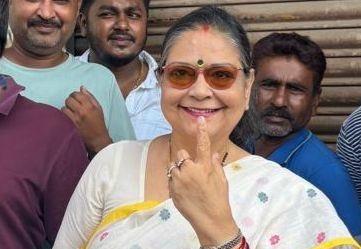
The humiliating defeat of Trinamool Congress in the Assembly polls is seeing the party head for a split. It has also given rise to the role and future position of 29 MPs in the Lok Sabha. Senior TMC MP Kakoli Ghosh Dastidar triggered speculations when she wrote on X that “Do you think a four-time MP from a political family, who has stood beside Mamata Banerjee and fought against authoritarian systems for four decades, would think only of personal interests? This is actually a verdict against the failure of policy and governance.” Dastidar did not mention any individual or issue directly but her message was loud and clear. Dastidar, an influential figure within the Trinamool, has been a close associate of Mamata Banerjee. Until recently, she served as the party’s Chief Whip in the Lok Sabha. However, she was replaced in that role by Kalyan Banerjee, a development that many political analysts believe marked the beginning of growing distance between her and the party leadership. Subsequently, Dastidar publicly criticised political consultancy firm I-PAC, alleging that its activities had harmed the party. She later resigned from various organizational posts within the TMC. Political speculation intensified further when the Union government enhanced her security cover shortly after her resignations. According to sources, around 20 Trinamool MPs may hold a crucial meeting in the coming days. Reports suggest that a letter could subsequently be submitted to the Lok Sabha Speaker seeking changes in the parliamentary party leadership. Speculation is rife that Dastidar’s name could be proposed as an alternative to current parliamentary leader Abhishek Banerjee.
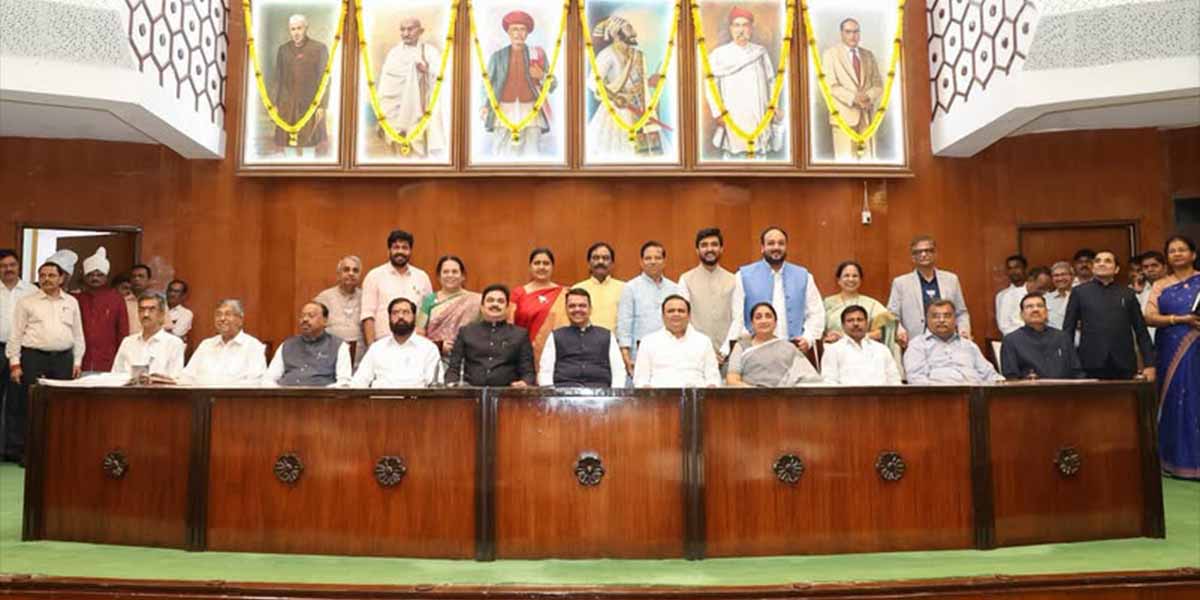
The election to the Maharashtra Legislative Council is becoming more and more intriguing with one sensational disclosure after another by rival political parties. As expected, Shiv Sena (UBT) MP Sanjay Raut lobbed the first salvo. He alleged that Rs 150 crore had been spent by the ruling Mahayuti alliance comprising the BJP, Shiv Sena (Shinde) and NCP (Ajit). It was his angry reaction to the humiliating show put out by the opposition Maha Vikas Aghadi (MVA), of which his leader Uddhav Thackeray is a major policy maker. Raut was immediately ridiculed since Uddhav’s confidant Bal Mane had withdrawn his nomination without giving a faintest hint to his leader. Moreover, Mane has returned to the BJP, which he had left some years ago. In all, the Congress and Sena (UBT) have been finding it most embarrassing as the Mahayuti is set to win almost each of the 17 seats for which election is being held. Developments in some legislative council constituencies have made the opposition leadership speechless since those withdrawing nominations did not even bother to formally convey their decisions. In most cases, the leaders learnt from TV channels of their candidates running away from the contest. Interestingly, Raut has been challenged by the BJP to announce why he failed to field a candidate of his party from Nasik, the district of which the MP is party’s organizational in charge. Has Raut accepted money for not contesting, the BJP has asked. More skeletons are expected to tumble out of the cupboard over the next few days.
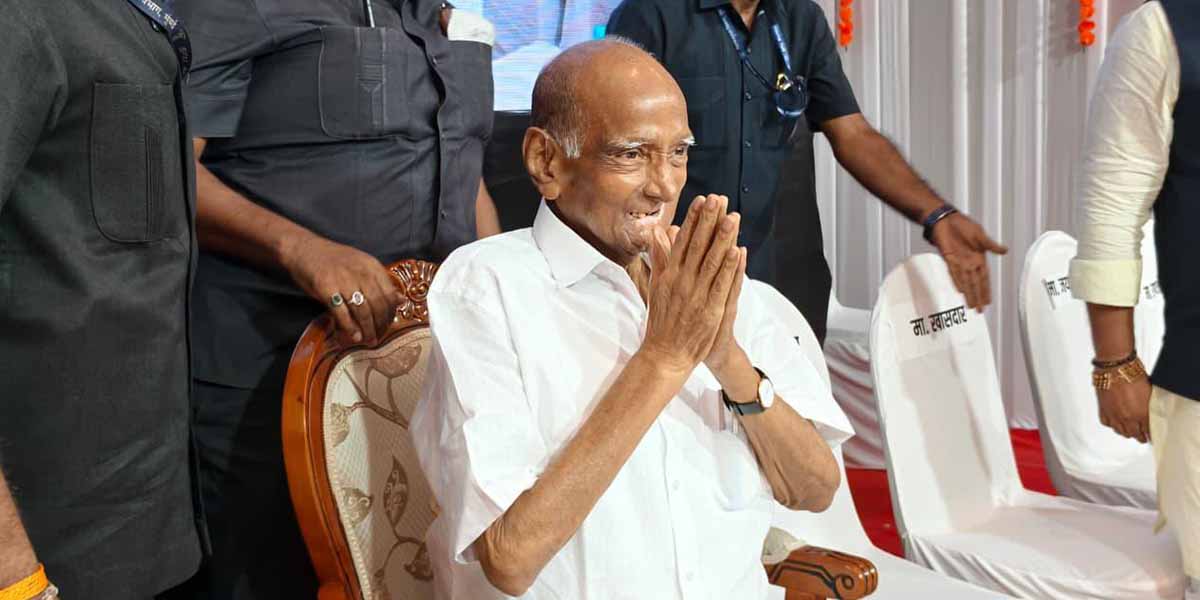
Veteran leader Sharad Pawar gave his consent and NCP (Ajit) candidate for the legislative council, Vikram Kakade’s election for the upper house became a mere formality. The reason stated to be instrumental was a telephone call Vikram’s father Sanjay, former BJP MP, had made to Pawar, urging him to clear the path for his son. Although from the rival faction, Pawar graciously gave a nod. Sanjay, it is learnt, had obliged Pawar’s Nationalist Congress Party nearly 15 years ago in a local election. As Pawar is blessed with an elephant’s memory, he paid back the obligation by ensuring Vikram’s election unopposed. But there is one more connection with the Pawar family and this election. Vikram had ‘advanced’ Rs.10 crore to Parth Pawar, son of deceased deputy CM Ajit Pawar and Sunetra Pawar, who is occupying the deputy CM’s post now. Vikram has clarified that the payment was against the purchase of a plot of land, which was in the name of Ajit Pawar. In faraway Vidarbha, the BJP’s candidate Arun Lakhani was elected unopposed to the upper house since Maha Vikas Aghadi failed to challenge him. A successful businessman and an ardent RSS worker, Lakhani’s son is slated to marry NCP (SP) leader Supriya Sule’s daughter. The would-be couple and their parents recently called on Prime Minister Narendra Modi to formally invite him for the wedding, the date for which is yet to be announced. While political party workers keep fighting on roads, no such bitter sentiment is seen in the upper echelons.
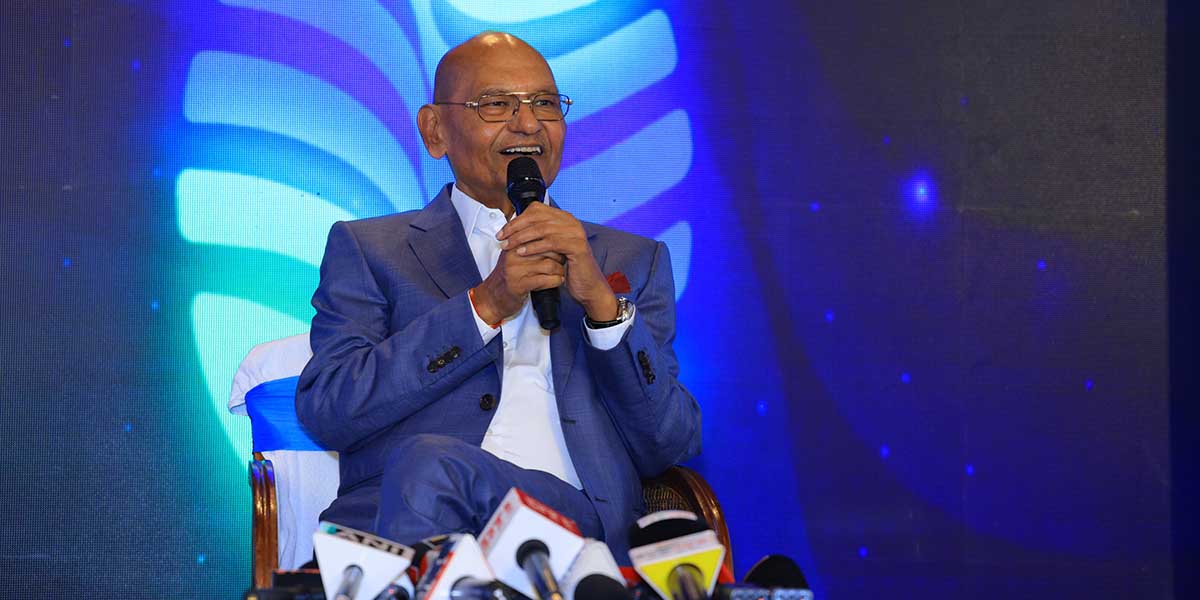
So far, Vedanta’s operations in Odisha remain completely unaffected by recent ongoing investigations, scrutiny with regard to FEMA probe, ED raid, search operations on the group’s founder Anil Agarwal after his conflict with Adani over the Jaypee deal. The Odisha state government in dealing with Anil Agarwal has kept its slate clear with regard to Vedanta’s local violations. Vedanta, it may be recalled, was penalized Rs 233.11 crore and Rs 71.16 crore for illegal water extraction and unauthorised hazardous fly ash dumping in Odisha state. Political observers say, “At the moment, Odisha government’s singular focus is ensuring Vedanta’s timely project completion of the project amidst continuous tribal complaints for encroaching on forest reserves. It may be recalled that Vedanta Group did throw a hat in the ring to acquire the debt-ridden Jaiprakash Associates. But the lenders ultimately favoured a lower bid from Adani Enterprises. Anil Agarwal tweeted about this development. This is why political analysts interpret the recent FEMA and ED probe as a veiled warning to Anil Agarwal not to cross swords with Adani Group. Vedanta Group is a global natural resources and technology conglomerate. Over the last four decades, founder-chairman Anil Agarwal transformed a small, failing scrap-metal business into one of the world’s leading diversified mining, metals, and hydrocarbons corporations.
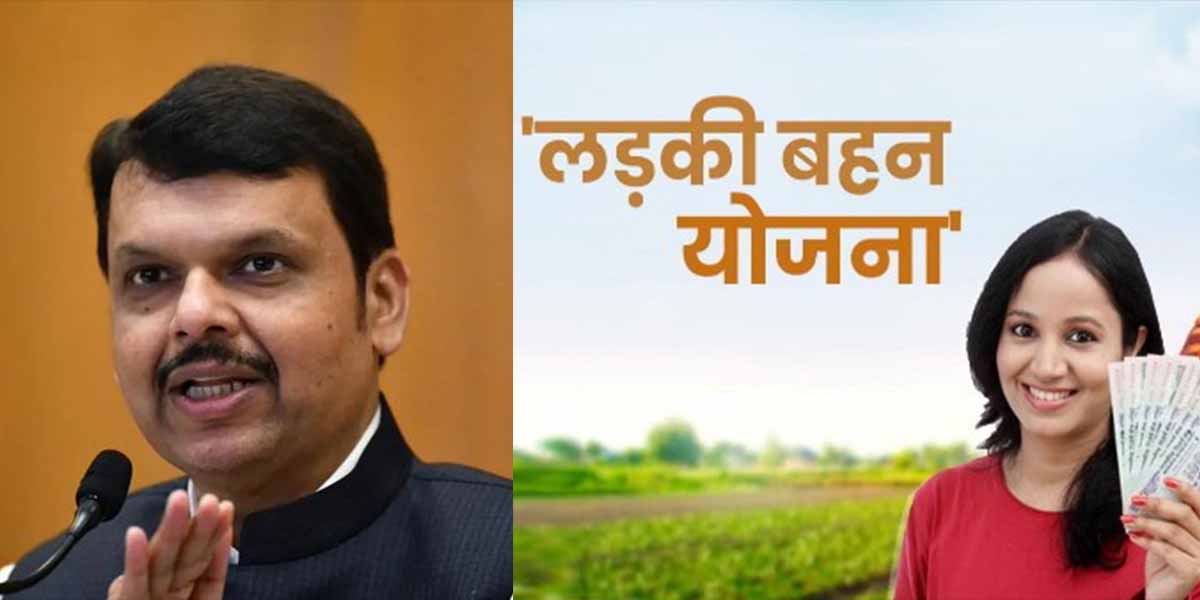
Maharashtra’s ongoing scrutiny of beneficiaries under the Mukhyamantri Majhi Ladki Bahin Yojana (CM’s My Favorite Sister Scheme) reportedly identified nearly 80 lakh ineligible women who enjoyed monthly assistance of Rs 1,500 since the scheme’s launch in 2024. Chief Minister Devendra Fadnavis has ruled out recovering payouts already made to them. The government’s lenient approach towards women beneficiaries, however, will not extend to the 14,000 men who allegedly secured benefits under the women-centric welfare scheme through fraudulent declarations. Officials involved in the verification exercise indicated that these beneficiaries would face recovery proceedings and could also be exposed to criminal action. At Rs 1,500 per month, the payments made to the male beneficiaries are estimated at Rs 50 crore. Preliminary findings suggest that several applications contained discrepancies in Aadhaar-linked records, while some beneficiaries were identified as ‘male’ during KYC verification despite having submitted details portraying themselves as eligible women. The scrutiny process also reportedly uncovered over five lakh women government employees who availed the benefit despite their annual incomes exceeding the scheme’s eligibility threshold of Rs 2.5 lakh. A senior official associated with the verification drive recalled that in an earlier instance, an individual was jailed for submitting multiple applications and claiming financial assistance under government schemes despite being ineligible. Similar recommendations for recovery and punitive action are expected in cases involving deliberate misrepresentation by men. Political observers believe the decision not to recover funds from the 80 lakh ineligible women reflects both economic and electoral considerations. With rural Maharashtra continuing to experience financial stress, the government appears reluctant to reclaim benefits already disbursed, including non-deserving women, a move that...
The Congress has nominated party chief Mallikarjun Kharge and party spokesperson Pawan Khera who was known for taking on Assam chief minister Himanta Biswa Sarma from Karnataka. The party opted to give the sole Rajya Sabha seat from Madhya Pradesh to Meenakshi Natrajan. A committed no-nonsense Congress leader, she had impressed Rahul Gandhi with her simple lifestyle. Party sources said most of the Rajya Sabha picks were personally cleared by Rahul Gandhi. Former CM Digvijay Singh who retired as MP refused to seek another term and made it possible for Meenakshi Natrajan. The Congress has just three sitting MPs who are retiring and if the elections goes as per party strength, the party is likely to get seven lawmakers, provided the JMM offers the second seat which the I.N.D.I.A Bloc can win to Congress in Jharkhand. Besides, Pawan Khera, another person who handles media for the Congress, Pranav Jha is also being nominated to the Rajya Sabha from Jharkhand. The party also nominated Mansoor Ali Khan, son of former Rajya Sabha Deputy Chairman Rahman Khan from Karnataka. Meanwhile in the BJP, there was a bloodbath of sorts as incumbent Union ministers George Kurian and Ravneet Singh Bittu did not find their names in the list from Madhya Pradesh. While Bittu may still be contesting the forthcoming Punjab assembly elections, tears are not being shed for Kurian as he had lost in Kerala assembly elections. An old BJP hand, he was apparently seen as not endearing himself or the party to the community. Kurian was not liked very much by the community even though he handled minority affairs.
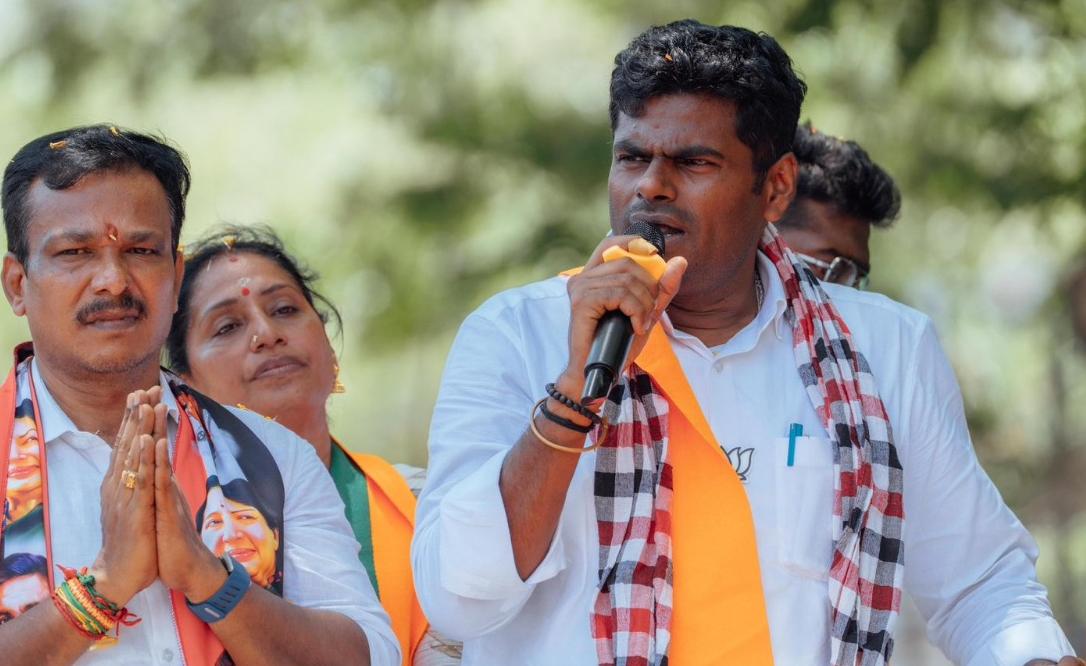
Former Tamil Nadu BJP president K Annamalai may have the satisfaction of dominating national media discussions for a day about his possible exit from the BJP. However, after camping in Delhi for three days and even spending his birthday (June 4) by holding out a resignation threat, one hears he has still not put in his resignation. His media antics were not well-received in the PMO. In fact, as news channels obsessed about his meetings with Home Minister Amit Shah and BJP chief Nitin Nabin, eyebrows were raised at the highest level at the kind of level a malcontent from South was allowed to manage media coverage in Delhi. It is precisely for this reason that the former IPS officer failed to secure even a birthday wish from PM Modi or Shah. When Annamalai explained his need to float new forum to mobilise youth in Tamil Nadu, Shah told him that there was no need for it. He was told that the party would always stand with him. It is being felt Annamalai’s talk of a separate morcha to take on the TVK under Vijay could all be an idea that is being pushed probably by the DMK. The DMK needs a credible, clean face to mobilise youth against CM Vijay. It is here that Annamalai fits the bill. Annamalai had extended his stay hoping to meet with PM Modi who was tied up with the visit of Venezuelan Acting President Delcy Rodríguez. It is learnt the BJP did not bargain with Annamalai. A section of the RSS suggested that talks be held with him which is why Amit Shah and Nitin Nabin met with him. Meanwhile, BJP TN president Nainar Nagendran had fixed up a meeting with Agriculture Minister Shivraj Singh Chouhan. Nainar’s visit to Delhi was portrayed as if he was being summoned by party bosses at Annamalai’s behest.
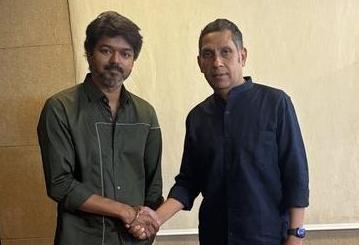
Contrary to speculation, the Tamilaga Vettri Kazhagam (TVK), the new political party led by actor Vijay that has just come to power in Tamil Nadu, apparently is not bothered about getting a foothold in Delhi. That is why the party did not hesitate in allotting Rajya Sabha seat from TN to its coalition partner, the Congress party, ahead of the biennial elections scheduled for June 18. In a statement, the TVK announced that the seat – vacated by AIADMK leader C V Shanmugam that is set to be filled through the Rajya Sabha election has been allocated to the Congress as part of the seat-sharing arrangement. AICC Tamil Nadu In-charge Girish Chodankar had met CM Joseph Vijay earlier in the day. “I met the chief minister, and requested him that this seat should be allocated to us by them and then it will also help us in the Rajya Sabha,” he said. Chodankar feels the Congress has every reason to feel thrilled with TVK’s gesture as it will now have three Rajya Sabha MPs from the state. At present the Congress has former Finance Minister P Chidambaram and Christopher Tilak (AICC secretary) who was elected to the Rajya Sabha in March 2026 with the support of the DMK. Praveen Chakravarty, a close Rahul Gandhi aide, who TN CM Vijay publicly addressed as a friend for batting for TVK-Cong alliance, will be the other PC, who is most likely to get elected from the state. “Apparently, the basis for the Congress joining the TVK Govt was the scope for improving its presence in Parliament,” says a Congress source.
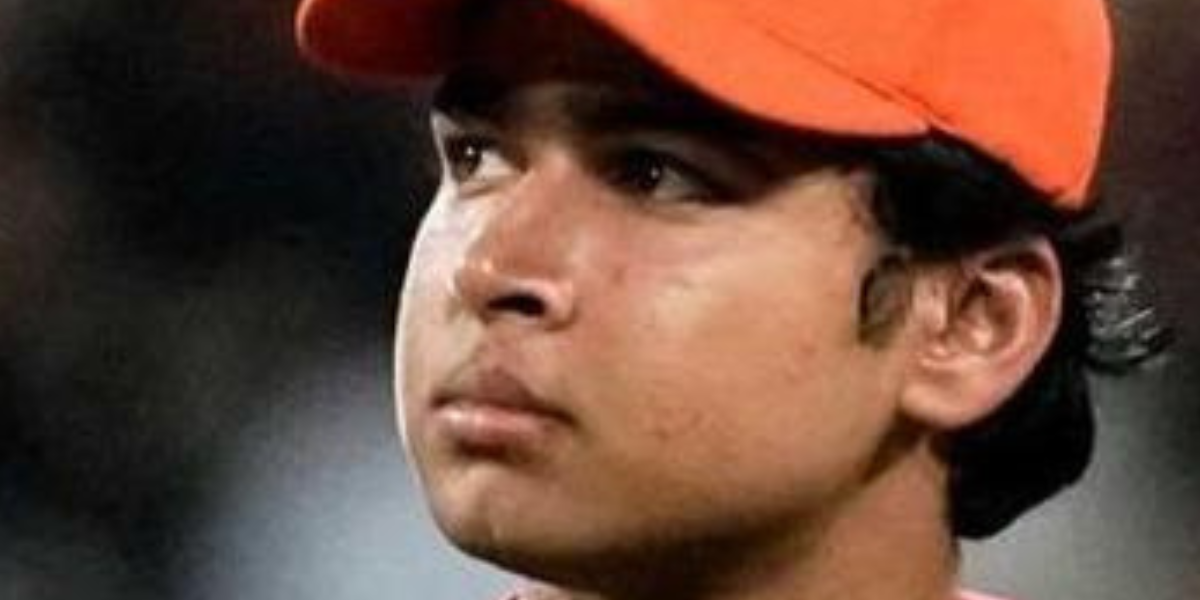
Vaibhav Sooryavanshi has made the big splash in Twenty20 cricket, but the corridors of power in the BCCI feel that the time has arrived to groom the left hander from Bihar and Rajasthan Royals for the 50-over World Cup and the World Twenty20. The 15-year-old put to sword some of the top notch fast bowlers like Jasprit Bumrah, Jofra Archer, Pat Cummins and Mitchell Starc in the recent Tata-IPL-19. He is yet to get a call for the national Twenty20 team — it’s an event that will happen imminently. Maybe during India’s white ball series in Ireland and England in June-July. India will play two Twenty20 matches at Belfast and then five Twenty20 and three ODIs in England. He has not been picked in the team that will play the three home ODIs against Afghanistan, but vacancy could arise should Rohit Sharma and Hardik Pandya do not clear the fitness test. Sooryavanshi has not played in the UK where auditions could happen for the Men in Blue team’s preparation for the ICC Cricket World Cup 2027. The ICC would be happy to see Sooryavanshi being promoted as a big brand for the next two events — the 50-over World Cup in South Africa, Zimbabwe and Namibia and the Twenty20 World Cup in Australia-New Zealand. With so much uncertainty about Suryakumar Yadav to last till 2028, there is a possibility of Sooryavanshi’s career receiving a big push in both white-ball formats. The rationale for the left-hander’s inclusion is based on the big question of whether such a fantastic talent can be wrapped in a cotton wool for a long time. India’s Twenty20 openers are Abhishek Sharma and Sanju Samson and it’s Rohit and Shubman Gill in ODI’s …but things could clear up soon for Sooryavanshi in both formats.
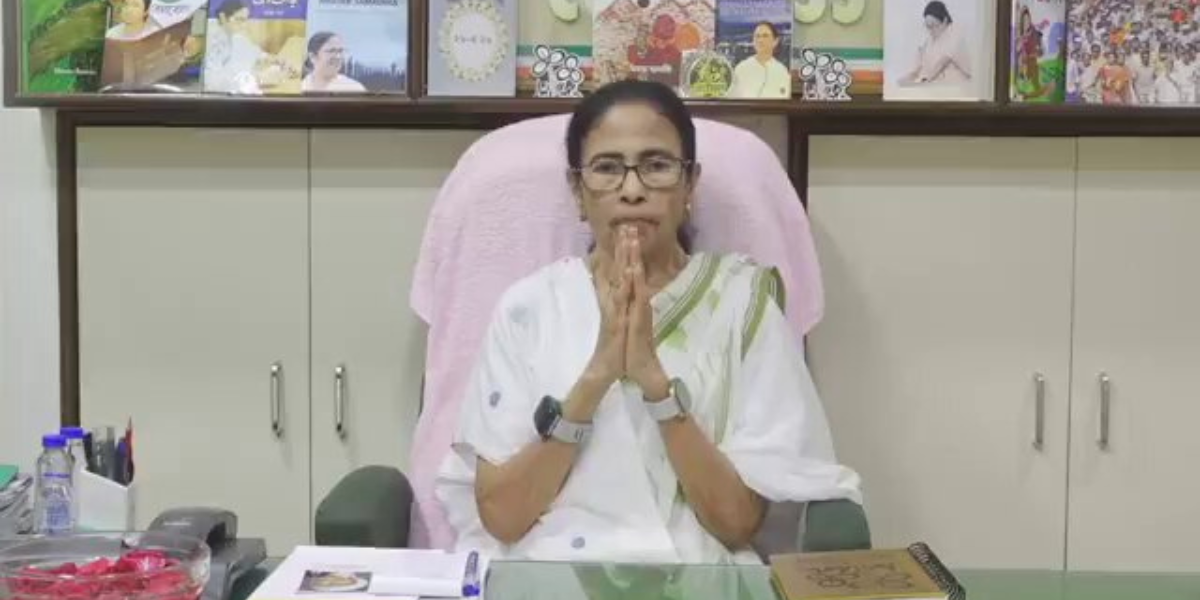
Political turbulence within the Trinamool Congress (TMC) has intensified in the aftermath of the West Bengal Assembly election results, with the party expelling two legislators amid a controversy over alleged forged signatures and growing speculation of internal dissent. MLAs Ritabrata Bandyopadhyay and Sandipan Saha were expelled after reports emerged that they had lodged a police complaint over an alleged signature forgery incident. Their expulsion has reduced the TMC’s strength in the West Bengal Assembly from 80 to 78 MLAs. Since the election results, several senior leaders have publicly expressed differences. Some of the party leaders including Mamata Banerjee, Abhishek Banerjee, Kalyan Banerjee had to face the ire of public anger; they were booed, heckled and names called. Now, speculations are rife about a possible split of the party. It is learnt that a significant number of legislators could leave the party and form a new outfit led by expelled MLAs, including Bandyopadhyay and Saha. Speculation intensified after a meeting convened by Didi reportedly had attendance from only 20 of the party’s 80 MLAs, leading to its cancellation. Observers believe any large-scale defection could alter the balance of power in the Assembly and challenge the TMC’s position as the principal opposition party. Comparisons are being drawn with Maharashtra, where the split in the Nationalist Congress Party saw the founder Sharad Pawar losing control. Likewise, a rebellion within Shiv Sena resulted in Uddhav Thackeray losing control of the party organisation and election symbols. Expelled TMC leader Bandyopadhyay says he is prepared to provide authorities with information regarding alleged corruption within the party and government. Addressing supporters through a Facebook Live session, Mamata accused the BJP of attempting to engineer defections.
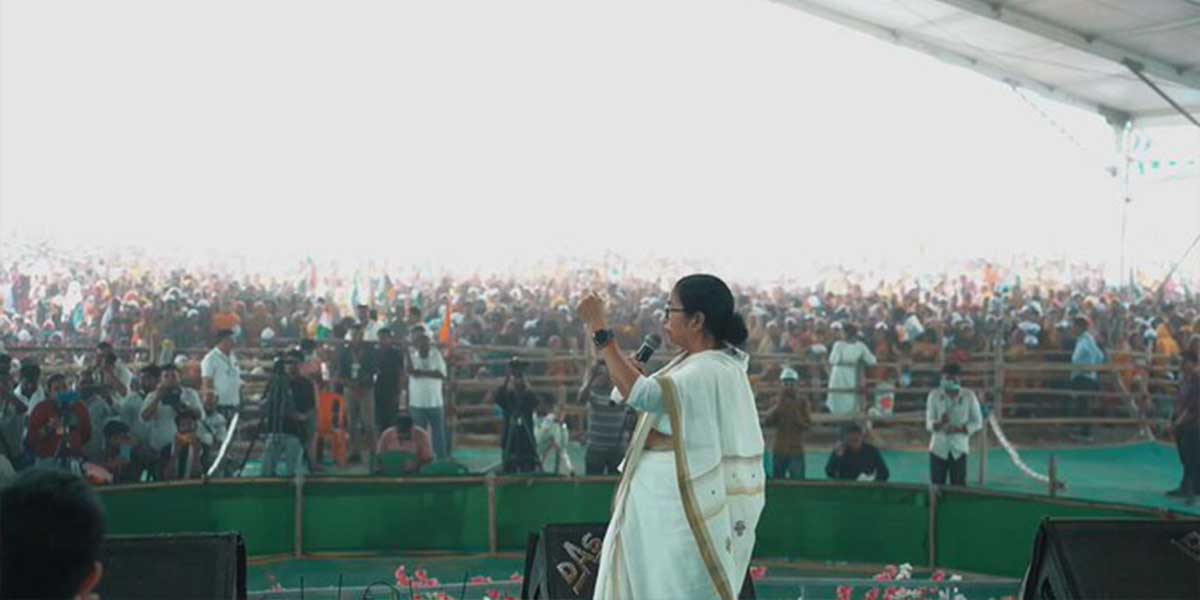
Having remained silent and absent from the INDIA Bloc’s public engagements for a while, West Bengal chief minister Mamata Banerjee has made her stance unmistakably clear — she’s aligned with regional parties in the broader national agenda to defeat the BJP in upcoming assembly elections. Acting on Mamata’s suggestion, Opposition parties are set to gherao the Election Commission of India’s office in New Delhi on August 8 calling out widespread allegations of irregularities in the Special Intensive Revision (SIR) of electoral rolls. With elections due this year in Bihar, as well as next year in non-BJP-ruled states such as West Bengal, Tamil Nadu, and Kerala, the issue is rapidly gaining traction as a national political flashpoint. Ahead of the protest, top leaders from the INDIA Bloc will convene in New Delhi on August 7 to finalise the gherao strategy. According to party sources, TMC national general secretary Abhishek Banerjee will attend the meeting and also dinner hosted by Rahul Gandhi. Discussions may include not only the logistics of the EC gherao but also preparations for the Vice-Presidential election scheduled for August 9. It may be recalled that on July 21, Didi warned the TMC would not hesitate to gherao the EC if the names of legitimate voters were found to be removed from Bengal’s electoral rolls under the SIR. In effect, Mamata has reasserted her political clout within the INDIA Bloc — not just through participation, but by driving the narrative on what she sees as a fundamental threat to democracy through electoral roll manipulation.

West Bengal chief minister Mamata Banerjee announced a substantial 30% hike in honorarium for community Durga Puja organisers, raising the amount from Rs 85,000 last year to Rs 1.10 lakh per club. Playing high on Hindutva card, with approximately 45,000 clubs organising community pujas across the state, the move will cost the state exchequer an estimated Rs 495 crore. Didi also urged electricity supply companies to offer an 80% rebate to puja committees on power usage. The announcement, coming just months before the State Assembly elections, sparked sharp criticism from the Opposition parties, which termed the hike a “bribe” by the ruling Trinamool Congress. Emphasising the cultural and emotional significance of Durga Puja in Bengal, the CM urged organisers to prioritise safety and crowd control over competition. She encouraged clubs to deploy more volunteers and maintain separate entry and exit routes in pandals. She also appealed to the puja committees to support returning migrant workers who, she claimed, have faced mistreatment in BJP-ruled states. This year’s Durga Puja festivities will take place in the last week of September, followed by the annual carnival on October 5.
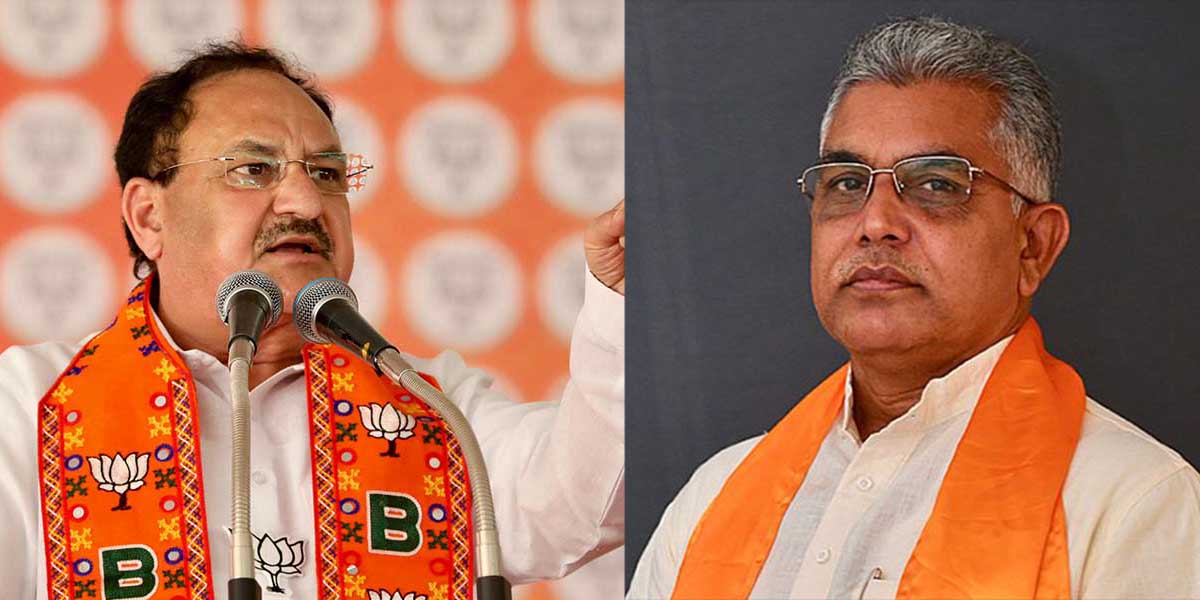
The BJP one learns has set its Bengal house in order. Former state president in West Bengal Dilip Ghosh had remained absent from PM Modi’s rally in the state on July 18 claiming that the state leadership had not invited him. A solid RSS leader, Ghosh’s absence had begun to bother the BJP leadership as he has been skipping important party events and rallies in the recent past, including events attended by Modi at Alipurduar and Amit Shah in Kolkata this year. His latest absence from the Modi rally at Durgapur was particularly worrying since he had contested from the Bardhaman-Durgapur Lok Sabha constituency in West Burdwan district in 2024 and lost. Speculations were rife that he may cross over to the TMC amid reports of a souring relationship between him and the State BJP leadership. It may be recalled that it was under Ghosh’s leadership that the BJP had done well in Bengal – winning 18 out of the State’s 42 Lok Sabha seats in 2019. In May this year, Ghosh drew criticism from the BJP when he met CM Mamata Banerjee at the inauguration of the Digha Jagannath Temple. He had also made some statements backing Mamata. In this backdrop, BJP chief JP Nadda reached out to Ghosh, met with him in Delhi and had detailed discussions. Party sources say Ghosh is keen to contest as a party candidate in the 2026 West Bengal Assembly polls but from the same Assembly constituency from where he got elected for the first time in 2016 — Kharagpur (Sadar) in West Midnapore constituency. However, he had to resign as the MLA from Kharagpur (Sadar) in 2019 after winning from the Midnapore Lok Sabha constituency in the same year.
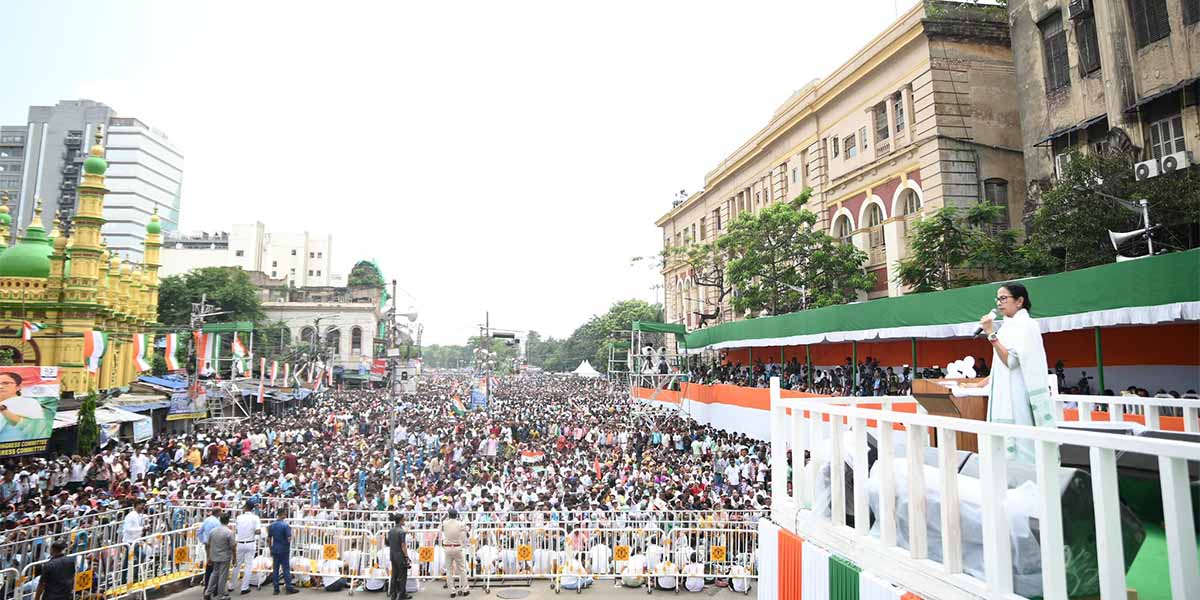
West Bengal chief minister and Trinamool Congress (TMC) supremo Mamata Banerjee has made it official that her party will take on BJP in the run-up to the State Assembly polls based on Bengali Asmita. Addressing a massive Martyrs Day rally in Kolkata she accused BJP of unleashing linguistic terrorism and Mamata made it categorical that another Bhasha Movement will be embarked upon to safeguard Bengali pride. She claimed that more than 1,000 Bengali-speaking individuals have been detained and jailed in BJP-ruled states such as Odisha, Chhattisgarh, Rajasthan, and Madhya Pradesh. TMC supremo stated that terror has been unleashed on the Bengali language and described the BJP’s actions as a massive conspiracy against Bengali identity. She warned that if linguistic profiling of Bengalis does not stop, the resistance movement will be taken to the national capital. Mamata also announced a statewide protest campaign against what she described as the ongoing oppression of the Bengali language. Directly attacking Assam chief minister Himanta Biswa Sarma, Didi said he is unable to manage his own state but continues to interfere in West Bengal’s affairs. Interestingly, she went a step further in her political critique, claiming that the present Indian government is being remotely controlled by U.S. President Donald Trump. Significantly, during the rally, Mamata introduced the gathering to the father of Jhantu Ali Sheikh and a family member of Bitan Adhikari—both victims of the Pahalgam terror attack earlier this year.
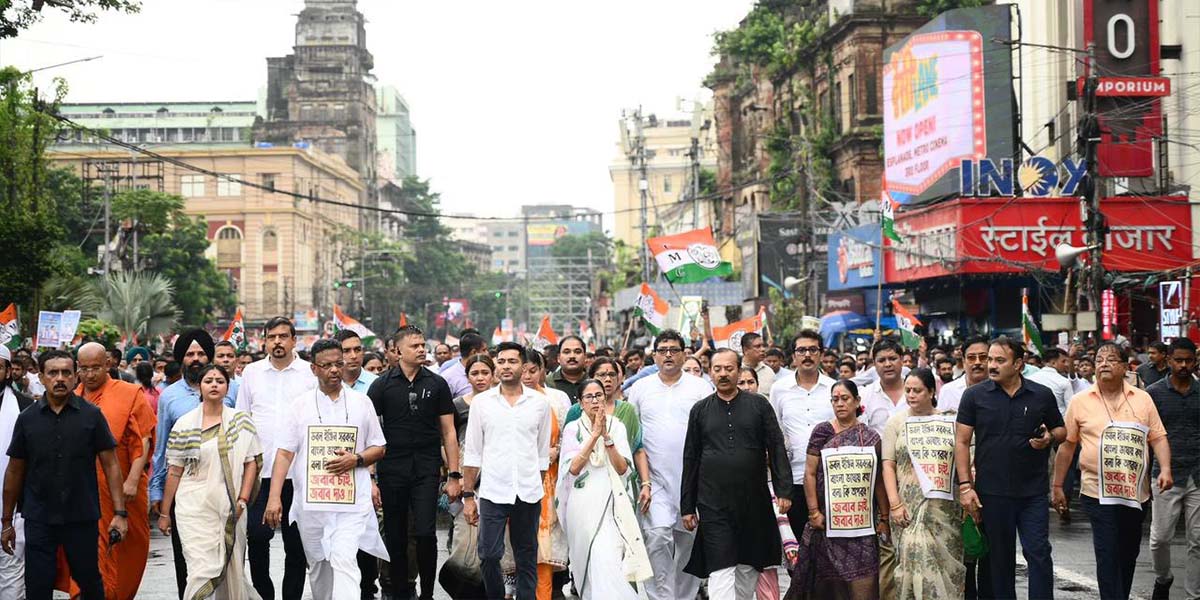
West Bengal chief minister Mamata Banerjee has once again invoked the powerful sentiment of Bengali Asmita ahead of the 2026 Assembly elections. In a move reminiscent of her successful 2021 campaign, Banerjee accused the Centre of systematically targeting Bengali-speaking individuals and migrants across BJP-ruled states, painting it as part of a larger political design to marginalise Bengalis. This protest comes just days ahead of Prime Minister Narendra Modi’s scheduled rally in Durgapur on July 18 and the TMC’s annual Martyrs’ Day on July 21. The TMC supremo led a protest rally on July 16, alleging that the Union government had secretly issued a notification permitting detention of individuals — especially Bengali speakers — on mere suspicion of being illegal migrants from Bangladesh. Walking alongside her nephew and party’s National General Secretary, Abhishek Banerjee — amid speculations of a strained relationship — Mamata projected a message of unity and communal harmony by notably including a Buddhist monk and a Muslim cleric, underlining inclusivity in the face of alleged divisive policies. She raised concerns over Bengalis being labelled as Bangladeshis despite having Aadhaar and PAN cards. She pointed out that over 1.5 crore migrant workers from other Indian states are working in Bengal with dignity, unlike the treatment meted out to Bengalis elsewhere. Didi cautioned that if Bengalis are detained, Bengal will politically detain the BJP through the ballot box. Political observers believe that the choice of location for the PM’s rally on July 18 in Durgapur is strategic as it will encompass the two key Lok Sabha constituencies of West Bardhaman district — Bardhaman-Durgapur and Asansol. In both constituencies BJP was defeated in 2024 Lok Sabha polls. Modi’s address is expected to clarify BJP’s stance — whether it will continue with a Hindutva-driven approach or pivot toward inclusive development.

Despite recent efforts at mending fences, internal rifts in the Bengal BJP have resurfaced after senior leader and former state president Dilip Ghosh reignited controversy with remarks seemingly soft on West Bengal chief minister Mamata Banerjee. This comes even after Ghosh’s meeting with newly appointed state BJP chief Samik Bhattacharya and a visit to Delhi where he met BJP national joint general secretary Shiv Prakash. Ghosh stated again that Mamata herself is not named in any corruption cases, blaming those around her instead — a comment that runs contrary to the BJP’s aggressive anti-Mamata narrative and has triggered discontent within state ranks. Without naming him, Ghosh also appeared to take aim at Leader of the Opposition Suvendu Adhikari, saying that some recent entrants into the party are trying to stoke divisions — a likely reference to criticism he faced after attending the inauguration of Digha’s Jagannath Temple on Mamata’s invitation. Ghosh later insisted he was merely stating facts, not giving Mamata a “clean chit.” In an effort to contain the damage, state president Samik Bhattacharya met Ghosh at the party office and publicly reaffirmed his place in the BJP, declaring, “He was in BJP, is in BJP, and will remain in BJP.” Tensions date back to Ghosh’s April 30 Digha’s Jagannath temple visit, which drew flak from Adhikari and then-state chief Sukanta Majumdar. Ghosh was subsequently sidelined from key meetings, including on leadership selection, and complained of deliberate alienation—even being denied a chair during meetings. His latest remarks, though intended to reaffirm party ties, have once again unsettled the BJP ahead of the 2026 Assembly elections.
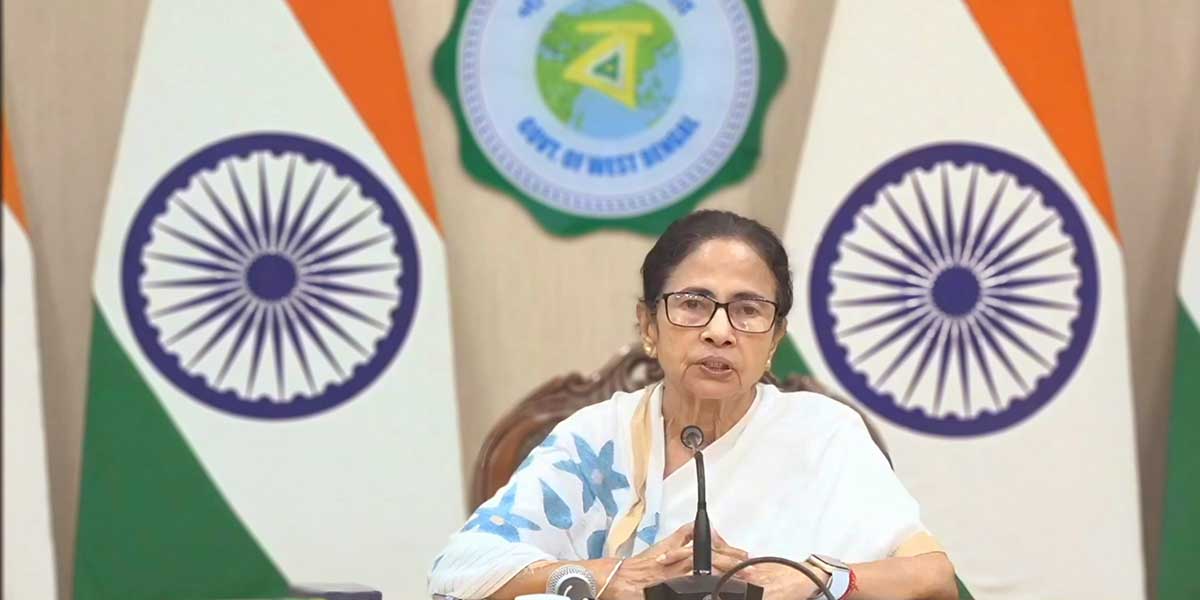
The West Bengal government’s action is once again under scrutiny after political cartoonist Manjul received a takedown notice from Cyber Crime wing of the state police. News website, The Wire, reported that the notice targeted two 2019 cartoons featuring chief minister Mamata Banerjee; one depicting defections from TMC to BJP, and the other on chit-fund scams under her regime. The state police cited alleged legal violations behind the notice. Earlier in March, FIRs were filed against CPI(M)’s Mohammad Salim and BJP IT cell head Amit Malviya for sharing a video showing a woman being flogged by a TMC leader in North Dinajpur’s Chopra. The post led to public outrage, prompting police to seek content removal. These instances reflect a long-standing pattern. In 2012, Jadavpur University professor Ambikesh Mahapatra was arrested for forwarding a cartoon featuring Banerjee; his case dragged on for a decade. Farmer Shiladitya Chowdhury was branded a “Maoist” by Banerjee after questioning fertiliser prices, then detained and legally pursued. In 2019, Sanmoy Banerjee, ex-Congress spokesperson, was arrested for criticising the chief minister’s nephew. In June 2022, YouTuber Roddur Roy was arrested from Goa for allegedly abusing Banerjee and her nephew. In 2023, advocate and former Congress spokesperson Kaustav Bagchi was also detained for allegedly derogatory remarks about Banerjee. Both later joined the BJP. Notably, during protests over the rape and murder of a junior doctor at Kolkata’s RG Kar Medical College in August 2023, artists criticised the state’s response. In retaliation, the TMC initiated a cultural boycott led by Kunal Ghosh, backed by MP Kalyan Banerjee and Education Minister Bratya Basu.
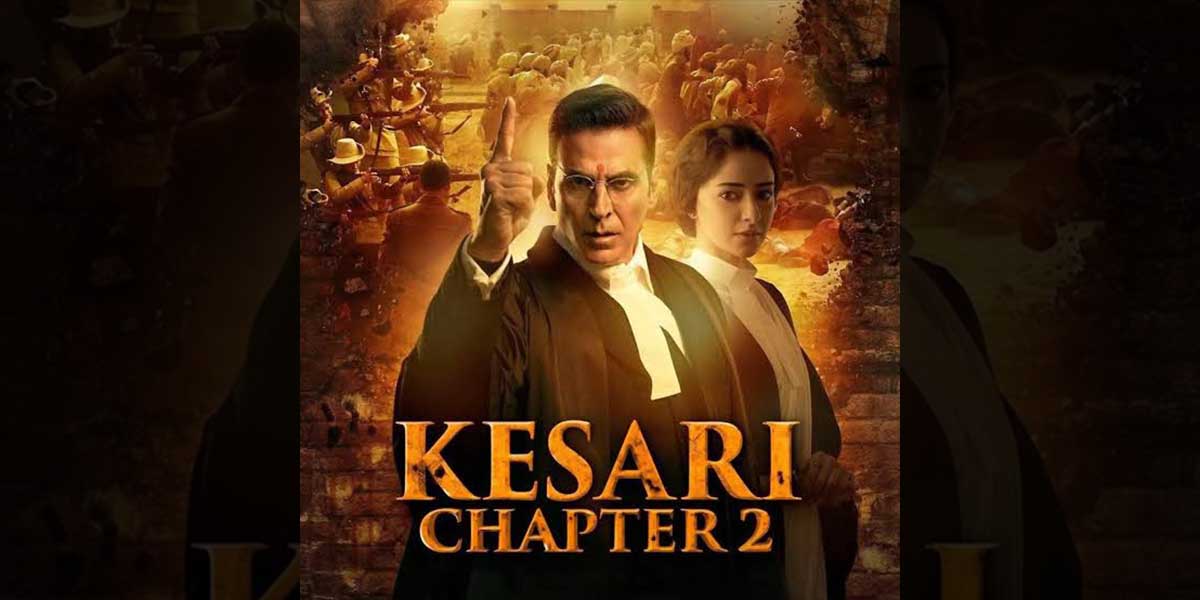
West Bengal chief minister Mamata Banerjee has targeted the BJP for distorting Bengal’s contribution to India’s freedom movement through the recently released film Kesari Chapter 2, starring Akshay Kumar, R Madhavan and Ananya Panday. Banerjee and the ruling Trinamool Congress (TMC) have accused the filmmakers of deliberately altering the names of iconic Bengali revolutionaries, alleging that this was done with political intent, as Kumar is known to be close to PM Narendra Modi and the BJP. According to Didi, the BJP had been consistently targeting the state and its rich cultural heritage. The film, directed by Karan Singh Tyagi, released in theatres on April 18 and later on OTT platform JioCinema, has now landed in controversy. A formal police complaint has led to a FIR under multiple sections of the Bharatiya Nyaya Sanhita (BNS) for allegedly insulting freedom fighters and misrepresenting historical facts. Ranjit Biswas, a resident of Nabapalli Sector IV in Bidhannagar South, filed the complaint, claiming that the courtroom scene in the film related to the Muzaffarpur Conspiracy Case misrepresents revolutionaries Khudiram Bose and Barindra Kumar Ghosh. In the movie, they are portrayed as ‘Khudiram Singh’ and ‘Birendra Kumar’ from Amritsar, which Biswas called an “insult to Bengal’s martyrs.” Following the complaint, the police have registered a case under BNS Sections 352 (intentional insult), 353(1)(c) (public mischief), and 353(2) (dissemination of false information). The TMC has demanded an apology and correction, accusing the film of whitewashing Bengal’s revolutionary history.
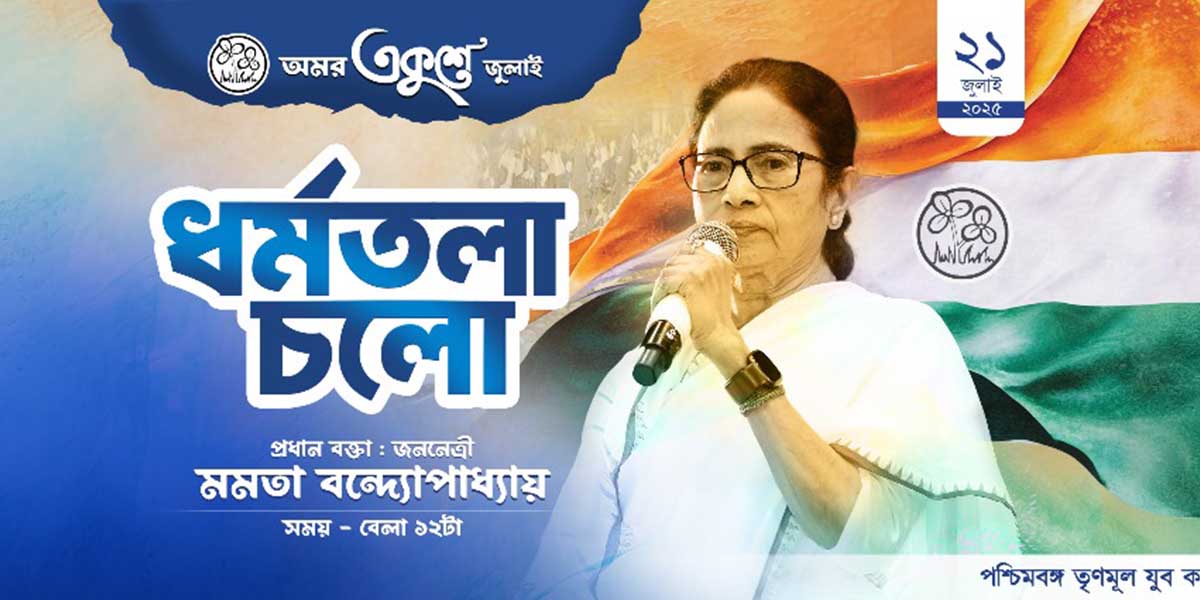
In a move reflecting deeper shifts within the Trinamool Congress’ internal power dynamics, national general secretary of the party and Mamata Banerjee’s nephew Abhishek Banerjee, it seems, voluntarily opted out of being featured on posters for the TMC’s Annual Martyr’s Day Rally to be held on July 21. This decision underscores Didi’s continued projection as the sole face of the party amid ongoing debates over leadership prominence. According to party veteran Sudip Bandyopadhyay, Abhishek has conveyed the decision to exclude his image from the posters. Sudip further clarified that the posters for the programme, provided by Abhishek’s office on a pen drive, contained only Didi’s image. The absence of Abhishek’s image in posters in the past had sparked off debates. In the November 2023 Netaji Indoor rally, party spokesperson Kunal Ghosh publicly questioned nephew’s omission. The controversy resurfaced in early 2024 and now in 2025 over the party’s New Year calendar, which featured both leaders but with Abhishek’s photo noticeably larger, prompting the leadership to recall it. February’s rally this year also showed only Mamata’s image. Incidentally, Mamata has repeatedly asserted in party meetings that she is the final authority in both government and organisation, even declaring that she will continue leading the party for the next 10 years. Significantly, Sudip also highlighted the importance of this year’s rally, which is being viewed as a precursor to the 2026 Assembly elections.
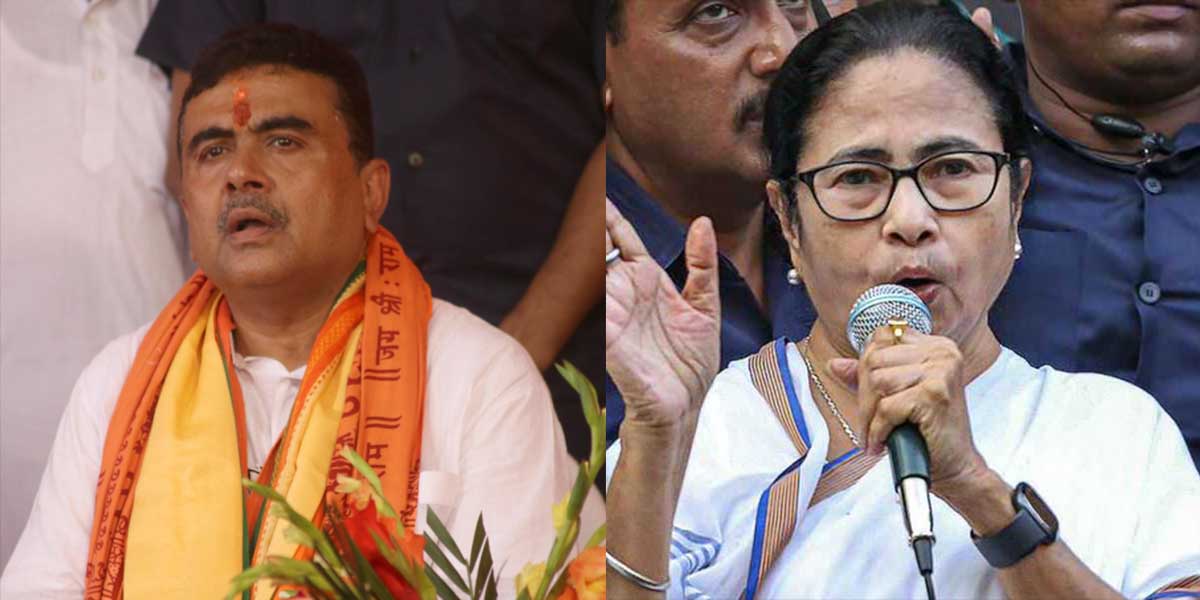
In a rare and increasingly confrontational political climate within the West Bengal Assembly, Leader of the Opposition (LoP) Suvendu Adhikari has set an extraordinary record with multiple suspensions and breach of privilege motions against him over the past four years. From chief minister Mamata Banerjee labelling him as a “limitless opposition leader”, the Assembly passed yet another breach of privilege motion against BJP leader Adhikari, the eighth since 2021. Reminding that he had defeated the CM in Nandigram, Adhikari has already faced suspension from the Assembly four times over the past four years and maintains that the government would not be able to take any effective action against him as he had never claimed any medical bills since 2006 and had not drawn his salary during suspension periods. He argues that these motions are attempts to silence his voice. Dismissing the claim, TMC Chief Whip Nirmal Ghosh and senior cabinet minister Chandrima Bhattacharya explained that the party had repeatedly approached the Speaker due to various statements made publicly by the LoP. Assembly records show that no previous LoP since 1957 has faced as many disciplinary actions as Adhikari. Former opposition leaders such as CPI(M)’s Surjya Kanta Mishra and Congress leader Abdul Mannan also faced privilege motions during Didi’s tenure but not to this extent. Veteran leaders noted that even former CM and CPI(M) patriarch Jyoti Basu, who served as Opposition Leader from 1957–67 and again from 1971–72, did not face such a record. Congress leader Abdul Mannan viewed that the situation was unprecedented adding that while strong opposition is important, lawmakers must remain mindful of their language.
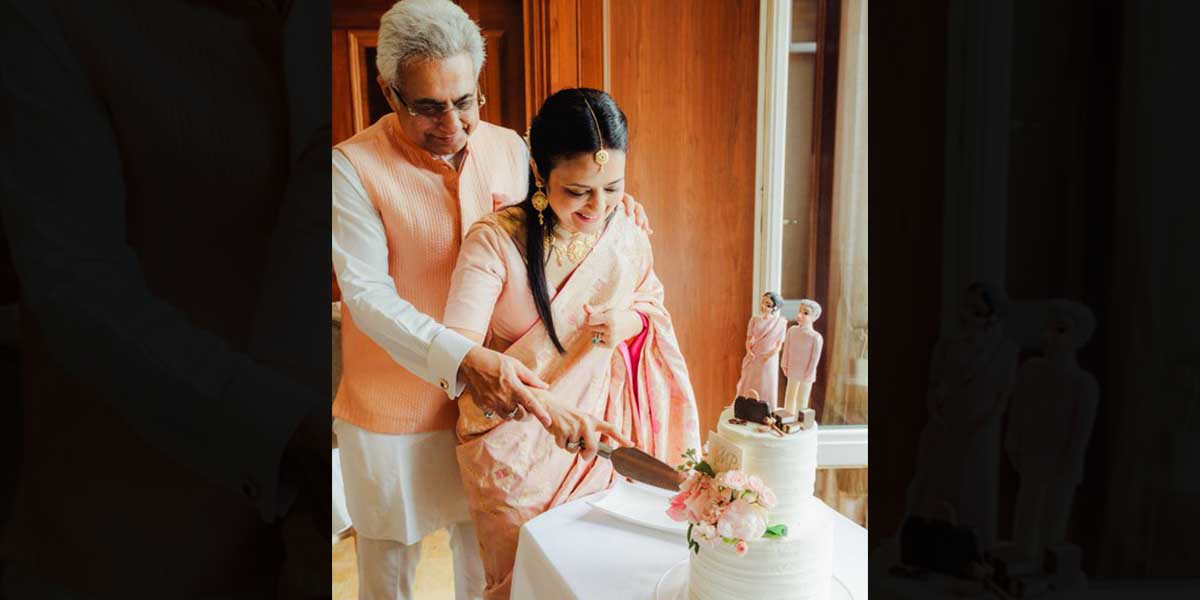
Sixty-five-year old Pinaki Misra, an eminent Supreme Court lawyer and politician, created headlines for marrying 51-year old firebrand Trinamool Congress MP Mahua Moitra and that too quietly in Germany on May 3. Odisha born Misra is four-time MP, winning on both the Congress and BJD tickets. Their marriage photo which went viral was broken by ABP’s The Telegraph. Why did two high profile people get married in Germany and that too quietly was the question everybody was asking. Incidentally, it’s the second marriage for both. Reportedly, Misra who hails from an illustrious family, his father Loknath Misra was a Rajya Sabha member, later Governor of Assam and whose net worth estimated around Rs 130-crore plus has houses in Germany and Delhi. It is said that Mishra’s relationship with Mahua solidified in 2023 following her expulsion from Lok Sabha in cash-for-query scandal wherein she received cash and gifts from industrialist Darshan Hiranandani in return for allowing him to use her Parliamentary login to pose questions against the Adani Group. When this issue came to light, Hiranandani openly alleged about her relationship with Mishra. At that time Mishra brushed it off labelling it malicious. For both Mohua and Pinaki this is their second marriage. Mohua was married to Danish financier Lars Borson and later she was in a relationship with lawyer Jai Anand Dehadrai. Pinaki, who divorced his wife Sangeeta in 1984, has two children. Incidentally, Page 3 circles were not surprised by this wedding as their affair was a public secret.
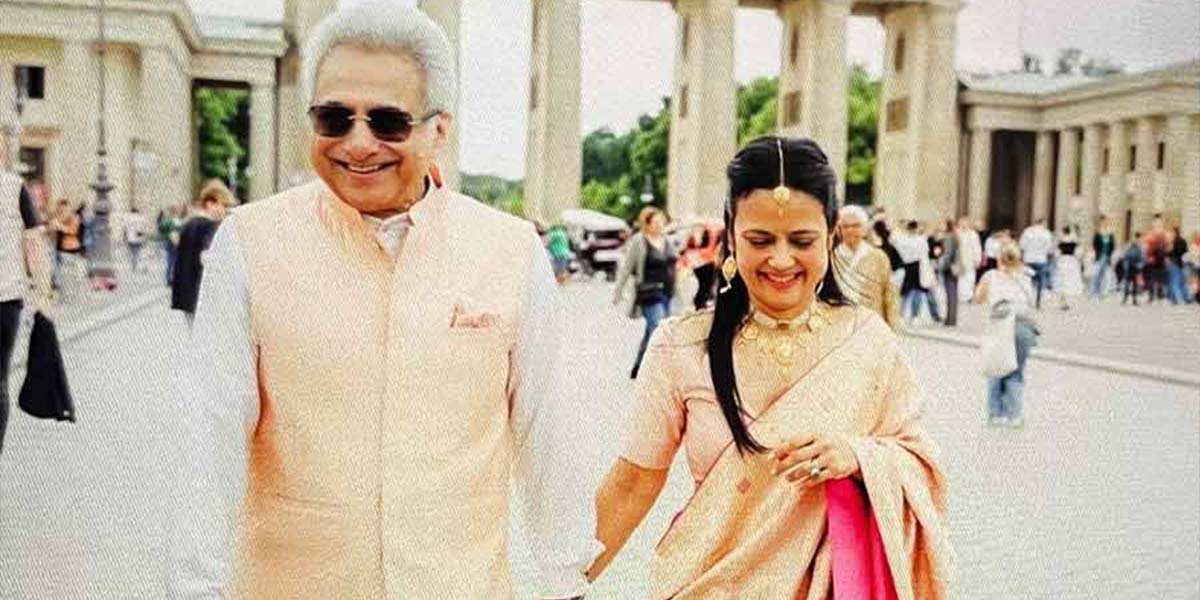
When news of Trinamool Congress (TMC) MP Mahua Moitra (50) tying the knot with Biju Janata Dal (BJD) leader and former MP Pinaki Mishra(65) in Germany was first announced in a Kolkata newspaper, mind you nearly a month after their marriage (on May 3), it was clear that the couple had officially wanted the world to know about it. A day later Mahua shared a picture of Pinaki and her cutting a cake on her X handle. Interestingly, the post was shared on TMC handle by party leader Abhishek Banerjee even as he was abroad on Operation Sindoor delegation. Looks like the news leak was timed with the private party that the couple threw for their friends in Delhi this week. Interestingly, what is worrying BJD leaders from Odisha is the manner in which Pinaki, who was a 4-term Lok Sabha MP from Puri and had been BJD Parliamentary Party leader, was being sidelined by the Bengal media. How can Kolkata media be so dismissive of the high networth BJD veteran with a poser like “who is Pinaki Misra?” BJD sources even wondered why Pinaki was getting bad press. While it may be true that Naveen Patnaik had denied Pinaki the Lok Sabha ticket in 2024 polls from Puri as his victory margin had been steadily declining, BJD sources felt it would be unfair to be dismissive of the Supreme Court lawyer. Party sources pointed out that Pinaki belonged to an eminent family of jurists — at least two from his family — Dr Ranganath Misra and his cousin Justice Dipak Misra went on to be CJI. His first wife, Sangeeta is a legal professional and hails from Maharashtra; they have two children.
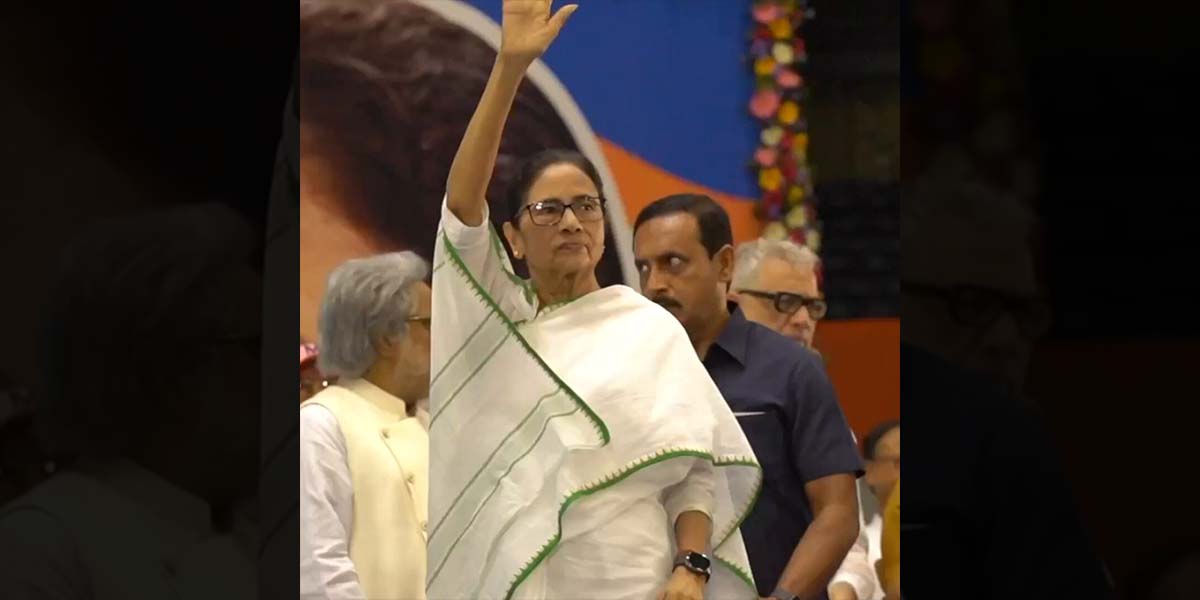
In a throwback of sorts to his clash with TMC supremo Mamata Banerjee that had marked his didi-oh-didi campaign in the last West Bengal assembly election, incumbent CM made a personal jibe about PM Modi’s estranged wife setting off a vicious cycle of personal attacks. A controversy apparently erupted following PM Modi’s rally in Alipurduar on May 27, where he, without naming Mamata, had sharply criticised her government and the TMC. In response, Mamata at a presser called out Modi’s “politicisation of Operation Sindoor”. She transgressed the political line with a personal jibe: “Remember that every woman has respect. They take sindoor from their husbands… Modiji is talking this way. You are not every woman’s husband… why don’t you give sindoor to your Missus first?” Apparently Mamata attacked Modi on the basis of unfounded media reports that BJP was going to distribute sindoor to women. Later, realising the inappropriateness of her comment, she immediately apologised while blaming Modi for provoking her. “I am sorry to say this. I shouldn’t get into all this. But you are compelling us now to open our mouths.” Instead of accepting Mamata’s apology, BJP’s State unit chief Sukanta Majumdar and LoP Suvendu Adhikari launched a coordinated retaliation that targeted not just Mamata’s alleged personal conduct but also her humble origins and socio-economic background. The situation reached a disturbing climax in Chinsurah, Hooghly, where BJP women workers forcibly applied sindoor on female police officers who were trying to disperse their protest. The incident drew criticism even from within the BJP’s own state unit. The episode highlights how personal attacks and identity politics have increasingly dominated Bengal’s political landscape, with both major parties crossing traditional boundaries of political propriety and raising serious questions about the health of democratic discourse in the state.
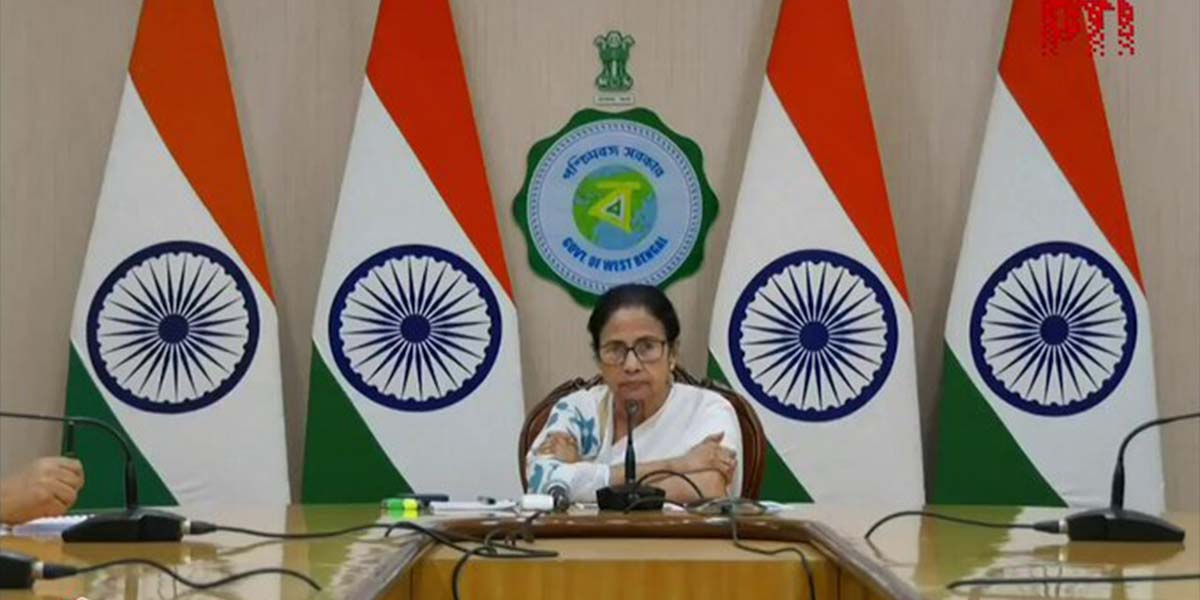
In a sharp counterattack to Prime Minister Narendra Modi’s recent address in West Bengal’s Alipurduar, chief minister Mamata Banerjee has challenged the PM to a live TV debate—teleprompter and all—and dared the BJP to call early elections in the state. Modi’s address, widely seen as the start of the BJP’s campaign for the 2026 Assembly elections, took aim at Mamata, branding her “Nirmam” (merciless) while highlighting recent communal violence in Murshidabad and Malda, the Supreme Court’s scrapping of teaching posts which left over 25,000 teachers jobless, and accusing her government of blocking Central government’s schemes. Hitting back, Didi accused the PM of engaging in “political Holi” at the expense of national interests. She dismissed his “Operation Bengal” remarks as an insult to the people of the state and pointed out that her nephew, TMC National General Secretary Abhishek Banerjee, was part of an MP delegation meeting global leaders—signalling her party’s commitment to protecting the nation’s interests internationally. Didi also slammed the Centre’s political motives behind naming the post-Pahalgam operation. She mocked Modi for his transformation from a self-proclaimed tea-seller to what she described as a “sindoor salesman,” a dig at his remarks that she interpreted as disrespectful to the women of Bengal. Mamata claimed that she had instructed her leaders to avoid commentary on “Operation Sindoor” despite its provocative nature. She accused the PM of spending more time on foreign trips than on India’s pressing issues and criticized what she called the erosion of federalism under Union Home Minister Amit Shah’s watch, branding him the country’s “acting Prime Minister.”
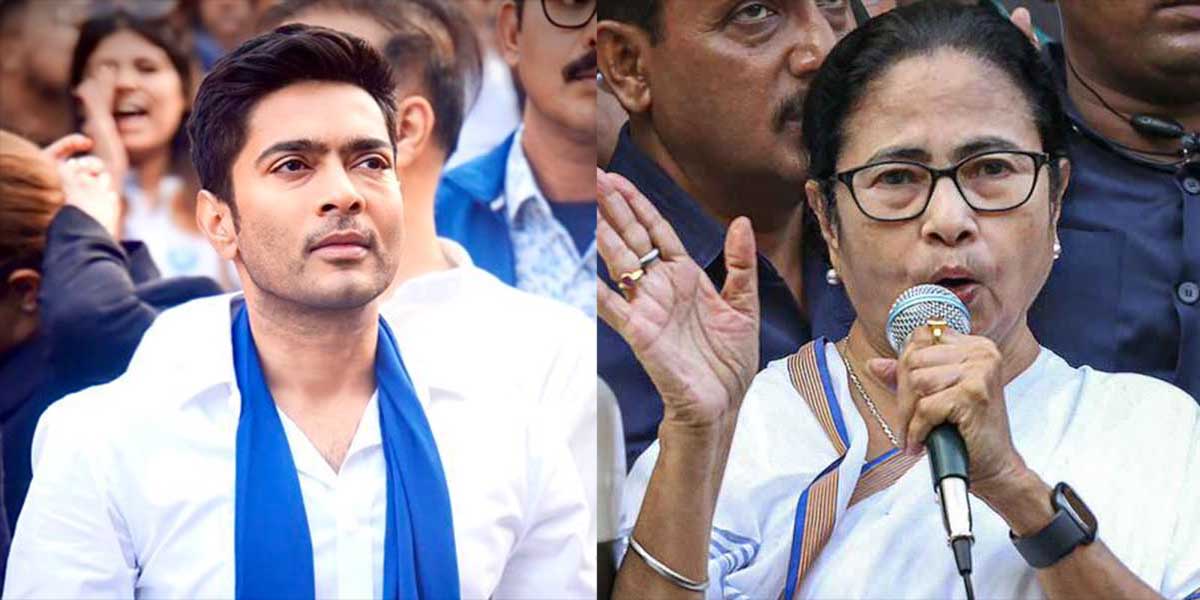
Is Mamata Banerjee changing her approach towards PM Modi? There has been speculation within the Trinamool Congress (TMC) that her nephew and party national general secretary, Abhishek Banerjee, is advising her to tone down her criticism of the PM and the BJP, as he believes the ED and CBI are closing in on him in various corruption cases. For some time now, Mamata’s directive to TMC leaders not to make any personal comments against Modi has been followed by them. Abhishek has been particular that the TMC should not appear to be disallowing the BJP from functioning as an Opposition party by using police and administration. The latest episode involving Abhishek joining one of the MPs’ delegations for global outreach after Operation Sindoor has caused a surprise. A day after Didi withdrew her MP, Yusuf Pathan, who had been named by the government, from a multi-party delegation, she nominated Abhishek to replace him. This was after Parliamentary Affairs Minister Kiren Rijiju reached out to Mamata to “pacify her”. Mamata is learnt to have told Rijiju that the Centre should have consulted the party instead of unilaterally picking Pathan. After Rijiju’s call, she also announced that a five-member team will visit Srinagar, Poonch and Rajouri to express solidarity with the people affected by cross-border shelling by Pakistan. She is sending Rajya Sabha MPs like Derek O Brien and Sagarika Ghose to J&K. It is being said Mamata withdrew Yusuf Pathan from the delegation only because she hasn’t been happy with him. She had found the former cricketer who hails from Gujarat is an absentee MP. He was nowhere to be seen in the aftermath of Murshidabad violence. He is apparently getting away only because of his proximity to influential bhaipo Abhishek.

Tensions have erupted within the BJP West Bengal unit following senior leader and former state president Dilip Ghosh’s controversial appearance at the inauguration of the Jagannath temple in Digha where he shared the stage with chief minister Mamata Banerjee. The temple event had been boycotted by the BJP in light of recent communal tensions in Murshidabad. Ghosh’s presence — along with his wife Rinku Ghosh — was quickly disowned by the party’s current state leadership. BJP state president Sukanta Majumdar distanced the organisation calling it his “personal choice.” Others, including senior leaders Swapan Dasgupta and Soumitra Khan, launched more pointed attacks, with Dasgupta branding the move a “betrayal.” The backlash has reignited tensions between Dilip Ghosh and sections of the BJP leadership, especially those who joined the party after 2021. Ghosh accused defectors of sidelining long-time loyalists like him and also claimed that many grassroots workers have become disillusioned under the current leadership. Ghosh’s veiled remarks were seen as a dig at Suvendu Adhikari. Ghosh pointed out that many had once thrived under Didi’s leadership and lacked the credibility to question him. He urged the party to recall its past alliances with Banerjee during the Vajpayee-era. Despite the controversy, Ghosh reiterated his loyalty to the BJP but cautioned against internal sabotage, blaming leadership failures for the party’s declining momentum in Bengal. He highlighted his own role in the party’s past growth with 18 MPs winning during 2019 Lok Sabha Polls and 77 MLAs during 2021 Assembly Election and questioned why that progress had stalled since his exit from the top post.
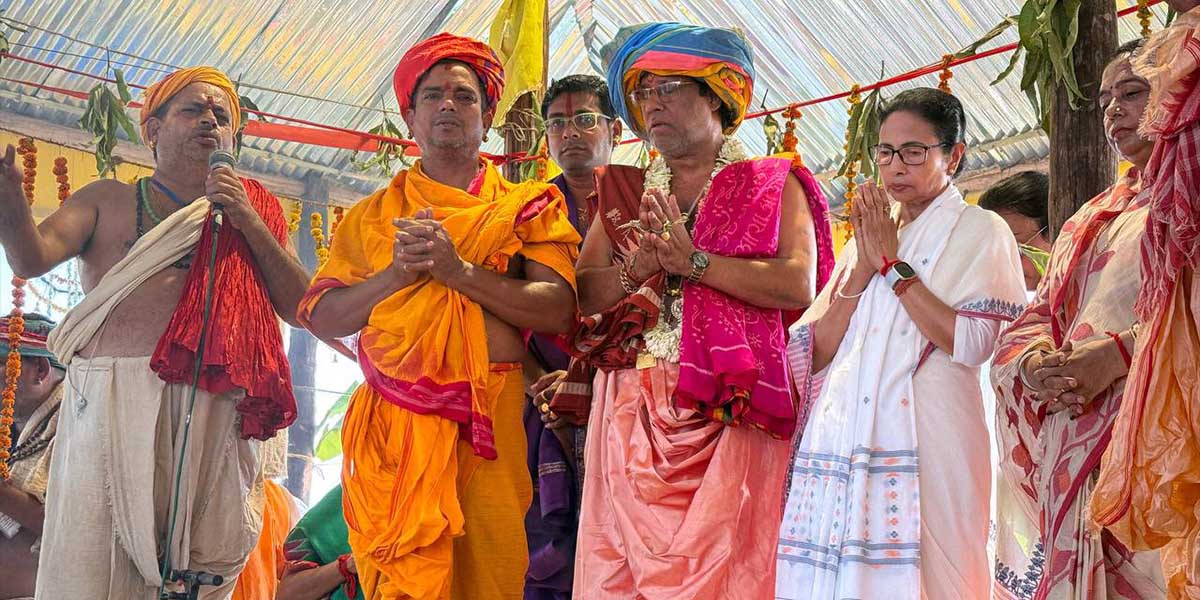
Looks like the West Bengal Chief Minister Mamata Banerjee is playing the balancing game. She has inaugurated the newly constructed Jagannath Temple, officially named “Jagannath Dham,” in Digha on the auspicious occasion of Akshaya Tritiya. Didi referred to the arrival of Jagannath in Bengal as “a long-awaited dream fulfilled.” A Vedic yagya commenced on April 25 at the temple, with offerings made to the guardian deity “Vastu Purush” to purify the temple and ward off evil. Mamata, who personally oversaw the final rituals and ceremonies in Digha on April 28, will serve as the ‘pradhan yajaman’ (chief patron) during the agni ritual, culminating in the ‘purnahuti’ — the final sacred offering. On April 30, she conducted the pran-pratishtha (ritual infusion of life into the deity) and performed the temple’s ceremonial opening, followed by the first aarti. It may be recalled that Mamata boycotted the Ayodhya event. Now BJP and RSS leaders are dismissing the Digha temple as a mere “cultural center” with questionable spiritual legitimacy. Meanwhile, the TMC government headed by Mamata Banerjee feels that Digha will witness an economic surge in hospitality, transport and tourism, similar to Ayodhya. Roads have been improved, accommodations readied, and security strengthened. Looks like Didi is shaping a narrative that blends devotion with development ahead of the 2026 Bengal Assembly elections.
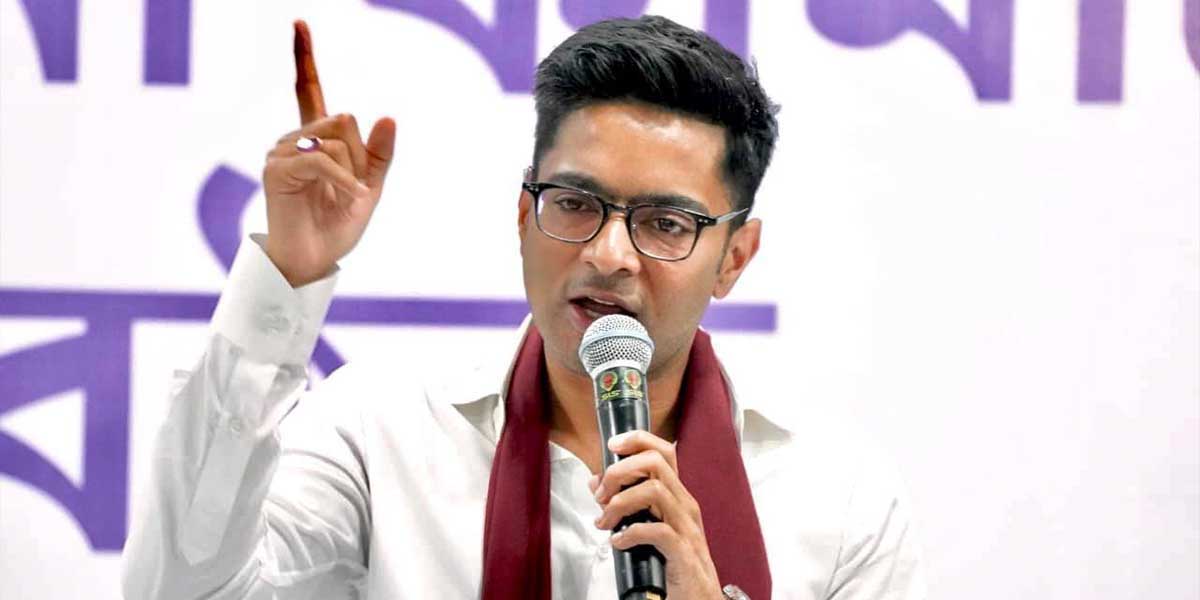
The recent Supreme Court order invalidating the West Bengal government’s 2016 appointment of more than 25,000 teachers and non-teaching staff triggered off sitting demonstrations and agitation in the state. During the course of agitation what came to the fore was, the Trinamool Congress’ (TMC) National General Secretary Abhishek Banerjee was not countering the attack from the front. He consciously stepped away from the frontline, raising serious questions about the cracks within the party’s top leadership. It is also obvious that Abhishek’s public appearances have been reduced to congratulatory social media posts for local football clubs and the occasional endorsement of police efforts in his constituency. His last major political intervention was a virtual meeting on March 15. Since then, his near-total disengagement from party affairs has triggered anxiety within TMC’s rank and file, many of whom now openly question the party’s leadership strategy. The official narrative claims Mamata Banerjee has asked Abhishek to focus on national politics. But Abhishek’s loyal followers say that he was deliberately being sidelined from talking on the school recruitment scandal. Instead the State President Subrata Bakshi was given the job of doing all the heavy weight lifting on this front. Sure enough, his exclusion has left his loyalists demoralised. Further, Abhishek’s social media activities, particularly his praise for Diamond Harbour police during communal tensions and earlier disapproval of police actions post the RG Kar Hospital incident, are being interpreted as subtle criticism of the state government’s performance. These posts have drawn further scrutiny and are being read by Opposition parties as indirect jabs at the administration led by Didi.

In a strategic move ahead of the 2026 West Bengal Assembly elections, chief minister Mamata Banerjee has revived the ‘Mentor’ position within Zilla Parishads, a role previously discontinued after the last panchayat elections. The State Panchayat Department’s initiative has already been implemented in districts including Howrah, Hooghly, East Midnapore, Bankura, Birbhum, and Bardhaman. While officially recognised, the ‘Mentor’ designation was initially introduced by the Trinamool Congress (TMC) following their rise to power, primarily to accommodate influential leaders who could not be placed in formal governance roles. However, the role was quietly laid dormant after the 2023 panchayat polls. The revival of these positions is widely interpreted as a strategic move by Didi to strengthen the party’s grassroots organization. Party insiders suggest it serves to provide senior leaders with influential roles, potentially mitigating factional rivalries. Notable appointments have included figures such as former state minister Rajib Banerjee (Howrah), former minister Akhil Giri (East Midnapore), and former MLA Arup Khan (Bankura). However, objections have reportedly surfaced in at least two districts, with concerns that these mentors, despite lacking formal administrative authority, could become alternative power centres. This raised fears of potential disruptions to both Panchayat operations and internal party dynamics, given the mentors’ individual support bases. Some party leaders also believe the revival is a pre-emptive measure to manage the growing number of MLA ticket aspirants for the Assembly poll. Adding to the political complexity, the TMC has yet to implement a long-pending organizational reshuffle. Discussions indicate that Didi may soon expedite this process, which is expected to include changes within several party wings.

The electoral victory of former cricketer Yusuf Pathan from Baharampur rekindled the long-standing debate over whether celebrity status alone could shape an effective politician. Pathan, a political novice, was fielded by the Trinamool Congress (TMC)—reportedly at Abhishek Banerjee’s behest—and went on to defeat Congress heavyweight Adhir Ranjan Chowdhury. However, his silence during unrest in Murshidabad led to criticism of his political detachment. A social media post of him sipping tea amid tensions drew backlash, highlighting concerns about celebrity MPs’ lack of engagement. This reflected a broader trend of celebrities being fielded for name recognition or to balance party equations, often without expectations of long-term political commitment. While some like Kirti Azad transitioned successfully, others faded from active roles. TMC’s Satabdi Roy, Dev, June Maliah, Sayoni Ghosh, and BJP’s Locket Chatterjee, Agnimitra Paul showed sustained dedication. Conversely, Moon Moon Sen and Sandhya Roy won seats but failed to leave a mark. BJP stars Hema Malini and Sunny Deol also faced absenteeism charges. Among Pathan’s cricketing peers, Lakshmi Ratan Shukla exited politics; Manoj Tiwary, despite a ministerial post, remained largely inactive. BJP’s Ashok Dinda, however, stayed visible. Though TMC defended Yusuf, arguing that the unrest occurred in a Congress MP’s area, even party insiders admitted only a few celebrities remained actively engaged. BJP’s Dilip Ghosh remarked that most celebrities joined politics for perks, not service. CPM’s Mohammed Salim emphasized that real leadership demanded grassroots work and personal sacrifice—values rarely found overnight.

In a calculated political offensive ahead of the 2026 West Bengal Assembly elections, chief minister Mamata Banerjee has strongly opposed the Centre’s proposed Waqf (Amendment) Act 2025, positioning herself as a defender of minority rights. Speaking at a meeting with Muslim clerics and community leaders, she asserted that the bill threatens religious freedoms and undermines constitutional values. The move is widely seen as an attempt by the Trinamool Congress to solidify its traditional Muslim support base, which accounts for nearly 30% of the state’s electorate and holds sway in key districts like Murshidabad, Malda, and North Dinajpur. Banerjee framed the proposed law as part of the BJP-led government’s broader agenda to interfere in religious matters and weaken India’s pluralistic framework. However, internally, the TMC remains divided over the strategy. While some leaders view the issue as an opportunity to reinforce the party’s core vote bank amid the BJP’s intensifying Hindutva campaign, others express concern that an overt focus on religious identity could alienate moderate and secular voters. Meanwhile, Mamata’s remarks have drawn sharp criticism from the BJP, which accused the TMC of leveraging communal narratives for political mileage. On the other hand, Mamata’s ability to appeal to the Muslim vote comes at a cost for Congress and the Left, who have traditionally relied on Muslim support in Bengal. The Left, in particular, has faced criticism for failing to effectively challenge Mamata’s rising influence among the Muslim community.
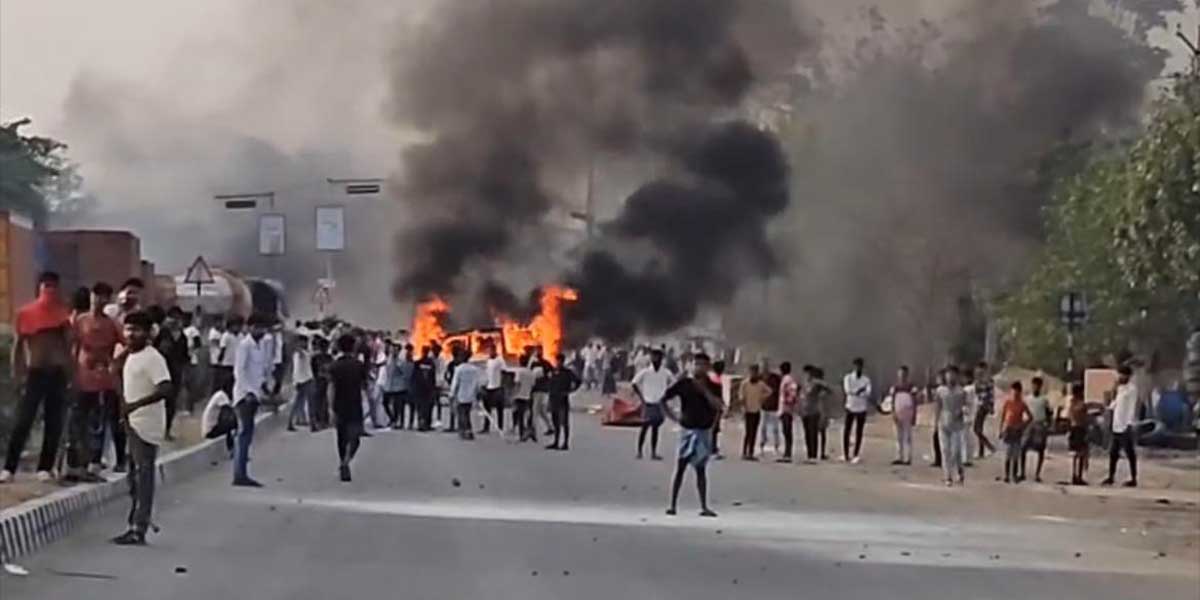
Two months after President’s rule was imposed in Manipur, West Bengal’s Murshidabad riots converted Hindu families into refugees pouring in exodus to neighbouring Malda district. Possibilities of imposition of Central rule in West Bengal have turned probable now as mobs of masked (mostly juvenile delinquents) carried out coordinated attacks upon the majority community. Hindu homes were targeted with stones, sticks, sickles by rampaging mobs threatening mass rapes of women in the TMC administered state. They were apparently only venting anger over amendments to the Waqf Board law legislated by the Indian parliament last week. On Friday (Apr 12), right after Muslim congregations offered prayers, coordinated protests were witnessed across Mamata Didi’s West Bengal followed by the targeted Murshidabad terror attacks upon Hindu families that continued well into Saturday. Highly placed sources tell shortpost.in there is clear and present danger of West Bengal being engulfed in communal frenzy as part of the tool kit being perpetrated from across the borders (from Bangladesh and Pakistan). “The BJP led Central government bit the bullet in Manipur, sacking its own party CM Birendra Singh, imposition of President’s rule there. West Bengal is steadily deteriorating over Mamata Didi’s reluctance to act against Muslim hardliner elements (including illegal Bangladeshis and Rohingya immigrants) comprising her core voter base,” sources reveal adding, “For long the possibility of WB’s balkanization into north and south Bengal over communal fault-lines has loomed large. Central rule may become the only option to prevent disintegration of India’s Bhalo Bhashi state. “The Calcutta High Court also ordered immediate deployment of central forces in Murshidabad district. after the incidents of widespread violence, vandalism and arson in the region over the Waqf (Amendment) Act 2025.

A significant internal conflict within the Trinamool Congress (TMC) escalated, marked by the abrupt cancellation of a key disciplinary meeting in the West Bengal Assembly. This cancellation, despite prior notices, signalled a deepening party crisis, attributed to the burgeoning tensions and power struggles among senior MPs. The disciplinary committee meeting was intended to address the issue of absenteeism among MLAs, with threats of stern action against over 30 absentee MLAs, including ministers like Manoj Tiwari, during the final two days of the Budget Session. The meeting, intended to address MLA absenteeism, was postponed indefinitely by chairman Shovandeb Chattopadhyay. The catalyst was a public attack by MP Kalyan Banerjee against Saugata Roy, Kirti Azad and Mahua Moitra accusing them of unethical conduct. Banerjee’s personal accusations referenced past controversies involving Roy’s involvement in the Narada sting operation and Moitra’s suspension from Parliament. Prior to Banerjee’s outburst, Moitra reportedly sent a complaint to party chief Mamata Banerjee. Kalyan Banerjee alleged Moitra attempted to have him arrested. Moitra’s camp denied this, claiming she sought security assistance after verbal harassment. Saugata Roy publicly supported Moitra, criticizing Banerjee for overstepping his authority. Banerjee retaliated, labelling Roy “a man with no character.” The disciplinary meeting’s cancellation was seen as a strategic retreat amid this chaos. Party sources acknowledged that disciplining MLAs would be counterproductive while MPs publicly flouted discipline. An insider stated that any action now would only embolden others to question the central leadership. All eyes are on Mamata Banerjee’s response, whether it involves public statements, suspensions, or internal reshuffling.
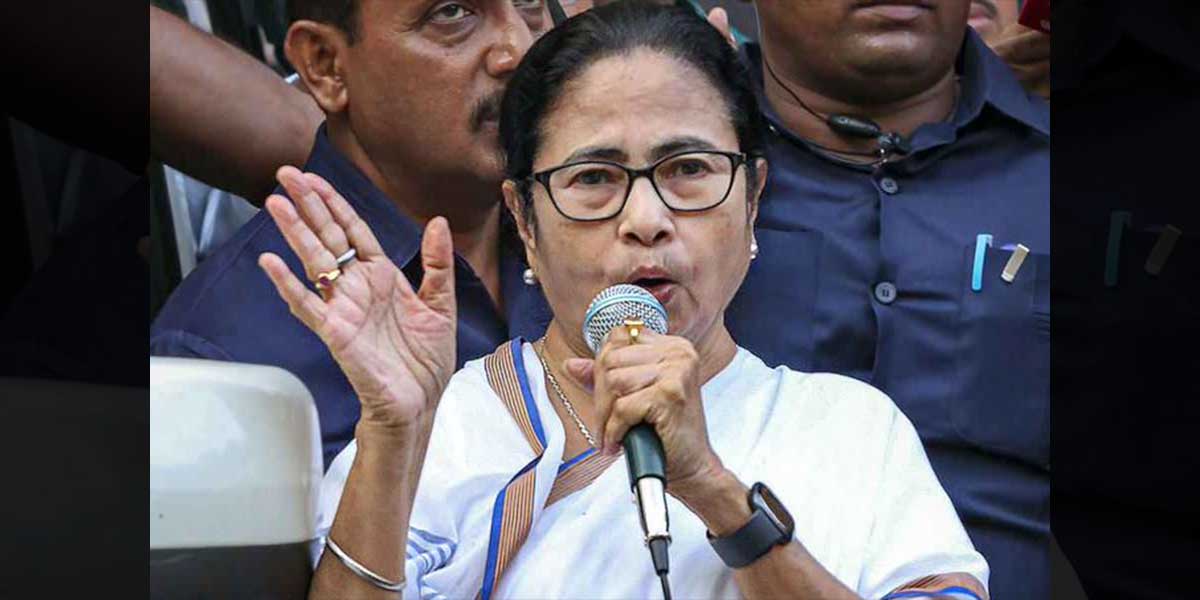
West Bengal chief minister Mamata Banerjee and her party the Trinamool Congress (TMC) face a significant challenge following the Supreme Court’s decision to uphold the Calcutta High Court’s annulment of over 25,000 teachers and non-teaching staff appointments in West Bengal. The SC’s ruling, which cited a selection process “tainted beyond resolution” and mandated a fresh recruitment within three months, has prompted Banerjee to take immediate action. She has pledged to meet with affected individuals on April 7, promising comprehensive support. In her public address, Banerjee sought to deflect blame onto the CPI(M) and the BJP, while emphasizing the possibility of rectifying the situation through the mandated new recruitment process. She also highlighted the independence and efficiency of the newly formed School Service Commission (SSC) and drew parallels to the Vyapam scam, attempting to shift the narrative. However, the TMC is confronting a growing image problem, compounded by the recent R G Kar rape and murder case. Insiders express concern that further unfavorable court rulings, particularly regarding the Other Backward Classes (OBC) matter and another teacher-related case, could exacerbate the situation. Despite these challenges, some TMC leaders remain optimistic, citing the party’s resilience and the time available before the next Assembly elections. They point to the BJP’s reduced Lok Sabha seat count in West Bengal, despite the earlier High Court ruling, as evidence of limited electoral impact. Conversely, some academics suggest that the BJP’s approach might inadvertently bolster the Left’s standing, as aggressive criticism of the TMC could revive support for the Left.
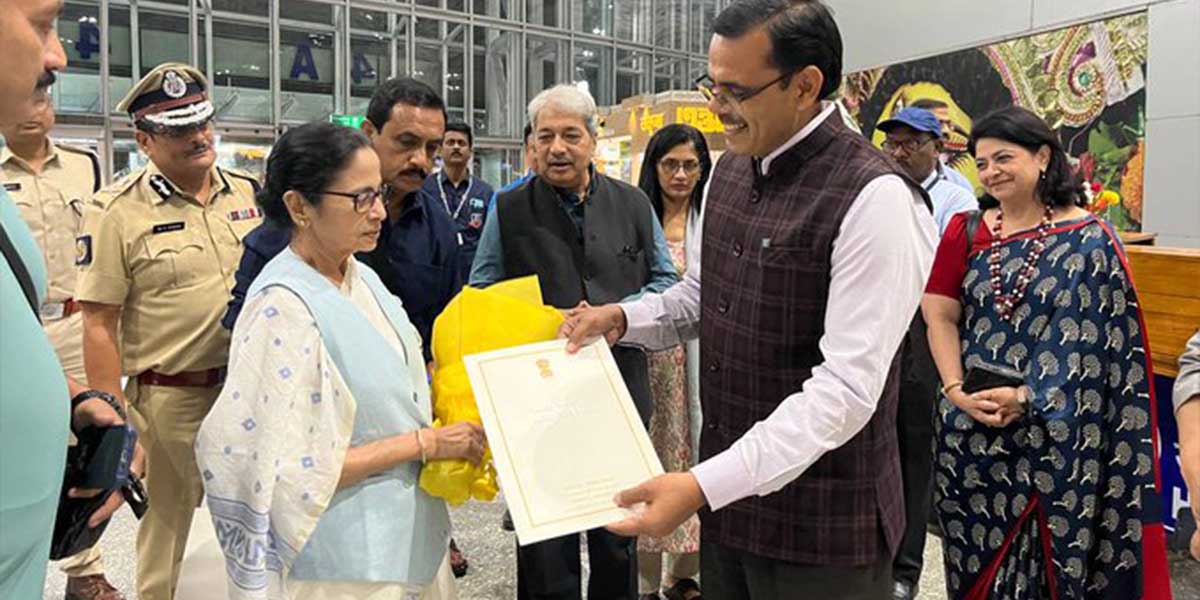
In a significant turn of events within the Trinamool Congress (TMC), West Bengal chief minister Mamata Banerjee has signalled a shift in political succession, distancing her nephew, Abhishek Banerjee, from the role of her heir apparent. Party insiders suggest the move is a strategic recalibration aimed at reinforcing her authority while reshaping the party’s leadership dynamics. For years, Abhishek was considered the party’s ‘crown prince.’ However, tensions began to mount as Abhishek pushed for generational change, advocating for age limits in politics. Party veterans, many of whom have been with Didi since the party’s inception, viewed Abhishek’s assertiveness as a threat. Reports of his close aides reaching out to BJP leaders in Gujarat and Uttar Pradesh further deepened suspicions. This prompted Didi to publicly rebuke him and strip him of any assumptions of succession. Adding to the discord, Abhishek’s response to the RG Kar rape-murder case in August 2024 saw him challenge the administration’s inaction, pushing for decisive action. His direct engagement with Kolkata police further irked Mamata, reinforcing her belief that he was overstepping his boundaries. Interestingly, as Didi embarks on her UK tour on Saturday morning, set to return to Kolkata on the night of March 29, she has formed a task force comprising the party’s state president and senior leader, Subrata Bakshi, along with Abhishek, to oversee government affairs while also delegating party responsibilities in her absence. Political observers note that this move sends a strong message within the party, reinforcing the concept of “joint leadership” that balances both senior and young leaders.
Bengal BJP is grappling with a significant internal crisis as it faces a series of resignations, defections, and internal dissent. Once boasting 77 MLAs after the 2021 state assembly elections, the party’s strength has now dwindled to 65, with concerns looming over the loyalty of several MLAs. The BJP’s legislative strength began to shrink soon after the 2021 assembly elections. Initially reduced to 75 MLAs when two elected members, also serving as MPs, resigned as the party had failed to secure power. Since then, eight more MLAs have defected, one passed away, and another resigned after winning a parliamentary seat in 2024. Tamluk MLA Tapasi Mondal’s defection to ruling TMC was particularly alarming as she belonged to BJP leader Suvendu Adhikari’s stronghold. In North Bengal, Kurseong MLA Bishnu Prasad Sharma has openly criticized the BJP’s leadership for failing to deliver on promises of special status for the Darjeeling Hills. In Nadia and North 24 Parganas, BJP MLAs in these regions, particularly those with ties to the influential Matua community, have kept the party anxious. Before the 2024 Lok Sabha elections, two MLAs were given parliamentary tickets to prevent them from defecting, yet both failed to win. The influence of regional leaders like Ananta Maharaj in North Bengal has complicated BJP’s internal dynamics. With the 2026 state assembly elections in sight, the BJP faces an urgent need to stabilize its ranks. The party’s ability to manage dissent, especially in politically sensitive zones like North Bengal and Matua-dominated regions, will be critical. While the TMC’s aggressive poaching strategy has played a role, the BJP’s own failure to manage internal grievances and regional dynamics has compounded its problems.
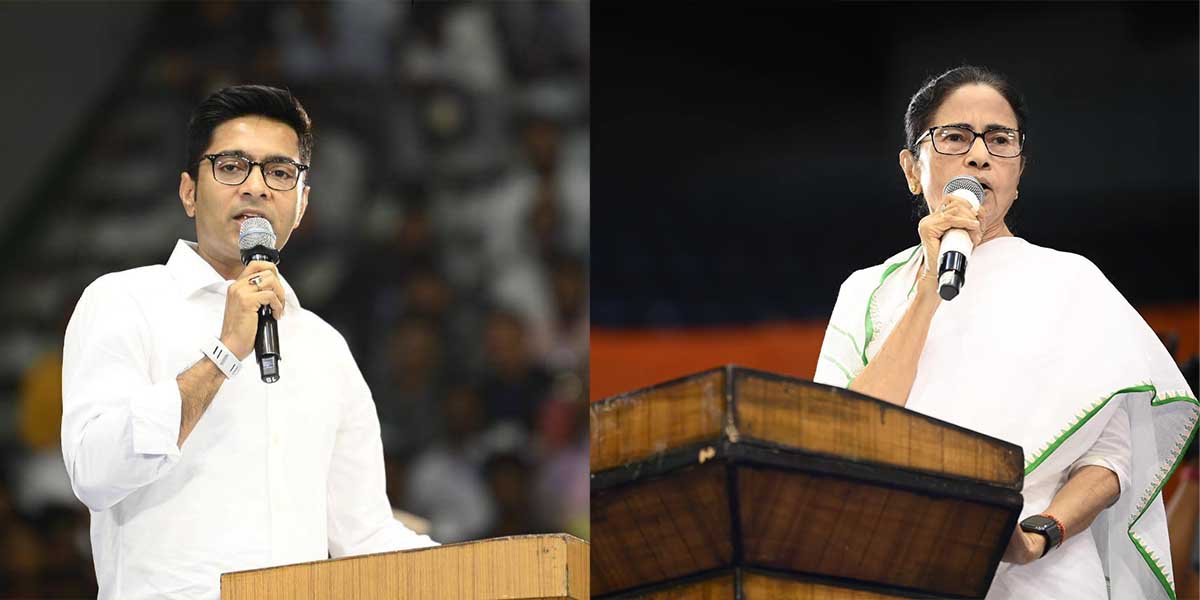
In a high-stakes display of political manoeuvring, West Bengal chief minister and Trinamool Congress chairperson Mamata Banerjee took center stage in a highly anticipated party meeting, reaffirming her command over the party. With the 2026 State Assembly election looming, Mamata made it clear that her party will come back to power with resounding victory for the fourth term garnering over 215 seats. All eyes were on the long-anticipated reunion between Didi and her nephew, TMC’s national general secretary Abhishek Banerjee. After months of speculation about internal rifts, their joint appearance was meant to silence whispers of discord. Abhishek, who had been conspicuously absent from key party affairs. So, Mamata’s strategic decision to place him as just a member of the critical 35-member voter list review committee—led by state president Subrata Bakshi—raised eyebrows. Adding to the intrigue, four relatively new MPs—Yusuf Pathan, Sagarika Ghosh, Kirti Azad, and Shatabdi Roy—were given speaking slots ahead of Abhishek, breaking the usual tradition where he directly precedes Didi at party events. The move hinted at a recalibration of hierarchy within the party, reinforcing Mamata’s supreme authority. Equally significant was Mamata’s shifting stance on I-PAC, the political consultancy firm long associated with Abhishek’s camp. Once wary of its influence, she had earlier instructed party members to withhold information from its representatives, leading to speculation that she was distancing herself from Abhishek’s strategies. However, recent meetings between Mamata and I-PAC’s current head, Pratik Jain, have reversed this perception. She has now warned against speaking negatively about the firm, a move seen by many as a sign of reconciliation—or at least, strategic necessity—in the run-up to 2026.
According to the West Bengal chief minister and Trinamool Congress super boss Mamata Banerjee, the absence of alliance between AAP and Congress is the main reason for the defeat of AAP by the BJP in the Delhi assembly elections. But nephew Abhishek Banerjee, party’s general secretary differs. He believes that even if such an alliance had been formed, it would not have made a significant impact. According to him, at best, the alliance could have influenced the results in four or five seats, but it would not have altered the overall outcome. After 27 years, the BJP has stormed to power in Delhi, winning 48 out of 70 seats. AAP secured 22 seats, while Congress for the third time failed to win any seat. Didi voiced that if Congress had been more flexible in seat-sharing with AAP, the results could have been different. She also cited Haryana as an example, arguing that just as AAP’s actions hurt Congress in Haryana, Congress did the same to AAP in Delhi. However, Abhishek maintained that public sentiment was the most crucial factor; Delhi voters wanted change, and AAP failed to effectively counter the BJP’s narrative. Referring to West Bengal’s example, Abhishek stated that when the BJP had claimed that the central government was sending funds, but the TMC was not distributing them to the people, TMC launched a counter-campaign, challenging the Centre to release a white paper on the funds. Although Didi blamed both Congress and AAP for the lack of an alliance, she made it clear that TMC would contest alone in Bengal and return to power with a two-thirds majority.
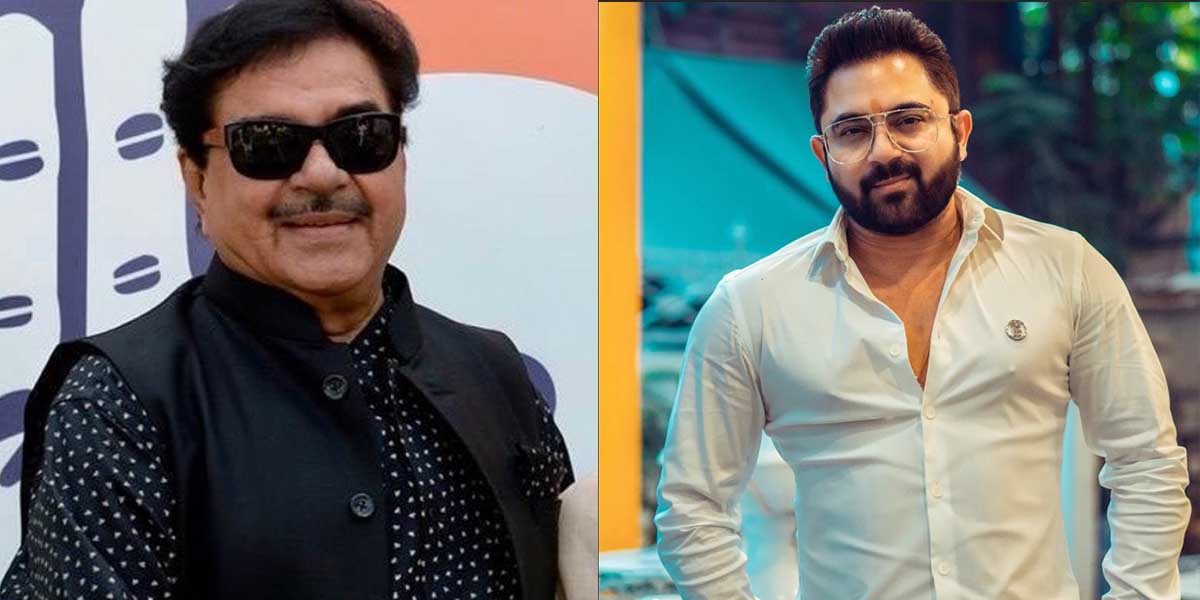
The Trinamool Congress (TMC) has reaffirmed its stance on party discipline, taking decisive action against three leaders whose public statements embarrassed the party. However, the party’s inaction against three prominent actor-turned-legislators and parliamentarians despite their controversial remarks has raised questions about a perceived selective approach to discipline. TMC’s disciplinary committee acted against MLAs Humayun Kabir, Narayan Goswami and Madan Mitra. Kabir’s call to appoint the party’s National General Secretary and Diamond Harbour MP Abhishek Banerjee as Deputy Chief Minister with control over the police department did not sit well with the leadership. Goswami faced scrutiny after making incoherent statements and singing at a public event. Mitra triggered controversy by accusing the party’s advisory agency, I-PAC, of extortion. All three leaders either faced show-cause notices or issued public apologies to mitigate the damage. However, the party has remained silent on controversial statements made by Chandipur MLA Soham Chakraborty and MPs Rachna Banerjee and Shatrughan Sinha. Soham contradicted the party’s official stance on the high-profile rape and murder case at R G Kar Medical College by suggesting that the convicted individual may not have acted alone. Sinha, on the other hand, stirred controversy by advocating for a nationwide ban on non-vegetarian food, aligning with the ideological stance of the BJP. The disciplinary committee’s swift response to one group of leaders while ignoring others raises questions about selective approach. Is the party hesitating to take action against its celebrity MPs due to their public appeal? Or is there an underlying strategy to maintain a delicate political balance?
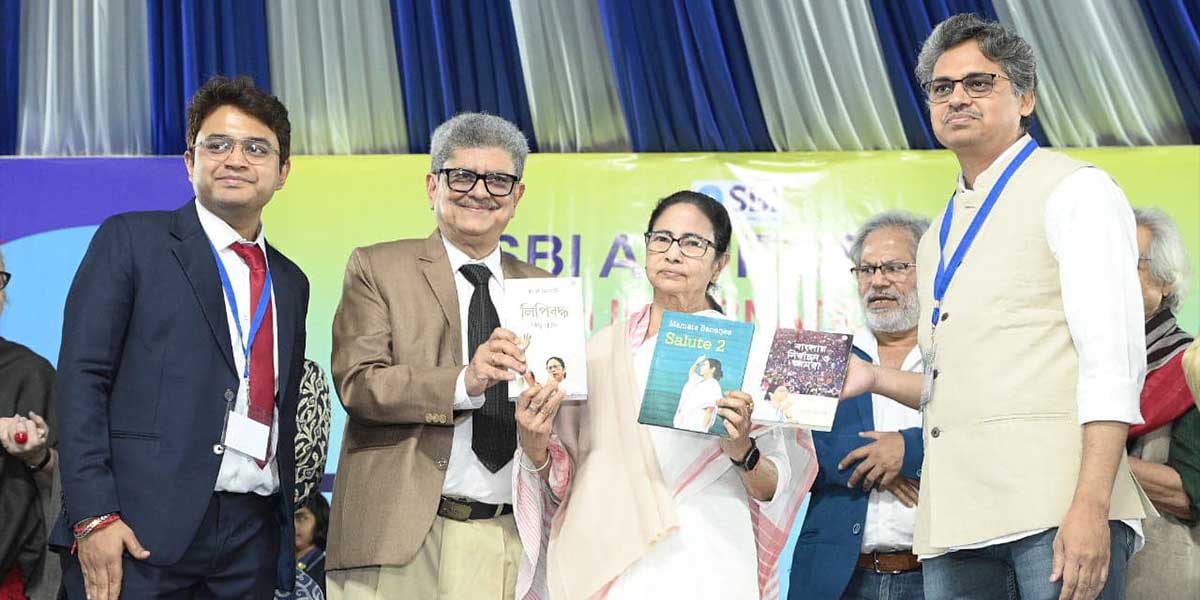
West Bengal Chief Minister Mamata Banerjee’s newly released book, Banglar Nirbachon O Amra (Bengal’s Elections and Us) has squarely blamed the Congress party for the BJP’s return to power in the 2024 Lok Sabha elections. With the book’s release at the 48th Kolkata International Book Fair, it has become clearer that Didi has decided that her party TMC will go alone in the 2026 West Bengal State Election. In the book, Didi argues that the Opposition alliance, INDIA Bloc, failed due to the grand old party’s rigidity and weak leadership. She further claims that the Congress won its seats in 2024 only because of support from other INDIA Bloc allies. She accuses the Congress-Left alliance in West Bengal of secretly helping the BJP by creating a larger anti-TMC front, which ultimately benefited the saffron party in the state. The 2024 Lok Sabha elections saw the BJP losing ground in West Bengal. The party, which had secured 18 seats in the state in 2019, saw its tally reduced to 12 in 2024. On the other hand, TMC improved its performance, winning 29 out of 42 seats. The Congress managed to win only one seat, while the Left failed to open its account. Incidentally, Mamata has stuck to her policy of supporting the strongest party against BJP, by sending its MP, actor-turned-politician Shatrughan Sinha, to campaign for the Aam Aadmi Party (AAP) in the upcoming Delhi Assembly elections. Political analysts see this as Mamata’s indirect message to Congress. TMC’s participation in AAP’s campaign indicates its commitment to the INDIA Bloc but also highlights the friction between the Opposition allies, especially after Didi’s criticism of Congress dominance within the coalition.

Trinamool Congress General Secretary and MP Abhishek Banerjee’s recently launched healthcare initiative, Sebaashray, seems to have raised a lot of questions about the existing healthcare landscape in West Bengal. By introducing a programme that delivers free medical services at the grassroots level, Banerjee has not only demonstrated a proactive approach to addressing healthcare gaps but has also sparked debates on the adequacy and accessibility of state-run facilities. In a message via social media Abhishek said, “Administration cannot be run with words alone; it requires action. Actions that can transform lives.” The party’s second-in-command highlighted the impact of Sebaashray by sharing statistics on its beneficiaries. Launched on January 2, 2025, in his parliamentary constituency, the initiative has already served 341,000 people, drawing significant attention and popularity, with many traveling from distant areas to access its services. The programme’s success has also prompted scrutiny, particularly regarding the necessity of a separate initiative alongside the state government’s existing free medical services. Responding to such concerns, Abhishek clarified that the initiative is not intended to replace or compete with the state’s healthcare framework but to complement it. While acknowledging the state’s progress over the past 10-15 years in establishing primary health centres and super-speciality hospitals, he explained that his initiative focuses on delivering advanced treatment directly to villages through a cluster-based model. Abhishek said that similar programmes would be replicated across West Bengal over a period of time. The initiative, however, has not escaped criticism. CPI (M) leader Sujan Chakraborty argued that Sebaashray signals the inadequacy of the state government’s healthcare delivery at the local level.
Once a political powerhouse, CPI(M) is grappling with organizational crisis in Kolkata, as highlighted in the report presented at its district conference. The party now faces a stark disparity in its presence across South and North Kolkata, with the party nearly vanishing in several areas, particularly the slums. While select areas show some signs of organizational activity through fund collection, magazine sales, and event turnouts, the situation in the northern parts of the city is dire. The report describes South and North Kolkata as “two extremes” in terms of party strength. Neighborhoods with significant minority populations, such as Rajabazar, Kidderpore, and the port areas, have witnessed a sharp decline in CPM’s influence. In South Kolkata’s refugee colonies, the growing presence of the BJP further erodes the party’s traditional support base. However, the most concerning trend for the party’s district leadership is its diminished presence in slums across areas like Beleghata, Maniktala, Chetla, Ballygunge, and Park Circus. On the contrary, Trinamool Congress leaders and MLAs, such as Paresh Pal in Beleghata and Firhad Hakim in Chetla, have secured critical voter base in the slums. Efforts to revive the party’s presence through initiatives like the Slum Federation have yielded little success. A reluctance among the younger generation to engage in grassroots-level work has compounded the crisis. The party also faces significant challenges in attracting women and individuals under the age of 31. The report highlights systemic failures in promoting women within the organization contrasting sharply with the ruling Trinamool’s success. The findings underscore the deep-rooted issues facing the CPI (M) in Kolkata, from internal structural challenges to the changing political landscape dominated by the TMC and BJP.
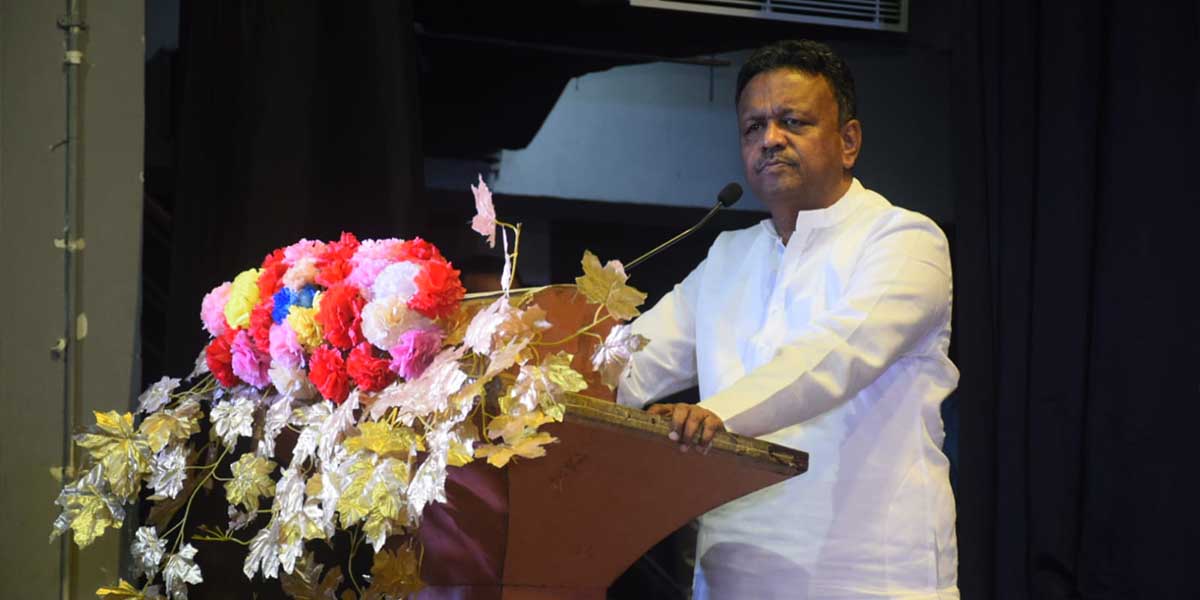
West Bengal politics was set ablaze recently after a statement by Firhad Hakim, senior minister of Mamata Banerjee government. Addressing a gathering of minority students, Hakim, a trusted lieutenant of Didi remarked that minorities could soon become the majority, prompting sharp reactions from political circles and his own party, the Trinamool Congress. The TMC, quick to distance itself from Hakim’s remarks, faced an internal and external uproar. Party leaders expressed disapproval, with several calling the comments “unnecessary” and “potentially divisive.” Opposition parties, led by the BJP, accused Hakim of fuelling communal tensions and promoting a polarising narrative in the state. Hakim’s controversial statement marks another instance in a series of remarks that have landed him in trouble over the years. In 2016, he faced backlash for referring to the Garden Reach constituency as a “mini-Pakistan”. More recently, his description of a BJP candidate during a campaign as an “item” also drew severe criticism. Sources within the TMC revealed that Didi, who relies heavily on Hakim for political and administrative matters, has expressed dissatisfaction with his comments and reminded him of his past controversies that caused embarrassment to the party. In an unusually stern response, she advised him to exercise caution in his public statements to avoid further political damage. Hakim’s daughter Priyadarshini, a youth leader within the party, defended her father, asserting that his statement in Urdu had been misinterpreted. Political analysts say that TMC faces the dual challenge of containing the fallout from Hakim’s remarks while steering the focus back to governance and development in the run-up to crucial elections.
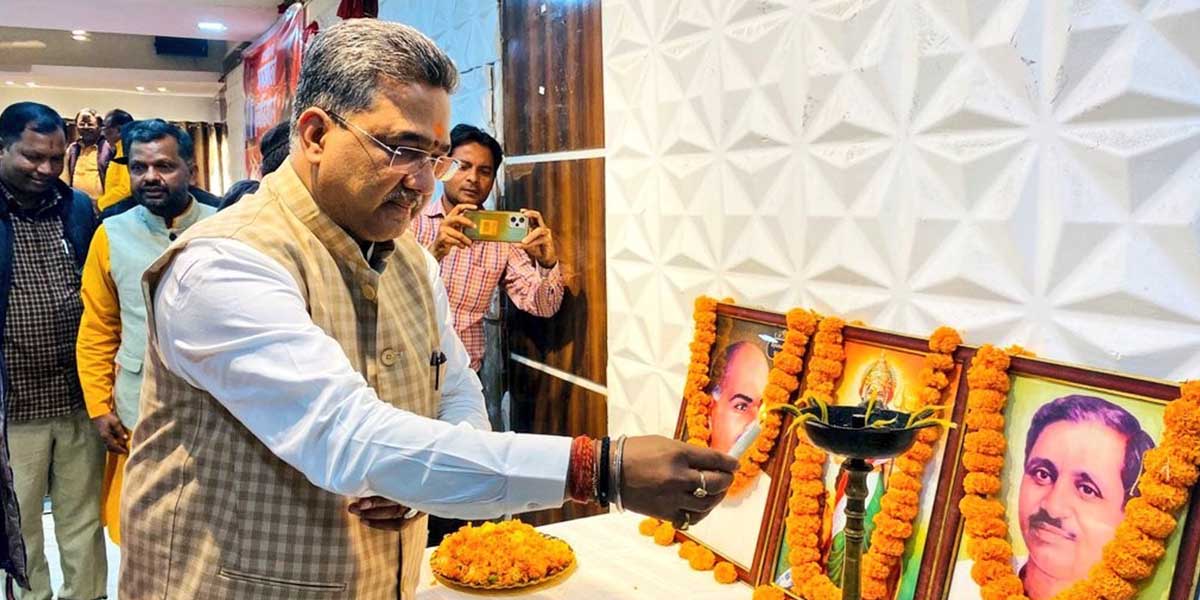
The Bengal unit of BJP is under fire for its repeated failures to meet membership targets. The latest membership drive, aimed at enrolling 1 crore new members in the state, has fallen drastically short, leading to severe reprimands from party heavyweights, including Amit Shah. It may be recalled that in the 2021 Assembly elections, the party had set an ambitious goal of winning 200 seats but won only 77. Subsequently, seven MPs crossed over to Trinamool Congress thereby reducing their numbers to 70. Recently, the party suffered a loss in the Madarihat bypoll, further dampening its prospects in the state. The current membership drive, which had a November 30 deadline, was a critical initiative to strengthen the party’s grassroots. However, Bengal BJP MPs and MLAs have failed to make significant progress, prompting the leadership to extend the deadline to December 31. At an emergency meeting in Delhi, Sunil Bansal, BJP’s central general secretary and in-charge of West Bengal, pulled up several Bengal MPs, including Shantanu Thakur, Jayant Roy, and Soumitra Khan. Reports suggest that none of them could enrol more than 50,000 new members, far below the 1-1.5 lakh target set for each MP. Bansal, a close ally of Amit Shah and a frontrunner for the position of BJP’s national president, has been tasked with rejuvenating the Bengal unit after the debacle in the 2021 elections. Internal assessments by the BJP indicate that the party’s organisational structure in Bengal is in disarray, with North Bengal—a former stronghold—facing significant challenges.
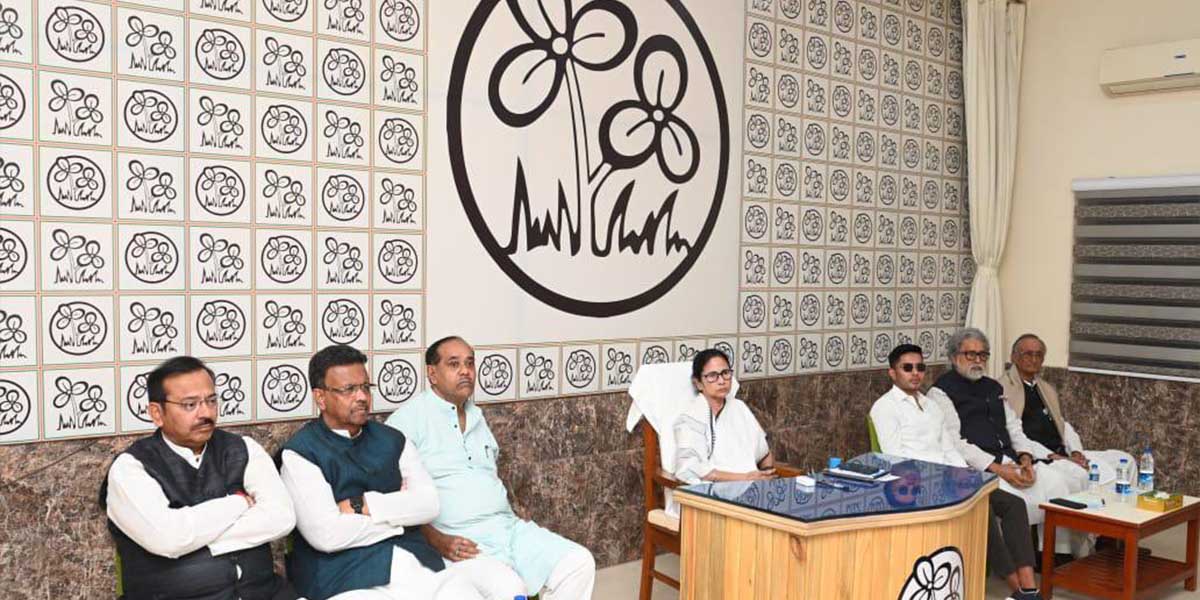
West Bengal Chief Minister Mamata Banerjee has issued a stern directive to her party’s MLAs and leaders, instructing them not to share any information with political consulting agencies. Instead, she emphasized that they are welcome to communicate directly with the party’s senior leadership. The move comes against the backdrop of rising tensions within the TMC, which, according to party insiders, stem from party’s general secretary Abhishek Banerjee’s growing influence. Abhishek, Mamata’s nephew is perceived to be transitioning into a more prominent role within the organization, causing unease among party veterans and Mamata loyalists. At a recent meeting with TMC legislators, Didi made it clear that she remains the party’s ultimate authority. She noted that some political strategists conduct surveys from afar and manipulate results, asserting that electoral victories depend on grassroots workers, not consultants. Mamata also reportedly cautioned MLAs about sharing sensitive information over the phone. The divide within the TMC has deepened, with party veterans accusing political agency I-PAC of creating a parallel structure within the organization. Party sources suggest that she is planning further steps to consolidate her control, including possible reshuffles in her Cabinet and the state police. This comes after a recent reorganization of her home department and a directive for strict action against corruption “irrespective of political affiliations.” Meanwhile, speaking about the constant speculation of her successor, Didi has stated that the decision regarding her successor as the leader of the party would be a collective one, emphasizing that the party is not just about her.

Kolkata’s cultural calendar is abuzz as the 30th edition of the Kolkata International Film Festival (KIFF) approaches, set to run from December 4 to 11. However, this year’s celebration of cinema is overshadowed by controversies and protests within the Tollywood industry. The festival, showcasing 175 films from 41 countries with a spotlight on French cinema, has been relocated from the sprawling Netaji Indoor Stadium to the smaller Dhanodhanya Auditorium by chief minister Mamata Banerjee’s government. The shift in venue, coupled with a reduced guest list, reflects the tension brewing between Bengal’s film industry and TMC government. This uncurrent stems largely from the aftermath of the RG Kar hospital rape incident, which sparked a citizen’s movement involving many prominent Tollywood stars coming out in open against the government. Party insiders revealed that Didi expressed dissatisfaction with Tollywood, remarking that the stars’ involvement had fuelled public outrage. Adding to the friction, a faction of directors and producers is protesting against Swarup Biswas, president of the Federation of Cine Technicians & Workers of Eastern India, accusing him of running a “syndicate raj.” Legal disputes, including defamation cases have escalated tensions further alienating a significant section of the film industry. This year, a notable portion of Tollywood has reportedly boycotted the festival, marking a shift in its traditionally warm relationship with Didi. Over the years, Didi fostered strong ties with Tollywood, even nominating several actors to political office. Yet, the current unrest signals a growing rift, with critics suggesting the RG Kar protests lent momentum to public dissatisfaction with her administration. This has strained the once-strong bond between Didi and the industry.
Trinamool Congress (TMC) chief and West Bengal chief minister Mamata Banerjee has firmly reasserted her authority within the party, sidelining immediate plans for a leadership overhaul proposed by her nephew, Abhishek Banerjee. The decision follows TMC’s sweeping victory in the November 13 by-elections, which bolstered the party’s confidence under her stewardship. At a recent organisational meeting at Mamata’s Kalighat residence, the Chief Minister emphasized her role as the party’s ultimate decision-maker, effectively putting Abhishek’s youth-driven restructuring plans on hold. The rejig intended to replace underperformers and inject younger leaders into the party, was initially announced by Abhishek during the TMC’s annual Martyr’s Day rally in July. Abhishek announced that action would be taken within three months against underperforming leaders in TMC-run civic and rural bodies, as well as against organisational heads in regions where the party trailed the BJP in the general election. Incidentally, during the recent meeting, the party has established three disciplinary committees to oversee conduct: one for parliamentary leaders, another for state legislative assembly leaders, and a third for other party members. Interestingly, all leaders who are part of these three disciplinary committees are close to Mamata and that signals her intent to maintain the status quo. The committees have already issued show-cause notices to Abhishek loyalist and Bharatpur MLA Humayun Kabir and sidelined another loyalist Arup Chakraborty, indicating a crackdown on those challenging Mamata’s leadership. The developments underline Mamata Banerjee’s control over the party, with the old guard retaining key positions.
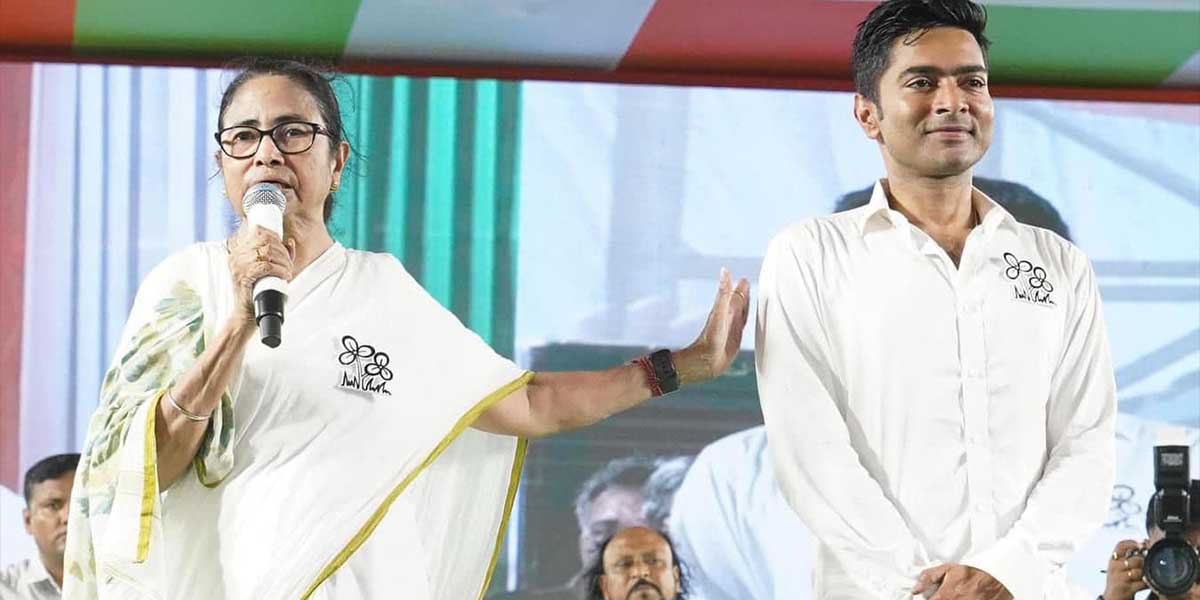
The Trinamool Congress (TMC) is witnessing an internal debate over a potential elevation of Abhishek Banerjee, the party’s National General Secretary and nephew of West Bengal chief minister Mamata Banerjee for the position of deputy chief minister. With an organisational reshuffle looming, Abhishek has submitted a comprehensive report to Didi, sparking resistance from the party’s old guard. Prominent leaders, such as Bharatpur MLA Humayun Kabir, are openly advocating for Abhishek to be made deputy CM and Home Minister. Kabir cited recent law and order issues, RG Kar rape case and attack on Kolkata Municipal Corporation councillor as reasons for stronger leadership. However, veteran leaders like Saugata Roy expressed reservations about the Kolkata Police’s efficiency, a veiled critique of current governance. Firhad Hakim, a senior minister, clarified his stance, emphasizing unwavering support for Mamata’s leadership while defending his earlier comments. Hakim reiterated that Didi remains the cornerstone of TMC’s electoral success and governance credibility. This internal friction comes against the backdrop of TMC’s strong performance in the recently concluded bypolls. The party swept six constituencies, including Madarihat in North Bengal, a seat it won for the first time. The success has bolstered confidence in the leadership duo of Mamata and Abhishek, who jointly selected the winning candidates. A national working committee meeting at Mamata’s Kalighat residence on November 25 is expected to address the reshuffle issue. For TMC balancing generational aspirations with the experience of senior leaders remains a critical challenge.

In a significant political development, West Bengal chief minister Mamata Banerjee has placed her trust in former cabinet minister and senior Left Front leader Abdus Sattar by appointing him as the chief advisor to her government on minority affairs. Sattar, an influential figure of CPI(M) who served as the Minister of State for Minority Affairs and Madrasah Education under the Left Front government. He has been tasked with addressing ongoing disputes related to Wakf properties and will advise the Department of Minority Affairs and Madrasah Education on initiatives for minority welfare. Interestingly, Sattar quit the Left Front way back in 2011 by joining the Congress before aligning with the TMC. This appointment, sources suggest, highlights TMC’s strategy to strengthen its appeal among the state’s educated minority communities. With the BJP’s growing influence in West Bengal and traditional opposition forces such as the Left and Congress losing traction, Sattar is seen as a critical asset for Banerjee’s administration, given his progressive reputation and deep organizational skills. A TMC leader pointed out that Sattar will complement prominent TMC leaders like Firhad Hakim and Siddiqullah Chowdhury. Interestingly, CPI(M) leader Sujan Chakraborty said that Didi’s appointment of Sattar reflects an acknowledgment of the developmental work undertaken during the Left Front regime and is also a rebuttal to TMC’s earlier narrative that the Left did nothing for minorities.

The CPI(M) in West Bengal is grappling with a challenging phase as several of its prominent leaders continue to quit the party and join rival parties like the Trinamool Congress (TMC) and the Bharatiya Janata Party (BJP). Surprisingly, notable figures who previously held influential roles within the Left Front government have quit. Some like Abdus Sattar and Abul Rezzak Mollah stand out as former Left Front ministers who have now ascended to notable positions within the TMC. The BJP, too, has benefited from CPI(M) defections. Shankar Ghosh, a young leader from Siliguri, left the CPI(M) to join the BJP ahead of the 2021 polls, defeating his mentor and veteran CPI(M) leader Ashok Bhattacharya. Ghosh has since risen to become the chief whip of the BJP Legislative Assembly Committee. Former CPI(M) MLA Tapasi Mondal is now a BJP legislator from Haldia, her former constituency. CPI(M) State Secretary Mohammad Salim has attributed the trend to a “bankrupted political culture” fostered by the TMC-BJP nexus, emphasizing that true ideological commitment would prevent leaders from joining parties with opposing values. However, within the CPI(M), there is a growing realization that even efforts to rejuvenate the party with youth faces are not stemming the outflow of talent. Amidst these concerns, CPI(M)’s Bengal unit is re-evaluating its alliance with Congress for upcoming state elections. Although the two parties are long-time allies in West Bengal, their ideological differences remain stark, especially given their rivalry in states like Kerala. Clearly, CPI(M) leadership has a tough job on hand – to stop the exits and ensure that the party regains its pristine glory in West Bengal.
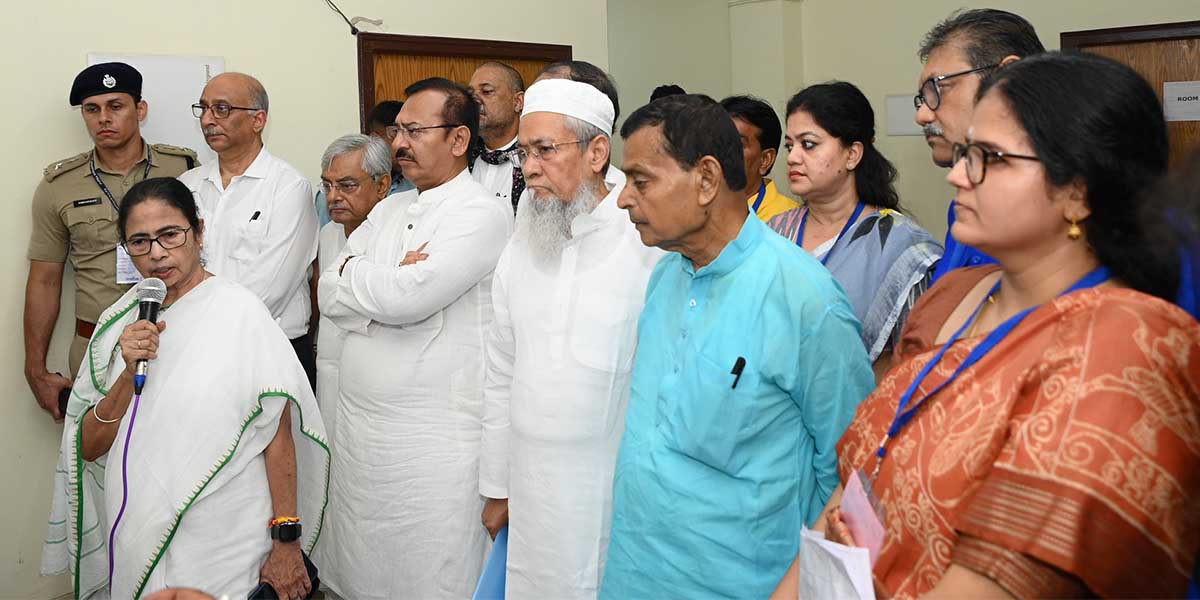
The upcoming by-election in six constituencies of West Bengal on November 13 is set to be a pivotal moment for the ruling Trinamool Congress (TMC), which faces growing unrest among civil society over the RG Kar hospital incident. According to TMC insiders, the party leadership is eager to assess whether it still has the same level of public support that led to its overwhelming victory in the general elections just four months ago. These elections coincide with widespread protests in the state, particularly the ongoing hunger strike by junior doctors in Kolkata, now in its 13th day. TMC is not only focused on retaining the five seats in its strongholds—but is also eyeing Madarihat, a stronghold of BJP, as well. Party insiders say that winning the bypoll could help mitigate the anti-government sentiment and diminish the political impact of the protests, which many in the TMC argue are primarily an urban movement. Senior TMC leader Kunal Ghosh indicated that the party sees this election as an opportunity to reassess its grassroots hold and signal that rural and semi-urban constituencies do not resonate with the anti-government sentiments that have surfaced in the cities. BJP spokesperson Rajarshi Lahiri is confident that RG Kar hospital will benefit his party gain ground in five of six constituencies but is less confident about Haroa, citing its Muslim-majority population vis a vis TMC. CPI(M) and Congress feel the protests’ impact are mostly Kolkata-centric.
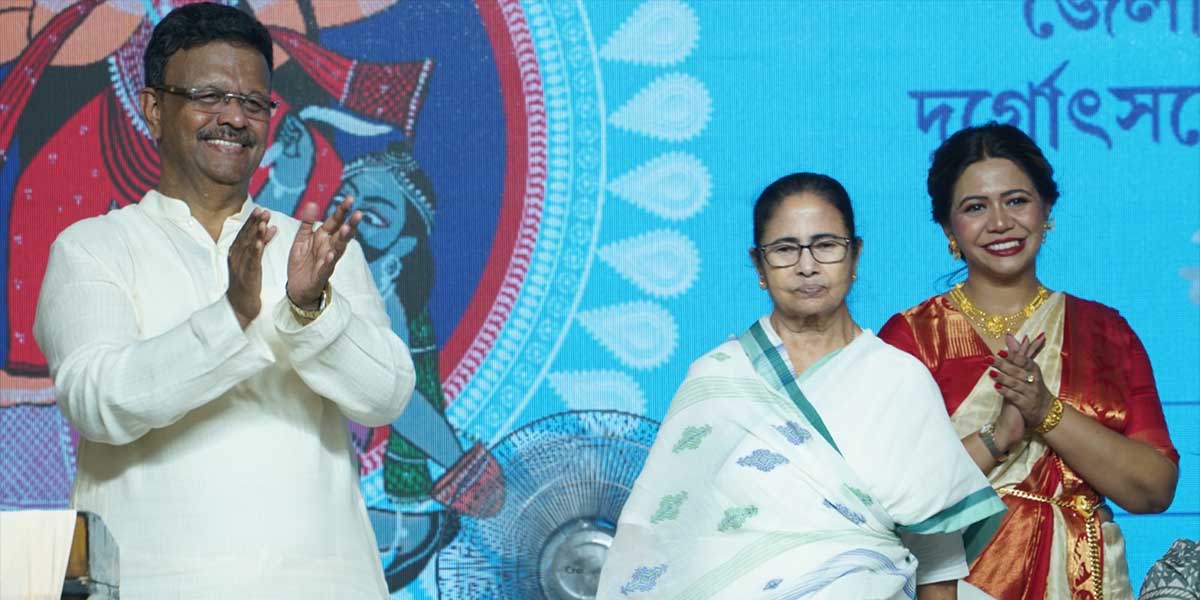
Amid the political chaos stemming from the RG Kar rape-murder incident, the West Bengal chief minister Mamata Banerjee is now facing a fresh crisis from within her own party. It is learnt that TMC party leaders are shocked that Abhishek Banerjee, National General Secretary and second-in-command, has lodged a police complaint against the Officer on Special Duty (OSD) to Firhad Hakim, the Mayor of Kolkata and a senior cabinet minister, alleging misappropriation of funds. Party insiders believe the timing is significant, coming shortly after the TMC’s lacklustre performance in several Kolkata Municipal Corporation (KMC) wards during the Lok Sabha elections. Some sections within the party view the move as Abhishek’s way of pushing for the “one person, one position” policy which he has long advocated. Others see it as an effort to cleanse the party of corruption and enhance its image in the wake of mounting public criticism. According to sources, the complaint from Abhishek’s office alleged that the OSD has been extorting money by misusing Abhishek’s name. The allegation has led to an unprecedented escalation of tensions between Abhishek and Hakim, where both have reportedly voiced their displeasure to the party leadership. Hakim, widely regarded as one of Didi’s closest confidants, has expressed his willingness to resign from Mayor’s post but Didi has rejected it. Reportedly she conveyed her displeasure to senior party leaders as to how the situation spiralled out of control. Hakim’s dual role as the Mayor of Kolkata and Minister for Municipal Affairs and Urban Development has long made him one of the most influential figures in the state’s political landscape.
In a significant move, Congress has appointed Subhankar Sarkar as the West Bengal State President, replacing veteran leader Adhir Ranjan Chowdhury. The decision marks a critical tactical shift in Congress’ approach to Bengal politics, signalling a recalibration of its relationship with both the ruling Trinamool Congress and CPI(M). Sarkar is known for his softer stance toward TMC supremo and chief minister Mamata Banerjee in contrast to Adhir Ranjan who was a vocal critic of Didi. The appointment comes amid speculation that Congress is keen on easing tensions with the TMC. The timing of Sarkar’s appointment is significant, particularly for the CPI(M). The party is still reeling from the recent death of its National Secretary, Sitaram Yechury, who played a key role in navigating the delicate relationship between Congress and the Left in Bengal. Yechury had close ties with Congress leader Rahul Gandhi, and his absence leaves a void in the CPI(M)’s ability to engage directly with the Congress high command. A senior CPI(M) leader has remarked that it is a double blow for the party as they lost Yechury, who was instrumental in maintaining dialogue with Congress. Now, with Adhir replaced, it’s clear that the Congress is moving towards a more TMC-friendly stance. Despite the growing concerns within CPI(M) ranks, the party leadership at Alimuddin Street has remained largely silent on the issue. Many believe that the leadership is still assessing the long-term implications of Congress’ strategic shift.
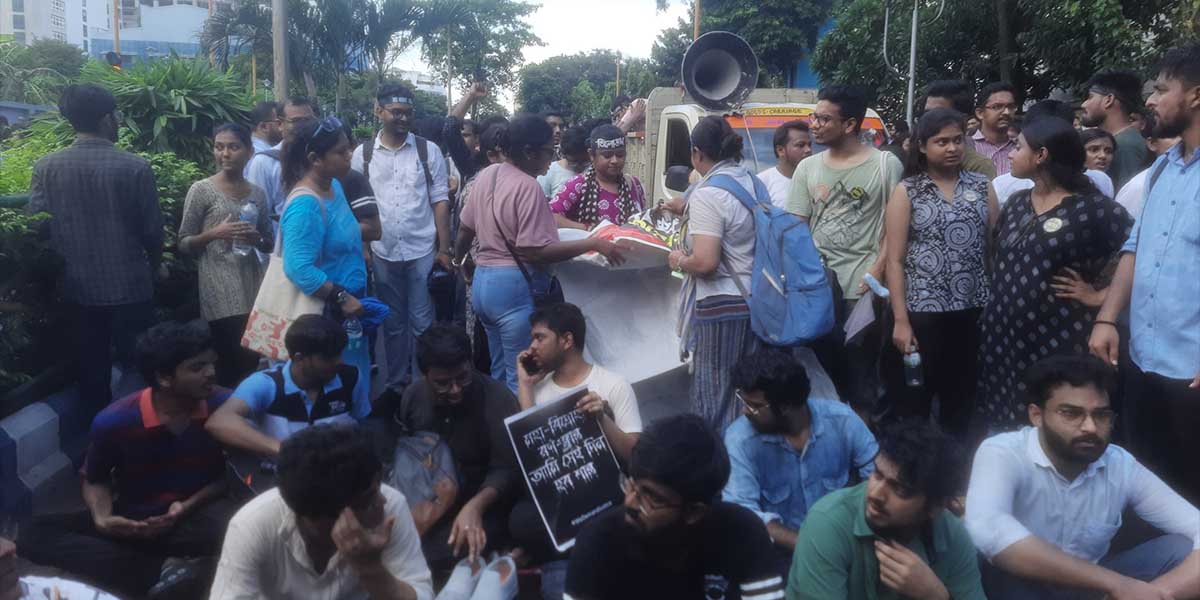
The ongoing RG Kar Medical College protests have cast a shadow over the Bengali film industry, with many in the fraternity struggling to return to work amid constant backlash and online trolling. While several actors, directors, and singers actively participated in the protests, some have gone back to work sparking mixed reactions from the public. The situation intensified after West Bengal chief minister Mamata Banerjee’s call to “return to festivities”. This statement was widely criticized. Amidst this political tension, prominent figures in the Bengali entertainment industry have found themselves facing undue criticism from netizens. Celebrities like singer Iman Chakraborty, actors Swastika Mukherjee, and Sohini Sarkar, all of whom supported the protests, became targets of online trolling. Swastika faced particular backlash after promoting her upcoming film Tekka, despite her regular attendance at protest rallies. Dev, who stars in Tekka and is also a Trinamool Congress MP, defended his stance, supporting the movement while stressing that livelihoods, especially during Durga Puja, should not be affected. He pointed out that marginalized groups, such as dhakis, decorators, and vendors, depend on the festive season. Singer Shilajit, another victim of online criticism, echoed similar sentiments. He defended the importance of continuing work, noting that events contribute significantly to artists’ earnings. Director Raj Chakraborty expressed concern over how easily celebrities become targets for trolls, leading many to avoid social media. Amid this growing tension, promotions for upcoming Puja releases, such as Bohurupi and Shastri, have been toned down to avoid further controversy. The Bengali film industry continues to navigate these challenging times with caution.

Amid a series of electoral failures, including a hat-trick of zero wins in major elections, the CPI(M) in Bengal is facing growing internal pressure to reconsider its approach and hire an external political strategist. Alimuddin Street, party’s headquarters, has received feedback that the organization’s current state is “disgraceful” and it must consider “alternatives.” Most political parties – BJP, Cong, TMC, AAP and DMK — have from time to time roped in political strategists/consultants. For instance, the Trinamool Congress’s 2021 victory was largely credited to IPAC, led by Prashant Kishor. Likewise Congress party has benefited from strategic insights provided by Sunil Kanugolu. CPI(M) State Secretary Mohammad Salim stated that though the party cannot afford to hire a professional agency, professionalism must be increased. The party had hoped that its alliance with Congress for the Lok Sabha polls would increase its vote share. Leaders had predicted a three-way contest between Trinamool, BJP, and the Left-Congress combine. However, the reality was a two-way fight between Trinamool and BJP, leaving CPI(M) without a seat, and Congress lost key constituencies like Baharampur, where five-time MP Adhir Chowdhury was defeated by TMC’s Yusuf Pathan. Party insiders have highlighted organizational failures, including an inability to deploy agents in polling stations. Again, in the RG Kar incident relating to rape-murder of doctor, where the CPI(M) youth wing DYFI, led protests in Kolkata, the party failed to mobilize at the district levels. Also, it has alienated women voters in the state by terming the Lakshmi Bhandar scheme as “alms”.

The recent brutal rape-murder of a trainee doctor at RG Kar Medical College and Hospital in Kolkata has put Mamata Banerjee’s government under immense pressure, marking perhaps one of the most significant challenges of her political career. The Supreme Court which took up the issue suo moto saw veteran advocate representing West Bengal government Kapil Sibal facing a barrage of questions. Throughout Didi’s three-term tenure, cases of rape have periodically ignited outrage in Kolkata. In 2012, only a year into her tenure, she dismissed the Park Street gangrape as a “shajano ghotona” (fabricated incident). Similarly, the 2013 Kamduni gangrape saw delayed police action, prompting Mamata to respond only after protests erupted. Recently, the Sandeshkhali incident ahead of Lok Sabha elections, where several women accused local TMC strongmen of sexual harassment. Despite these controversies, TMC saw its seat share increase. This time it seems, public’s ire is particularly directed at her, given that she holds both the Home and Health portfolios—two areas central to the incident. Internal discord within TMC is becoming evident. Party’s general secretary Abhishek Banerjee, Mamata’s nephew privately expressed deep dissatisfaction with the state government’s handling of the case, criticizing the internal politics of the health administration. Additionally, veteran leader Sukhendu Sekhar Roy tweeted about the police’s role, leading to a brief controversy with Kolkata Police summoning him. However, after the party’s senior leaders — Sudip Bandopadhyay and Subrata Bakshi– intervention, Roy deleted his tweet. In a significant move, both Mamata and Abhishek called for strict anti-rape laws, urging swift and harsh punishment for perpetrators within 50 days of such crimes.
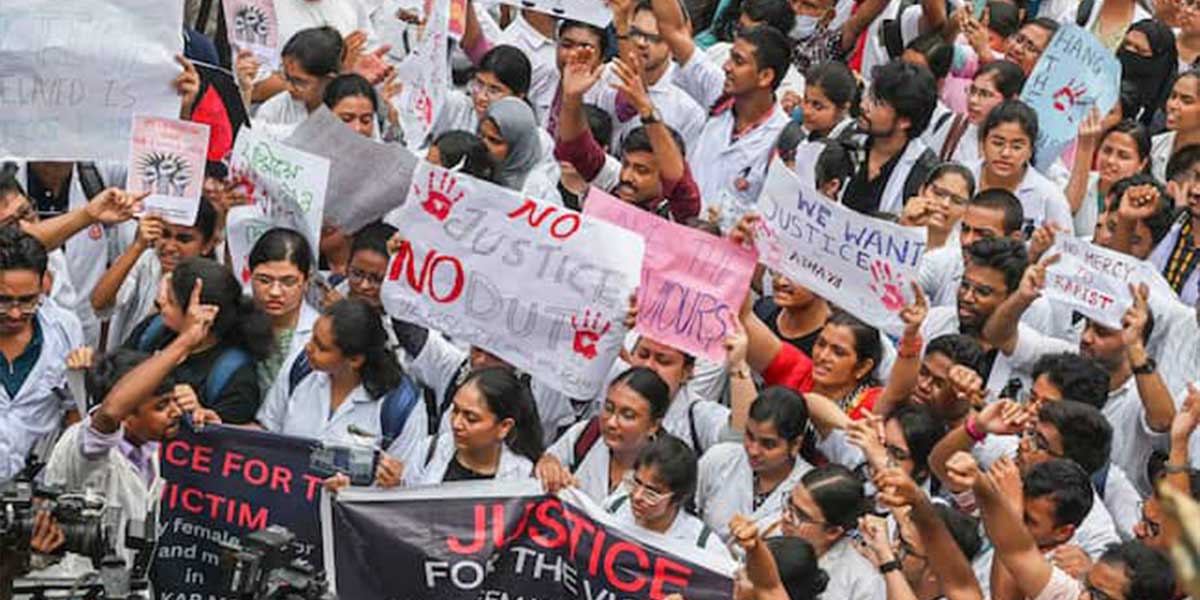
The rape and murder of a trainee doctor at RG Kar Medical College in Kolkata has sparked unprecedented protests across West Bengal and the country and in the process pushed the West Bengal chief minister Mamata Banerjee into a corner. Citizens and political parties, including the CPI(M) and BJP, have taken to the streets, criticizing the state government for its handling of the case. In an uncharacteristically defensive stance, Didi lashed out at her political rivals, accusing them of exploiting the tragedy for “cheap politics” where instead of standing with the family, they think they can do “a Bangladesh” here and even spreading fake information about the case using artificial intelligence (AI). Interestingly, she has refrained from directly attacking the Congress, even after Rahul and Priyanka Gandhi voiced their concerns over the incident. The controversy took a new turn when the Calcutta High Court ordered a CBI investigation into the case bypassing the state police. While a section of the ruling TMC sees this as a potential “relief” from the escalating crisis, others within the party view it as a clear sign of dissatisfaction with the state police’s role in the investigation. In a bid to downplay the CBI’s involvement, TMC leaders have questioned the agency’s track record, citing past failures such as the unsolved cases of Taapsee Malik’s rape and murder, the death of Rizwanur Rahman, and the theft of Rabindranath Tagore’s Nobel Prize. As doctors strike continue it’s the patients across the state who are suffering from a lack of medical care. Political experts are asking whether Didi, known for her ability to turn adversity into advantage, will be successful this time around.

With Bangladesh Prime Minister Sheikh Hasina resigning and fleeing the country, West Bengal chief minister Mamata Banerjee finds herself in a tough spot. Known for her sympathetic stance towards refugees, Mamata is now confronted with the daunting challenge of managing the influx of people. Hasina’s departure has thrown Bangladesh into a state of uncertainty, prompting many to seek refuge in West Bengal. This surge in refugees could disrupt the state’s already fragile demographic balance. It may be noted that during the Annual Martyr’s Day Rally on July 21, Didi had declared that she will welcome any person coming from Bangladesh due to the ongoing turmoil. Her announcement was not only criticised by the Central government, but even the erstwhile Hasina government as they felt it was sending the wrong signal to Bangladeshis. Mamata has been facing the heat from BJP about sheltering illegal Bangladeshi immigrants and giving them official recognition in order to increase her minority vote bank. However, deviating from her soft stance, Didi has sent out a strict directive to her party leaders to not make any provocative statements on the Bangladesh crisis. Political observers state that if Didi is not careful about the influx of refugees, it is likely to disturb the delicate balance of religious diversity of the state, which has a Muslim population of 27%. BJP leader and LoP in Bengal Suvendu Adhikari is claiming that the state is set to witness the entry of 1 crore Bangladeshi Hindus who are likely to face discrimination and hostility in the Muslim dominant districts of Bengal.
In a significant political development, the Congress high command is considering reassessing its relationship with Trinamool Congress (TMC) supremo and Chief Minister Mamata Banerjee following the departure of former Baharampur MP Adhir Ranjan Chowdhury as the Pradesh Congress state chief. Chowdhury’s tenure was marked by notable discord with the Congress leadership’s coordination and support extended to TMC at the state level, despite Mamata Banerjee’s strong relations with Congress leaders Sonia Gandhi and Rahul Gandhi. It has been learned that Chowdhury expressed extreme displeasure during a recent meeting in New Delhi when Congress West Bengal in-charge Ghulam Ahmad Mir referred to him as “former” and sought the opinions of other Bengal leaders. Close associates of the former MP stated that the resignation was supposed to be formally announced by INC President Mallikarjun Kharge. Instead, Mir highlighted it in an open forum, adding to the tensions within the party. As Congress prepares for a leadership change, the future of its alliance with TMC remains uncertain, with potential implications for the party’s strategy and its position within the broader political landscape of West Bengal and the nation.
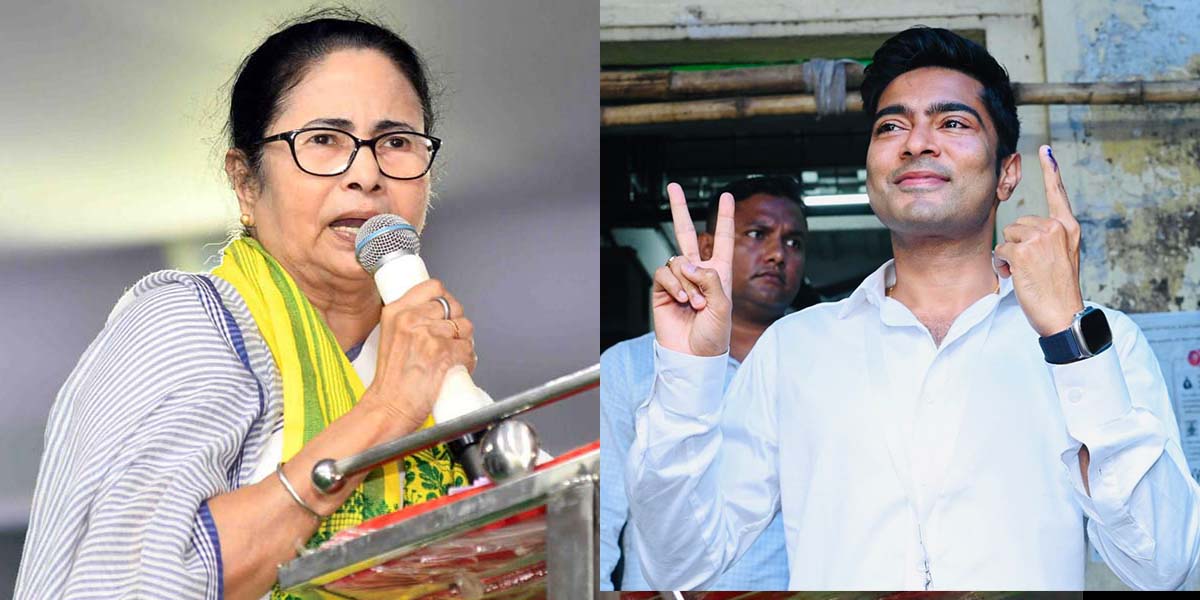
There are persistent allegations of corruption within the Trinamool Congress (TMC) where the party supremo Mamata Banerjee, once celebrated as one of the most honest chief ministers, has found herself at the centre of the Opposition attacks. For a considerable period, Banerjee seemed to dismiss the corruption allegations, often asserting, “In a big party, one or two people may be corrupt, but that does not make the whole party bad.” Despite her statements, the recent electoral setbacks, particularly in Kolkata, where the TMC is trailing in wards that were previously strongholds, have forced a re-evaluation of the party’s stance. The decline in urban voter support is largely attributed to the perceived corruption and misrule within the TMC. The party is trailing in crucial wards, including those of the Mayor and Deputy Mayor, signalling a significant shift in voter sentiment. In response, Didi and her nephew, Abhishek Banerjee, the second-in-command of the party have made clear their intentions to rectify the situation with an eye on the 2026 Assembly elections. However, reports indicate internal differences between the two leaders regarding the reshuffling of party functionaries. Interestingly, party sources said that while Abhishek advocates for comprehensive changes in areas where the TMC is trailing with respect to all opposition parties, Didi favours making changes in areas where the party has a significant loss to BJP. A senior party member revealed that Didi is considering a 30-40% change, contingent upon discussions with other senior members. Also, it is learnt that several members who allegedly collaborated with the BJP during the Lok Sabha polls are under scrutiny, with reports being submitted to Abhishek’s office.
West Bengal chief minister Mamata Banerjee has affirmed her participation in the upcoming NITI Aayog meeting in New Delhi, despite INDIA bloc leaders deciding to boycott the event. Sources close to the TMC leader indicate that Didi’s attendance underscores her commitment to securing Bengal’s financial interests within the framework of federal relations. While aligning with the INDIA bloc, Banerjee is keen to assert her state’s autonomy, signalling a nuanced approach separate from opposition alliances. Political analysts interpret Banerjee’s move as a strategic assertion rather than a rupture in opposition unity, emphasizing her intent to voice for Bengal’s dues amounting to Rs 176,000 crore, including the allocation under Awas Yojana and MGNREGA schemes. Party insiders say that the NITI Aayog forum is a perfect platform for Banerjee to raise her state’s pressing fiscal concerns. In a pre-departure statement, Mamata voiced her objections to what she described as discriminatory practices by the Central government towards Bengal. She termed the Centre’s actions as a method to divide the eastern region economically and geographically. It may be noted that speculations were rife that Didi might drop from NITI Ayog meet to avoid controversy. It may be mentioned that Mamata did invite Samajwadi party chief Akhilesh Yadav to her Martyrs’ Day rally which underscores her strategy to strengthen regional political fronts independent of Congress.