 All
All Politics
 Business
 Entertainment
 Sports
 Celebrities

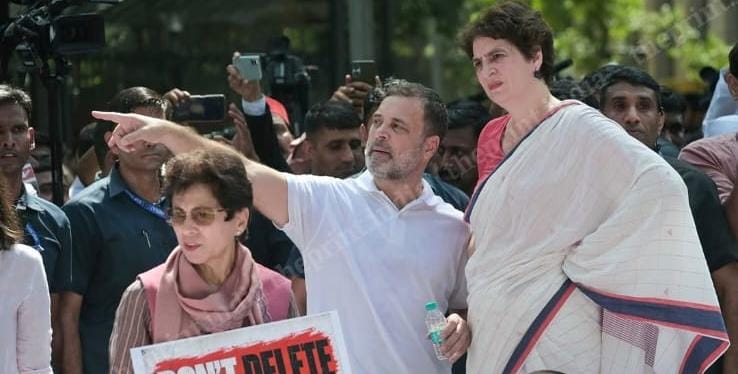
It is now becoming increasingly clear Congress leaders — Rahul Gandhi and Priyanka Gandhi Vadra — stole the show at the INDIA bloc march to the Election Commission’s office in Delhi on October 6 with the sit-in at Akashvani Bhavan. They were simply not bothered about coordinating with other Opposition parties nor were they worried about Opposition unity. They seemed more worried to better the CJP record of protest — which incidentally is going to be held on October 10. Surely, the media focus on Gandhi siblings’ antics on the streets in the past two days so upset Congress’s allies that many leaders felt the mega protest eventually became a Gandhi siblings’ show. Many leaders questioned the Gandhis’ move for a sit-in at Akashvani Bhavan while other Opposition leaders were being detained. Apparently, the sit-in protest was not part of the plan. While Rahul’s aides tried to explain about the Gandhis sit-in protest at Akashvani as a move to get appointment with the CEC, many Opposition leaders found Rahul Gandhi’s insistence on meeting the CEC as very odd. Did the Gandhis take 200 Opposition MPs who had gathered at Parliament’s Makar Dwar on October 6 for granted? So it was not just the DMK that skipped the Opposition event. Even Samajwadi Party not only chose to keep away from the Gandhi show but also skipped the Cong lunch invite at Sagar Ratna. Explaining the many who missed the lunch event, Congress leader Jairam Ramesh in post on X insisted that all INDIA janbandhan parties had been invited for the lunch. However, since the decision for the lunch had been taken late last night and communicated. It was therefore natural that some parties could not be represented.” At the same time, he protested about the Gandhis being arrested once again. Meanwhile there was outrage on X about Rahul Gandhi spotted manhandling a Delhi woman police official.
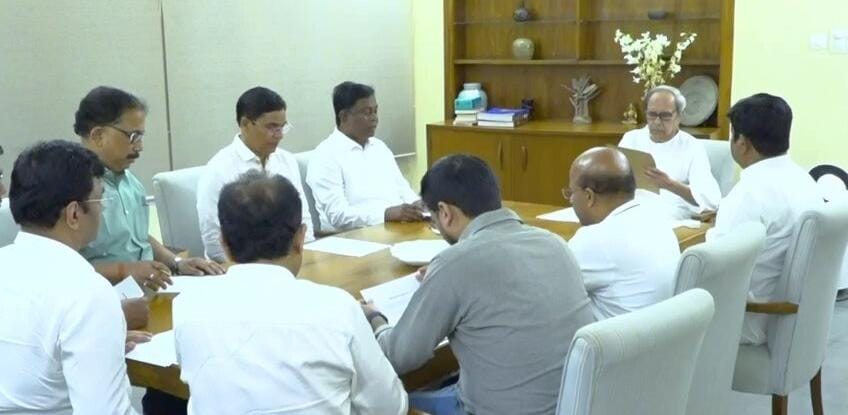
It seems Biju Janata Dal (BJD) President and leader of Odisha opposition Naveen Patnaik is now shifting from his quiet demeanour to an active communication offensive. He and his party members are now getting ready for an all-out media war against Mohan Charan Majhi’s government by having a highly coordinated media and public outreach strategy. The idea is to expose, highlight the state government’s failures, lapses and mis-governance to the people at large. As part of this plan, Naveen Patnaik has already reorganised BJD’s media cell. This means restructuring the party’s communication road map covering digital, print, and electronic media. Objective is to divert growing public discontent of BJP’s administrative failure into a structured, state-wide campaign against Majhi’s government. Political analysts decoding Patnaik’s new strategy say that Naveen babu has realised that his earlier defeat was due to BJD’s weak social media narrative. And the current media strategy is an antidote to the earlier gap. The job ahead for BJD media team is cut out because it’s taking the role of self- managed PR strategy which has its distinct strategic benefits but also challenges with regard to core execution requirements.

Not just in India, particularly South Indian homes but in the U.S. too mornings are ushered in by that magical voice waking up Lord Rama…“Kausalya Supraja Rama Poorva Sandhya Pravarthathe.” The evenings resonate in temples and homes with the legendary Carnatic vocalist M S Subbulakshmi’s sublime recitation of the Vishnu Sahasranamam. Is it then surprising that a production team launched a biopic on her titled M.S. – A Legacy On Screen? The decision to cast Rashmika Mandanna in the title role did not create waves of talk, surprise and surmise. Whoever played that role was bound to draw audience, magnetically, going beyond a heroine to remember Bharat Ratna recipient M S Subbulakshmi and her beauty. MS would come on stage in her custom woven Kanchipuram silk, diamond studded nose and earrings…glinting, glittering and gleaming in the arc lights. When Kamal Haasan sounded the first clap for the official launch of the biopic at Chennai’s music academy, Rashmika Mandanna must have felt goosebumps and trepidation. Can I play this legendary artist? Director Gowtam Tinnanuri must have calculated the gains and risks …knowing fully well that Rashmika or anyone else with the right makeup, jewellery and stunning saris would carry the biopic on her shoulders. Vidya Balan too had been “look tested” earlier. Though Vidya looked stunning, the casting coup did not happen. Rashmika has announced that after the biopic hits the cinemas, she would take a five-year break…to stay home and enjoy family life to the fullest. She would start her second innings after that hiatus ….Rashmika is wise beyond her age …after playing MS, even if she retired she could still cherish the role of her life. Legends come rarely.

It is learnt that the Modi government which is formulating a new industrial policy is exploring the use of land belonging to PSUs and factories closed for ages for creating space for new industries. The industries department is already inspecting the defunct Hindustan Cables and Hindustan Fertiliser units in the Asansol-Durgapur industrial belt. The government is also consulting the Bengal Chamber of Commerce and Industry (BCCI) and other industry bodies to identify closed industrial units whose land could be reused. According to secretariat sources, the industries department has prepared a preliminary list based on a BCCI report. The list shows at least five closed PSUs in Asansol-Durgapur together hold around 2,095 acres, including water bodies. Hindustan Cables and Hindustan Fertiliser account for nearly 1,488 acres, though parts of some properties are reportedly encroached upon. Other units identified include Cycle Corporation of India, Sen-Raleigh Cycle Company, Mining and Allied Machinery Corporation (MAMC), Bharat Ophthalmic Glass Ltd, Hindustan Pilkington Glass Factory and Kesoram Industries’ Refractories Division. MAMC has 193.67 acres, including 153.4 acres unused, while Cycle Corporation has around 239.1 acres, of which 178.42 acres is unused and 16.81 acres comprises water bodies. Six closed National Jute Mill Corporation together have nearly 400 acres along the Ganga. Moreover, sources said no legal complications have been found so far, while the Centre plans phased auctions. Industry bodies have also identified about 975 acres at Burn Standard’s Howrah and Raniganj units and 70 acres at Jessop in Dum Dum. The Centre and NCLT are moving to sell these properties to promoters. Other properties include 69 acres of NISCO land at Belur and 250 acres of Dunlop land at Sahaganj.
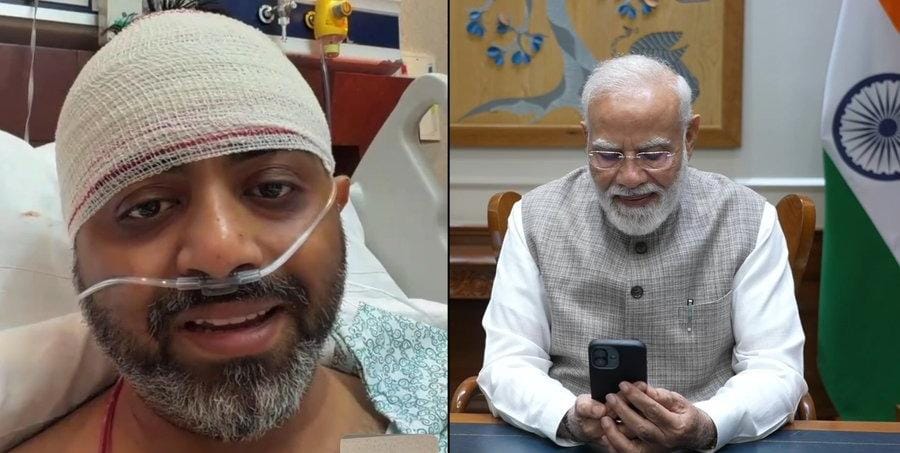
In a heart-warming move, PM Modi had a emotional chat with Captain Smit Machchhar, who survived a savage axe attack inflicted on him by an Omani co-pilot on the ill-fated Flydubai flight on September 30. Incidentally the Modi-Machchhar chat on Oct 2 managed to puncture the opposition protests on the CEC. As the emotional conversation dominated news headlines, slogans at Jantar Mantar became a faint echo. Incidentally, on the day Modi connected with Capt Smit, UAE Presidential Advisor Anwar Gargash described the attempted hijacking of Flydubai flight to Tel Aviv as a “terrorist act”. Gargash also praised Indian Captain Smit Machchhar as a “true hero” for helping avert a potential disaster. Abu Dhabi publicly condemning an attack targeting a flight to Israel was seen as a bid to strengthen Israel-UAE ties. PM Modi praised the captain’s bravery in saving numerous lives. During the video call, Machchhar, who is currently recovering at a hospital in the UAE, shared his personal experience and explained that chanting ‘Hanuman Chalisa’ gave him courage during the incident. “I was fighting for my life. I realised at that time that if I don’t show courage, then 170 passengers will lose their lives.” PM Modi had spoken to Capt’s wife and parents, a day earlier and assured them full support from Indian missions. As the pilot apologised to PM Modi for breaking down mid-call, he said that he never imagined that he would get the opportunity to speak to the PM. Modi and the pilot exchanged a few words in Gujarati. It is perhaps this Gujarat connection that must have made the Congress and Rahul Gandhi go silent on not celebrating a hero toasted by the nation! UAE is also probing if the Omani hijacker had Pak links.
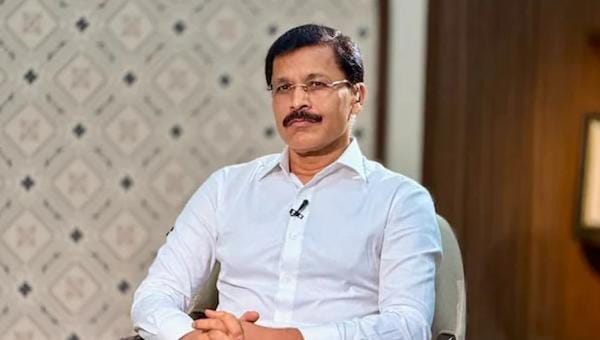
Maharashtra FDA Commissioner Tukaram Mundhe’s squads have seized of tonnes of unsafe and adulterated food items across the state, valued at over Rs 67 crore. Since taking over in May 2026, Mundhe has shaken up India’s food sector and is firmly supported by chief minister Devendra Fadnavis. The judiciary, too, has stood by him except for ordering nesa few corrections. The most drastic action by him was a Thane raid in which the FDA impounded 28,955 kg (nearly 29 tonnes) of raw ingredients and solid foods such as chips, farsan, chivda, flours and wafers as well as stocks of palm oil. In a three-day drive from September 28–30, the FDA suspended 31 licenses and impounded over 3900 kg of substandard sweets, cheese, paneer and oils, including 617 litres of milk. So far, the FDA has conducted over 12,000 inspections, issued over 5200 improvement notices, suspended 603 licenses and recorded 875 arrests. Outlets of some major global fast food chains have faced temporary closures or license suspensions due to pest infestations and poor sanitation. The campaign has hit quick-commerce dark stores, too, and subjected them to temporary shut downs due to hygiene breaches. It has not spared some government canteens also. Mundhe became famous following the implementation of a statewide ban on analogue paneer. The other major action was to ban the common occurrence of street vendors wrapping hot food like vada paav in newspapers due to ink toxicity. A frequently transferred officer, Mundhe’s continuation as FDA chief has become a matter of discussion.
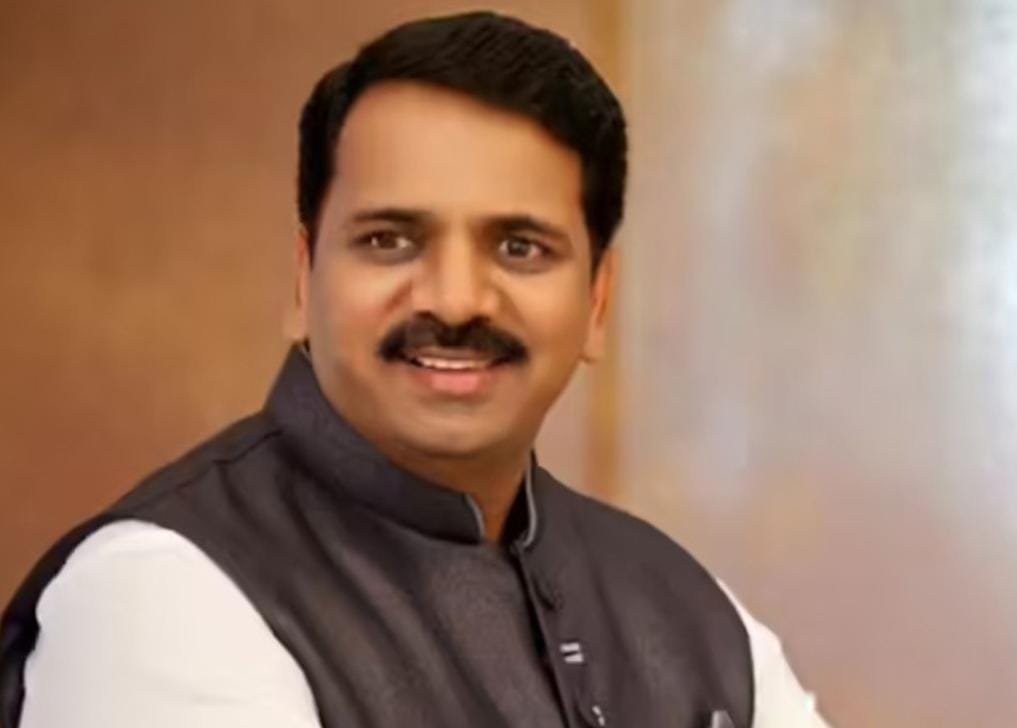
BJP MLA Narendra Mehta has sparked off one more controversy, only to perform another volte face within hours following a huge backlash from almost all quarters. As soon as Mehta described the religious and cultural identity of Mira-Bhayandar, which is on the outskirts of Mumbai, as a “Jain city” and “Mini Rajasthan,” verbal attacks against the claim began. He immediately apologised but the embers of the offensive statement are still felt. In support of his claim, Mehta maintained that the township has more than 33 Jain temples, has nine Jain corporators and the mayor, too, is a Jain. It was just a few days ago that an advisory was issued by Seven Square Academy in Mira Road, a school founded by Mehta, asking students not to bring onion, garlic, potato, beetroot and other leafy vegetables or non-vegetarian food during the Jain Paryushan period. The suggestion was withdrawn following all-out opposition. Mira-Bhayandar is a BJP stronghold for a long time and Mehta is its face. His political enmity with the Shiv Sena (Shinde) is well known and he does not shy expressing it publicly time and again. Realising that his latest claim can become a huge headache for the BJP, Mehta has withdrawn it and emphasised that the city belongs to the Agri-Koli community, the original residents for centuries. He also has lauded Maharashtra and Marathi community, saying, “I am fully aware that Marathi people have elected me as their MLA. I apologise for my statement.” But the after effects of his audacious utterance will be felt for some time, at least.
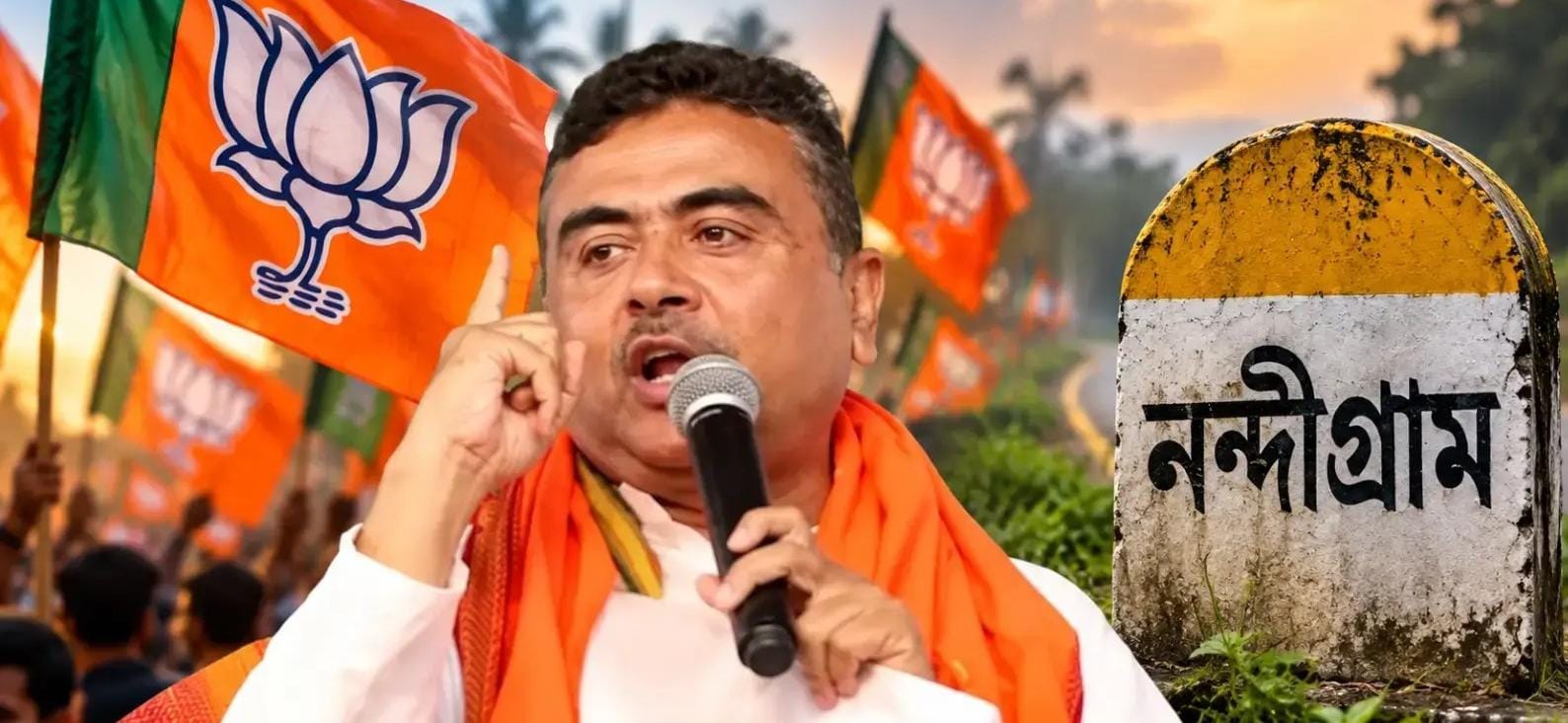
Nandigram is set for its first electoral test since the BJP formed the government in West Bengal earlier this year; the October 6 bypoll carries wider political stakes. It will test the Congress-TMC tactical understanding, put West Bengal chief minister Suvendu Adhikari’s former seat back in focus and offer an early indication of how Bengal’s new political equation is taking shape. Adhikari won Nandigram in the 2026 Assembly election but vacated the seat after also winning Bhabanipur; he had defeated Mamata Banerjee from Nandigram in 2021. The Congress-TMC equation is an unusual one: the two parties are cooperating in Nandigram, but remain electoral rivals in Rejinagar. Banerjee’s faction withdrew its candidate in Nandigram and backed Congress nominee Milan Pradhan. The move followed a meeting between the TMC candidate and Adhikari, after which Banerjee announced her support for Pradhan. Pradhan was subsequently arrested in cases linked to the 2007 Nandigram land agitation and later secured interim bail. That contrast — tactical support in one seat and a direct contest in another — makes Nandigram a closely watched test of whether the two parties can convert limited cooperation into electoral support on the ground. A senior Congress leader said the Nandigram contest would test not just one seat but the extent of coordination among anti-BJP votes. A senior TMC leader said the support for the Congress candidate was aimed at stopping the BJP and should not be equated with the two parties’ separate contest in Rejinagar. The Special Intensive Revision of electoral rolls has emerged as another major issue, with more than 6,000 appeals reportedly pending in Nandigram ahead of polling which will be held on October 6 and counting is scheduled for October 9.
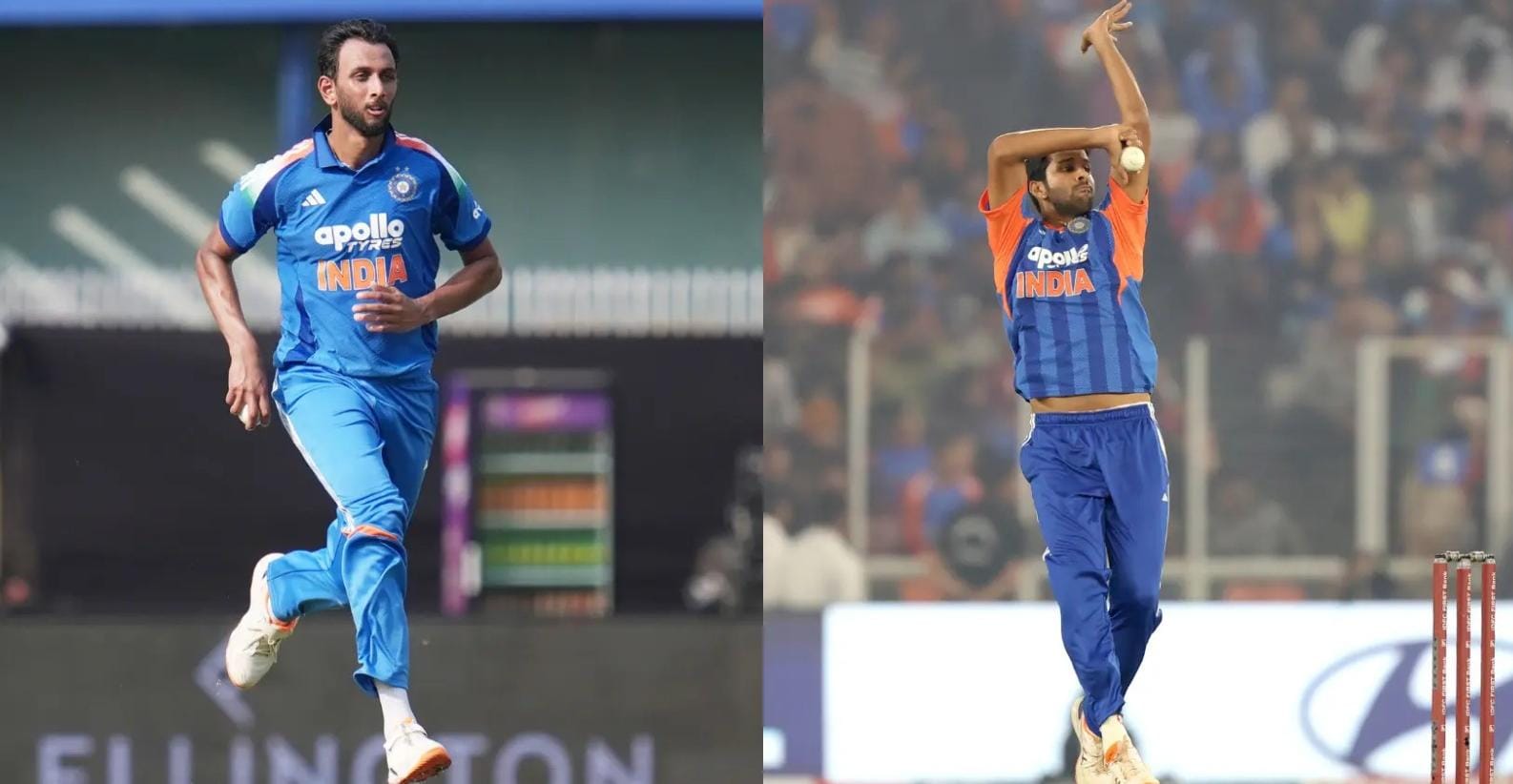
Punching bags, that’s the moniker the fast bowlers and spinners have become in the ongoing One-day series against the West Indies. What transpired in God’s own country in Thiruvananthapuram (Keralam) and around the Brahmaputra (Guwahati, Assam) was nothing short of carnage: the bowlers were put through the shredder. All because of a featherbed of a surface and a team that took the bowlers out of the equation straightaway. Only four Men in Blue batters have stepped out of the dugout; skipper Shubman Gill has piled up 333 in two knocks with a double (223*) at Guwahati, Virat Kohli 168, with an unbeaten 139 near Kovalam and Rohit Sharma 133 with a 101 in the second match. The fourth batter was Ruturaj Gaekwad, who too has an average of 78.57. The authorities cared a fig for the bowlers who were taken apart for 678 runs off 514 balls by the Indian batters. The home team has so far hammered 66x4s and 38x6s. The Men in Maroon have scored 663 off 603 balls with 4x100s. The second ODI was indeed not a good advertisement for the sport; it would be interesting to know how the ICC rates the surface at Guwahati. No wonder India’s head coach Gautam Gambhir described the match as “This is not cricket, this is only batting. If I have to be absolutely honest, I feel there has to be a bit more contest between bat and ball.” The third and final match will be played at New Chandigarh on Saturday (Oct 3). The pitch is unlikely to be any different. So far it’s been a graveyard! India has won the series, its aim will be to lift the numbers to 3-0.
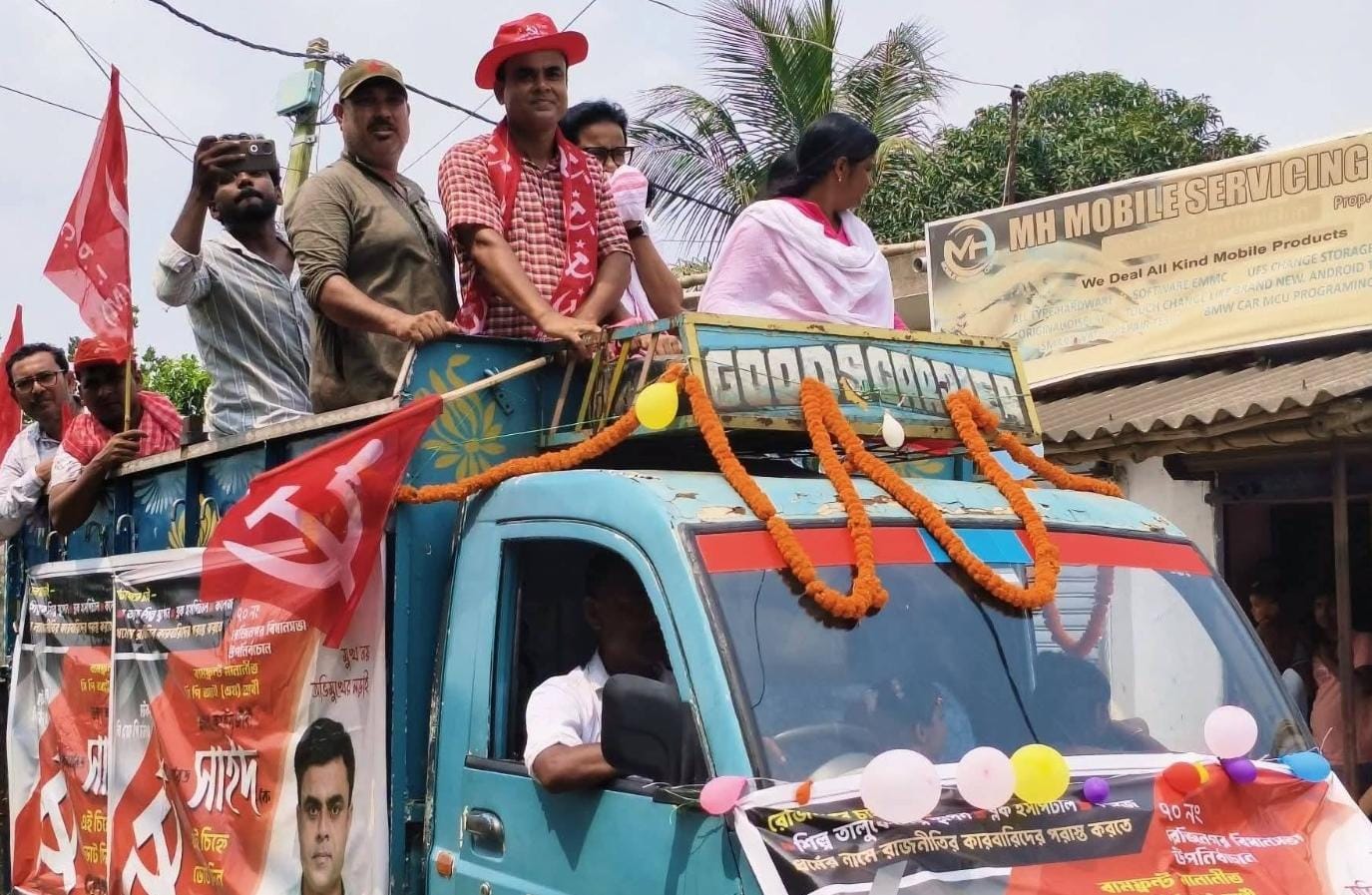
The Bengal CPM’s attempt to put younger leaders in the political spotlight appears to have run into a deeper organisational problem. According to the party’s latest Party Letter No 1, members below 30 constitute just 4.55% of its total membership — a figure the document itself describes as “quite concerning”. The admission, on page three of the document, comes against the backdrop of a sustained effort by the party in recent years to project younger faces in elections as well as organisational positions. Leaders such as Meenakshi Mukherjee, Shatarup Ghosh, Dipita Dhar, Kaltan Dasgupta and Sayan Banerjee have been given greater political visibility over the past five-six years. Mukherjee’s rise has been particularly notable, with her induction into the CPM central committee. The party has also brought in age norms at different levels of its committees, ostensibly to make room for a younger generation. Yet the membership figures suggest that the changes at the leadership level have not translated into a significant shift in the composition of the organisation as a whole. The Party Letter also points to another difficulty: the party continues to struggle to attract members from SC/ST, and minority communities. A state secretariat member attributed the present imbalance to organisational decisions taken two decades or more ago, when, the leader said, the party failed to bring in a number of promising young people because of selective recruitment practices. Over time, that gap widened and became embedded in the organisation. The contrast is particularly significant at a time when a large section of the electorate belongs to Gen Z. For the Bengal CPM, therefore, the challenge is not simply to find younger faces for elections or committees, but to rebuild a wider organisational base that can sustain that transition.
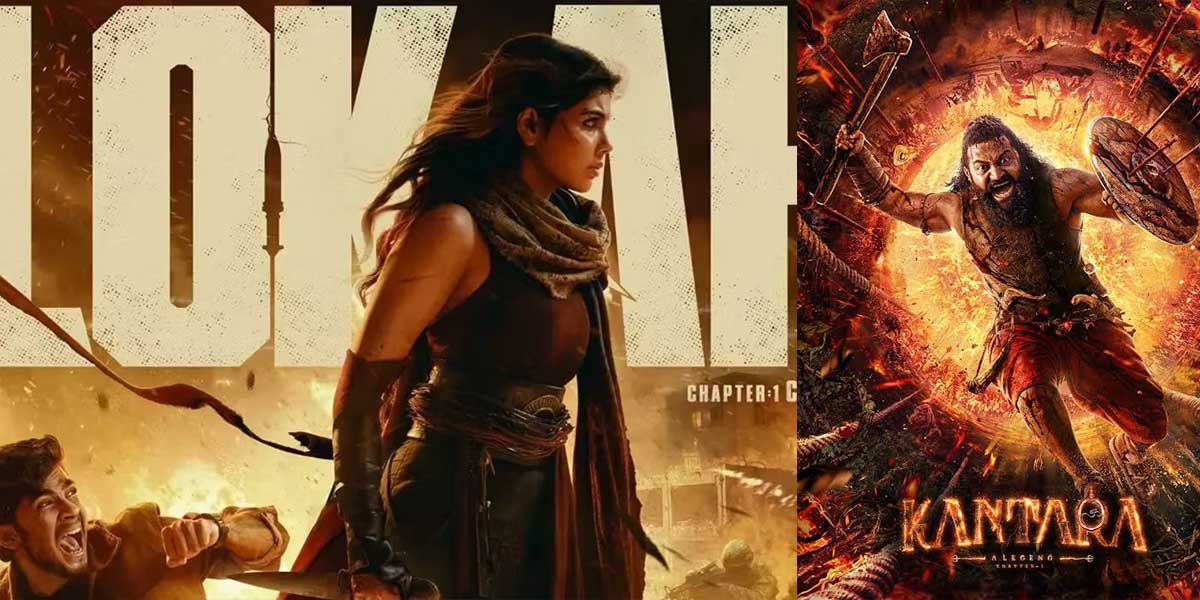
In a watershed year for Indian cinema, Kannada and Malayalam industries are leading the charge with blockbuster epics that blend cultural depth with universal spectacle. Rishab Shetty’s Kantara: Chapter 1 has shattered records, amassing Rs 500 crore worldwide, fuelled by its raw portrayal of Karnataka’s ‘Bhoota Kola’ rituals and environmental folklore. Shetty’s dual role as the fierce Panjara— a forest guardian clashing with modernity—delivers visceral action and spiritual resonance, backed by immersive folk music and stunning Udupi landscapes. The film’s grassroots appeal exploded through dubbed versions in Hindi, Tamil, and Telugu, turning rural myths into pan-Indian anthems and earning global acclaim at festivals like Busan. Hot on its heels, Malayalam’s Lokah Chapter 1: Chandra released on August 20, 2025, surged past Rs 300 crore in just six weeks, heralding a superhero saga rooted in Kerala’s matrilineal heritage. Director Dominic Arun masterfully fuses high-octane VFX with emotional intimacy, as producer Dulquer Salmaan crafts a universe where heroine Chandra (Kalyani Priyadarshan) wields ancestral powers against cosmic threats. Priyadarshan’s nuanced turn — from vulnerable orphan to empowered icon — fills a void in female-led genre tales, while spicy dialogue controversies sparked viral debates, boosting theatre footfalls. Salmaan’s bold vision promises spin-offs, blending local lore with Marvel-esque flair. This duo’s dominance underscores a broader renaissance: Gujarati’s Chhello Show 2 breached Rs 100 crore with its heartfelt immigrant saga; Marathi’s Dashaavtar hit Rs 50 crore via satirical family dramedy; and Tamil’s Coolie topped Rs 250 crore in labour-rights thriller mode. Smart OTT tie-ups, dubbed releases, and culturally authentic narratives propel these beyond regional silos, outshining Hindi’s faltering Param Sundari and Sunny Sankari ki Tulsi Kumari. As indigenous voices claim centre stage, Indian cinema evolves into a vibrant mosaic....

This Dussehra weekend produced a striking box‑office lesson: Rishab Shetty’s Kantara Chapter 1, a regional franchise title released in multiple languages, dramatically outperformed the new Hindi release Sunny Sanskari Ki Tulsi Kumari starring Varun Dhawan despite modest marketing for both. Kantara’s all‑language opening was reported at Rs 60 crore, with the Hindi version alone contributing Rs 19.5 crore on day one; SSKTK’s day one tally was roughly Rs 9 crore. On day two Kantara held very strong — around Rs 43.65 crore across languages, with the Hindi slice at about Rs 12 crore — taking a two‑day cumulative near Rs 105.5 crore, while SSKTK dropped to about Rs 5.25 crore on day two, totalling roughly Rs 14.25 crore across two days. Those numbers are revealing. First, the Hindi‑belt audience clearly embraced Kantara’s Hindi version at levels more than double SSKTK’s in the initial 48 hours. This suggests that a compelling story, rooted identity and franchise momentum from the South can translate into pan‑Indian box office power, even against a star‑led mainstream Hindi release. Second, the performance underscores how audiences today often prioritize spectacle, strong world‑building and franchise potential over conventional star vehicles, especially during holiday windows when families seek high‑energy, communal viewing experiences. For Hindi industry stakeholders the takeaway is urgent: star power alone may no longer guarantee opening weekend dominance. Building durable IP, investing in cross‑lingual accessibility, and crafting marketing that conveys the film’s scale and emotional stakes are critical. Simultaneously, distributors and producers should respect release timing and ensure robust promotional pushes in non‑native markets. Kantara’s success is not merely regional pride; it is a reminder that content that feels native yet universal, backed by smart release strategy, can outshine traditional formulas and reshape audience expectations across India.

Janhvi Kapoor has carved a distinctive space in Hindi cinema by consistently balancing content‑driven performances with mainstream, masala entertainers. From early hits like Dhadak to more challenging outings such as Gunjan Saxena: The Kargil Girl, Milli and Good Luck Jerry, her choices have demonstrated a willingness to oscillate between star‑led commercial projects and single‑minded, performance‑oriented films. That versatility has kept her visible: even when her filmography lacks a long list of commercial blockbusters, endorsements, a strong social‑media presence and curated publicity have ensured she remains in the public eye. What sets Janhvi apart is her readiness to embrace markedly different screen personas. On one hand, she takes on glamorous, crowd‑pleasing roles in big‑banner potboilers that rely on charm, song-and-dance and mass appeal. On the other, she accepts taxing, festival‑friendly parts that foreground craft over gloss. Her recent internationally lauded turn in Homebound — playing a marginalized, complex character — has won critical praise and is India’s Official Oscar entry, while her work in more commercial fare continues to draw mainstream attention. This duality is not accidental: it’s a strategic blend that expands her range and broadens her audience. Her upcoming releases further underscore this balance. The Dussehra‑timed Sunny Sanskari Ki Tulsi Kumari positions her in an ultra‑glamorous, high‑energy entertainer aimed at wide family audiences, even as her involvement in arthouse projects keeps her relevant on the festival circuit. Few contemporary actresses manage this tightrope so consistently: to command box‑office visibility while also earning critical credibility. By alternating between mass entertainers and serious, performance‑led films, Janhvi has ensured simultaneous traction in both columns — critical appreciation and commercial promise — keeping her career lively and versatile.
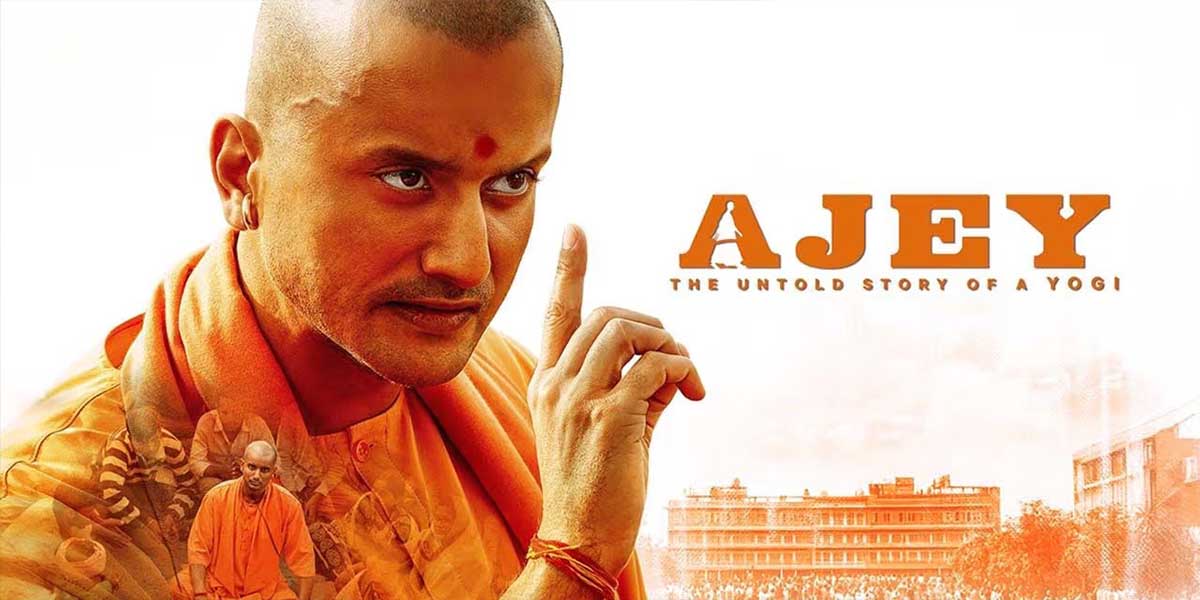
It is striking how quickly lack of marketing leads some producers to resort to manufactured controversy as a substitute for a coherent release strategy. Hindi feature film, ‘Ajey: The Untold Story of a Yogi’, a biopic of Uttar Pradesh chief minister Yogi Adityanath illustrates the risks of that shortcut. The film, directed by Ravindra Gautam with newcomer Anant Joshi in the lead, endured censor delays and repeated postponements, and was released with almost no pre‑release publicity: no sustained trailer campaign, limited social assets, negligible media buying and no visible on‑ground outreach. With no established star, director profile, or promotional momentum, the makers appear to have leaned on controversy to generate interest. Media reports and social chatter suggested that some groups opposed the film and that it faced restrictions in certain overseas markets; those narratives were amplified across news channels and digital platforms, creating a storm of attention that had little to do with the film’s craft or storytelling. By contrast, Jolly LLB 3 benefited from classic, disciplined marketing: franchise recognition, TV integrations, viral short‑form content and broad social amplification. The result was Jolly LLB 3 reported opening day collection of around Rs 13 crore, while Ajey managed barely Rs 20 lakh nationwide. That gulf underlines a simple truth: controversy is not a marketing plan. Manufactured outrage may produce headlines, but it rarely translates into sustained audience trust or ticket sales. The Ajey case serves as a cautionary tale for low‑budget and debut projects. Effective promotion need not be extravagant, but it must be strategic: clear positioning, targeted digital spend, festival and critic engagement, and grassroots visibility. When films are launched without those basics, manufactured controversy becomes an all‑too‑tempting, and usually ineffective, fallback.
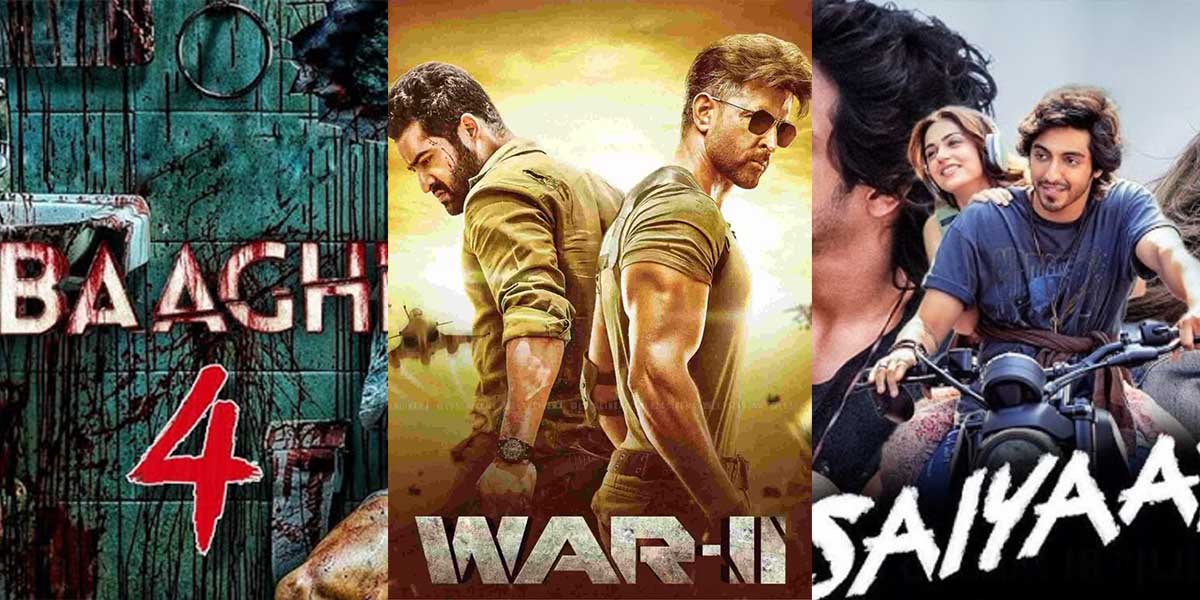
Recent box‑office disappointments from Baaghi 4 and War 2 to the latest Housefull 5 instalment, all underline a fundamental shift: the star cast no longer guarantees good openings. In past decades marquee names could single‑handedly generate massive opening weekends; today even established superstars such as Tiger Shroff, Hrithik Roshan, Akshay Kumar, Salman Khan, Shahid Kapoor and Jr NTR struggle to ignite the immediate surge that once defined success. High‑profile casts with weak concepts are faltering, while content‑led films and global formats are finding passionate, sustainable audiences. Younger viewers, particularly Gen Z, now prioritise authenticity, narrative innovation and experiential value over celebrity worship. They binge Korean dramas, embrace Japanese anime like Demon Slayer, attend immersive live experiences and discover diverse global content on OTT platforms. The enthusiastic reception for Demon Slayer’s theatrical release and the success of content‑driven films such as Saiyaara demonstrate that strong storytelling, memorable music and convincing world‑building can outdraw even big‑name star vehicles. Conversely, titles that leaned primarily on star power including some recent franchise entries like Baaghi 4 and Housefull 5 have failed to translate celebrity into sustained box‑office momentum. For filmmakers, producers and studios the implications are clear. First, invest in content development: prioritise script refinement, richer character arcs and tonal clarity before locking in headline casting. Second, align casting to story needs rather than assuming star wattage will compensate for weak material. Third, embrace mid‑budget, high‑concept projects that allow creative risk and targeted marketing rather than relying solely on costly tentpoles.
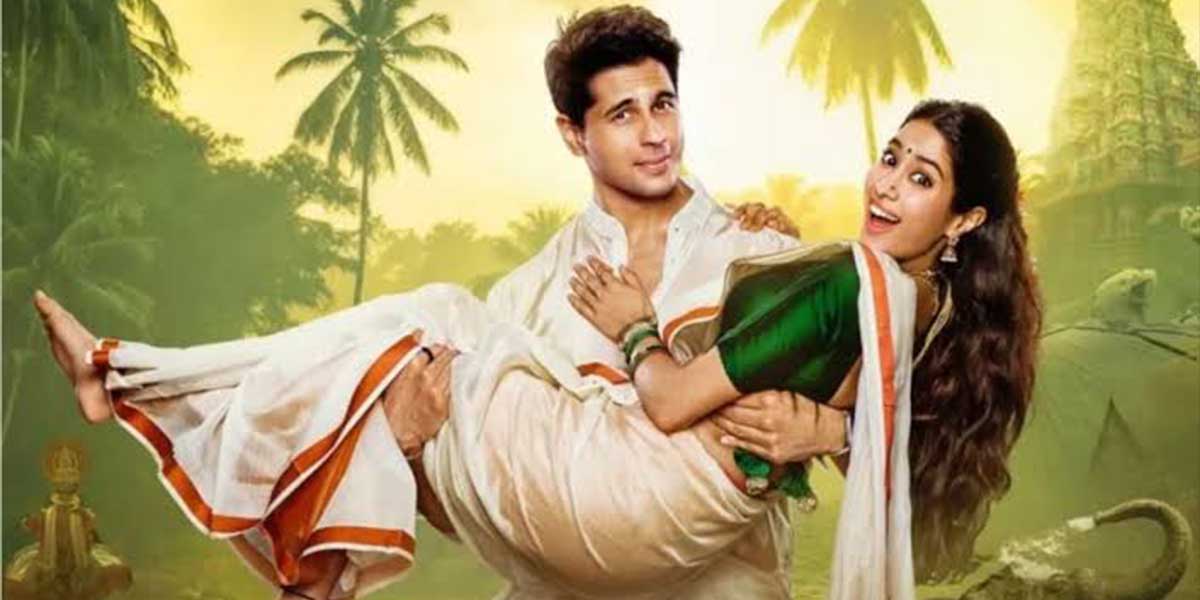
‘Param Sundari’s opening weekend has put a spotlight back on Siddharth Malhotra’s commercial pull — and the picture isn’t flattering. The film debuted with a Friday of roughly Rs 7.25 crore and, with mixed-to-negative reviews and early controversies (criticism over the portrayal of a Malayali character by Janhavi Kapoor, stereotypical use of Mohiniyattam and jasmine motifs, claims about one song’s origins), is now pegged to finish the weekend near Rs 25 crore. With an estimated production cost of around Rs 50 crore, and reported fees of about Rs 12 crore for Siddharth and Rs 5 crore for Janhvi, theatrical recovery looks challenging unless the film finds strong legs or ancillary revenue. Siddharth’s track record in recent years has been uneven. He has had high points — notably Ek Villain and his supporting turn in Kapoor & Sons — but several solo outings such as Yodha, Thank God, Jabariya Jodi, Mission Majnu, Marjaavaan and others failed to translate into consistent box-office domination. That patchy filmography suggests he is not, at present, a reliably bankable solo star who can guarantee big openings that make producers comfortable taking large commercial bets. In Param Sundari’s case, the controversies and perceived lack of charm relative to mainstream entertainers have clearly dampened audience enthusiasm. The film also invited unfavourable comparisons to more successful masala entertainers like Chennai Express. For Siddharth to reassert himself as a genuine box-office force he needs sharper script choices, stronger director collaborations, and perhaps strategic fee negotiations so producers can allocate more to production and promotion. After Param Sundari he is not a guaranteed box-office anchor.

Aryan Khan’s directorial debut arrives with a confident, offbeat pulse that immediately distinguishes it from routine star launches. The promo’s cheekiest beat comes when Aryan breaks the fourth wall, addressing the camera as the familiar, violin-laced Shah Rukh Khan motif plays — an audacious, meta wink that signals reverence without reverence’s usual stiffness. That tonal gamble pays off: the piece feels mischievous and smart rather than self-important. Visually, the promo is polished and assured. Clean frames, slick colour palettes and an Arri Alexa–style sheen hint at streaming-grade cinematic ambition. Art direction and sound design suggest a larger production muscle at work, while the supporting cast — names like Bobby Deol and Raghav Juyal — promise layered turns that complement Aryan’s youthful voice rather than overshadow it. The world he sketches is slightly chaotic and deliberately uncertain, an apt playground for an emerging filmmaker aiming to stake out an identity. Beyond style, the project carries heavyweight goodwill. Glimpses of Shah Rukh Khan and buzz from industry peers amplify attention; Netflix’s visible enthusiasm — from executives in India to global leadership — underscores how much is riding on the series as a conversation-starter for the streamer. But flash isn’t the same as staying power. The promo does its job: it teases tone, talent and production values and provokes curiosity rather than answers. Whether Aryan “scores” will depend on what follows — sharp writing, assured long-form direction and committed performances across episodes. This moment also sits within a broader trend: star children and actor-turned-directors reworking industry legacies into new careers. From the lineage of filmmakers such as Randhir Kapoor and Rakesh Roshan to contemporary scions like Utkarsh Sharma, Junaid Khan and Krishna Shroff exploring directoral roles, filmmaking has long been a family trade.
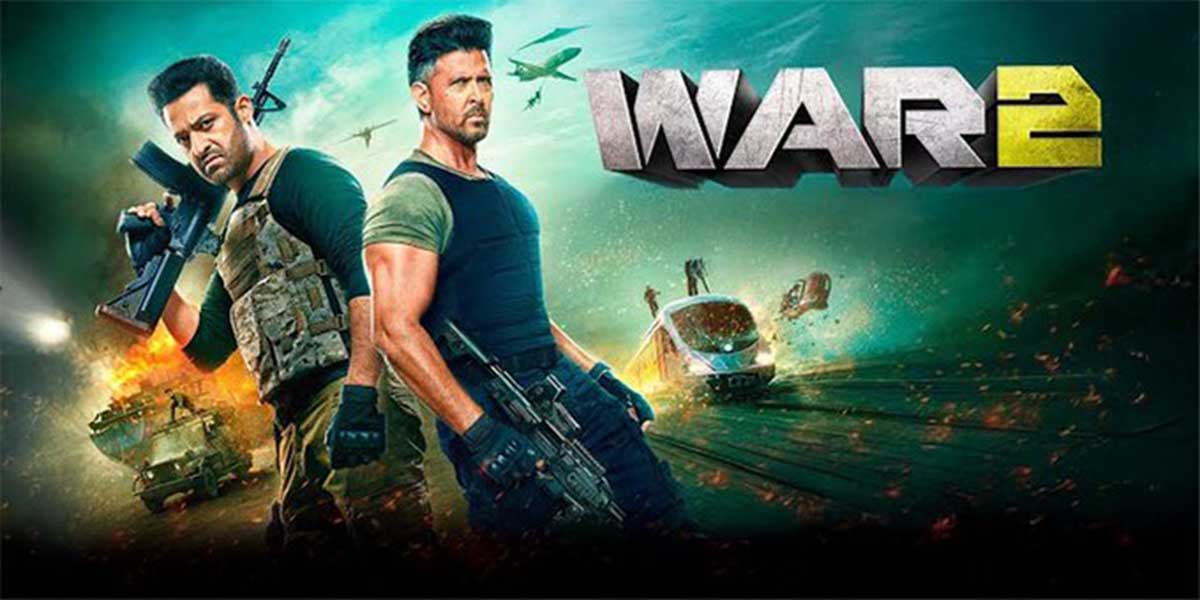
On paper this film had everything: a near Rs 400 crore production, two of India’s biggest stars — Hrithik Roshan and Jr NTR — backed by Kiara Advani, Anil Kapoor and Ashutosh Rana, and the marketing muscle of a major studio. It should have been a global blockbuster. Instead it collapsed under its own weight, and the fault lies squarely with the writers. The story is credited to Aditya Chopra, a name associated with some of Hindi cinema’s biggest commercial properties. The screenplay and execution were entrusted to Sridhar Raghavan (whose earlier work on big projects raised expectations) and dialogue by Abbas Tyrewala, a writer capable of sharp lines. Together they should have turned this star-studded canvas into a taut, emotional spectacle. Instead, overconfidence and sloppy plotting have produced a film that looks spectacular but feels hollow. Technically, the film often delivers: lavish set pieces, slick VFX and ambitious action set-pieces that scream big-budget cinema. But those production values only highlight the script’s failures. Characters are one-dimensional; motivations are perfunctory; scenes exist to justify action rather than to emerge from character. Even sequences that should thrill — aerial dogfights, tense confrontations — veer into the absurd and invite laughter instead of awe. This is not a failure of stars or resources but of storytelling. Aditya Chopra’s confidence in scale seems to have tipped into complacency: the belief that marquee names and massive budgets can substitute for a coherent story. What should have been a Rs 1,000 crore-level tentpole looks unlikely even to cross Rs 250 crore. This movie is a reminder: scale magnifies both strengths and weaknesses. No amount of star wattage, stunts or VFX can compensate for an unmoored script.
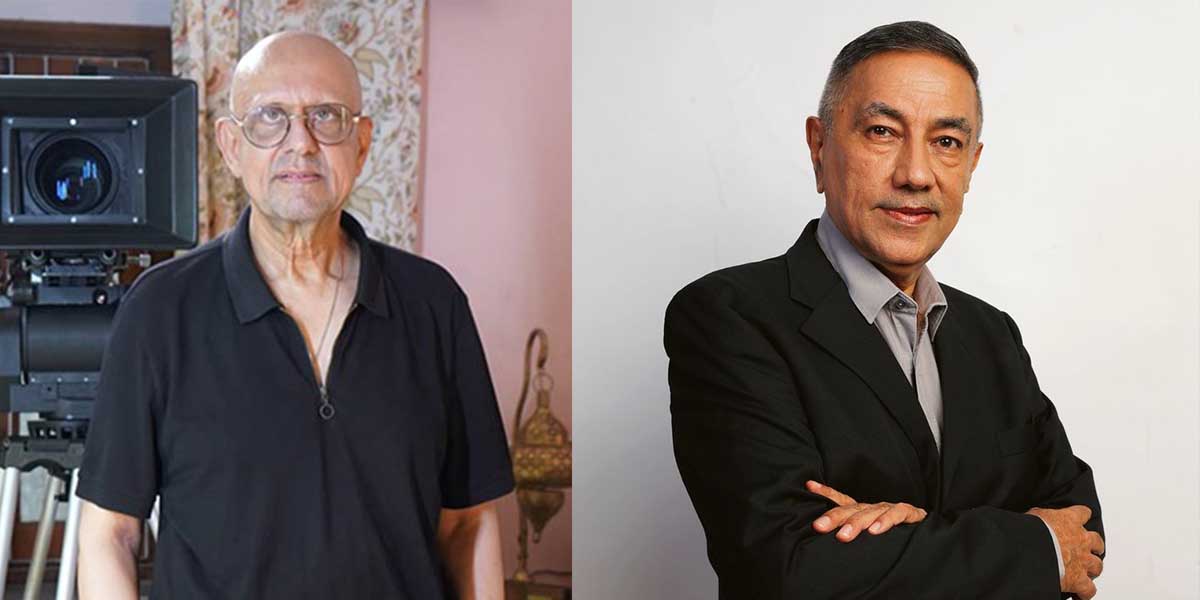
On August 8, 2025, Bollywood witnessed a disheartening chapter for two of its veteran filmmakers, Suneel Darshan and Rajiv Rai, whose latest releases, Andaaz 2 and Zora respectively, met with resounding rejection at the box office. These senior filmmakers, once titans of the Hindi film industry, are struggling to resonate with today’s audience, their latest works exposing a stark disconnect rooted in their adherence to outdated storytelling and production styles. Suneel Darshan, celebrated for launching stars like Priyanka Chopra and delivering hits like Jaanwar (1999) and Andaz (2001), returned with Andaaz 2, a sequel banking on nostalgia. Similarly, Rajiv Rai, known for stylish, music-driven blockbusters like Vishwatma (1992) and Gupt (1997), presented Zora, a murder mystery. Both films crumbled because of poor execution, weak screenplays and ineffective marketing. Andaaz 2 featured music by Nadeem of Nadeem-Shravan fame and lyrics by Sameer, the names synonymous with 90s chartbusters, but the soundtrack failed to evoke the same magic, sounding dated and uninspired. Zora’ suffered from a weak narrative and forgettable music, failing to capture the intrigue expected of a thriller. Both films were dismissed by audiences underscoring a critical truth: nostalgia alone cannot sustain success in today’s dynamic cinematic landscape. Interviews with Suneel Darshan and Rajiv Rai reveal a bitterness toward past collaborators, particularly actors who no longer align with their projects. This resentment, coupled with their reliance on 90s filmmaking tropes —melodramatic narratives, formulaic music, and predictable plots —highlights their struggle to adapt. The failure of Andaaz 2 and Zora mirrors the struggles of other veterans like Subhash Ghai and Ram Gopal Varma. Filmmakers, regardless of past laurels, must shed outdated baggage and embrace modern techniques.
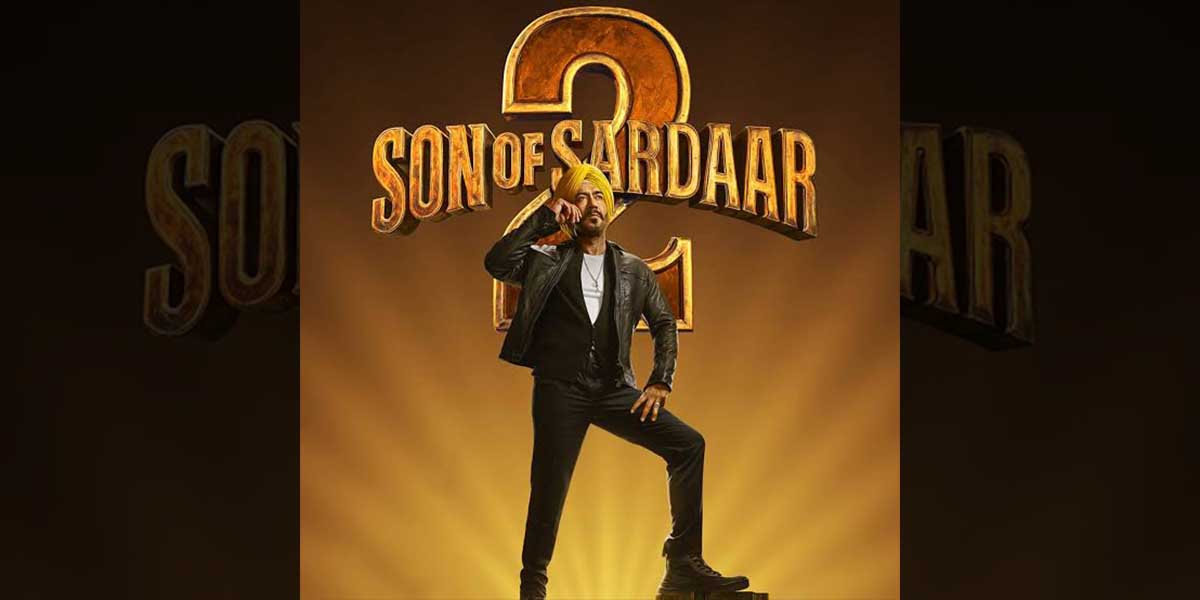
The release of Son of Sardaar 2 was notably overshadowed by a fierce competition with Dhadak 2, as both films contended for screen space during the ongoing box office success of Saiyaara. Despite the latter’s impressive performance, which left exhibitors reluctant to allocate screens to Son of Sardaar 2, the film ultimately managed to secure a substantial release. The makers had hoped that by postponing their film by a week, they would allow Saiyaara to run its course, thus creating a safer release window. However, to their dismay, Saiyaara continued to dominate the box office, raking in significant revenue even in its second weekend. Opening with a disappointing collection of Rs 7.25 crore on Day one, Son of Sardaar 2 fell short of expectations, particularly given its substantial production budget of approximately Rs 70 crore. It experienced a modest increase on Day two at Rs 8.25 crore and Rs 9.25 crore on Day three (Sunday), bringing its weekend collection to around Rs 25 crore. This figure is considered inadequate for a film of its scale, as even the prequel was just an average fare released in 2012. Critics and audiences alike were quick to point out the film’s outdated humor and weak character development, particularly in Ajay Devgn’s portrayal of the titular “Innocent Sardar.” The casting of Devgn in a role that required a more innocent and naïve demeanor felt misaligned, leading to a perception of the character as a caricature rather than a relatable figure. The writing and overall execution suffered from a lack of freshness, which significantly diminished the film’s appeal. Ultimately, the failure of Son of Sardaar 2 can be attributed to a combination of poor script choices by Ajay Devgn , drawing unfavourable comparisons to his past disasters like Bhola and Auro Me Kaha Dum Tha.
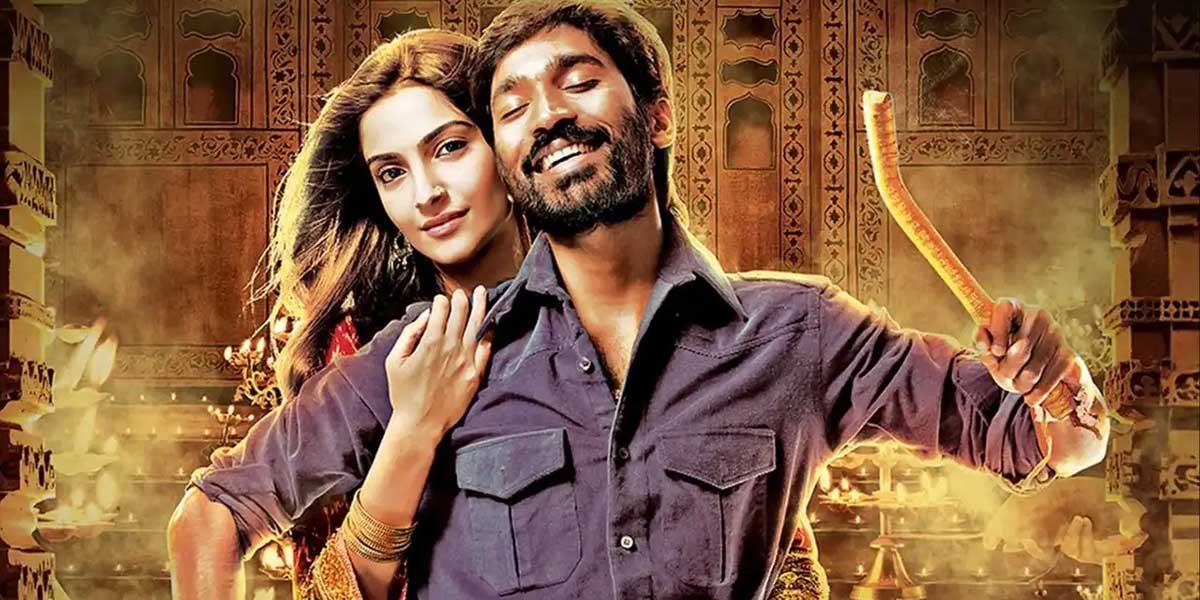
The 2013 film Raanjhanaa directed by Aanand L Rai, stands as a testament to the power of storytelling, featuring an unconventional pairing of Dhanush and Sonam Kapoor. Its memorable music and poignant direction marked a significant milestone in Indian cinema, propelling Rai into the realm of celebrated directors. The film’s narrative, with its bittersweet ending, resonated deeply with audiences, creating a lasting emotional impact akin to classics like Sadma, Qayamat Se Qayamat Tak and Ek Duje Ke Liye. In the age of artificial intelligence, the temptation to alter established narratives for the sake of novelty or entertainment poses a significant threat to the integrity of original works. The notion of revisiting Raanjhanaa to create a happier ending, albeit under the guise of innovation, undermines the artistic vision of its creators, including the director and writer. Once a film is released into the public domain, it becomes a shared experience, and any post-release alterations—especially those that disregard the original intent—can be seen as a disservice to the creative process. Eros International, the rights holder of Raanjhanaa pursuing an alternate ending without the director’s consent is not just an inappropriate approach; it sets a troubling precedent for other producers. Such actions could lead to a slippery slope where the creative authority of filmmakers is undermined, allowing producers to alter endings at will. Using AI to trivialize or distort established narratives is a misuse of technology. As we navigate the intersection of technology and creativity, it is crucial to uphold the sanctity of original narratives, ensuring that the heart of storytelling remains intact.
The trailer for ‘War 2’ has all the ingredients of a quintessential masala potboiler, promising to deliver an exhilarating cinematic experience. As the sixth instalment in the expansive Spy Universe of Yashraj Studios, this film boasts impressive production values, breathtaking action sequences and a palpable energy that is sure to captivate audiences worldwide. Starring Telugu superstar NTR Jr and Bollywood icon Hrithik Roshan, the film is set to release on August 14th. With simultaneous release in Hindi, Telugu and Tamil, War 2 is expected to make a big impact at the box office. Initial projections suggest that the Hindi box office alone could exceed Rs 50 crore on its opening day, with a global total—encompassing all three languages—expected to surpass Rs 100 crore. If the film crosses the Rs 100-crore mark on its first day, it could potentially gross upwards of Rs 300 crore throughout its theatrical run. Audiences can expect breathtaking visuals, including high-speed chases, intense ground battles, and aerial dogfights, all choreographed to perfection. director Ayan Mukerji, known for his work on Brahmastra brings his visionary approach to the project, while writer-producer Aditya Chopra, celebrated for hits like Tiger 3 and the original War ensures a compelling script. War 2 is shaping up to be the quintessential masala entertainer, blending style, substance and sheer excitement—a formula that has historically resonated with audiences, reminiscent of the fervour generated by the Dhoom franchise for Yash Raj Films.
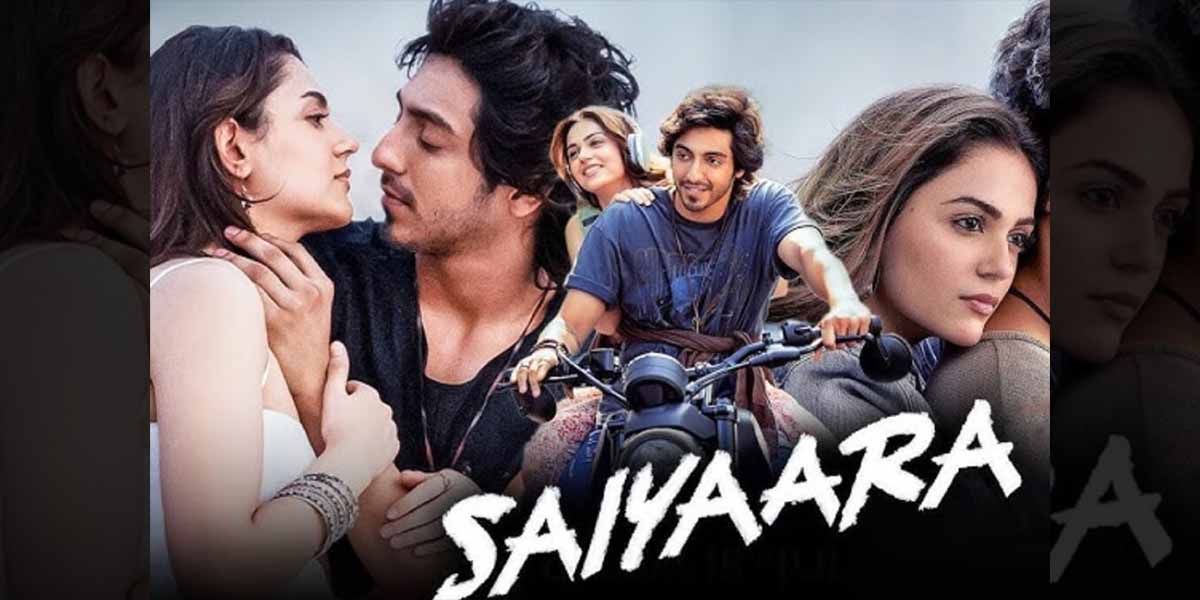
Music has always been a cornerstone of Bollywood, shaping the success of films and the careers of newcomers. This is vividly illustrated in the recent release ‘Saiyaara’, featuring debutants Ahaan Panday and Aneet Padda, directed by the renowned Mohit Suri and produced by Akshaye Vidwani under the Yash Raj Films banner. The film has generated significant buzz, thanks in large part to its captivating soundtrack, which has resonated with audiences and critics alike. With an impressive collection of approximately Rs 45 crore in first two days, it’s clear that the combination of fresh talent and compelling music has struck a chord with viewers. Historically, Bollywood has a rich legacy of launching new stars through films that feature memorable love stories and unforgettable music. Classics like ‘Bobby’ ‘Betab’, ‘Maine Pyar Kiya’ and ‘Qayamat Se Qayamat Tak’ exemplify how the right blend of romance and melody can catapult newcomers into stardom. In Saiyaara, the soundtrack, consisting of seven tracks composed by a talented lineup including Mithoon, Sachet-Parampara and Tanishk Bagchi, serves as a powerful marketing tool, drawing in viewers and creating a lasting impression. In today’s competitive cinematic landscape, a strong musical score can be a game changer. The enchanting melodies and heartfelt lyrics elevate the film’s emotional depth, making the love stories more poignant and relatable. Mohit Suri’s understanding of music, showcased in hits like Aashiqui 2 and Ek Villain Returns shines through in this film, creating an experience that feels like attending a concert. Saiyaara exemplifies how a well-crafted musical experience can pave the way for success, ensuring that both the film and its stars are celebrated long after the credits roll.

Metro In Dino directed by Anurag Basu, has opened to disappointing box office numbers, grossing approximately Rs3.35 crore, a stark contrast to its hefty production budget of Rs100 crore. Despite the film receiving mixed reviews, with some intellectual critics praising its love story, music, and performances—particularly from the lead actress—audience reception has been lukewarm at best. The disconnect between critical acclaim and public enthusiasm is evident, as mainstream viewers have not resonated with the film, leading to a significant drop in expectations. The film’s three-year production timeline raises questions about its viability in an increasingly saturated market. The concept of love anthologies, once fresh and engaging, has been extensively explored across numerous OTT platforms, diluting its novelty. When “Life in a…Metro” was initially conceived in 2007, it boasted a unique premise and a strong musical score, but the landscape has shifted dramatically. With audiences now inundated with similar narratives, the film struggles to stand out. Moreover, the star cast, featuring Aditya Roy Kapoor, Sara Ali Khan, and Pankaj Tripathi, lacks the mass appeal necessary to draw in larger crowds. While each actor possesses talent, they do not command the box office clout that would ensure a successful opening. The ambitious attempt to revisit a concept after 18 years has proven misguided, as audiences have moved on, leaving the film feeling outdated.
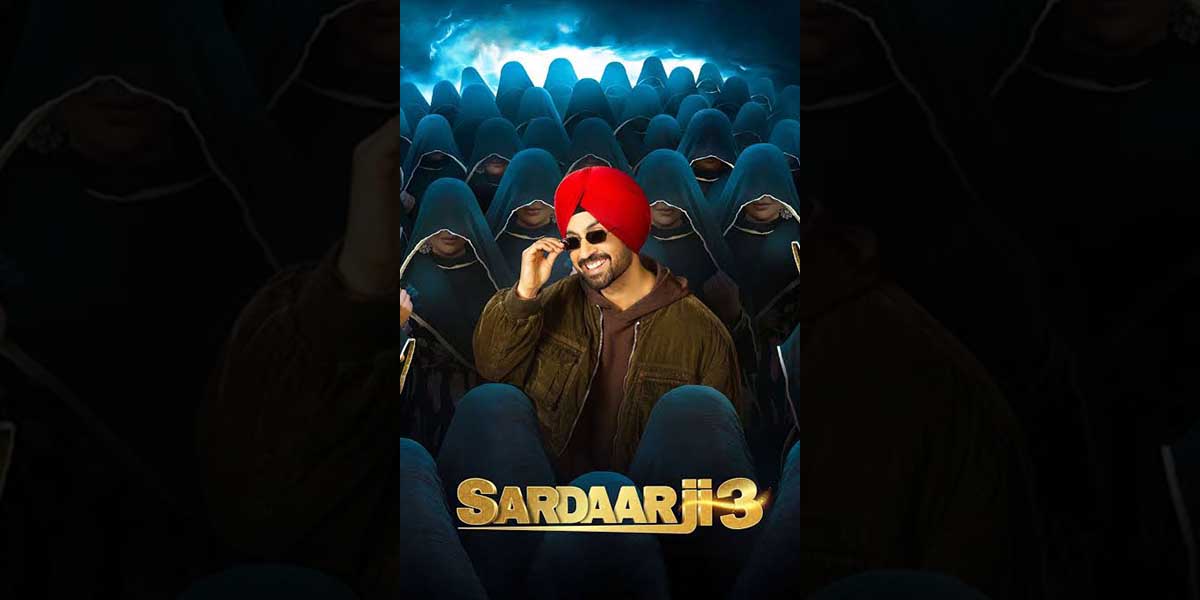
Diljit Dosanjh, a popular figure in the Punjabi music and film industry, finds himself at the centre of a brewing controversy that could significantly impact his career. His film Sardaarji 3, which features Pakistani actress Hania Aamir, has sparked a fierce debate within the Indian film fraternity. It reflects deeper tensions between Indian and Pakistani artists, particularly in light of the ongoing geopolitical issues between the two nations. The Federation of Western India Cine Employees (FWICE), a prominent body representing various stakeholders in the Indian film industry, has voiced its discontent regarding the film’s release. Their concerns stem from a broader sentiment within the industry that seeks to distance itself from Pakistani artists due to past incidents, including provocative social media statements made by some Pakistani celebrities. The FWICE’s opposition is significant, as it holds considerable influence and credibility within the industry, and their stance could lead to serious repercussions for Dosanjh. When confronted with the backlash, Diljit’s dismissive comments about Bollywood raised eyebrows. His apparent indifference to the Indian film industry, which has nurtured his career, could alienate him from a substantial segment of his fanbase. Such behaviour may be viewed as irresponsible, especially for someone in his position, and it poses a risk of escalating tensions further. As the situation unfolds, the potential for a ban on Diljit’s work in India looms large, threatening to overshadow his popularity and success. While he may continue to thrive in international markets, the lack of support from the Indian film community could hinder his growth and acceptance within his home country. While Jasbeer Jassi stood by him, Mika condemned his stand.
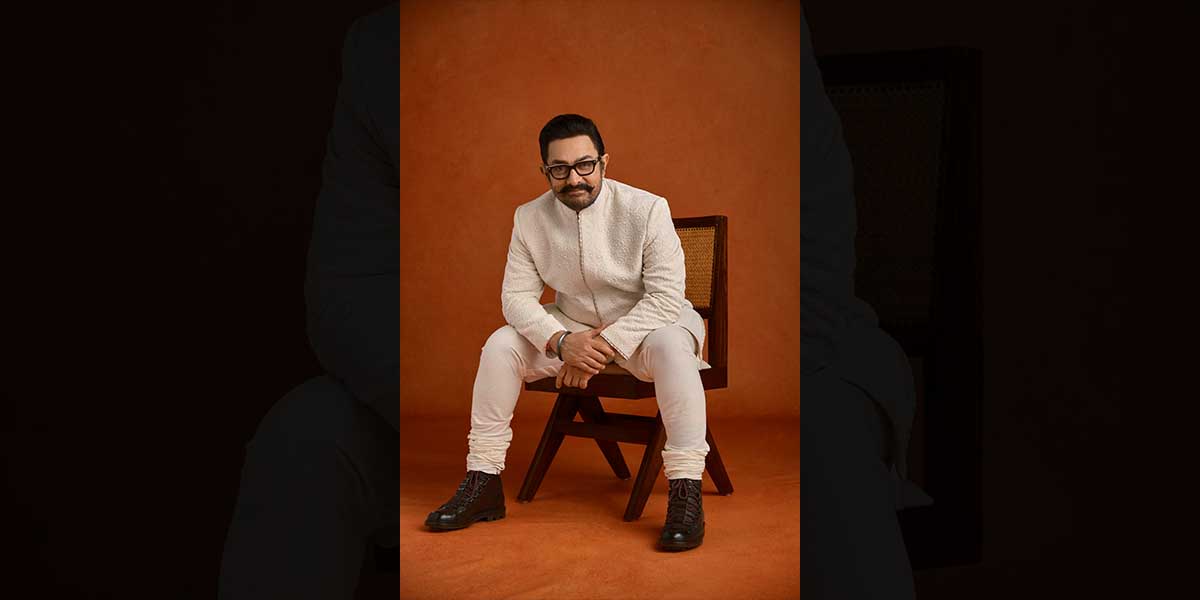
Aamir Khan, hailed as one of Bollywood’s most bankable stars, has consistently pushed the boundaries of Indian cinema with his choice of diverse and thought-provoking roles. However, his latest film, Sitare Zameen Par, which garnered approximately Rs 10.70 crore on its opening day, raises critical questions about the viability of niche cinema in a commercial landscape dominated by mass appeal. While the film showcases Aamir’s commitment to storytelling that resonates with a more elite audience, its limited screen release and lack of mainstream entertainment elements have significantly hampered its box office potential. Unlike his contemporaries, Shah Rukh Khan and Salman Khan, who frequently deliver mass-centric blockbusters, Aamir’s foray into niche narratives may alienate the average moviegoer. The film’s intellectual depth and artistic merit, although commendable, do not cater to the broader audience base that thrives on high-octane entertainment and relatable themes. The expectation for Aamir Khan films to cross the Rs 100-crore mark within the first three days has become a benchmark of success in Bollywood. However, Sitare Zameen Par weekend collections appear to be around Rs35-40 crore, a figure that many industry insiders deem disappointing for a film featuring such a prominent star. This trend raises concerns about the sustainability of niche cinema in a market that increasingly favours commercial viability over artistic expression. As the film fraternity navigates this evolving landscape, it is imperative for stars like Aamir Khan to strike a balance between artistic integrity and audience engagement. While niche films have their place in cinema, the current climate suggests that a more mass-oriented approach may be necessary to foster the growth of Indian cinema as a whole.
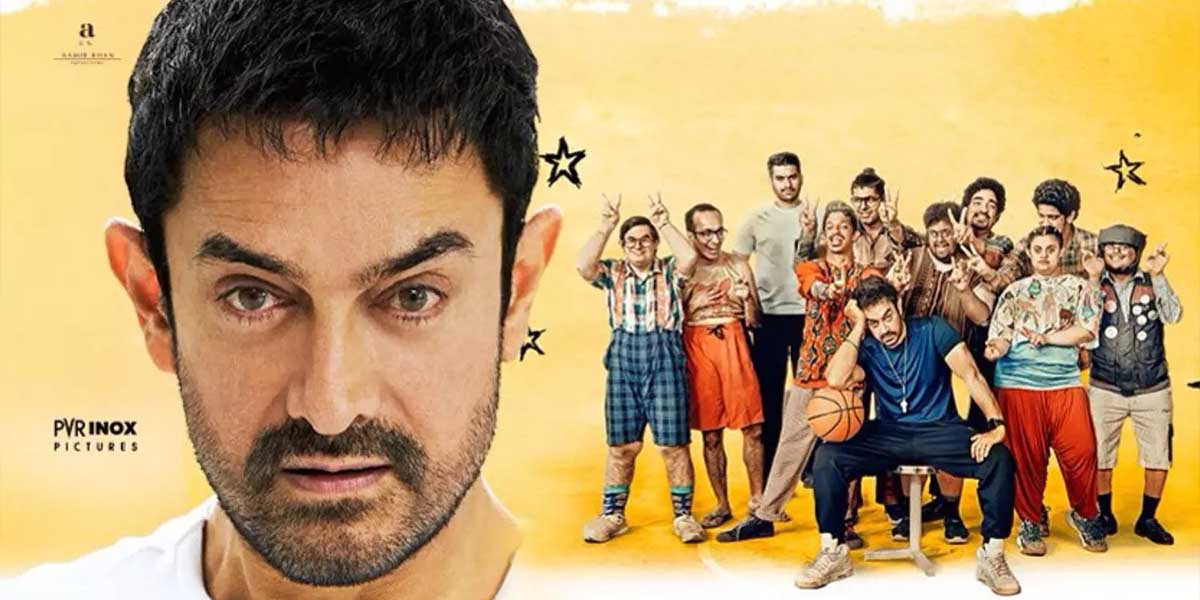
The question of whether Aamir Khan’s overexposure could hinder the success of Sitare Zameen Par is a compelling one. Aamir Khan is not only a celebrated filmmaker but also a masterful marketer. His ability to craft and dictate marketing strategies has played a significant role in the success of many films he has produced and starred in, including Lagaan, Rang De Basanti, Taare Zameen Par, Ghajini and more. He has consistently demonstrated an understanding of what resonates with audiences, employing innovative marketing techniques that have included unique promotional stunts and celebrity engagements. However, with Sitare Zameen Par, Aamir’s omnipresence in the media raises concerns. He is currently everywhere — on podcasts, TV interviews, and social media—actively promoting the film by inviting celebrities and influencers to his home for discussions. While this level of visibility can create buzz, it risks becoming counterproductive. The saturation of Aamir Khan in promotional activities may lead audiences to feel overwhelmed, diluting the film’s impact and excitement. Effective marketing should strike a balance between visibility and intrigue. While traditional methods such as social media campaigns, public relations efforts, and billboard advertisements are essential, they should be complemented by innovative strategies that captivate the audience’s imagination. The current promotional approach for Sitare Zameen Par seems to rely heavily on routine visibility without offering a compelling narrative or unique engagement. Aamir Khan has previously employed similar strategies with his son Junaid’s film Loveyapa where he invited notable personalities like Raj Thackeray, Sachin Tendulkar and Salman Khan for special pre-release screenings. However, despite the visibility, the film did not perform well, highlighting that increased exposure does not guarantee success.

The Indian cinema landscape is undergoing a transformative phase, characterized by bold choices and innovative storytelling. Aamir Khan’s decision to release his ambitious film, Sitare Zameen Par on YouTube channels instead of traditional OTT platforms exemplifies this shift. This choice aims to reach a broader audience, tapping into the millions who turn to YouTube for entertainment. By opting for this route, Khan seeks to engage a diverse demographic, ensuring that the film’s poignant themes of childhood, creativity, and the nurturing of talent resonate across various backgrounds. Sitare Zameen Par is set to spark conversations and inspire change in societal perceptions regarding education and artistic expression. Conversely, Sajid Khan’s Housefull 5 takes a different approach within the same industry. Renowned for its comedic flair, the Housefull franchise embraces the absurd and entertaining. This latest instalment promises to innovate further by introducing multiple endings, a groundbreaking concept in Indian cinema. This narrative technique will witness different endings in different Cinema and in fact, different screens as well. Such an approach could redefine audience excitement in the suspense genre in Bollywood, encouraging future filmmakers to explore unconventional storytelling methods. Both films, despite their differing genres, highlight the willingness of Indian filmmakers to experiment and take risks. Aamir Khan focuses on socially relevant themes, while Sajid Khan delivers entertaining escapism, showcasing the diverse storytelling that Indian cinema is embracing. As filmmakers navigate the digital landscape, blending traditional and modern distribution methods will likely become more common. With both Sitare Zameen Par and Housefull 5 exemplifying the coexistence of meaningful narratives and entertaining spectacles, audiences are invited to engage with some experiments as well.

Kamal Haasan, a multifaceted talent known for his remarkable acting and producing prowess, has often found himself at the center of political controversies. His statements frequently spark debates, and his recent remarks have once again placed him in a contentious spotlight. While promoting his highly anticipated film Thug Life directed by the acclaimed Mani Ratnam, Haasan made a statement in Karnataka suggesting that Kannada is derived from Tamil. Although he intended this comment to reflect love and affection, it was met with immediate backlash from pro-Kannada groups and various political organizations. The timing of this controversy is particularly precarious, as Thug Life is set to release on June 5, just days away. The film, featuring music by the legendary AR Rahman, is one of Haasan’s most ambitious projects, and the surrounding controversy could jeopardize its success. Many fans, as well as fellow politicians and industry colleagues, advised Haasan to issue an apology to mitigate the situation and ensure a smoother release. However, Haasan stood firm, asserting that he had no intention of apologizing, which has only intensified the backlash. This situation is reminiscent of the challenges he faced during the release of Vishwaroopam where political controversies resulted in significant financial losses. The current climate of heightened sensitivity surrounding regional identities in India adds another layer of complexity to the issue. Haasan’s refusal to back down could alienate potential audiences in Karnataka, a significant market for his films. As the release date approaches, the tension surrounding Thug Life raises concerns about its commercial viability. The potential for protests or calls for a ban could significantly impact box office performance, making it a risky venture for Haasan and his production team.
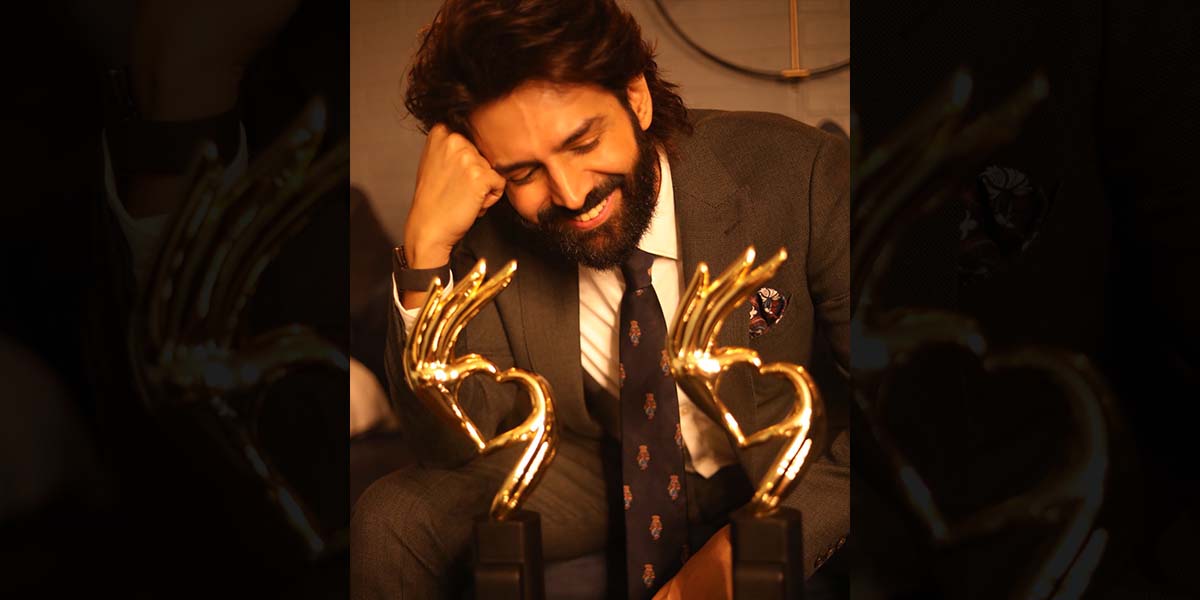
Kartik Aaryan has recently made headlines by clinching two of the most prestigious awards in Indian cinema: the Popular Best Actor for ‘Bhool Bhulaiyaa 3’ and Critics’ Best Actor for ‘Chandu Champion’ at the Zee Cine Awards 2025. This remarkable achievement underscores his versatility as an actor, proving that he is not only adored by fans but also respected by critics. His recent film, Chandu Champion portraying the character of Paralympics Gold Medalist Murlikant Petkar has garnered significant praise, highlighting his ability to take on diverse roles. Additionally, his portrayal of the quirky Rooh Baba in Bhool Bhulaiyaa 3 further solidified his status as a popular actor earning him accolades and recognition. Kartik’s journey has not been without its challenges. He faced a significant setback when he had a public fallout with renowned filmmaker Karan Johar. Reports surfaced claiming that Aaryan was unprofessional, so Johar’s Dharma Production dropped him from Dostana 2. It was followed by Shah Rukh Khan promoted Red Chillies Entertainment dropping him from Good-Bye Freddie. This conflict with such a heavyweight in the industry was a bold move, demonstrating his courage and confidence. Despite the controversy, Kartik managed to deliver hits like Satya Prem Ki Katha and Bhool Bhulaiyaa 2 establishing himself as a bankable star. In an unexpected turn of events, news has emerged that Kartik and Karan are set to collaborate on a new film. This development serves as a reminder that in the film industry, relationships can be complex and ever-changing. It is a testament to Kartik’s maturity that he can mend fences and move forward, proving that in Bollywood like politics there are no permanent friends, no permanent enemies, only permanent interests.

The Indian box office is currently witnessing an exhilarating showdown as two major film franchises go head-to-head this week. First up is Final Destination: Bloodline, the sixth instalment of the iconic horror thriller series, making its much-anticipated return after a 14-year gap since its fifth film. This franchise has built a loyal fan base over the years, thanks to its masterful blend of suspenseful storytelling and innovative horror elements. The captivating narrative and high production values have earned it a cult status, making it one of the most awaited releases in the horror genre. On the flip side, we have Mission: Impossible – The Final Reckoning, the second part of the franchise’s final instalment and the eighth entry in this legendary action series starring Tom Cruise. Initially set for a May 23 release in India, Paramount Studios has opted to advance it to May 15 coinciding with Final Destination: Bloodline. The stakes are high, particularly for Tom Cruise starrer which has previously achieved remarkable box office success in India, demonstrating a strong appetite for action-packed thrillers. Meanwhile, Final Destination: Bloodline is poised to draw horror enthusiasts eager for the next chapter in this beloved saga. As excitement builds among moviegoers, early projections indicate that Mission: Impossible – The Final Reckoning could rake in Rs20 -22 crore on its opening day. However, with both films vying for audience attention, this week promises to be a pivotal moment for Indian cinema.

As the release date of Housefull 5 approaches on June 9, renowned producer Sajid Nadiadwala finds himself at a crucial juncture. This highly anticipated instalment of the successful franchise is expected to be a litmus test for both Nadiadwala and the current state of the Indian film industry, particularly amidst the backdrop of rising political tensions between India and Pakistan. The challenges posed by these tensions could impact audience turnout and overall box office performance. Nadiadwala, who recently faced a string of disappointing releases — including Sikandar, Chandu Champion and Bachchan Pandey — has invested significantly in acquiring the rights to the trending song “Lal Puri” hoping it will resonate with audiences. The recent underperformance of his films, coupled with a generally lacklustre box office climate, has raised questions about the viability of his production house, Nadiadwala Grandson Entertainment. Housefull 5 boasts an impressive ensemble cast featuring Akshay Kumar, Riteish Deshmukh, Abhishek Bachchan, and more, making it one of the biggest films in recent times. The film’s success is not just vital for Nadiadwala; it could also serve as a bellwether for the exhibition sector in India, gauging whether audiences are ready to embrace cinema again after a period of uncertainty. As the film aims to capture the essence of what the Housefull franchise represents—comedy, entertainment, and escapism—its reception will be closely watched. Will it manage to overcome the prevailing sentiment and deliver a blockbuster experience, or will it join the ranks of recent flops? For Nadiadwala, Housefull 5 is not just another film; it’s a pivotal moment that could redefine his career and the future of Bollywood in these testing times.

The first week of May saw the release of six prominent films, each generating substantial buzz across various media platforms. The line-up includes two Hindi films featuring star power — Ajay Devgn’s Raid 2 and Sanjay Dutt’s The Bhootnii. The South Indian film industry saw three noteworthy entries: Retro a Tamil film starring Suriya, Tourist Family also a Tamil movie and Hit 3, a Telugu franchise film featuring the popular actor Nani. Among these films, Hit 3 is projected to perform exceptionally well at the box office, potentially raking in between Rs 90 to Rs 95 crore over its first weekend. This strong showing is indicative of the film’s popularity and the franchise’s established fan base. Meanwhile, Suriya’s Retro is also receiving positive reviews and expected to gross around Rs 80-85 crore in its opening weekend, further solidifying the trend of South Indian films capturing audience attention. Ajay Devgn starrer Raid 2 is expected to earn around Rs70-75 crore over the extended four-day weekend. Meanwhile Sunjay Dutt’s The Bhootni has not fared as well. It is struggling to surpass Rs 5 crore in its opening weekend; a major setback for the filmmakers. Turning to the Hollywood segment, Thunderbolts has also fallen short of expectations. Initial projections indicate it will earn between Rs 10-15 crore over the weekend, a figure that reflects a lukewarm reception from audiences. In summary, the first weekend of May has clearly demonstrated a prevailing trend: South Indian cinema is currently leading the box office race, with three of the six releases performing strongly. As the weekend progresses, it will be intriguing to observe how these films continue to perform and what this means for the future of Indian cinema as a whole.
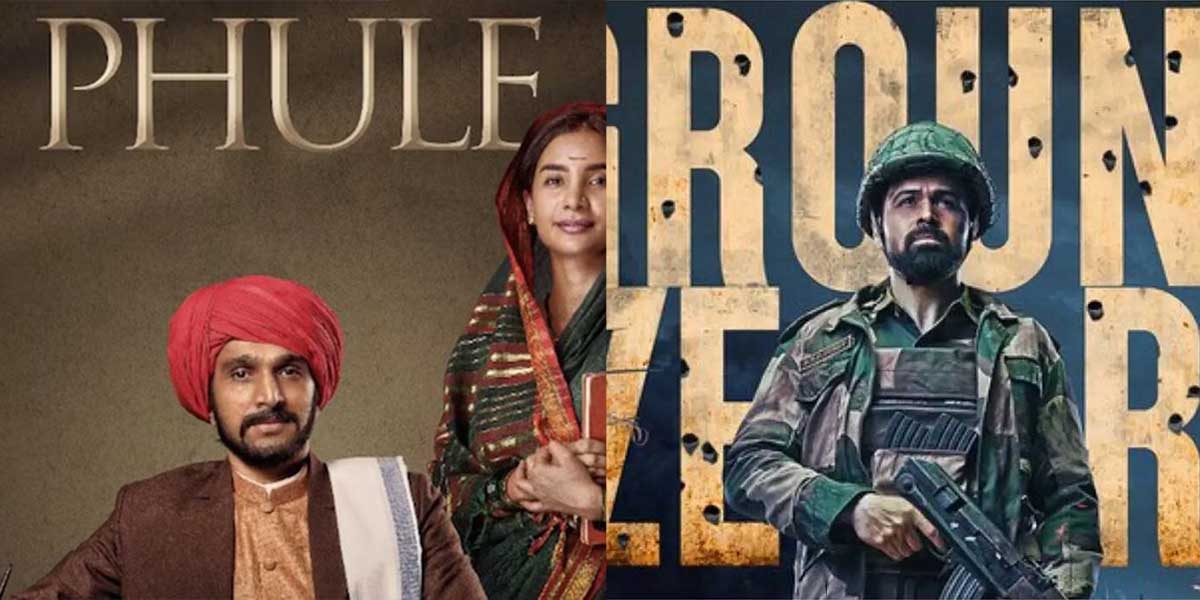
This week has been particularly bleak for the Indian box office with a series of film releases failing to resonate with audiences and resulting in dismal collections. Ground Zero, featuring Emraan Hashmi and Sai Tamhankar opened with a mere Rs 1.15 crore, and despite a slight uptick to Rs 1.90 crore on its second day, the total collection of Rs 3.05 crore over the weekend is far from impressive. Lack of effective marketing played a significant role as it struggled to gain visibility and attract viewers. With no substantial draw for Emraan Hashmi, the film was destined for disaster. So too was Ananth Mahadevan’s Phule. The film was mired in controversy, particularly due to opposition from certain groups in Pune and an outburst from Anurag Kashyap regarding Brahmin representation. Despite the buzz surrounding these issues, the film starring Prateek Gandhi and Patralekha, opened to a disappointing Rs 21 lakh on its first day. Although the reviews praised the direction and storytelling, the film managed to collect a meagre Rs 47 lakh over the weekend. This is one of the most underwhelming openings in recent memory, especially considering the positive reviews. The re-release of the classic Andaz Apna Apna was anticipated to follow in the footsteps of successful re-releases like Sanam Teri Kasam. However, it too fell flat, opening with just Rs 25 lakh on its first day…culminating in a total of Rs 55 lakh over the weekend. This performance is disappointing for a film with such a legacy, indicating that nostalgia alone is not enough to draw audiences back to theatres. Overall, the fate of these three Hindi films can be described as disastrous. Factors contributing to their lacklustre performance include weak scripts, average brand recall, insufficient visibility, and inadequate marketing strategies.
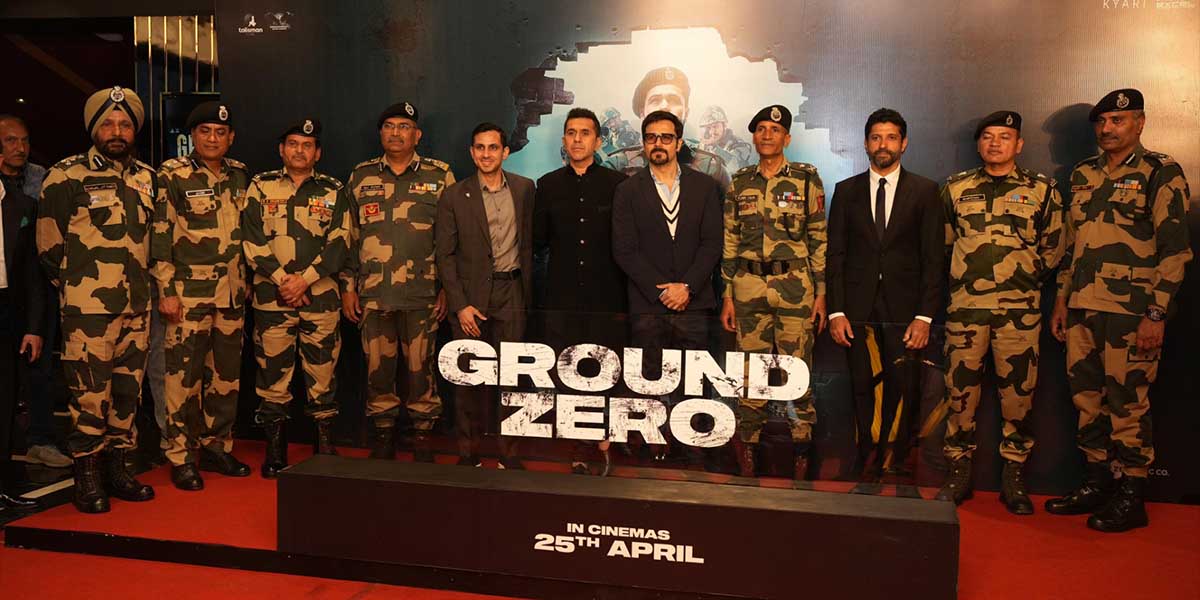
Action thriller Ground Zero featuring Emraan Hashmi and Sai Tamhankar in the lead roles is set for release. Directed by Tejas Deshkar, known for his work in both Marathi and Hindi cinema, the film has generated a fair amount of buzz, primarily due to its intriguing premise and the involvement of notable producers Ritish Sidhwani and Farhan Akhtar’s Excel Entertainment. Originally, a grand premiere was planned in Kashmir, marking as the first major film event in the region in recent years. However, due to security concerns, this event was cancelled. As the film gets ready for its release, there seems to be a palpable lack of excitement surrounding it, which raises questions about its potential success. Emraan Hashmi, while a recognizable name in Bollywood, has not proven to be a leading man who can shoulder the weight of an entire film. His recent works, such as The Body, Baadshaho, Selfie and Mumbai Saga have not particularly stood out, often blending into the background of a crowded cinematic landscape. Even his much-anticipated role as a villain in Tiger 3 failed to leave a lasting impression, as his character was underdeveloped and did not resonate with audiences. The casting of Hashmi as a Border Security Force (BSF) commander in Ground Zero raises eyebrows as his previous performances suggest he may not possess the gravitas required for such a pivotal role. Hashmi’s track record suggests that he may not bring the necessary passion and dedication to the character of a BSF commander. So, one has to wait and watch to see whether Hashmi will deliver a performance that defies expectations.

The highly anticipated latest Hindi release Jaat which generated considerable excitement with its initial trailer release, ultimately fell short of expectations at the box office. Despite a strong opening, the film’s marketing strategy failed to maintain the momentum created by the initial euphoria. Released on Mahavir Jayanti, Jaat managed to collect Rs 9.5 crore on its opening day (Apr 10), but this figure dropped to Rs 7 crore on Friday (Apr 11). The weekend saw a slight rebound, with Saturday’s collection reaching Rs 9.75 crore and Sunday (Apr 13) peaking at Rs 14 crore, driven by positive word-of-mouth and favorable reviews. However, the following week revealed a decline, with Monday’s (Apr 14) earnings at Rs 7.25 crore and Tuesday dropping to Rs 6 crore, leading to a total domestic box office collection of approximately Rs 53.5 crore within the first six days. Given its production budget of Rs 100 crore, these figures are disappointing, especially since industry expectations were for Jaat to surpass the Rs 100-crore mark during its extended opening weekend. While the film may still prove to be a profitable venture for its lead actors, Sunny Deol and Randeep Hooda, the filmmakers face significant challenges in recouping their investment. The average performance of Jaat highlights the importance of sustained marketing efforts and audience engagement beyond the initial release phase. As the film’s prospects now hinge on OTT platform releases and overseas markets, it underscores the volatile nature of box office success and the critical role of strategic promotion in maximizing a film’s potential.
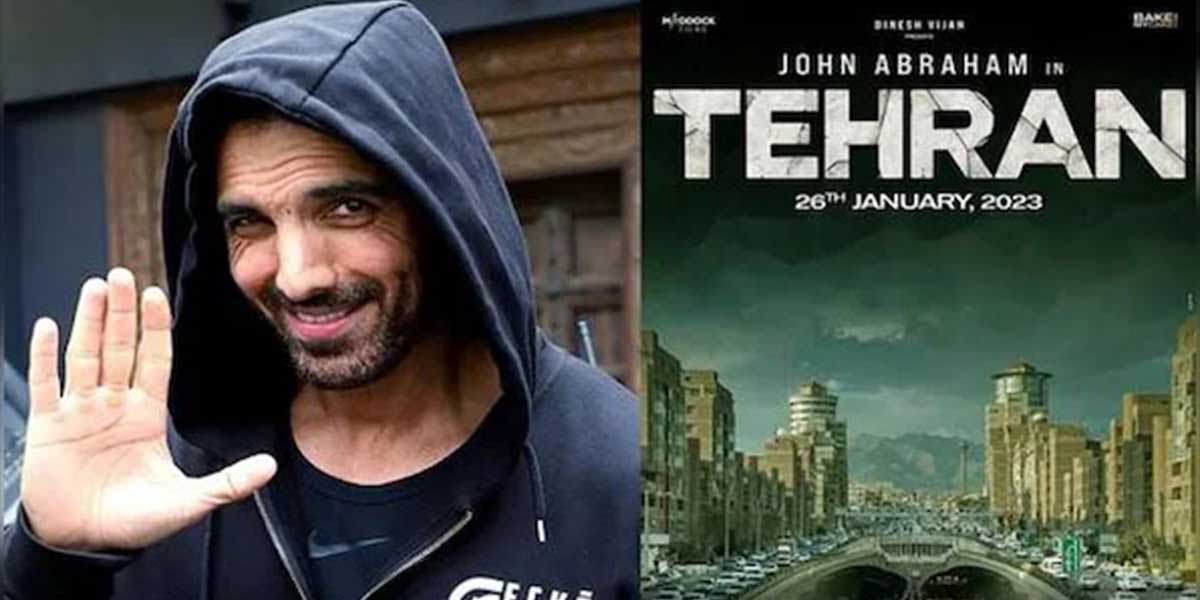
John Abraham has long struggled to establish himself as a consistent box office draw, and his recent release, The Diplomat, exemplifies this ongoing challenge. Despite the film’s potential, it has failed to recover its production costs, raising serious questions about Abraham’s viability as a producer. The film faced a protracted release timeline of over a year, primarily due to a lack of interest from its production partner, T-Series, and poor marketing strategies. The promotional efforts, which relied heavily on the presence of a real diplomat, did little to enhance visibility or generate audience excitement. Given the backdrop of several recent disappointments, including Veda, Ek Villain Returns and Satyamev Jayate 2, Abraham’s track record at the box office has become increasingly questionable. While Pathaan achieved remarkable success, it is essential to note that this triumph belongs to Shah Rukh Khan rather than Abraham. The disappointing performance of The Diplomat, which received critical acclaim but failed to resonate with mainstream audiences, casts a long shadow over his upcoming project, Tehran. With the fate of The Diplomat likely to influence the reception of Tehran, Abraham faces an uphill battle in securing a successful release. The lack of spectacular content in The Diplomat suggests that Tehran may encounter similar challenges. As audiences continue to demand engaging narratives and compelling performances, John Abraham must reassess his approach to both acting and production if he hopes to revitalize his career and reclaim his status in the competitive landscape of Bollywood.
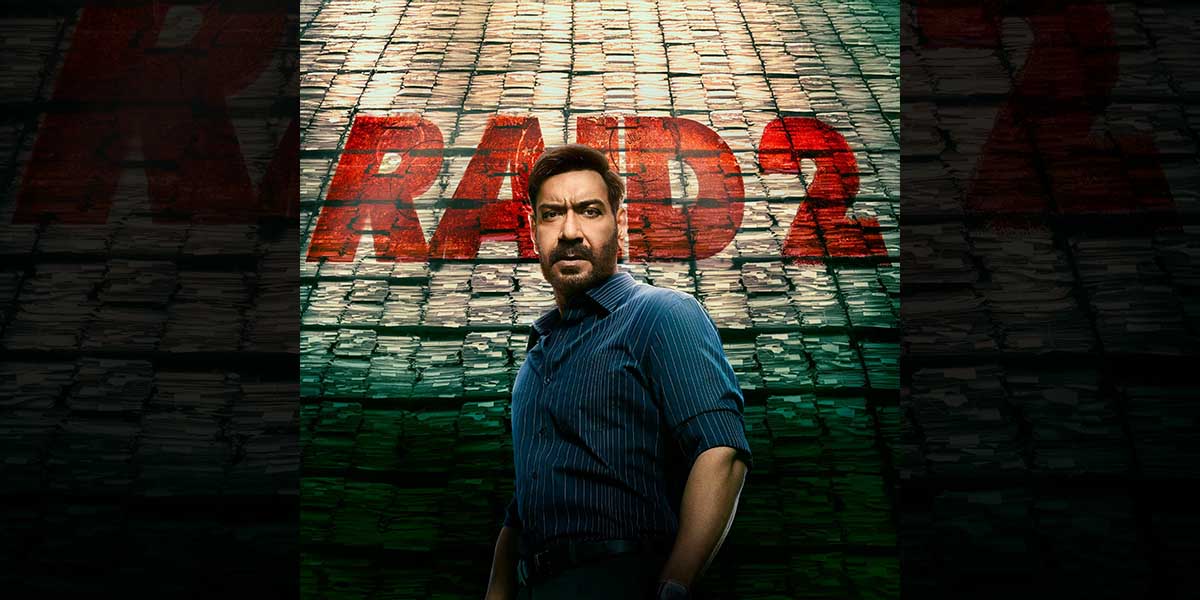
Ajay Devgn’s recent trajectory at the box office has raised concerns about his ability to draw audiences to cinemas. While films like Shaitan achieved sleeper hit status, others, such as Auro Kahan Dham Tha were significant disappointments. The much-anticipated Maidan which faced numerous delays, also underperformed upon release, further complicating Devgn’s box office appeal. His filmography in recent years reveals a troubling pattern: while Singham was just average at the box office, it too fell short of expectations of the masses. As audiences increasingly gravitate towards larger-than-life spectacles like Pushpa, RRR or the Marvel franchise, there’s a growing sentiment that they prefer to experience such grand narratives on the big screen. In contrast, Raid 2, a sequel to a content-driven film, may struggle to capture the same level of excitement. The film, while part of a successful franchise, lacks the extravagant elements that draw crowds. Today’s viewers are more inclined to enjoy nuanced storytelling and character-driven narratives from the comfort of their homes on OTT platforms rather than making the effort to visit cinemas for films that don’t promise a spectacular experience. The current cinematic landscape is shifting, and Raid 2 may find it challenging to achieve the box office success that Ajay Devgn once enjoyed. The trailer, while satisfactory, does not evoke the mass appeal needed to draw large audiences. It seems that the class-driven appeal of such films may resonate more with multiplex audiences, but this demographic alone may not suffice to meet the financial expectations that filmmakers have for a big box office return.

The recent failure of Sikandar serves as a significant blow to Salman Khan, particularly given its release during the auspicious Eid season — a time when he has historically been a major crowd-puller with hits like Wanted, Bajrangi Bhaijaan and Kick. Unfortunately, the film’s lacklustre performance is just the latest in a string of disappointments that have plagued his recent projects including Dabangg 3, Race 3, Tubelight, Bharat and Kisi Ka Bhai Kisi Ki Jaan. This trend suggests a worrying decline in his box office appeal. Khan’s portrayal in Sikandar has been criticized for its apparent laziness and lack of enthusiasm. His signature mannerisms, which once captivated audiences, now come across as repetitive and uninspired. Even during emotional scenes, his performance fails to resonate, leaving viewers feeling disconnected. This perceived disinterest in his craft raises questions about his commitment to selecting compelling scripts and delivering performances that capture the audience’s imagination. The essence of Khan’s on-screen persona seems to have shifted towards a brand of “toxic masculinity,” where his attempts to appear effortlessly cool have become tiresome and unoriginal. This disconnect between his star power and the expectations of his audience is becoming increasingly evident, as fans seek more meaningful narratives and authentic performances. The unfortunate fate of Sikandar serves as a stark reminder of the consequences of complacency in the film industry. The film has been rejected by both the masses and critics alike, highlighting a growing sentiment that Salman Khan’s current approach to filmmaking and performance is out of sync with contemporary audience preferences. If he hopes to reclaim his status as a box office titan, a re-evaluation of his acting choices and a renewed commitment to the craft may be imperative.

The simultaneous release of three films, Tumko Meri Kasam directed by Vikram Bhatt, Pintu Ki Pappi by Shiv Hare and Baida by Sudhanshu Rai seems to have skidded at the box office. These films are emblematic of a troubling trend in the industry, characterized by poor marketing, lack of visibility, and minimal audience excitement. Tumko Meri Kasam features Adaah Sharma, Ishwak Singh, Isha Deol and Anupam Kher. However, it suffers from a lacklustre promotional strategy that fails to generate buzz. The film’s dark and dull poster does little to entice potential viewers, making it feel like a B-grade production rather than a cinematic offering worth watching. Similarly, Pintu Ki Pappi is struggling with a title that fails to convey its essence, leaving audiences confused and uninterested. With Ganesh Acharya as the producer and newcomers Sushant and Jaanya Joshi in leading roles, this film too lacks the marketing push to draw the audience. A title like Pintu Ki Pappi may be catchy, but without context or appeal, it risks alienating potential viewers. In the case of Baida, a supernatural thriller that despite its intriguing premise, has not garnered attention. Directed by Sudhanshu Rai who also stars in the film, it suffers from a lack of awareness and visibility. All three films represent small-budget productions that have entered the market without effective marketing strategies or brand recall. The absence of excitement and visibility raises serious questions about how these films expect to attract audiences to theatres. The only commonality among these releases is their dismal box office performance, highlighting the urgent need for filmmakers to prioritize marketing and audience engagement if they hope to succeed in an increasingly competitive landscape.

The legendary trio of Bollywood—Aamir Khan, Shah Rukh Khan, and Salman Khan—continues to command the spotlight as they gracefully embrace their sixties this year. Recently, Aamir celebrated his 60th birthday (Mar 14), generating headlines not only for this milestone but also for announcing a new relationship, which underscores his enduring appeal and the public’s fascination with his personal life. This news resonated throughout Indian media, highlighting the unmatched influence these three superstars wield over the industry. Whenever Shah Rukh, Salman, or Aamir makes a statement or announcement, it instantly becomes a headline, reinforcing their formidable presence in the entertainment landscape. They are not merely actors; they are cultural icons whose words and actions resonate deeply with fans across generations. SRK, with his recent box office triumphs, has reaffirmed why he remains one of the most sought-after stars, effortlessly drawing audiences to theatres. Salman, the perennial Eid favourite, consistently reigns at the box office, with even his less successful films crossing the coveted Rs 100 crore mark—a testament to his box office magic. Though Aamir faced setbacks with his last two films, he remains undeterred, gearing up for exciting projects like Sitare Zameen Par and a collaboration with Lokesh Kanagaraj. Each Khan possesses a unique charm and business acumen that keeps them relevant in an ever-evolving industry. Their timeless appeal mirrors that of legends like Amitabh Bachchan and Rajinikanth, who have crossed 60 long ago, yet remain socially and culturally relevant through their work. As they continue to redefine success, it’s clear that the magic of the Khans remains undiminished, proving that age is merely a number in the realm of Bollywood stardom.
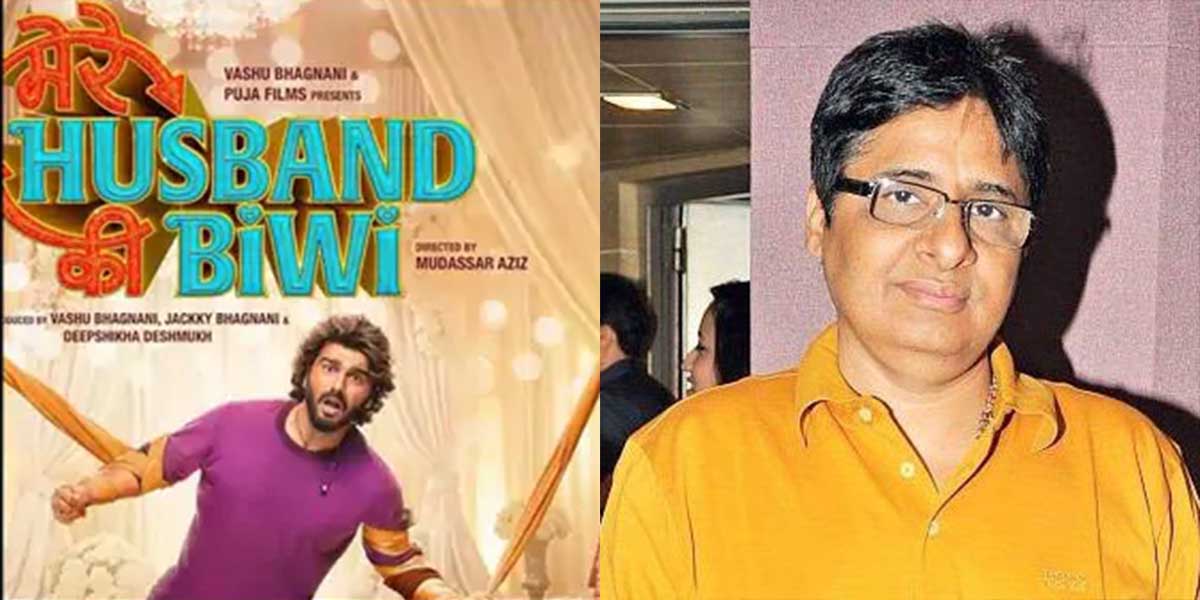
The recent release Mere Husband Ki Biwi has bombed at the box office, collecting less than Rs 5 crore in its opening three days against a hefty making cost of around Rs 60 crore. This underwhelming performance marks yet another flop for producer Vashu Bhagnani. Bhagnani, once celebrated for his successful films, has seen a string of failures such as Ganpat, Mission Raniganj and Bellbottom. He has faced financial setbacks with projects like Bade Miya Chhote Miya and is currently embroiled in a legal dispute with its director. The direction of Mere Husband Ki Biwi was helmed by Mudassar Aziz, known for his earlier works like Khel Khel Mein, Pati Patni Aur Woh and Happy Phirr Bhag Jayegi. The film’s lead actor, Arjun Kapoor, has struggled to find success as a solo performer, with his recent projects—including The Lady Killer, Kuttey and Bhoot Police — failing to make a mark at the box office. Similarly, the leading actresses, including the likes of Bhumi Pednekar, have also faced a streak of underwhelming films like The Lady killer, Afwaah, Bheed, and Rakshabandhan and thus making it difficult for Mere Husband Ki Biwi to generate excitement among viewers. Rakul Preet Singh is known for other disappointments like Thank God, Doctor G, Runway 34, Attack and Marjaawan. With a cast and crew associated with a series of unsuccessful films, the expectations from Mere Husband Ki Biwi were understandably low. Despite attempts to engage audiences with remixed songs, the film has failed to captivate, illustrating that audiences are no longer willing to watch films that lack compelling narratives and star power.

A 30-year-old man from Bengaluru, Abhishek MR, has made headlines after winning Rs 65,000 in compensation from PVR Cinemas, INOX, and BookMyShow for what he described as a waste of time due to lengthy advertisements before a movie screening. The consumer court ruled in his favor, highlighting the principle that “time is money” and labelling the practice as “unfair trade.” This landmark decision has resonated with many moviegoers who often voice their frustrations over ticket prices, the cost of food and beverages, and the excessive time spent watching ads before their favourite films. In 2023, Abhishek booked three tickets to see the film Sam Bahadur, scheduled to start at 4:05 pm. However, the screening was delayed by nearly 30 minutes due to a barrage of advertisements and trailers, prompting him to take legal action. His case has sparked a conversation about the growing dissatisfaction among consumers regarding the overall cinema experience, which often feels marred by high costs and lengthy pre-show content. This ruling has instilled confidence in the average consumer who frequently complains about the escalating expenses associated with a trip to the multiplex. With cinema chains like PVR INOX already facing criticism for their pricing strategies, this decision may serve as a wake-up call for these establishments to reconsider their advertising practices. Many patrons feel that after paying a premium for tickets, they should not have to endure an extended advertising session before the film begins. As multiplexes continue to generate revenue from box office sales, food and beverages, the pressure to provide a more satisfying experience for customers is mounting. This ruling could potentially lead to restrictions on the length and frequency of advertisements, ultimately enhancing the movie-watching experience and restoring consumer trust in the industry.
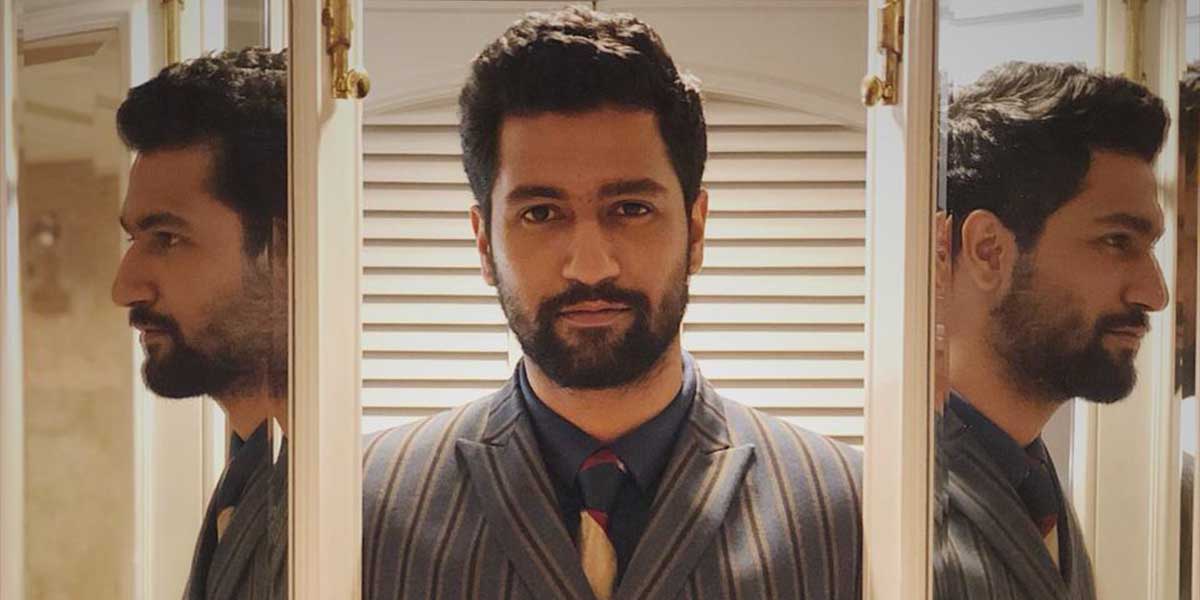
Thirty six year old Vicky Kaushal is rapidly emerging as the new superstar of the Indian film industry, particularly following the phenomenal success of Chhaava directed by Laxman Utekar. The film has made waves at the box office, grossing over Rs 400 crore plus in just 10 days, marking a significant relief for the exhibition industry, which has been in dire need of such a blockbuster. Chhaava’s success reinforces Kaushal’s status as a leading figure in contemporary cinema. Examining his filmography reveals a trajectory of impressive versatility. While his previous film, Bad News was met with average reviews, his performances in Sam Bahadur and Zara HatKe Zara Bachke showcased his ability to connect with audiences. Kaushal’s breakout role in Uri: The Surgical Strike catapulted him to commercial success, and he has since delivered commendable performances in supporting roles in films like Sanju, Dunki and Raman Raghav 2.0. Vicky’s filmography is a testament to his range, encompassing biopics like Sardar Udham Singh anthology films like Lust Stories and commercial ventures such as Govinda Mera Naam. His journey began as an assistant to Anurag Kashyap, and he has since evolved from art-house films to mainstream cinema. As the veteran superstars — Aamir Khan, Shah Rukh Khan and Salman Khan — become increasingly selective with their projects, and with contemporaries like Ranbir Kapoor and Ranveer Singh also taking fewer roles, Vicky Kaushal stands poised to fill that void. His versatility and consistent performances suggest that he is not just a rising star but a potential new pillar of the industry.
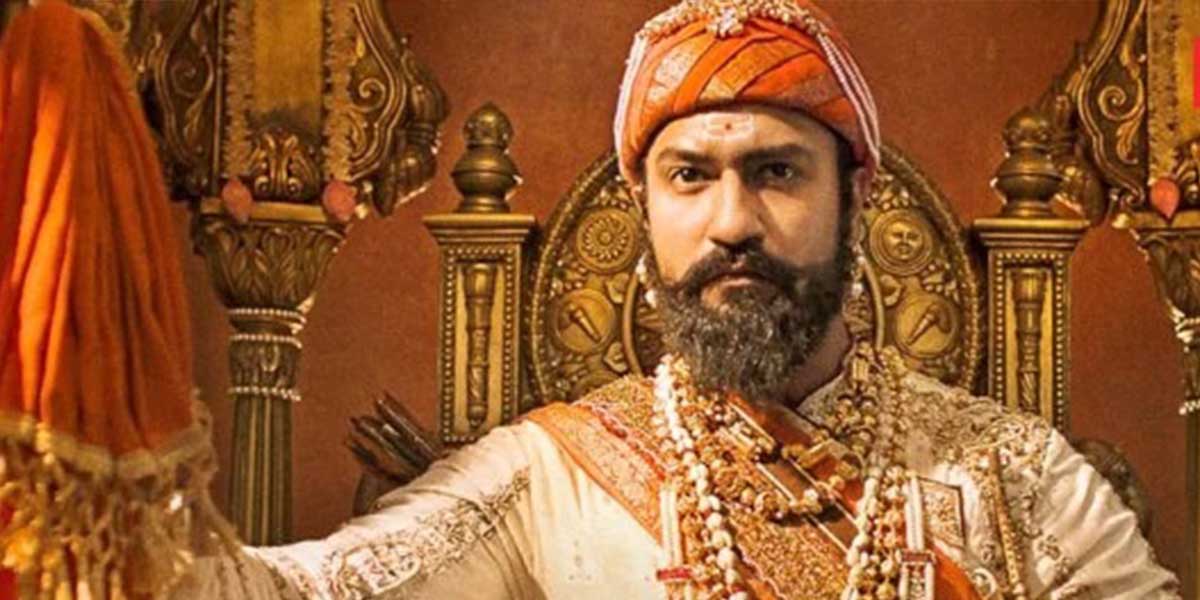
The recent release of Chaava, featuring Vicky Kaushal and Rashmika Mandanna, has ignited significant discussions around the intersection of art and political scrutiny in India. While the film has garnered considerable buzz and attention at the box office, it has also faced backlash from various political groups, often dubbed as the “moral police.” This scrutiny particularly intensified around a promotional song featuring a traditional lezim dance that depicted the historical figure Sambhaji Maharaj in a manner some deemed inappropriate. Critics argued that the portrayal of the king dancing was historically inaccurate and disrespectful, prompting Maharashtra Minister Uday Samant to advocate for a review by historians to preserve the dignity of the Sambhaji Maharaj. In response to this pressure, director Laxman Utekar met with political leader Raj Thackeray and ultimately decided to remove the contentious scene. This incident reflects a growing trend where political entities feel entitled to intervene in Bollywood productions, raising concerns about the freedom of expression for artists. This pattern is not new; previous controversies, such as the uproar over the song “Besharam Rang” from Pathaan and the backlash against the song “Malhari” from Jodha Akbar which faced criticism for its use of the phrase “Vaat Laavli,” underscore the inconsistent responses from the industry and authorities. Sanjay Leela Bhansali, known for his grand historical narratives, has frequently found himself at odds with political outfits, from Jodha Akbar to Padmaavat to Gangubai Kathiawadi. This trend illustrates a troubling reality where the creative landscape is increasingly shaped by political agendas, often at the expense of artistic integrity and historical representation. As the lines between art and politics blur, it raises critical questions about the future of creative freedom in India.

The re-release of Sanam Teri Kasam, a 2016 romantic drama starring debutants Harshvardhan Rane and Mawra Hocane,has been surrounded by an intriguing wave of drama and fanfare. Recently, a passionate group of fans gathered outside the office of producer Deepak Mukut, accompanied by actor Harshvardhan Rane, fervently urging him to re-release the film. In a surprising turn of events, Mukut not only confirmed the film’s re-release but also announced a sequel, generating significant buzz in the industry. Initially launched to lacklustre box office performance, Sanam Teri Kasam was deemed a disaster upon its first release. However, the film’s soundtrack, featuring hit songs, kept it alive in conversations, gradually transforming it into a cult favorite. Now, with its re-release across 400 to 500 screens, Sanam Teri Kasam finds itself in direct competition with two fresh titles: Loveyappa, starring Junaid Khan and Khushi Kapoor, and Himesh Reshammiya’s Badass Ravi Kumar. Interestingly, while both new films struggled to make a significant impact at the box office, Sanam Teri Kasam has shown promising advance bookings, leading many exhibitors to consider increasing its showtimes over the weekend. This resurgence is particularly noteworthy for a film that was initially dismissed, highlighting a curious trend in the industry where previously overlooked content receives a second chance. Adding to the irony, the film’s popular music was composed by Himesh Reshammiya, who is simultaneously competing with his own project, underscoring the unpredictable nature of audience preferences and the evolving landscape of Bollywood.
In recent times, Bollywood has seen a noticeable shift, with many newcomers struggling to leave a lasting impression on audiences. This decline can be traced back to a variety of factors, including the selection of projects that fail to resonate with viewers. Gone are the days when iconic films like Betaab, which introduced Sunny Deol or Rocky which launched Sanjay Dutt, captivated audiences and launched the careers of these stars. So too Jackie Shroff with Hero. In contrast, today’s newcomers like Suraj Pancholi, Siddhant Kapoor and Sasha Agha find themselves lost in films that do not provide them with the platform to showcase their talents effectively. The recent film Azaad featuring Aaman Devgan and Rasha Thadani serves as a case in point. Aaman Devgn, nephew of Ajay Devgn has struggled to make a significant impact, while Raveena Tandon’s daughter Rasha Thadani managed to capture some attention with her performance. Many of the films do not offer the newcomers a fair opportunity to shine; often focusing more on star power than on storytelling. For instance, in Azaad, the narrative centres around the titular horse rather than the lead pair, which diminishes the impact of the human characters. This misalignment can lead to a lack of engagement from the audience, making it difficult for the actors to connect with viewers. Aaman’s performance, despite being camera-friendly, lacks the emotional depth and histrionics that are often necessary to truly engage the audience. In contrast, Rasha stands out with her strong screen presence and impressive dance moves, showcasing a talent that could potentially elevate her career. Ultimately, even when a film does not resonate with audiences, a standout performance can create opportunities for newcomers to prove themselves.
The perception that January is a challenging month for the film industry is not without merit. Historically, this month has often been viewed as a “jinx” for film releases, primarily due to the post-holiday dynamics that affect audience behaviour and box office performance. As people transition from the festive season to their regular routines, several factors contribute to the underperformance of films released in January. Films released in December often enjoy extended viewership due to the holiday season, leaving little room for new releases. Several films released in January have struggled to resonate with audiences, reinforcing the notion that this month is not ideal for cinematic success. For instance, Chhapak, which was released in January 2020, faced challenges at the box office despite its critical acclaim and social relevance. Similarly, in January 2023, films like Fighter and Mai Atal Hu failed to garner the expected audience turnout, highlighting a consistent trend of underwhelming performances during this month. The recent January releases, such as Emergency, featuring Kangana Ranaut, and Fateh, starring Sonu Sood, also struggled to find traction despite significant promotional efforts. This pattern suggests that even with star power and marketing campaigns, films released in January may face an uphill battle to attract viewers. Given the historical challenges associated with January releases, filmmakers and studios may need to reconsider their marketing and timing strategies. To mitigate the risks associated with January releases, studios could explore alternative strategies, such as targeting specific demographics or leveraging unique marketing campaigns that resonate with the post-holiday mindset. As the film industry continues to evolve, understanding the dynamics of audience behaviour and timing will be crucial for maximizing box office potential.
Salman Khan is undeniably one of the most iconic figures in the Indian film industry whose impact transcends mere box office statistics. With a career that spans over three decades, his films–regardless of critical reception — frequently surpass the Rs 100-crore mark signifying his extraordinary appeal and star power. Throughout his illustrious career, Salman Khan has found himself at the centre of numerous controversies and has come unscathed. With a net worth estimated at around Rs 2,900 crore, he is an immensely sought-after star for brand endorsements. However, in recent years, his forays into guest appearances in films such as Baby John, Singham Again, Godfather and Antim have not garnered the kind of response one might expect from the audience. While his cameo in Pathaan was well-received, his lead role in Kisi Ka Bhai Kisi Ki Jaan released on Eid, faced significant criticism and was largely snubbed by both critics and fans alike. Looking ahead, the anticipation surrounding his upcoming film Sikandar is palpable. Directed by AR Murugadoss, this film marks a significant moment in his career, as it will be his first mainstream lead release following Tiger 3. Sikandar represents a pivotal juncture in his career, especially after a series of mixed receptions for his recent projects. Rumours are rife that he is in talks with well-known south director Atlee. Despite his immense charisma and dedicated fan base, a pressing question lingers in the face of ongoing controversies, and the challenges posed by a rapidly evolving industry: whether Sallu bhai at 59 can still captivate the new generation of moviegoers?