 All
 Politics
 Business
 Entertainment
 Sports
 Celebrities


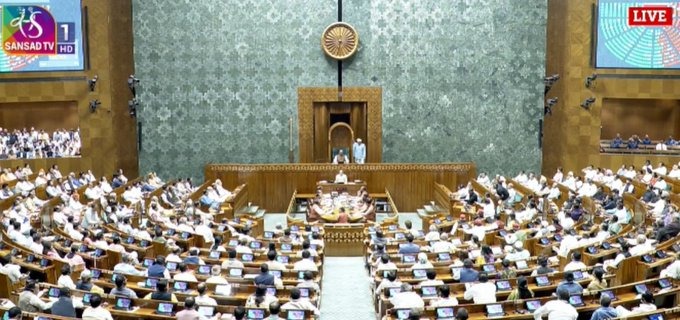
In a big push to get the Delimitation Bill passed in Parliament next week, the Union Cabinet has approved a proposal to increase the strength of the Lok Sabha by 50% uniformly across all states — a move that aligns with the major demand of the southern states. As per the fresh amendments, the allocation of seats will remain frozen for the next 25 years, until 2051. The Bill proposes that every state’s Lok Sabha seats will rise by 50%, the Centre has essentially delinked the delimitation exercise from the Census. This was a demand of the southern states. The Centre has convened a mini-sitting, which will be an extension of the Monsoon session, on November 30. The proposed bill will raise the Lok Sabha to 850 seats. The Centre had tabled the Constitution (131st Amendment) Bill in April. However, it was defeated by a united opposition, which objected to the law’s implementation being tied to the next Census. The latest Bill has been linked to the last census of 2011. Even as PM Modi will project the Delimitation Bill as a bid to implement women quota in our legislatures, the Congress is all geared to oppose it. “We are opposing the Delimitation Bill because of a CWC resolution. Gender quota is very much needed. Even Pakistan has more women MPs than us — in their National Assembly (the lower house), there are 72 women holding seats out of 332 current members (about 21.7%),” rued a party leader from South clearly backing PM Modi. His views were in contrast to Maharashtra leader Prithviraj Chavan who protested hike in seats because there would be a crowd of MPs and no one would have their say. Parliament can perhaps meet more often to hear out everyone as it happens in the U.S. But let us not shut women out. Nonetheless what the Congress feared most was whimsical delimitation of constituencies that would subsequently follow.
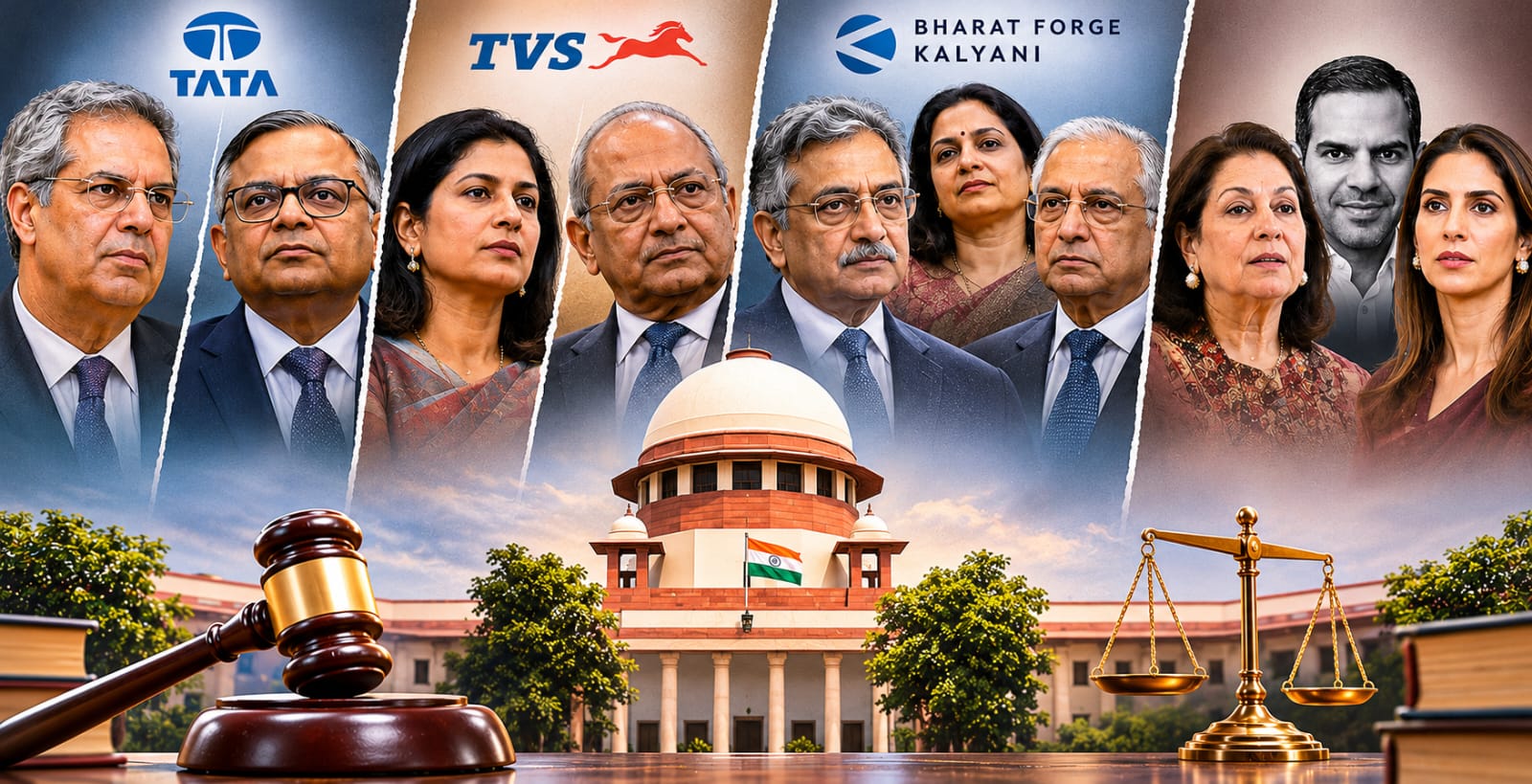
Rarely has corporate India witnessed four high-profile legal battles involving some of its biggest names playing out simultaneously. What was once settled behind closed doors, either in boardrooms or through family elders, is now being fought in courtrooms. The battle between Tata Trusts chairman Noel Tata and Tata Sons chairman N Chandrasekaran has been an ongoing one. Now, two Tata trusts have moved the Bombay High Court challenging Chandra’s reappointment for a third term. At the heart of the dispute is a larger question: who calls the shots at Bombay House — the majority shareholders or the Tata Sons board? Interestingly, TVS patriarch Venu Srinivasan is fighting a legal battle on his home turf. His daughter Lakshmi Venu, backed by her mother Mallika Srinivasan, has moved the Madras High Court seeking an equal share of the joint family assets under the Hindu Succession Act. Her father’s position is that the family assets have already been settled. Meanwhile, Bharat Forge chairman Babasaheb N Kalyani is embroiled in an inheritance battle involving his sister Sugandha Hiremath and brother Gaurishankar Kalyani over ancestral wealth reportedly exceeding Rs 1 lakh crore. With mediation by former Supreme Court judge L Nageswara Rao failing, the apex court has suggested arbitration. Equally acrimonious is the battle following the death of industrialist Sunjay Kapur. Even after 15 sittings, former Chief Justice of India DY Chandrachud could not broker a settlement between Kapur’s mother Rani Kapur and his widow Priya Kapur. With Rani seeking Rs 6,000 crore from a family trust reportedly worth Rs 30,000 crore, the Supreme Court has closed mediation proceedings. Interestingly, some of the country’s finest legal eagles are representing the warring parties. These four cases raise an uncomfortable question: have Indian business houses given enough thought to succession planning, ownership structures and dispute resolution? Clearly, wealth creation and wealth distribution...

The Spencer Junction on Chennai’s Mount Road and a new bill board caught the attention of a number of motorists. A new billboard with Racing Thala Ajith Kumar had sprouted with racing cars as backdrop for their hero, and a new biscuit brand, ‘Independence Power Up’ to take Indian Motor Sport to new heights. Many a die-hard Ajith fans tut-tutted seeing this …of all products, biscuits? Why not Lamborghini or Porsche, more appropriate to this dashing daredevil who has made his mark on the race car circuit too, launching his own racing team? Even as comments flew thick and fast, the clear headed and finance focussed analysts unravelled a confusing skein of contradictions. Kollywood has fast turned into a bottomless pit for gobbling up mega budgets ….a potpourri churned up by extravagant directors and producers who pander to sky high remuneration of a few stars. Even as Vijay seamlessly stepped into politics seeing the writing on the wall, Rajnikanth signed up for four films with SUN Pictures (the only production house that can now afford this superstar). Ajith has his racing passion. There is a rethink about big budget productions that increasingly fail at the box office. Ajith himself faced the inevitable…chose wife Shalini to produce his next, Dare Devil. Film production now faces more vicious circles of hit and miss of lavish films. Ajith teaming up with mega corp Reliance Consumer makes financial sense…biscuits could soon turn to monogrammed luxe T shirts, mens Bling, After Shaves ….the list is endless. Who better than dashing, handsome and super popular star than Thala? Kollywood’s big budget ecosystem has morphed into the next golden goose gig.
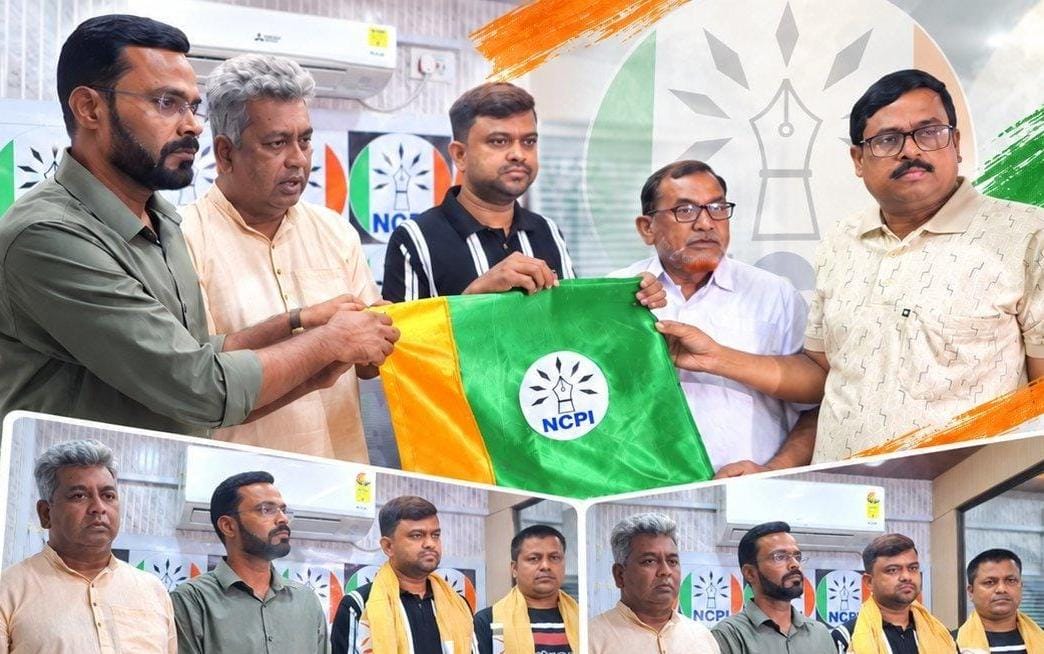
The sudden emergence of the Nationalist Citizen Party of India (NCPI) is reshaping rural political dynamics across West Bengal. Operating as an ally of the National Democratic Alliance (NDA), the group virtually unheard of eight months ago but now asserts authority over numerous gram panchayats and panchayat samitis. These swift advances have largely weakened the Trinamool Congress (TMC) at the grassroots level. However, the rapid pace of these political shifts leaves observers debating the party’s long-term role. Ultimately, it remains unclear whether the NCPI is forging its own political path or merely acting as a temporary bridge for discontented TMC members looking to join the BJP. From Islampur and Goalpokhar in North Bengal to Minakhan and Sandeshkhali in the south, elected representatives and grassroots workers have crossed over. In the Basirhat Lok Sabha constituency alone, NCPI claims to have wrested 13 gram panchayat and two panchayat samitis from the TMC. NCPI spokesperson Anurag Singh has described the developments as evidence of organisational expansion and expressed confidence about capturing more local bodies. However, political expansion through defections and building a sustainable electoral base are two different propositions. The TMC has accused the BJP of using NCPI as a proxy to weaken its rural organisation. TMC MLA Kunal Ghosh alleged that the BJP was deploying its B-team and C-team. CPI(M) leader Sujan Chakraborty also linked NCPI’s rise to a broader BJP strategy, while questioning the circumstances surrounding the TMC’s own formation. The TMC itself once expanded by engineering defections from the Congress and CPI(M). Whether NCPI can convert its growing panchayat presence into independent public support and electoral credibility remains the real test. Control over local bodies alone does not make a political force.
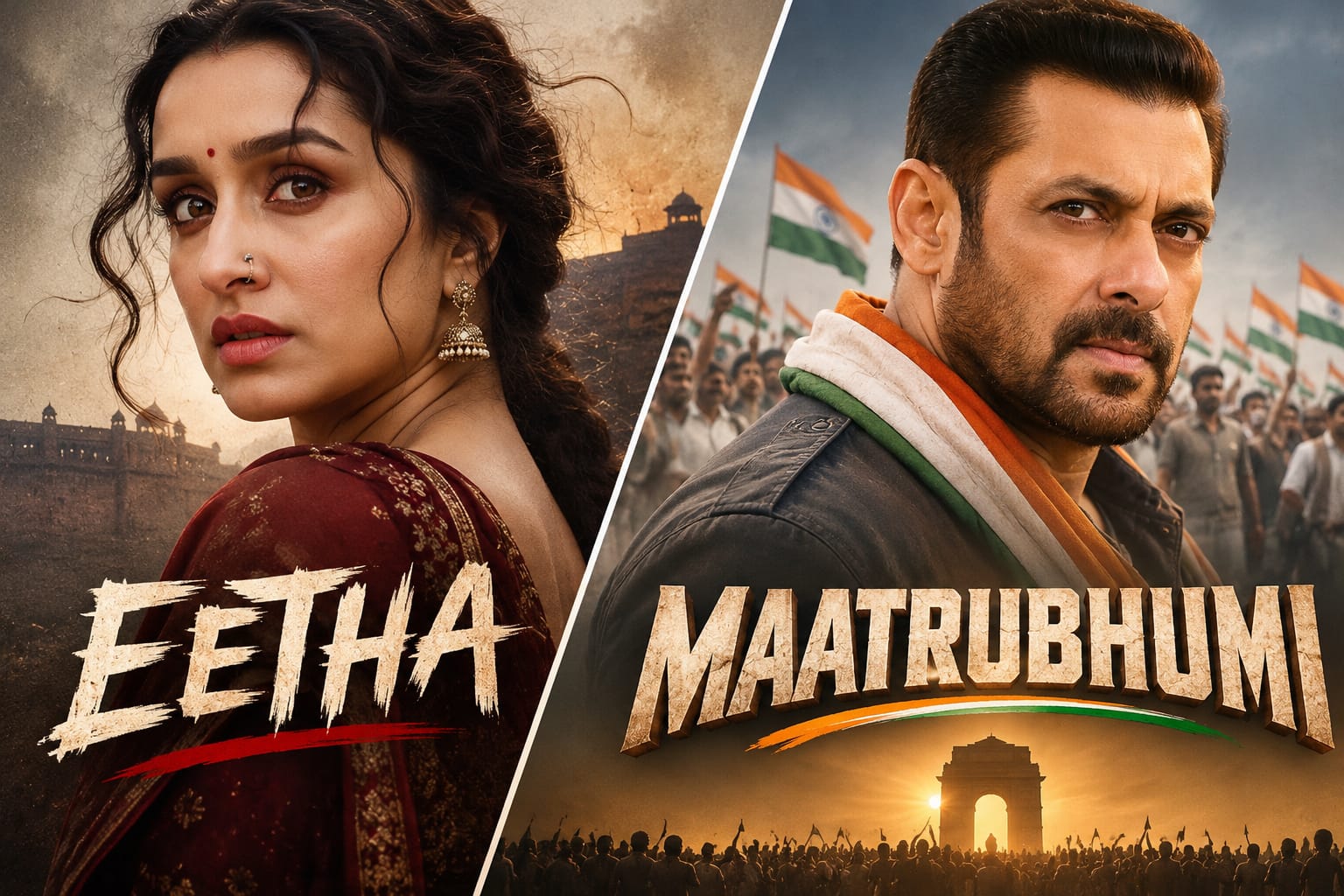
December 4 is set for an unusual face-off: Shraddha Kapoor’s Eetha and Salman Khan’s Maatrubhumi. On paper it looks like a contest. On the ground, the temperature feels low. Eetha’s economics explain the quieter campaign. Reports put the domestic distribution deal with PVR Inox Pictures at around Rs 90 crore on an advance basis, after Jio Studios stepped away. Add the usual streaming, music and satellite monies—commonly estimated in the Rs 20–40 crore range for a film of this profile—and the producers are largely covered before a single ticket is sold. The film, directed by Laxman Utekar and rooted in Maharashtra’s Tamasha and Lavani traditions with Ajay-Atul’s music, is doing city tours and cultural-focused promotion. But they are not creating the kind of widespread heat that turns a release into an event. Eetha so far have not generated the curiosity that usually precedes a big opening. Maatrubhumi is in a different position. A war drama inspired by the Galwan clash, led by Salman Khan and directed by Apoorva Lakhia, should normally carry automatic pull. Yet the promotional conversation has been uneven. City activity and social media chatter have not translated into the organic buzz that typically builds around a Salman film. The star himself has been gracious calling Shraddha Kapoor to apologise for the clash—but goodwill does not automatically fill seats. Maatrubhumi needs the traditional Salman opening energy that has been harder to spot this time. With neither film generating clear mass excitement, the December 4 clash currently looks more subdued than competitive. Whether audiences turn up in numbers, or whether both films settle into modest runs, will become clearer once bookings open and the first weekend numbers arrive. For now, the noise is quieter than the clash itself.
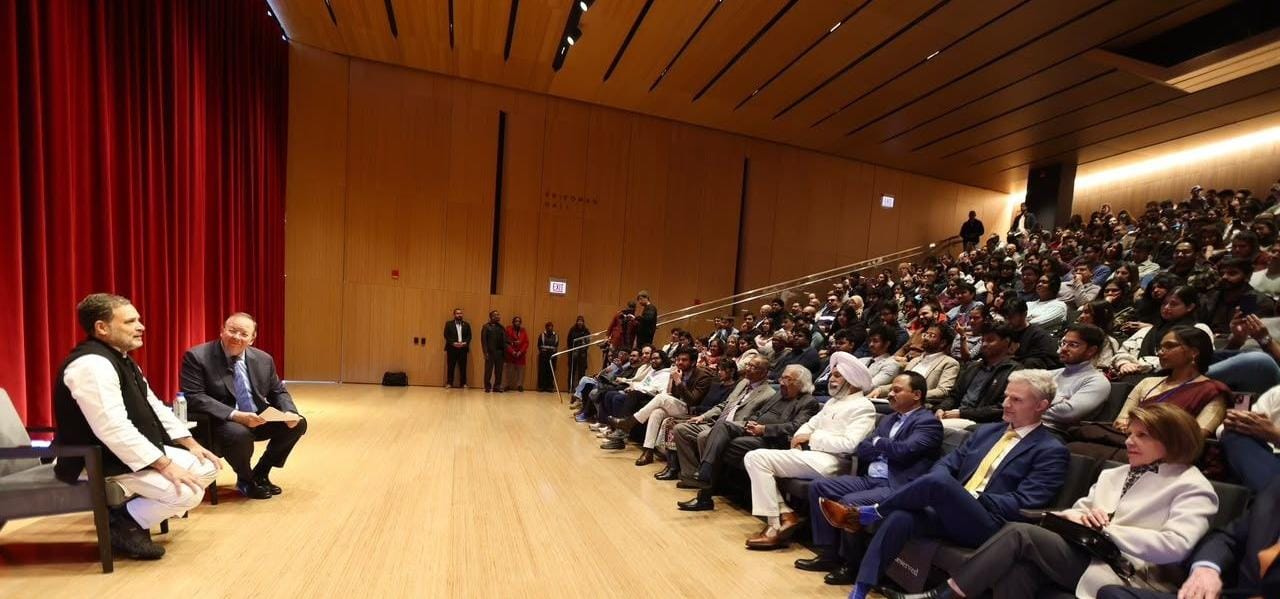
During his recent visit to the U.S., Rahul Gandhi had initially sought to undermine the Indian economy by describing it as a “disaster”. That too at a time when international rating agencies like Lowy Institute have ranked India among three fastest growing Asian economies. Perhaps to make up for a swipe on the economy, he was seen backing the government on its foreign policy. At least during an interaction at the University of Chicago (Nov 19/20), Rahul was heard condemning the October 7, 2025 Hamas attacks and Israel’s actions in Gaza, while backing continued strategic and defence ties between India and Israel, based on India’s national interests. He called the October 7 attacks “absolutely horrible”, while also condemning Israel’s actions in Gaza, stating that “one wrong cannot justify another”. He noted that India has a good relationship with Israel, including strategic reasons and purchasing weapons produced by Israel. He said India is a country of 1.5 billion people and its foreign policy should be guided by what is good for India, without being constrained on the global stage by Israel, the U.S., Russia or China. Rahul’s views were certainly at variance from the more nuanced position that the Congress takes on Israel. His sister Priyanka, a Kerala MP, is always taking a pro-Palestine stand. So what made Rahul Gandhi back the government and India’s interest? There were jokes on the X wondering if the Israeli Mossad had suddenly found something on Rahul. It is well known that his patron George Soros, though a holocaust survivor, is anti-Israel. Unless Anya Schiffrin, another Soros beneficiary who introduced Rahul at Columbia University, possibly softened his position on Israel. Incidentally, Schiffrin is a Jew.
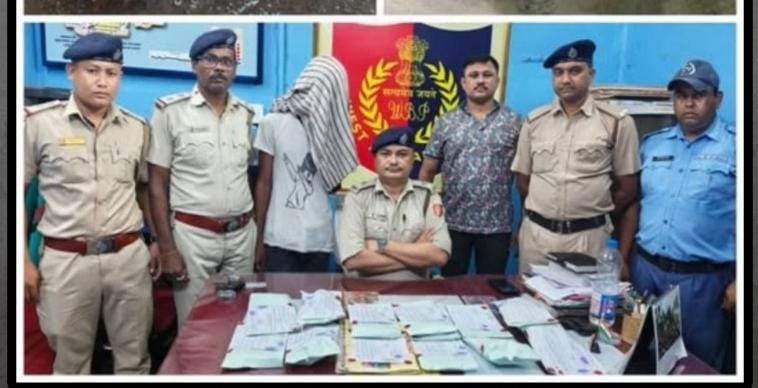
Are police encounters becoming the new way of dealing with crime and criminals in West Bengal? Five encounters in six months since the BJP government assumed office have raised questions over its policing strategy, with the Opposition challenging the operations and human rights groups flagging alleged discrepancies. The latest incident occurred on November 15, when police shot accused Ratan Sheikh at a brick kiln where he had allegedly concealed firearms. Police claimed Sheikh opened fire at their vehicle when a team went to arrest him, prompting retaliatory firing. This was reportedly the fifth encounter, after incidents in Baruipur and Gaighata (North 24 Parganas), Samsherganj (Murshidabad) and Raiganj (North Dinajpur). The developments have revived memories of Bengal’s troubled policing history. In 1971, Calcutta’s walls carried slogans such as “police maro, ostro karo” (kill the police, capture their weapons). A Calcutta Police Gazette order had instructed armed personnel to secure revolvers to their belts to prevent weapons being snatched. Fifty-five years later, these references have acquired renewed significance. Chief Minister Suvendu Adhikari, who also holds the Home portfolio, has defended the tough approach, saying police will not remain passive when attacked. He has promised zero tolerance towards assaults on personnel and action against anti-social elements, particularly history-sheeters and those accused of rape and murder. The Association for Protection of Democratic Rights (APDR) has flagged discrepancies in fact-finding reports on the Baruipur encounter, the first under the new government, and the Raiganj incident. The Trinamool Congress Opposition questioned why police should resort to encounters when courts can prosecute accused persons, raising concerns over extra-judicial killings. CPI(M) state secretary Mohammed Salim called the late-October 2026 encounters “scripted” and “staged”, likening them to...
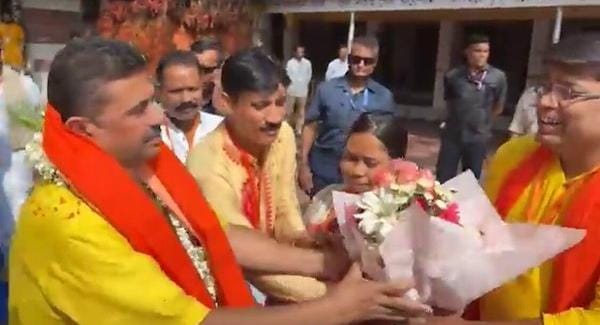
West Bengal Chief Minister Suvendu Adhikari’s government is adopting policy models from Gujarat, Uttar Pradesh, Haryana, and Andhra Pradesh across industrialisation, land reforms, employment, afforestation, and law and order. Adhikari stated his administration aims to develop Bengal like Gujarat over five years, targeting at least 50% of that benchmark. For industry, Bengal announced a single-window portal modelled on Gujarat’s nearly two-decade-old system, enabling investors to access information, submit applications, get approvals, lodge complaints, and receive post-project services. Services carry legally stipulated timelines requiring departments to explain delays, while a state-level empowered committee oversees strategic project incentives, power subsidies, and inter-departmental coordination. Regarding land policy, Adhikari rejected both the Left regime’s compulsory acquisition and the Trinamool Congress government’s approach of leaving industrialists to buy land independently. Alongside a land bank, Bengal plans land pooling like UP, Haryana, and Andhra—combining multiple owners’ land for infrastructure development and returning 25-30% of developed plots to boost land values, cut acquisition costs and rehabilitation disputes, and aid planned urbanisation. To boost the 125-day employment scheme, four panchayat officials visited Andhra Pradesh. Since July 1, Andhra generated over five crore person-days in four months versus Bengal’s 50 lakh. Studying Andhra’s vacant-land plantations and separate Panchayat Engineering Directorate for road and infrastructure work, Bengal is discussing restructuring its rural development agency similarly. Citing the Prime Minister’s ‘Ek Ped Maa Ke Naam’ campaign, Adhikari pledged to compete with UP Chief Minister Yogi Adityanath’s 26-crore tree-planting drive by planting 10 crore trees. On law and order, adopting Yogi’s zero-tolerance stance against drugs, infiltration, and crimes against...
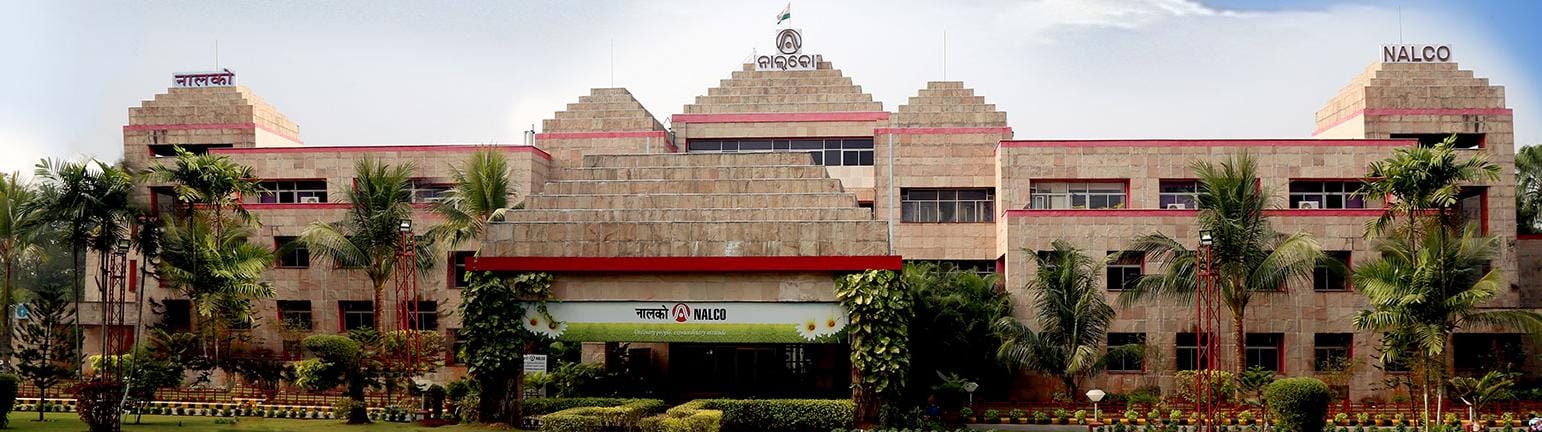
The 50:50 joint venture between National Aluminium Company Limited (NALCO) and NLC India Limited (NLCIL) to develop a 1,080 MW (4×270 MW) coal-based captive thermal power plant in Angul, Odisha, appears to have hit political turbulence. Opposition parties, led by the Biju Janata Dal (BJD) and the Congress, are questioning the terms of the deal. They argue that the partnership is unnecessary, pointing out that NALCO—a Navratna PSU—has the financial muscle to set up captive power plants on its own rather than surrendering half the ownership and profits. BJD Rajya Sabha MP Sasmit Patra, who is also a member of the Parliamentary Standing Committee, has highlighted potential flaws in the arrangement. He noted that NALCO has committed to purchasing 100% of the generated power for 25 years while holding only a 50% equity stake, raising concerns over tariff-setting, profit-sharing, and risk allocation. From the Opposition’s perspective, NALCO already possesses strong financial credentials, captive coal mines, and existing infrastructure, making a 50% equity dilution unwarranted. Among critics, there is a growing perception that this move could be the first step toward the eventual privatization of NALCO.
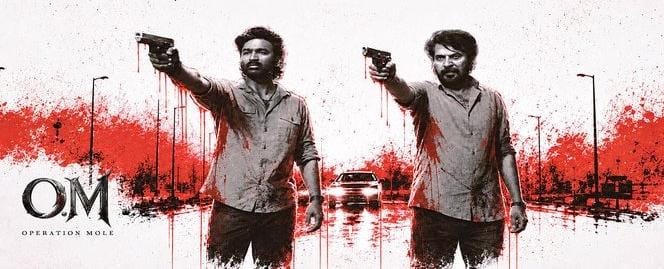
Dhanush’s OM (O.M: Operation Mole) hit theatres on November 20 amid a full-blown distribution war in Tamil Nadu, with fans’ “Worst Distributor AGS” cry proving partly prophetic even as the film powers toward a potentially career-best opening. AGS Cinemas, which holds the TN rights, stuck to its hard line on revenue sharing –70: 30 — refusing to sweeten the deal for exhibitors. The standoff has left visible gaps. Major chains including Rohini Silver Screens, Vetri and others in Chennai, Chengalpattu, Kanchipuram and surrounding areas have either skipped the film or have limited shows. Reports suggest the film is playing in only about half the theatres in key Chennai belt districts, far short of the 500-plus screens AGS had confidently projected. The absence of long-time Dhanush strongholds has fuelled fresh anger, with many calling the TN release one of the weakest for a star of his stature in his home market. Yet the commercial reality is more complicated. Despite the missing screens, OM registered strong advance bookings, crossing Rs 7 crore India-wide and already surpassing Dhanush’s previous best pre-sales. On release day, available shows are seeing healthy walk-ins and occupancy, with early Day 1 estimates putting India net collections in the Rs 10–13 crore range so far and tracking toward a possible career-best opening. Dhanush had earlier thanked chief minister Vijay for approving 6 am shows. The contradiction is stark: AGS protected its commercial terms, fans lost key screens, and OM is still finding an audience wherever it is playing. Whether the thinner TN footprint ultimately caps its final haul or the strong occupancy in available theatres carries the day will become clear by the weekend. For now, the “Worst Distributor AGS” tag has stuck, even as the film refuses to go down quietly.
In a big push to get the Delimitation Bill passed in Parliament next week, the Union Cabinet has approved a proposal to increase the strength of the Lok Sabha by 50% uniformly across all states — a move that aligns with the major demand of the southern states. As per the fresh amendments, the allocation of seats will remain frozen for the next 25 years, until 2051. The Bill proposes that every state’s Lok Sabha seats will rise by 50%, the Centre has essentially delinked the delimitation exercise from the Census. This was a demand of the southern states. The Centre has convened a mini-sitting, which will be an extension of the Monsoon session, on November 30. The proposed bill will raise the Lok Sabha to 850 seats. The Centre had tabled the Constitution (131st Amendment) Bill in April. However, it was defeated by a united opposition, which objected to the law’s implementation being tied to the next Census. The latest Bill has been linked to the last census of 2011. Even as PM Modi will project the Delimitation Bill as a bid to implement women quota in our legislatures, the Congress is all geared to oppose it. “We are opposing the Delimitation Bill because of a CWC resolution. Gender quota is very much needed. Even Pakistan has more women MPs than us — in their National Assembly (the lower house), there are 72 women holding seats out of 332 current members (about 21.7%),” rued a party leader from South clearly backing PM Modi. His views were in contrast to Maharashtra leader Prithviraj Chavan who protested hike in seats because there would be a crowd of MPs and no one would have their say. Parliament can perhaps meet more often to hear out everyone as it happens in the U.S. But let us not shut women out. Nonetheless what the Congress feared most was whimsical delimitation of constituencies that would subsequently follow.