 All
 Politics
 Business
 Entertainment
 Sports
 Celebrities

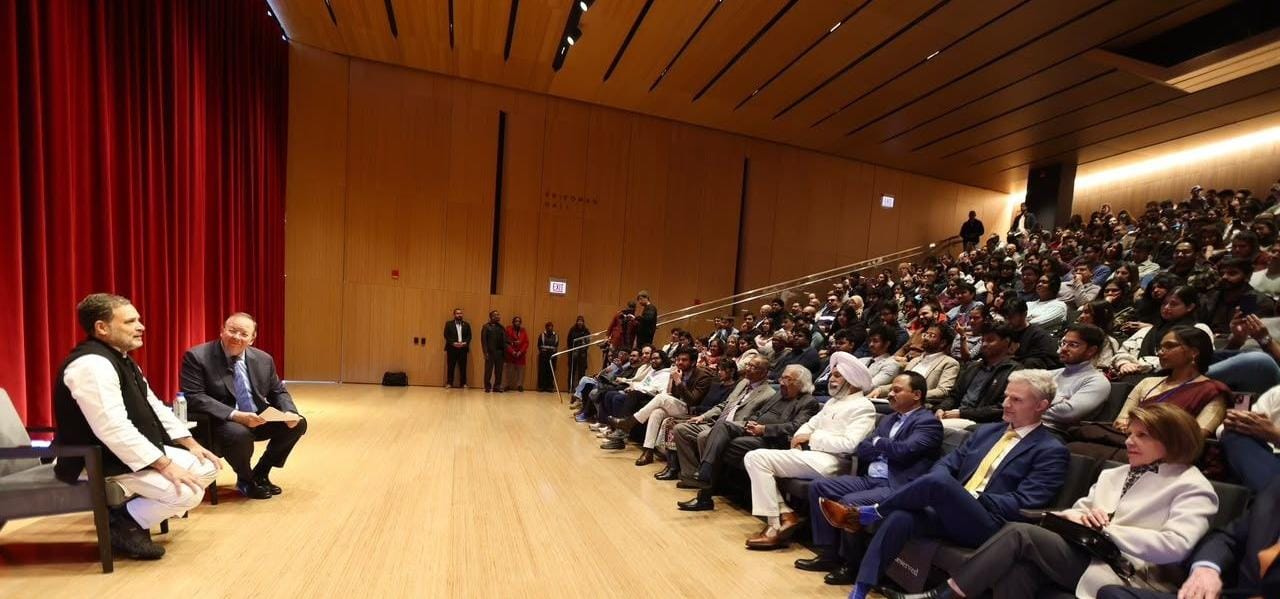
During his recent visit to the U.S., Rahul Gandhi had initially sought to undermine the Indian economy by describing it as a “disaster”. That too at a time when international rating agencies like Lowy Institute have ranked India among three fastest growing Asian economies. Perhaps to make up for a swipe on the economy, he was seen backing the government on its foreign policy. At least during an interaction at the University of Chicago (Nov 19/20), Rahul was heard condemning the October 7, 2025 Hamas attacks and Israel’s actions in Gaza, while backing continued strategic and defence ties between India and Israel, based on India’s national interests. He called the October 7 attacks “absolutely horrible”, while also condemning Israel’s actions in Gaza, stating that “one wrong cannot justify another”. He noted that India has a good relationship with Israel, including strategic reasons and purchasing weapons produced by Israel. He said India is a country of 1.5 billion people and its foreign policy should be guided by what is good for India, without being constrained on the global stage by Israel, the U.S., Russia or China. Rahul’s views were certainly at variance from the more nuanced position that the Congress takes on Israel. His sister Priyanka, a Kerala MP, is always taking a pro-Palestine stand. So what made Rahul Gandhi back the government and India’s interest? There were jokes on the X wondering if the Israeli Mossad had suddenly found something on Rahul. It is well known that his patron George Soros, though a holocaust survivor, is anti-Israel. Unless Anya Schiffrin, another Soros beneficiary who introduced Rahul at Columbia University, possibly softened his position on Israel. Incidentally, Schiffrin is a Jew.
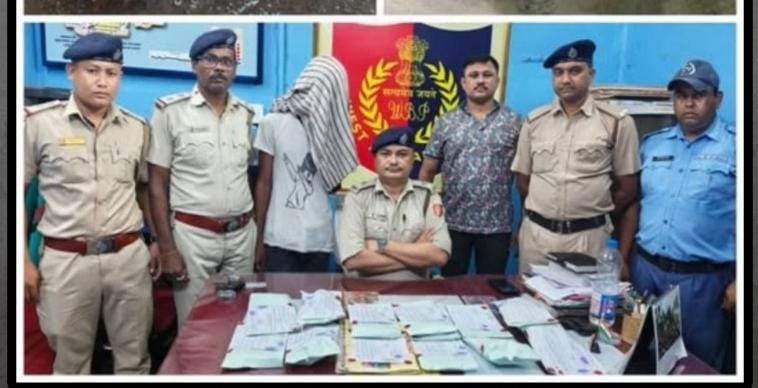
Are police encounters becoming the new way of dealing with crime and criminals in West Bengal? Five encounters in six months since the BJP government assumed office have raised questions over its policing strategy, with the Opposition challenging the operations and human rights groups flagging alleged discrepancies. The latest incident occurred on November 15, when police shot accused Ratan Sheikh at a brick kiln where he had allegedly concealed firearms. Police claimed Sheikh opened fire at their vehicle when a team went to arrest him, prompting retaliatory firing. This was reportedly the fifth encounter, after incidents in Baruipur and Gaighata (North 24 Parganas), Samsherganj (Murshidabad) and Raiganj (North Dinajpur). The developments have revived memories of Bengal’s troubled policing history. In 1971, Calcutta’s walls carried slogans such as “police maro, ostro karo” (kill the police, capture their weapons). A Calcutta Police Gazette order had instructed armed personnel to secure revolvers to their belts to prevent weapons being snatched. Fifty-five years later, these references have acquired renewed significance. Chief Minister Suvendu Adhikari, who also holds the Home portfolio, has defended the tough approach, saying police will not remain passive when attacked. He has promised zero tolerance towards assaults on personnel and action against anti-social elements, particularly history-sheeters and those accused of rape and murder. The Association for Protection of Democratic Rights (APDR) has flagged discrepancies in fact-finding reports on the Baruipur encounter, the first under the new government, and the Raiganj incident. The Trinamool Congress Opposition questioned why police should resort to encounters when courts can prosecute accused persons, raising concerns over extra-judicial killings. CPI(M) state secretary Mohammed Salim called the late-October 2026 encounters “scripted” and “staged”, likening them to...
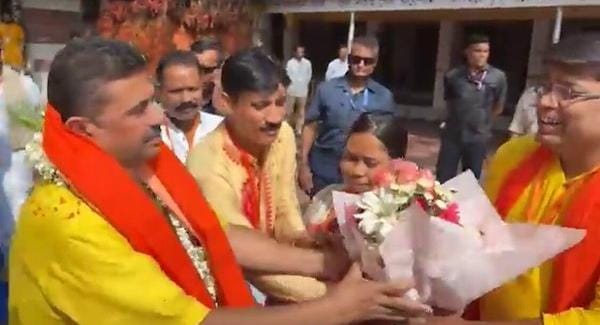
West Bengal Chief Minister Suvendu Adhikari’s government is adopting policy models from Gujarat, Uttar Pradesh, Haryana, and Andhra Pradesh across industrialisation, land reforms, employment, afforestation, and law and order. Adhikari stated his administration aims to develop Bengal like Gujarat over five years, targeting at least 50% of that benchmark. For industry, Bengal announced a single-window portal modelled on Gujarat’s nearly two-decade-old system, enabling investors to access information, submit applications, get approvals, lodge complaints, and receive post-project services. Services carry legally stipulated timelines requiring departments to explain delays, while a state-level empowered committee oversees strategic project incentives, power subsidies, and inter-departmental coordination. Regarding land policy, Adhikari rejected both the Left regime’s compulsory acquisition and the Trinamool Congress government’s approach of leaving industrialists to buy land independently. Alongside a land bank, Bengal plans land pooling like UP, Haryana, and Andhra—combining multiple owners’ land for infrastructure development and returning 25-30% of developed plots to boost land values, cut acquisition costs and rehabilitation disputes, and aid planned urbanisation. To boost the 125-day employment scheme, four panchayat officials visited Andhra Pradesh. Since July 1, Andhra generated over five crore person-days in four months versus Bengal’s 50 lakh. Studying Andhra’s vacant-land plantations and separate Panchayat Engineering Directorate for road and infrastructure work, Bengal is discussing restructuring its rural development agency similarly. Citing the Prime Minister’s ‘Ek Ped Maa Ke Naam’ campaign, Adhikari pledged to compete with UP Chief Minister Yogi Adityanath’s 26-crore tree-planting drive by planting 10 crore trees. On law and order, adopting Yogi’s zero-tolerance stance against drugs, infiltration, and crimes against...
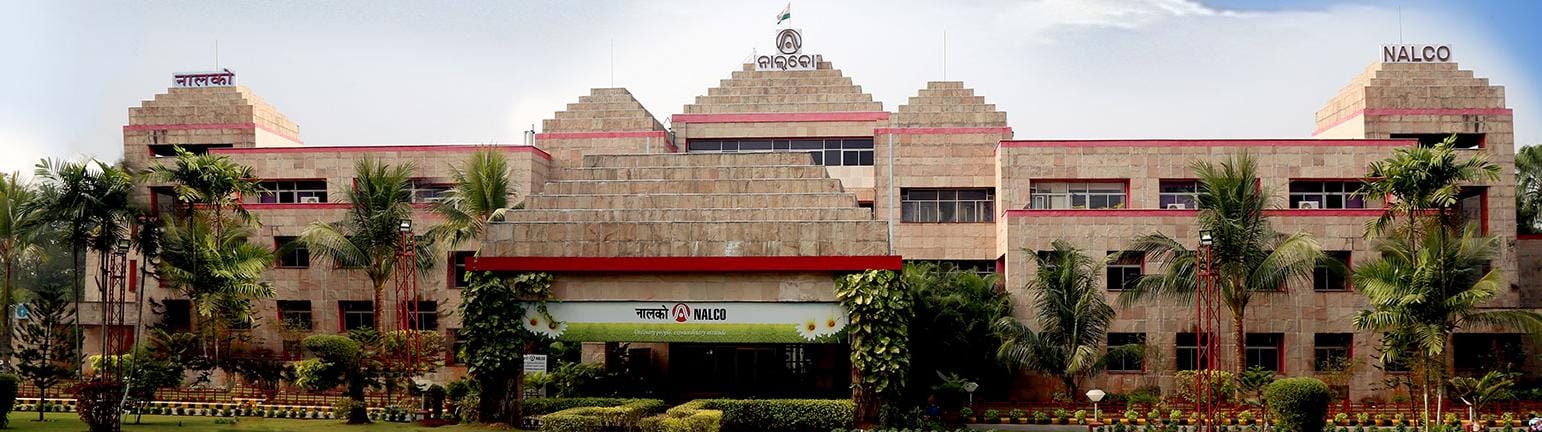
The 50:50 joint venture between National Aluminium Company Limited (NALCO) and NLC India Limited (NLCIL) to develop a 1,080 MW (4×270 MW) coal-based captive thermal power plant in Angul, Odisha, appears to have hit political turbulence. Opposition parties, led by the Biju Janata Dal (BJD) and the Congress, are questioning the terms of the deal. They argue that the partnership is unnecessary, pointing out that NALCO—a Navratna PSU—has the financial muscle to set up captive power plants on its own rather than surrendering half the ownership and profits. BJD Rajya Sabha MP Sasmit Patra, who is also a member of the Parliamentary Standing Committee, has highlighted potential flaws in the arrangement. He noted that NALCO has committed to purchasing 100% of the generated power for 25 years while holding only a 50% equity stake, raising concerns over tariff-setting, profit-sharing, and risk allocation. From the Opposition’s perspective, NALCO already possesses strong financial credentials, captive coal mines, and existing infrastructure, making a 50% equity dilution unwarranted. Among critics, there is a growing perception that this move could be the first step toward the eventual privatization of NALCO.
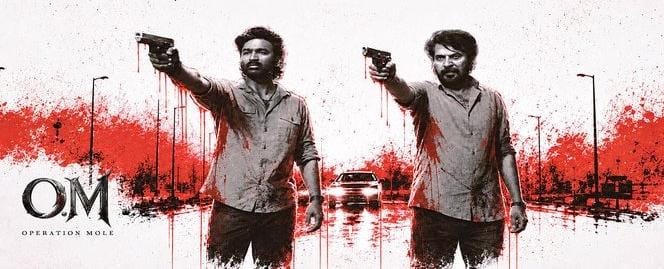
Dhanush’s OM (O.M: Operation Mole) hit theatres on November 20 amid a full-blown distribution war in Tamil Nadu, with fans’ “Worst Distributor AGS” cry proving partly prophetic even as the film powers toward a potentially career-best opening. AGS Cinemas, which holds the TN rights, stuck to its hard line on revenue sharing –70: 30 — refusing to sweeten the deal for exhibitors. The standoff has left visible gaps. Major chains including Rohini Silver Screens, Vetri and others in Chennai, Chengalpattu, Kanchipuram and surrounding areas have either skipped the film or have limited shows. Reports suggest the film is playing in only about half the theatres in key Chennai belt districts, far short of the 500-plus screens AGS had confidently projected. The absence of long-time Dhanush strongholds has fuelled fresh anger, with many calling the TN release one of the weakest for a star of his stature in his home market. Yet the commercial reality is more complicated. Despite the missing screens, OM registered strong advance bookings, crossing Rs 7 crore India-wide and already surpassing Dhanush’s previous best pre-sales. On release day, available shows are seeing healthy walk-ins and occupancy, with early Day 1 estimates putting India net collections in the Rs 10–13 crore range so far and tracking toward a possible career-best opening. Dhanush had earlier thanked chief minister Vijay for approving 6 am shows. The contradiction is stark: AGS protected its commercial terms, fans lost key screens, and OM is still finding an audience wherever it is playing. Whether the thinner TN footprint ultimately caps its final haul or the strong occupancy in available theatres carries the day will become clear by the weekend. For now, the “Worst Distributor AGS” tag has stuck, even as the film refuses to go down quietly.

Tossing a tricky question in the court of the political opposition is becoming rather frequent in Maharashtra. It all started with some local outfit demanding that the historic city of Pune should be renamed as Savitribai Phule Nagar. Already, Pune University has been given her name, to laud her role as a pioneer of women’s education in India. Even before the dust has settled, the demand for renaming Dadar railway station as ‘Chaitya Bhoomi’ to remember the contributions of Dr BR Ambedkar, including his decision to embrace Buddhism. As soon as the news flashed on the social media that the state government had accepted the renaming demand, there was a flurry of protests since Dadar is a world famous part of Mumbai and the name is associated with countless memories. Chief minister Devendra Fadnavis tried to douse the fire by announcing that not the railway station but the Metro Railway station just close by to Chaitya Bhoomi would be renamed as such. Knowing very well that such demands and the government’s decision in whatever direction evoke strong feelings, Shiv Sena (UBT) MP Sanjay Raut has demanded that Nagpur be renamed as Deeksha Bhoomi since Dr Ambedkar entered Buddhism in the city along with countless followers. Raut said his leader Uddhav Thackeray, too, was in favour of the demand. The state government’s response is awaited with a baited breath, given the sensitivity of the issue.
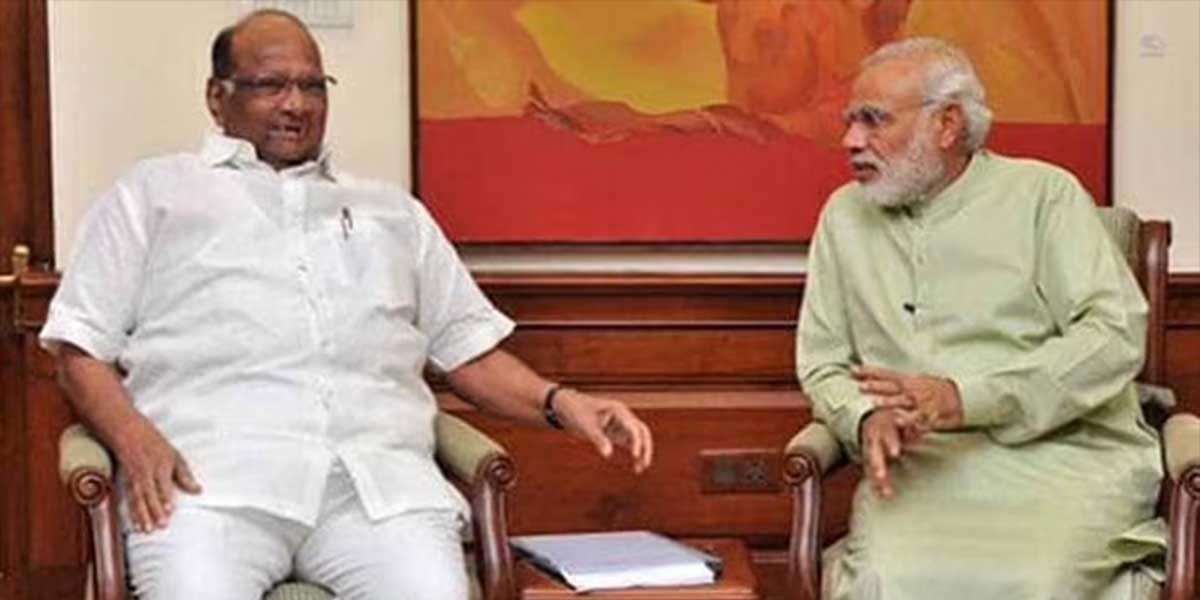
Prime Minister Narendra Modi’s proposed visit to Baramati has been cancelled for now, after two revised schedules. The visit on 12 December would have coincided with veteran leader Sharad Pawar’s birthday. Now that Modi will not be coming, Pawar himself will inaugurate the Prerana Sthal at his home town on that day. The visit had earlier been slated for 3 November and subsequently to 16 November, before its final cancellation. Pawar himself said that the PM would not be coming. Despite his age and the recent indisposition, Pawar has gradually started keeping himself occupied. On Friday (Nov 20), he visited Baramati and held a meeting with daughter Supriya Sule and grandsons Jai and Yugendra Pawar. The Pawar family is in the news at present for multiple reasons. The most important is the probable support by the NCP(SP) of the proposed Delimitation Bill. Supriya has already indicated that Pawar’s party can stand by the bill. Secondly, Pawar clan’s most vociferous member, Rohit, has been making one allegation after another in relation to the tragic death of his uncle and then deputy CM Ajit Pawar in a plane crash at Baramati. Although Supriya has expressed chagrin over the way Rohit tried to implicate CM Devendra Fadnavis in the matter, Sharad Pawar himself has remained silent on such a sensitive issue. While Union home minister Amit Shah has reiterated in a Pune event that the investigation in the mishap will be comprehensive and as fast as possible, the atmosphere is full of suspense and misgivings. Hence Modi’s decision to drop the Baramati visit has been linked with such developments.
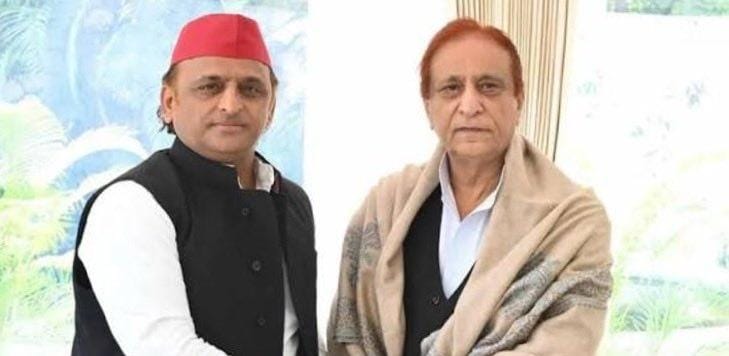
Senior Samajwadi Party leader Azam Khan’s release from jail has sparked speculation about his influence on the party’s prospects in the Uttar Pradesh Assembly elections early next year. Will he help the SP consolidate Muslim voters in western UP, or could he cause a counter-polarisation that benefits the BJP? He has already set the tone by attacking AIMIM leader Asaduddin Owaisi, saying that “Hyderabadi biryani” is not preferred in UP and that people prefer “pulao” and mutton biryani instead. Khan also stated that Owaisi is a “barrister, not a Maulana”. Khan’s comments followed the formation of the Samajik Parivartan Morcha by Owaisi and Nagina MP Chandra Shekhar Azad for the assembly polls, with Azad named its chief ministerial candidate. Khan returned to Rampur after being released on interim bail from Dasna District Jail in Ghaziabad on the night of November 18. The Supreme Court had dismissed an Enforcement Directorate challenge to his interim bail in a money laundering case related to his Ali Jauhar University in Rampur. Of course, legal hurdles may prevent him from contesting the Assembly elections. BJP leaders are happy that Khan, a strong polarising figure, is back in active politics. A close associate of Akhilesh’s father, Mulayam Singh Yadav, Khan is a former MP from Rampur and a former Uttar Pradesh minister. He has been facing around 100 criminal and civil cases since 2017 and has been convicted in some of them, resulting in his disqualification from the Lok Sabha. Khan’s influence is said to extend beyond Rampur to western UP and Rohilkhand districts such as Moradabad, Sambhal, Bijnor, Bareilly and Amroha, where consolidating Muslim votes is key to the SP’s success. Khan’s return could also trigger reverse polarisation among the Hindus in favour of the BJP.
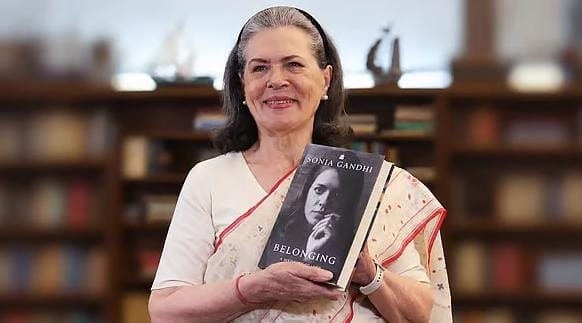
It may come as a surprise but for all her periodic attacks on the BJP-RSS through her memoir ‘Belonging: A Journey of Love’ for trying to forge “communal divide” in the country, Congress leader Sonia Gandhi has gone all out to project herself as a non-practicing Christian. In fact, she has over-emphasised the Hindu legacy of her husband Rajiv—a Kashmiri Pandit Kaul family from Allahabad on his matrilineal side—into which she married. Is it for the sake of her son Rahul’s political future? Or Uttar Pradesh elections? Or for her own political future? She projects her family in Italy, with the exception of her mother as being not committed to the church. She cites an instance when her pro-Communist father had walked out during a Christmas prayer; he had apparently never visited church after that. She admits to attending a boarding school run by the nuns and how she resented their regimentation, she asserts her family is not religious. She also cites how her husband Rajiv had let it be known that both he and his wife would have Hindu funerals. The most interesting bit is about an incomplete letter which Indira Gandhi wrote to her saying “I’m writing to you Sonia because I see glimpses of myself in you and many of my husband in my son, who is your husband”. Much of the clarification about her family’s religiosity is being viewed as natural since rumours were spread that Rahul and Priyanka had been christened. As for their names, Sonia clarifies that they were picked by her mother-in-law inspired by Buddhism. In fact, Indira had wanted Rajiv to be named Rahul. She has also sought to tackle some misgivings spread about her. Like how precious artefacts were smuggled out of the country with her help for sister’s antique shop. Vajpayee government had even held an inquiry into this, she says.
Lakshmi Iyer
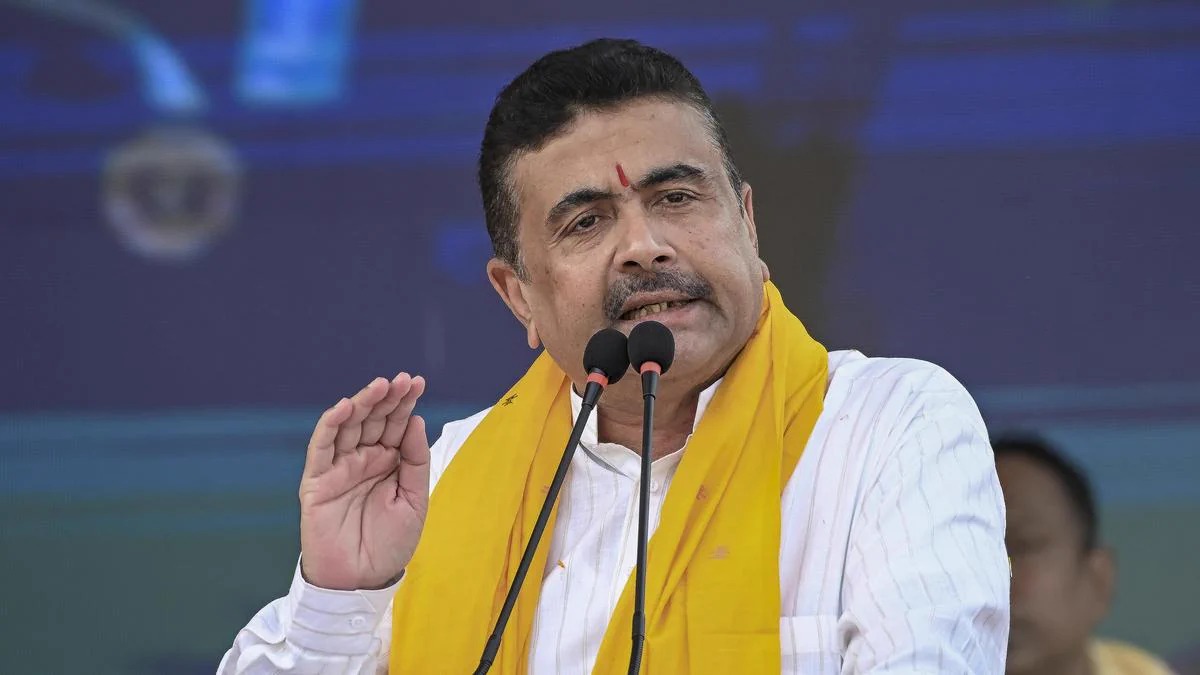
Barely six months after coming to power in West Bengal, the BJP faces deep internal unease over open factionalism and extortion allegations. Turf wars over organizational control, political clout, and municipal poll tickets have pitted veterans against newcomers, sparking debate over who the “real BJP” is—old-timers or those who joined after the May 4 assembly victory. Political observers note that a large section of the current leadership defected after 2021.Senior leaders’ remarks highlight the rift. Union minister Shantanu Thakur lamented that BJP workers are both attacking and getting attacked by their own. After a worker’s November 15 murder, Panihati MLA Ratna Debnath blamed a party faction, saying, “It would have been better if the BJP had not come to power,” and accused district leaders of favoring ex-Trinamool members. Echoing this, Barrackpore MLA Kaustav Bagchi accused Noapara MLA and minister Arjun Singh of shielding former Trinamool leader Uttam Das, an accused in a BJP worker’s murder. Meanwhile state president Samik Bhattacharya’s statement that ex-Trinamool leaders are unwelcome drew a sharp jibe from minister Dilip Ghosh. Pointing to chief minister Suvendu Adhikari—who joined BJP in December 2020. Having lost its name and symbol, Mamata Banerjee’s faction now operates as the Mamata All India Trinamool Congress with a “football player” symbol, fuelling turncoat influxes and power struggles among MLAs, MPs, and district presidents. Extortion charges have worsened the embarrassment. Beldanga MLA Bharatkumar Jhawar used loudspeakers to urge residents not to pay anyone—including BJP workers—for Awas and Annapurna scheme benefits, while other MLAs accused rival factions of extortion. On November 13, Samik warned workers to file FIRs against anyone misusing the party’s name, noting police minister Suvendu Adhikari would act. Yet, lack of visible action and fears of “Trinamoolisation”...
During his recent visit to the U.S., Rahul Gandhi had initially sought to undermine the Indian economy by describing it as a “disaster”. That too at a time when international rating agencies like Lowy Institute have ranked India among three fastest growing Asian economies. Perhaps to make up for a swipe on the economy, he was seen backing the government on its foreign policy. At least during an interaction at the University of Chicago (Nov 19/20), Rahul was heard condemning the October 7, 2025 Hamas attacks and Israel’s actions in Gaza, while backing continued strategic and defence ties between India and Israel, based on India’s national interests. He called the October 7 attacks “absolutely horrible”, while also condemning Israel’s actions in Gaza, stating that “one wrong cannot justify another”. He noted that India has a good relationship with Israel, including strategic reasons and purchasing weapons produced by Israel. He said India is a country of 1.5 billion people and its foreign policy should be guided by what is good for India, without being constrained on the global stage by Israel, the U.S., Russia or China. Rahul’s views were certainly at variance from the more nuanced position that the Congress takes on Israel. His sister Priyanka, a Kerala MP, is always taking a pro-Palestine stand. So what made Rahul Gandhi back the government and India’s interest? There were jokes on the X wondering if the Israeli Mossad had suddenly found something on Rahul. It is well known that his patron George Soros, though a holocaust survivor, is anti-Israel. Unless Anya Schiffrin, another Soros beneficiary who introduced Rahul at Columbia University, possibly softened his position on Israel. Incidentally, Schiffrin is a Jew.
Are police encounters becoming the new way of dealing with crime and criminals in West Bengal? Five encounters in six months since the BJP government assumed office have raised questions over its policing strategy, with the Opposition challenging the operations and human rights groups flagging alleged discrepancies. The latest incident occurred on November 15, when police shot accused Ratan Sheikh at a brick kiln where he had allegedly concealed firearms. Police claimed Sheikh opened fire at their vehicle when a team went to arrest him, prompting retaliatory firing. This was reportedly the fifth encounter, after incidents in Baruipur and Gaighata (North 24 Parganas), Samsherganj (Murshidabad) and Raiganj (North Dinajpur). The developments have revived memories of Bengal’s troubled policing history. In 1971, Calcutta’s walls carried slogans such as “police maro, ostro karo” (kill the police, capture their weapons). A Calcutta Police Gazette order had instructed armed personnel to secure revolvers to their belts to prevent weapons being snatched. Fifty-five years later, these references have acquired renewed significance. Chief Minister Suvendu Adhikari, who also holds the Home portfolio, has defended the tough approach, saying police will not remain passive when attacked. He has promised zero tolerance towards assaults on personnel and action against anti-social elements, particularly history-sheeters and those accused of rape and murder. The Association for Protection of Democratic Rights (APDR) has flagged discrepancies in fact-finding reports on the Baruipur encounter, the first under the new government, and the Raiganj incident. The Trinamool Congress Opposition questioned why police should resort to encounters when courts can prosecute accused persons, raising concerns over extra-judicial killings. CPI(M) state secretary Mohammed Salim called the late-October 2026 encounters “scripted” and “staged”, likening them to...
West Bengal Chief Minister Suvendu Adhikari’s government is adopting policy models from Gujarat, Uttar Pradesh, Haryana, and Andhra Pradesh across industrialisation, land reforms, employment, afforestation, and law and order. Adhikari stated his administration aims to develop Bengal like Gujarat over five years, targeting at least 50% of that benchmark. For industry, Bengal announced a single-window portal modelled on Gujarat’s nearly two-decade-old system, enabling investors to access information, submit applications, get approvals, lodge complaints, and receive post-project services. Services carry legally stipulated timelines requiring departments to explain delays, while a state-level empowered committee oversees strategic project incentives, power subsidies, and inter-departmental coordination. Regarding land policy, Adhikari rejected both the Left regime’s compulsory acquisition and the Trinamool Congress government’s approach of leaving industrialists to buy land independently. Alongside a land bank, Bengal plans land pooling like UP, Haryana, and Andhra—combining multiple owners’ land for infrastructure development and returning 25-30% of developed plots to boost land values, cut acquisition costs and rehabilitation disputes, and aid planned urbanisation. To boost the 125-day employment scheme, four panchayat officials visited Andhra Pradesh. Since July 1, Andhra generated over five crore person-days in four months versus Bengal’s 50 lakh. Studying Andhra’s vacant-land plantations and separate Panchayat Engineering Directorate for road and infrastructure work, Bengal is discussing restructuring its rural development agency similarly. Citing the Prime Minister’s ‘Ek Ped Maa Ke Naam’ campaign, Adhikari pledged to compete with UP Chief Minister Yogi Adityanath’s 26-crore tree-planting drive by planting 10 crore trees. On law and order, adopting Yogi’s zero-tolerance stance against drugs, infiltration, and crimes against...