 All
All Politics
 Business
 Entertainment
 Sports
 Celebrities

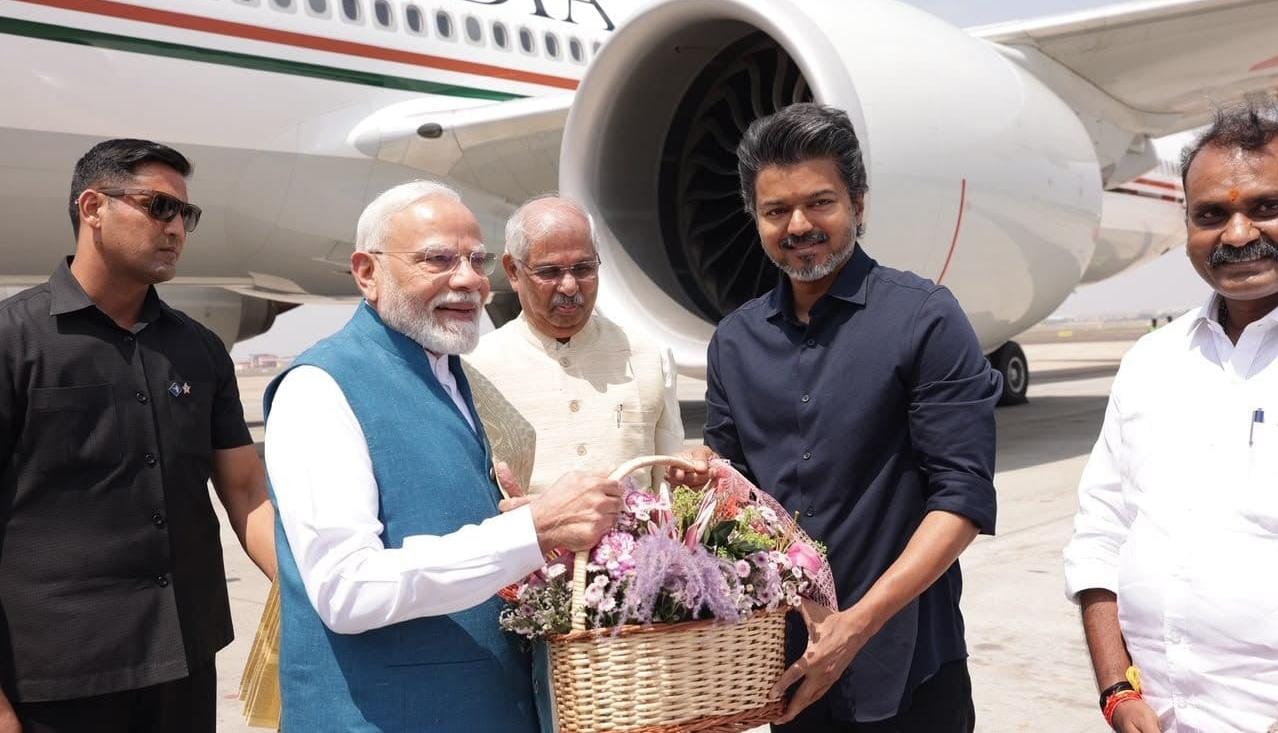
A day after meeting with Congress leader Rahul Gandhi whose MLAs are part of his government, Tamil Nadu chief minister C Joseph Vijay did the most audacious thing – he went to the airport to receive PM Narendra Modi on his first visit to Chennai after TN polls and sort of rolled out the red carpet. He used PM Modi’s visit to the state to sort out all pending issues — early approval for new Metro projects and the unconditional release of Rs 5,100 crore in pending education funds. Speaking at the at the inauguration of a Chennai Metro stretch –15-km Poonamallee Bypass–Vadapalani section — Vijay outlined demands covering urban transport, education funds, and river linking. He urged the Centre to expedite approval for Chennai Metro’s Phase III to improve connectivity across the metropolitan area. He also sought Metro projects for Coimbatore and Madurai to serve western and southern TN, and an interstate link between Hosur in Tamil Nadu and Bommasandra in Karnataka. Vijay thanked PM Modi for the Chennai–Bengaluru and Chennai–Hyderabad high-speed rail corridors announced in the 2026 Union Budget. Vijay also called for linking the Godavari and Kaveri rivers to ensure equitable water availability across states. On his part, PM Modi assured Vijay all possible help. Political analysts contrast Vijay’s tactical handling of pending state issues with Centre and the manner in which he raised it as a superb move. It apparently contrasts with the hostile manner in which then CM M K Stalin had heckled PM Modi publicly in Chennai in 2021. If PM Modi cedes to Vijay’s demands it will certainly be the end of the road for the DMK. That’s why a silly DMK claimed that PM Modi had “merely” flagged projects it had launched when it was in power.
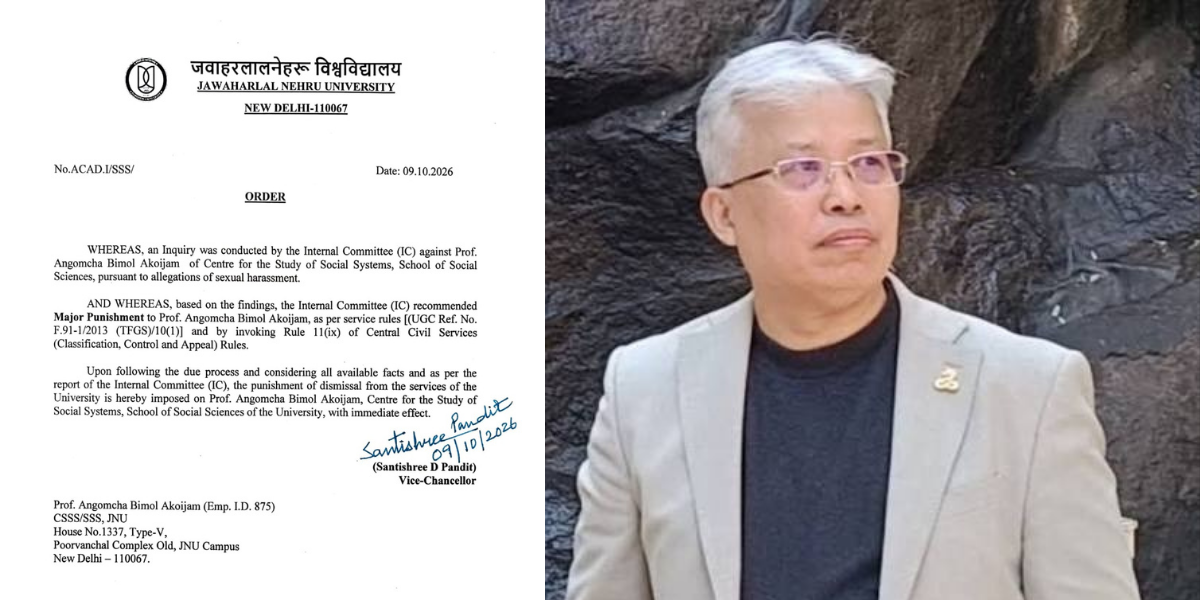
Jawaharlal Nehru University (JNU) has dismissed incumbent Congress MP Angomcha Bimol Akoijam with immediate effect following an inquiry into allegations of sexual harassment. According to a university order dated October 9 and signed by Vice-Chancellor Santishree D Pandit, JNU’s Internal Committee conducted the inquiry and recommended a major punishment. The university said it decided to dismiss Akoijam after following due process and considering the available facts and the committee’s report. The issue had taken a political turn, with BJP’s students wing, the Akhil Bharatiya Vidyarthi Parishad (ABVP) staging a protest at the university last month to demand action over complaints that had been filed by 11 women students. Akoijam had rejected the allegations, accusing what he described as “racist schemers” of trying to damage his reputation through unverified allegations and lies. Akoijam taught at the Centre for the Study of Social Systems in JNU’s School of Social Sciences. He was elected to the Lok Sabha from Manipur’s Inner Manipur constituency in 2024 on a Congress ticket. So far the Congress has not officially reacted to action on him. JNU V-C was heard saying that Akokijam had played truant and was not responding to “some 300 emails sent to him” by the Inquiry Committee. He was reportedly calling the women students home which were objected to by the students. The V-C went on record praising the women students who had the courage to see through their complaints. The complaints took a political hue with BJP’s Mahila Morcha planning to hold protest outside Congress offices across the country
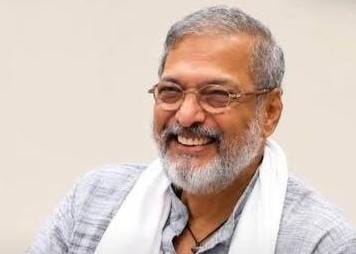
Famous Marathi play ‘Natsamrat’ (Greatest Performer) has earned a niche position in the history of Marathi stage. Written by Dnyanpeeth awardee litterateur Kusumagraj over five decades ago, the play is revered for its plot, dialogues and message. The central character of a stage artiste counting his final days is a challenge for any actor who performs the role. Nana Patekar was one of them. The play was so popular that a Marathi movie based on it earned over Rs 150 crore. Some of the soliloquies of the main character are so long and need so much strength to deliver that they were most tiring for an actor, Nana had disclosed in one speech. He recalled how towering thespians like Dr Shreeram Lagoo, Datta Bhat, Chandrakant Gokhale and Yashwant Dutt who had depicted the unfortunate personality had died of heart attacks. It is ironical that Nana, appearing perfectly fit physically, should fall prey to a suspected heart condition. Several such unknown facets of Nana’s life are coming out through the respects paid to his memory by his co-workers and admirers. It makes one shudder to know that Nana was related to dreaded gangster Manya Surve, whose police encounter had become a sensation in the early 1980’s. Nana’s mother, fearing that he might be influenced by Manya, had sent her son to their Konkan village to avert the possibility. Fortunately, Nana did not choose a wrong path after returning to Mumbai some years later and started acting in experimental stage.
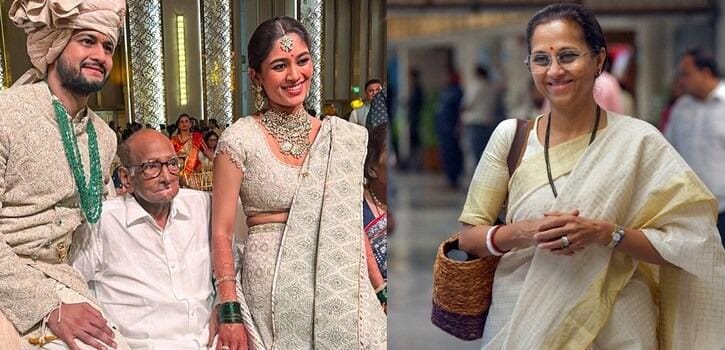
Veteran leader Sharad Pawar’s grandson-in-law has been allotted 1200 acres of land by the Maharashtra government on lease in Ahilyanagar’s district of western Maharashtra. The plot in Haregaon village has been entrusted to Vishwaraj Renewables Pvt Ltd, a Mumbai-based company owned by Sarang Lakhani, son-in-law of Supriya Sule, daughter of the Nationalist Congress Party (NCP) supremo. As soon as the government’s decision came under fire, Supriya Sule maintained that her son-in-law’s business and professional activities were entirely his personal matter. She refused to say anything beyond that. Interestingly, Sarang is the son of BJP MLC Arun Lakhani, an ardent RSS volunteer from Nagpur. Arun is considered close to various bigwigs of the saffron organisation. The land held by the Maharashtra State Farming Corporation has been leased to the Lakhani company for 49 years, according to an order issued on October 5. The allotment comes within two weeks of the government allotting on lease 1500 acres of land to another private firm, Nibe Group, in the same cluster. The state government has also allotted 1500 acres to the Defence Research and Development Organisation (DRDO). Social activist Anjali Damania has questioned the allotment decision, taken without following a tender process. Damania claimed that the government had decided to develop a green energy park on the land through “Maha Urja” but just three months later, the same 1200 acres was allotted directly to a single private company in September. Revenue minister Chandrakant Bawankule has defended the decision, ruling out likelihood of any further fireworks.
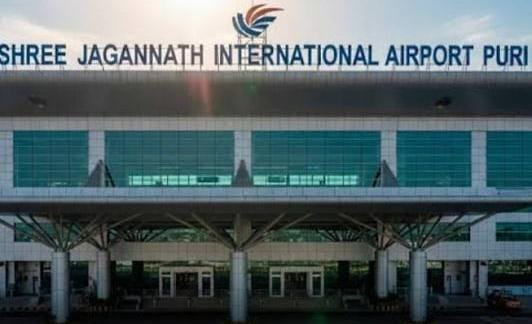
Five years back the Biju Janata Dal government led by Naveen Patnaik had taken the initiative to build the ambitious the Shree Jagannath International Airport in Sipasarubali, Puri — the abode of Lord Jagannath. It has now received the official go ahead. The Airport Authority of India (AAI) has agreed to take up its development as the Ministry of Environment, Forest and Climate Change has already granted the final Environmental and Coastal Regulation Zone clearances. The airport is proposed to be developed over 1,164 acres at an estimated cost of Rs 5,631 crore across three phases via public private partnership model. The airport will have passenger handing capacity of 4.6 million per annum in phase-1. The question doing the round in Odisha is whether the Mohan Charan Majhi government can complete the project before his five-year term comes to an end in mid-June 2029? Very unlikely say sources.
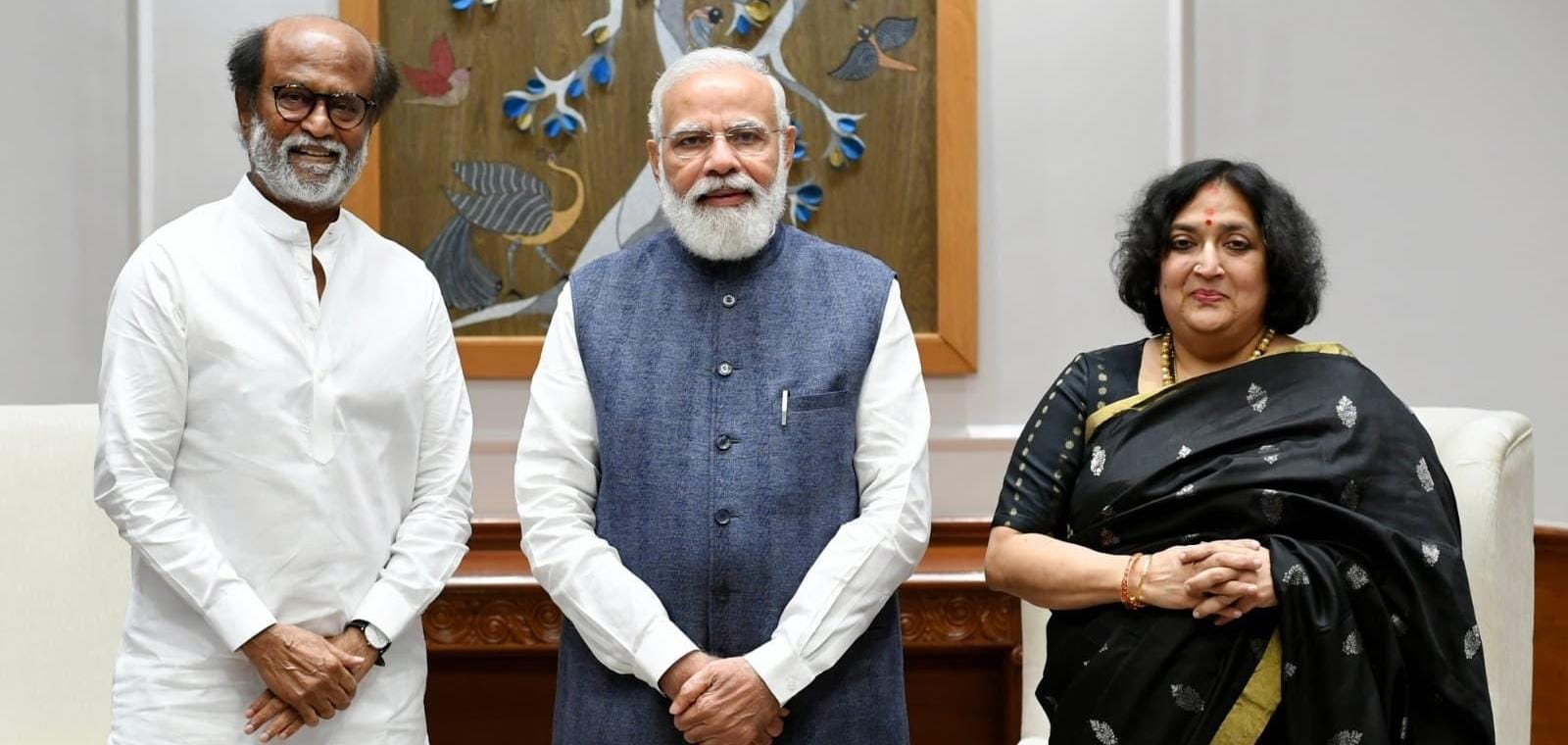
It took the imagination of TVK and its leading film star C Joseph Vijay to smash Dravidian politics in Tamil Nadu. Atleast emergence of Vijay as chief minister has raised a lot of hopes in Tamil Nadu politics. Or else how does one explain the unusual interest Latha Rajinikanth has begun showing to make some headway into politics. Yes, she has been camping in Delhi for the past few days. The buzz is Latha is lobbying to become an MP. If not her, she reportedly wants her superstar husband Rajinikanth to be nominated to the Rajya Sabha as an MP. It is being said Latha wishes for a parliamentary role for Rajinikanth since his contemporary Kamal Haasan is already an Rajya Sabha MP, courtesy DMK. The other buzz is that Dhanush, former son-in-law of the Rajinikanth and Latha, is also trying to register his political party. Latha, it seems, has already met with central ministers including Prahlad Joshi, Rajnath Singh and others. Latha has been wanting to meet with Union Home Minister Amit Shah. What may come in the way of Latha being considered for a Rajya Sabha berth are some ticklish legal issues. Media reports indicate petty municipal dues that could eventually get sorted out.
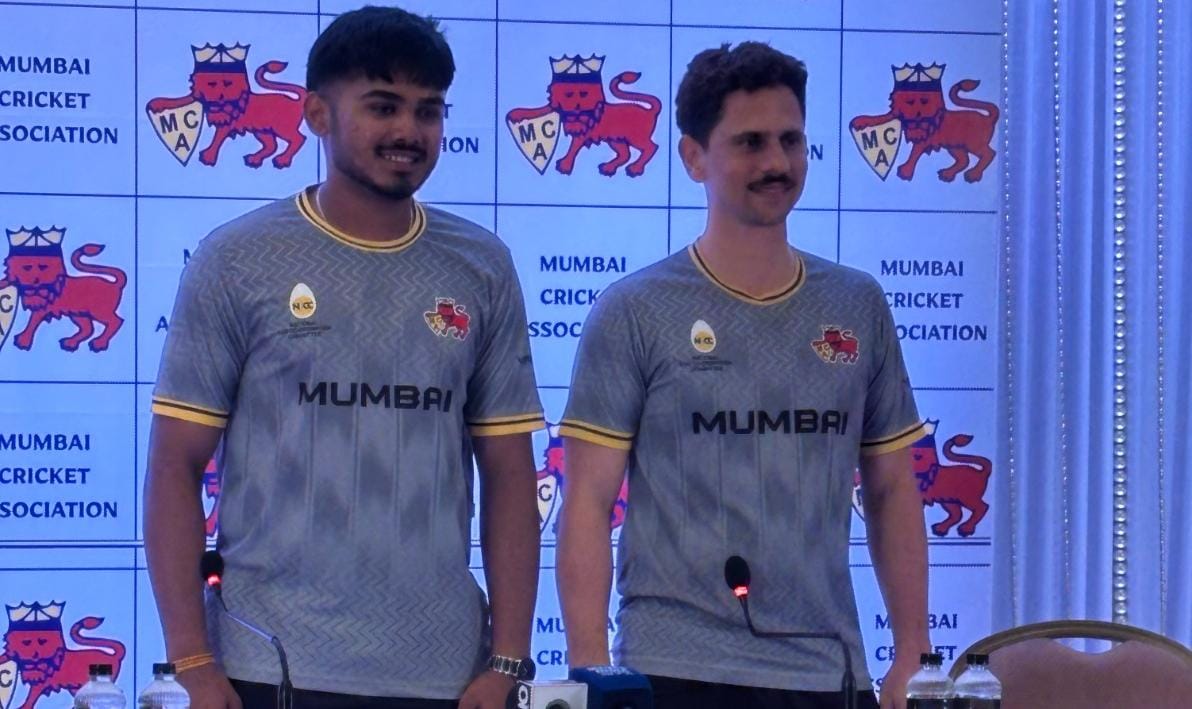
Finally, a Mumbai player and its captain Siddhesh Lad expressed happiness at returning to the Mumbai Cricket Association’s primary venue in South Mumbai — the Wankhede Stadium — to play a Ranji Trophy match. For years, the Mumbai team preferred to play the Ranji Trophy at the suburban venue at the Bandra-Kurla Complex. But the new domestic season, which gets off the ground on Sunday (Oct 11), will see the 42-time champion team take on Chandigarh at the ‘D’ road venue in Churchgate. Runs scored and wickets taken at a Test match venue — regarded by none other than Michael Atherton as a great venue for the game — carry their weight and value. The Wankhede tests first-class cricketers; a good one will prosper. Its red soil base helps the bowlers as well; ask Ravichandran Ashwin! Both the home and visiting teams will enjoy their success twice over. Even the senior national selection committee will reward players who do well at a Test venue. Mumbai players, many of whom are in the upper band of talent, have a chance to grab their opportunity. Lad at 34 has been named captain; he was a budding talent, but he may have missed the big-league bus. When on song, he is a delight to watch. Lad said the team feels good to be back at the Wankhede, and as a youngster, it was a dream to play there. “We are all looking forward to playing at the Big-W”, Lad said. The shift from BKC to Wankhede will motivate the players who wear the Lion crest with pride. For the Chandigarh team, the four-day match will be memorable, but Lad and his team will hope for a strong start.
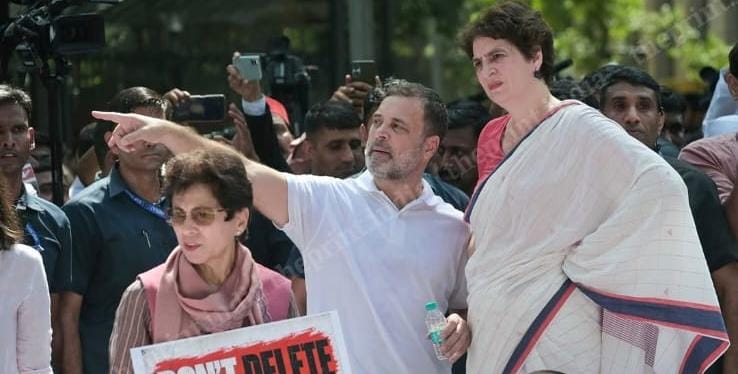
It is now becoming increasingly clear Congress leaders — Rahul Gandhi and Priyanka Gandhi Vadra — stole the show at the INDIA bloc march to the Election Commission’s office in Delhi on October 6 with the sit-in at Akashvani Bhavan. They were simply not bothered about coordinating with other Opposition parties nor were they worried about Opposition unity. They seemed more worried to better the CJP record of protest — which incidentally is going to be held on October 10. Surely, the media focus on Gandhi siblings’ antics on the streets in the past two days so upset Congress’s allies that many leaders felt the mega protest eventually became a Gandhi siblings’ show. Many leaders questioned the Gandhis’ move for a sit-in at Akashvani Bhavan while other Opposition leaders were being detained. Apparently, the sit-in protest was not part of the plan. While Rahul’s aides tried to explain about the Gandhis sit-in protest at Akashvani as a move to get appointment with the CEC, many Opposition leaders found Rahul Gandhi’s insistence on meeting the CEC as very odd. Did the Gandhis take 200 Opposition MPs who had gathered at Parliament’s Makar Dwar on October 6 for granted? So it was not just the DMK that skipped the Opposition event. Even Samajwadi Party not only chose to keep away from the Gandhi show but also skipped the Cong lunch invite at Sagar Ratna. Explaining the many who missed the lunch event, Congress leader Jairam Ramesh in post on X insisted that all INDIA janbandhan parties had been invited for the lunch. However, since the decision for the lunch had been taken late last night and communicated. It was therefore natural that some parties could not be represented.” At the same time, he protested about the Gandhis being arrested once again. Meanwhile there was outrage on X about Rahul Gandhi spotted manhandling a Delhi woman police official.
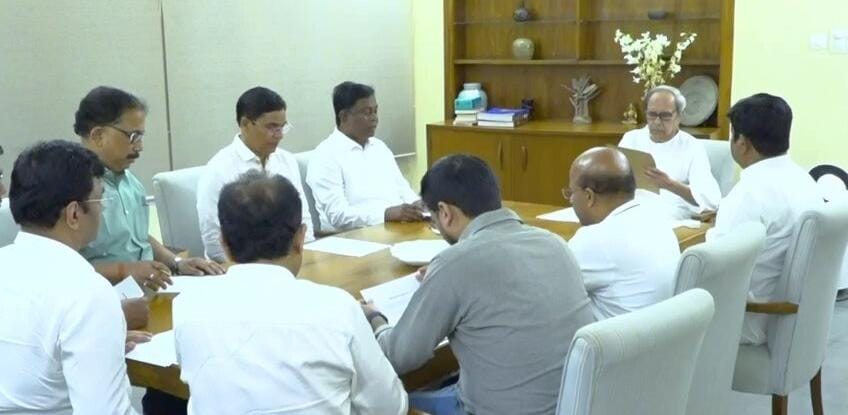
It seems Biju Janata Dal (BJD) President and leader of Odisha opposition Naveen Patnaik is now shifting from his quiet demeanour to an active communication offensive. He and his party members are now getting ready for an all-out media war against Mohan Charan Majhi’s government by having a highly coordinated media and public outreach strategy. The idea is to expose, highlight the state government’s failures, lapses and mis-governance to the people at large. As part of this plan, Naveen Patnaik has already reorganised BJD’s media cell. This means restructuring the party’s communication road map covering digital, print, and electronic media. Objective is to divert growing public discontent of BJP’s administrative failure into a structured, state-wide campaign against Majhi’s government. Political analysts decoding Patnaik’s new strategy say that Naveen babu has realised that his earlier defeat was due to BJD’s weak social media narrative. And the current media strategy is an antidote to the earlier gap. The job ahead for BJD media team is cut out because it’s taking the role of self- managed PR strategy which has its distinct strategic benefits but also challenges with regard to core execution requirements.
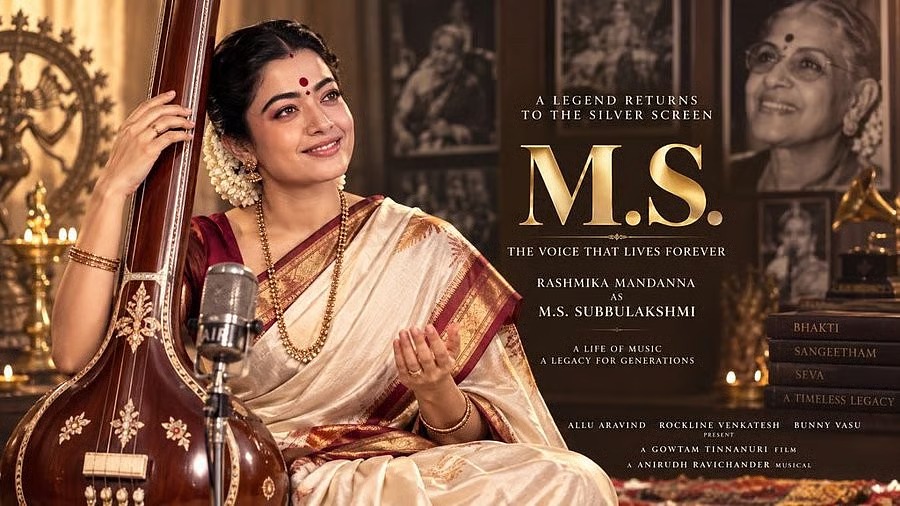
Not just in India, particularly South Indian homes but in the U.S. too mornings are ushered in by that magical voice waking up Lord Rama…“Kausalya Supraja Rama Poorva Sandhya Pravarthathe.” The evenings resonate in temples and homes with the legendary Carnatic vocalist M S Subbulakshmi’s sublime recitation of the Vishnu Sahasranamam. Is it then surprising that a production team launched a biopic on her titled M.S. – A Legacy On Screen? The decision to cast Rashmika Mandanna in the title role did not create waves of talk, surprise and surmise. Whoever played that role was bound to draw audience, magnetically, going beyond a heroine to remember Bharat Ratna recipient M S Subbulakshmi and her beauty. MS would come on stage in her custom woven Kanchipuram silk, diamond studded nose and earrings…glinting, glittering and gleaming in the arc lights. When Kamal Haasan sounded the first clap for the official launch of the biopic at Chennai’s music academy, Rashmika Mandanna must have felt goosebumps and trepidation. Can I play this legendary artist? Director Gowtam Tinnanuri must have calculated the gains and risks …knowing fully well that Rashmika or anyone else with the right makeup, jewellery and stunning saris would carry the biopic on her shoulders. Vidya Balan too had been “look tested” earlier. Though Vidya looked stunning, the casting coup did not happen. Rashmika has announced that after the biopic hits the cinemas, she would take a five-year break…to stay home and enjoy family life to the fullest. She would start her second innings after that hiatus ….Rashmika is wise beyond her age …after playing MS, even if she retired she could still cherish the role of her life. Legends come rarely.
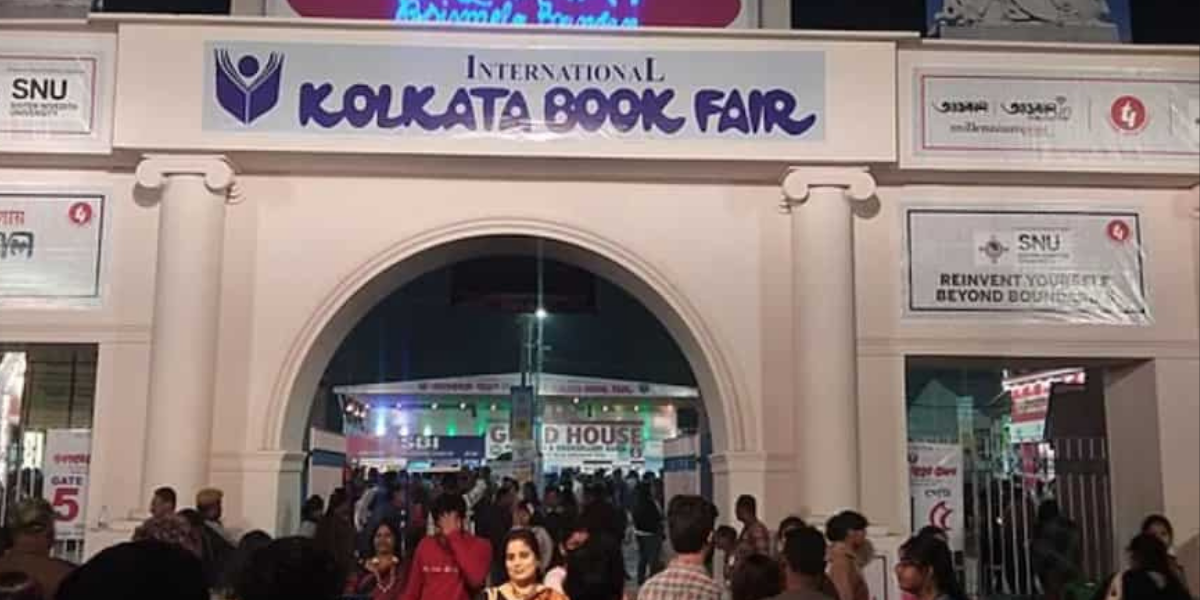
The BJP’s landslide victory in the 2026 West Bengal Assembly election has opened a new political space for the Hindu nationalist ecosystem to expand its presence beyond electoral politics into Bengal’s cultural landscape. The Hindu Right is seeking to build an alternative cultural infrastructure, with Kolkata’s College Street, or Boi Para, emerging as an early site of contestation. Long regarded as a hub of books, ideas and political debate, and historically shaped by Left intellectual traditions, the area is now witnessing the emergence of new cultural organisations. Two such platforms are the Bangiya Grantha Shilpa Parishad (BGSP), launched on June 1, and the Association of Bengal for Literature & Culture (ABLC), founded on June 27. Both present themselves as non-partisan bodies representing the book and cultural sectors. However, their emphasis on nationalism and the revival of Bengal’s “glorious culture” has prompted debate over their ideological positioning. The contest has also reached the Kolkata International Book Fair, with both organisations informally projecting themselves as potential alternatives to the existing organiser amid allegations of politicisation and irregularities. Parallel efforts are underway across the wider cultural sector. The Shyamaprasad Artist Forum and Bangiya Shilpa Kala Parishad have sought to consolidate artists, while the Lekhak Shilpi Samanway Samiti has expanded its activities and helped facilitate the Paschimbanga Natya Parishad for theatre practitioners. In music, Performers of Bengal has emerged as a platform for professionals, promoting what it calls a “Clean Culture, Healthy Culture”. The Hindu Right is also challenging what its supporters describe as Bengal’s “seku-maku” — secular-Marxist — intellectual culture. RSS-linked literary and historical organisations have further widened their networks, while newer groups are advancing alternative interpretations of Bengal’s history, identity, and cultural inheritance in Bengal.
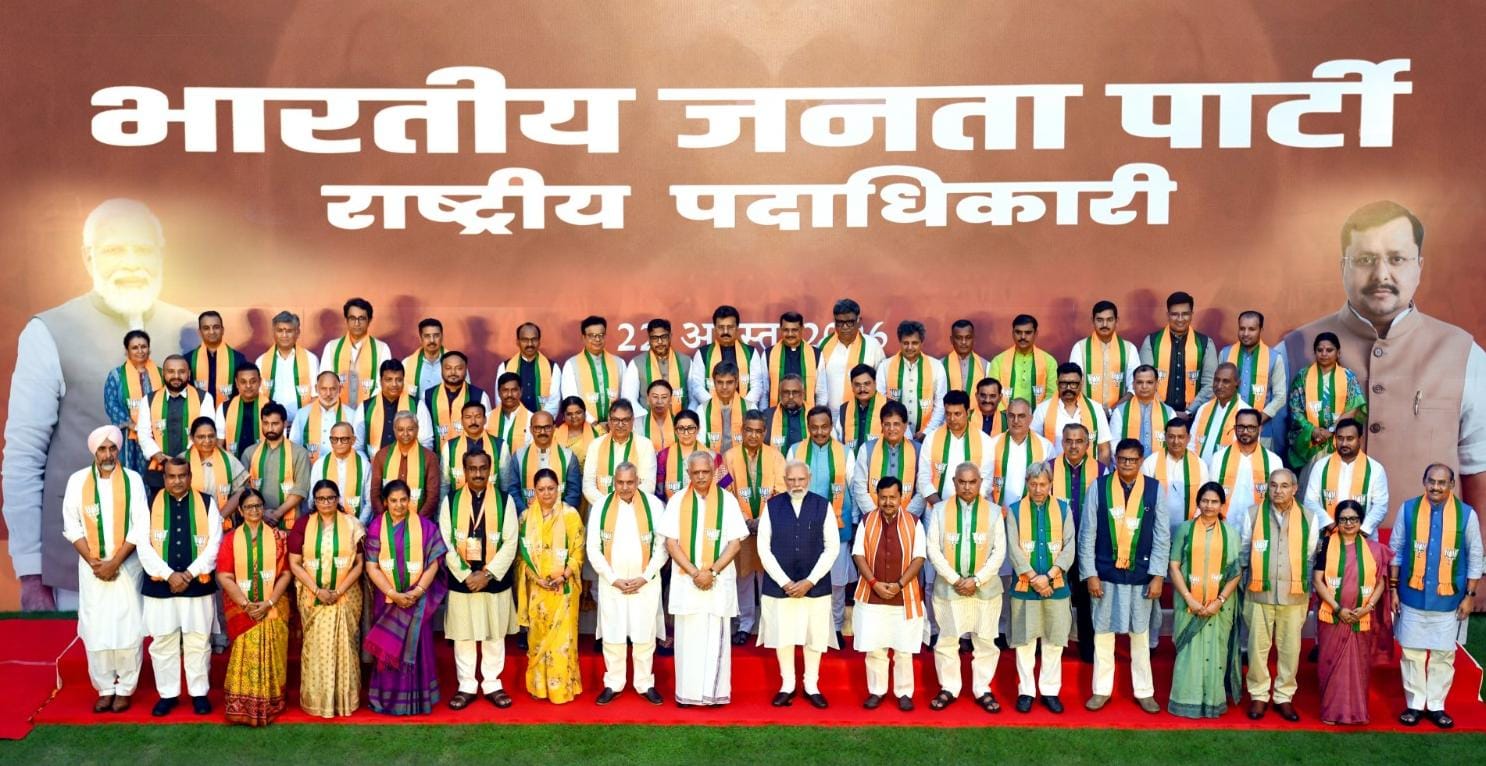
On August 22, PM Modi interacted with all 65 newly appointed BJP national office-bearers during a meeting at the party headquarters in New Delhi. It lasted around four-and-a-quarter hours and reportedly went beyond midnight. It marked Modi’s first interaction with the new team since BJP president Nitin Nabin announced the 65-member organisational team on August 17. Modi wanted the new team members to freely suggest ways for the BJP to strengthen the organisation at the grassroots level, develop fresh ideas and deepen its connect with the public. Since then, BJP’s IT cell has suddenly become aggressive. The IT cell units in different states are bombarding social media with memes and videos against Congress leader Rahul Gandhi. It all began with Rahul Gandhi’s “Chhatron Ki Goonj” rallies. A website named “Jhooth Ki Goonj” has surfaced to carry out a ‘fact check’ of all allegations levelled by Rahul Gandhi. According to this website, Rahul Gandhi levelled a total of 40 allegations in his four programs. Of those, 29 were completely fake, and 11 were misleading. The website claims it used government data and other facts from 134 sources for fact-checking. Congress leaders have alleged that this website has a BJP connection, but the saffron party has officially denied any connection. Union Minister Pralhad Joshi said the BJP has nothing to do with this website, which has been promoted by Gen Z creators. He said the website is exposing Rahul Gandhi’s PR stunts. Clearly, Congress is in a daze after this on social media by the BJP.
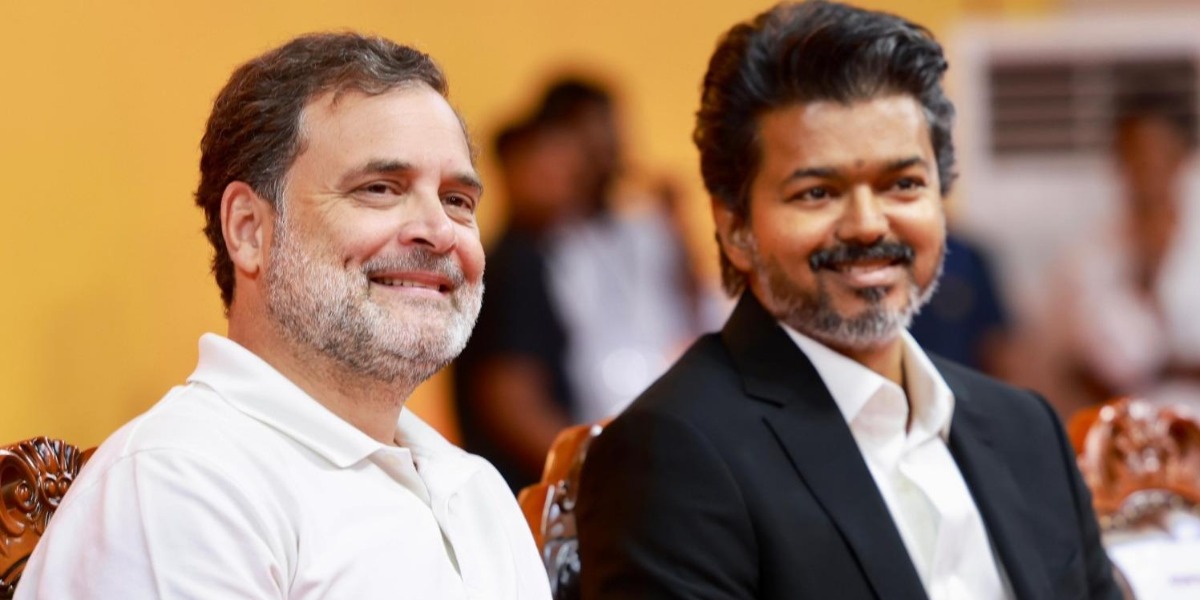
Can Tamil Nadu chief minister C Joseph Vijay really become Prime Minister in 2029? Given TVK’s presence only in TN, it doesn’t seem possible today, even as his government has completed 100 days in office. A recent India Today-C-Voter Mood of the Nation Survey, however, placed Vijay third in the national preference race for Prime Minister at 9%, trailing Narendra Modi (49%) and Rahul Gandhi (27%). This apparently added an element of tension between Vijay’s TVK and the Congress in TN. Several TVK ministers and leaders including PWD Minister Aadhav Arjuna and D Sarathkumar, publicly pitched Vijay as a future PM, arguing for a leader from southern India. Some TVK cadres and members put up promotional posters in towns like Tuticorin projecting Vijay as the next national leader. The development has caused a difficult situation for the Congress, which supported the formation of the TVK government after the Assembly election early this year. TVK had won 108 seats, 10 short of the majority mark. The Congress was the first party to join hands with them back then. Rahul Gandhi remains the Congress’ principal national face and a possible Prime Ministerial candidate. Vijay is now being presented by his own party as a possible alternative. Amid mounting friction between the two coalition partners over the issue, Congress Rajya Sabha MP Praveen Chakravarty met Vijay on August 31, a day after a Congress minister warned that the party’s two ministers in the state cabinet would quit if TVK did not back Rahul Gandhi for the top post. The Congress needs TVK in Tamil Nadu, where its own independent strength is limited. It may also need an electoral understanding with Vijay in the 2029 Lok Sabha election. However, TVK’s PM campaign may aim to strengthen its negotiating position with larger national parties.