All
All Politics
 Business
 Entertainment
 Sports
 Celebrities

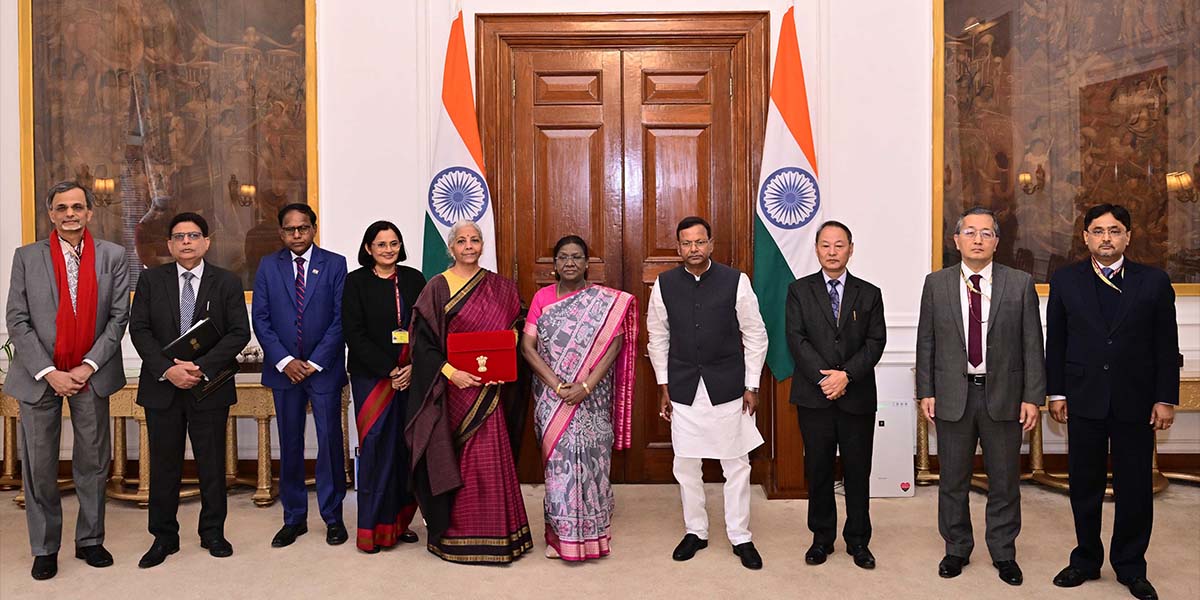
PM Modi is apparently very happy that the 16th Finance Commission’s recommendations will put a full stop to Opposition-ruled States attacking him for not giving adequate Central funds. When Finance Minister Nirmala Sitharaman presented the Union Budget 2026, one sentence tucked in the fine print drew the attention of every CM in the country. It was that the Centre had accepted the 16th Finance Commission’s recommendation to keep states’ share in the divisible tax pool at 41%. At first glance, that looked like continuity. But beneath that headline figure lies a quiet revolution. The commission’s new horizontal formula keeps the overall share fixed but changes how it is sliced. For the first time, a state’s contribution to the national GDP carries formal weight—10% of the total formula. This single tweak tilts the balance towards the country’s south and west, where economic output per capita is high, compared to the populous but poorer Hindi-heartland states that had benefited from the old population-heavy criteria. Preliminary calculations suggest that Karnataka, Kerala, Gujarat, Haryana, Tamil Nadu and Maharashtra are the top six gainers. Karnataka alone may receive around Rs 7,300 crore more each year. In contrast, Madhya Pradesh, Uttar Pradesh, West Bengal, Bihar, Odisha and Jharkhand will see smaller shares; MP could lose nearly Rs 7,600 crore. Most losing states are either BJP or NDA-ruled, while the gainers are largely Opposition-governed. Since the first Finance Commission in 1951, the horizontal formula has revolved around the distances between population, area, and income. The 16th Finance Commission marks a clear break. Echoing Modi’s ideas, Panagariya’s logic: States must show improvement in fiscal discipline, transparency and service delivery to qualify for discretionary grants.