 All
All Politics
 Business
 Entertainment
 Sports
 Celebrities

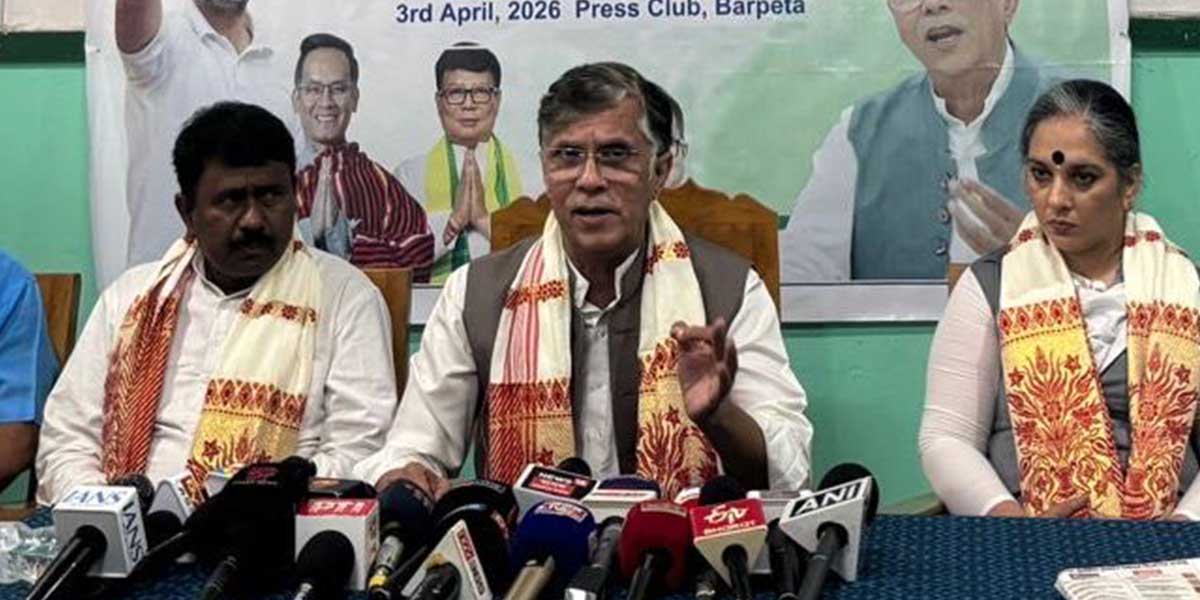
Assam Police conducted searches at Congress leader Pawan Khera’s residence in Delhi on April 7, a day after a FIR was filed against him by Assam CM Himanta Biswa Sarma’s wife Riniki Bhuyan over allegations of passport fraud he levelled against her. Searches were carried with aid of Delhi Police. It is being said Khera had left for Hyderabad a day earlier—that is as soon as he learnt that a FIR had been filed against him in Guwahati. The search yielded some “Incriminating material” said the Assam Police. All this led Assam CM to claim that Khera had “run away to Hyderabad”, while Congress hit back saying the searches prove that the CM was “facing imminent defeat” in the upcoming assembly polls on April 9. Congress sources said even though Telangana CM Revanth Reddy was in Kerala for election work, Khera had a home in Hyderabad and enough clout to secure legal cover for himself. Privately, however, many Congress leaders were not comfortable with the idea of raking up a controversy over Sarma’s wife’s passport. The Congress had held two press conferences in Delhi and Guwahati on April 5 where the party’s media department head, Pawan Khera, and Assam unit chief, Gaurav Gogoi, alleged that Sarma’s wife had passports of the UAE, Egypt, and Antigua and Barbuda. They alleged she owns properties in Dubai (UAE) and has a company in Wyoming (U.S.). They accused Riniki Bhuyan of having business interests worth Rs 52,000 crore in the U.S. Sarma accused the Congress of using documents from a social media group linked to Pakistan to forge alleged passports of three countries belonging to his wife. As for Congress president Mallikarjun Kharge, he wanted a clarification from EAM S Jaishankar on multiple passports of Bhuyan.
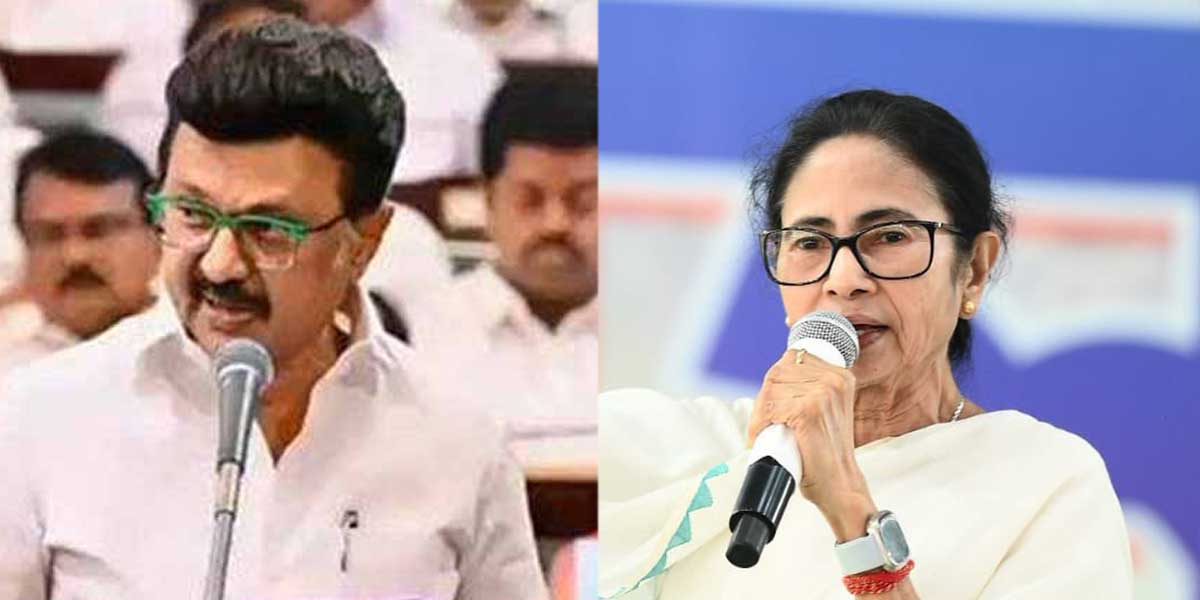
In an interesting move TMC supremo Mamata Banerjee charged DMK chief M K Stalin of having tacit understanding with the BJP. This is outrageous, considering the DMK is part of the anti-BJP INDIA bloc that Mamata associates with according to her convenience. The West Bengal CM has been an all-weather friend of the BJP when it suits her. Like she was part of the Vajpayee government. Maybe just as the DMK too was. However, Mamata felt quite comfortable taking a swipe at Stalin at a public rally in her state this week. The moot point is why did Didi suddenly find Stalin to be BJP friendly? While four states and a Union Territory headed to the hustings in the next few weeks, Mamata feels the Election Commission which she terms as “BJP stooge”, had only targeted bureaucrats close to her for punitive action. The EC had sent many of Bengal’s IAS and IPS officers to TN. She found that several officers including those instrumental in local law enforcement and development initiatives, had been sent to TN as observers. She alleged that out of 510 officers removed as observers across five poll-bound territories, a staggering 500 (approximately) were drafted from Bengal alone. “What are you thinking? Outsiders from Madhya Pradesh and Uttar Pradesh will come and (conduct the) vote?” she asked. Meanwhile, as the DMK-led Secular Progressive Alliance and the AIADMK-led NDA battle it out in TN, DMK surprised political watchers by the way it handled the SIR exercise in the state. It did not make a song and dance of SIR, the DMK simply took it in its stride. This may have led an old ally like the TMC to suspect it of being a friend of the BJP!
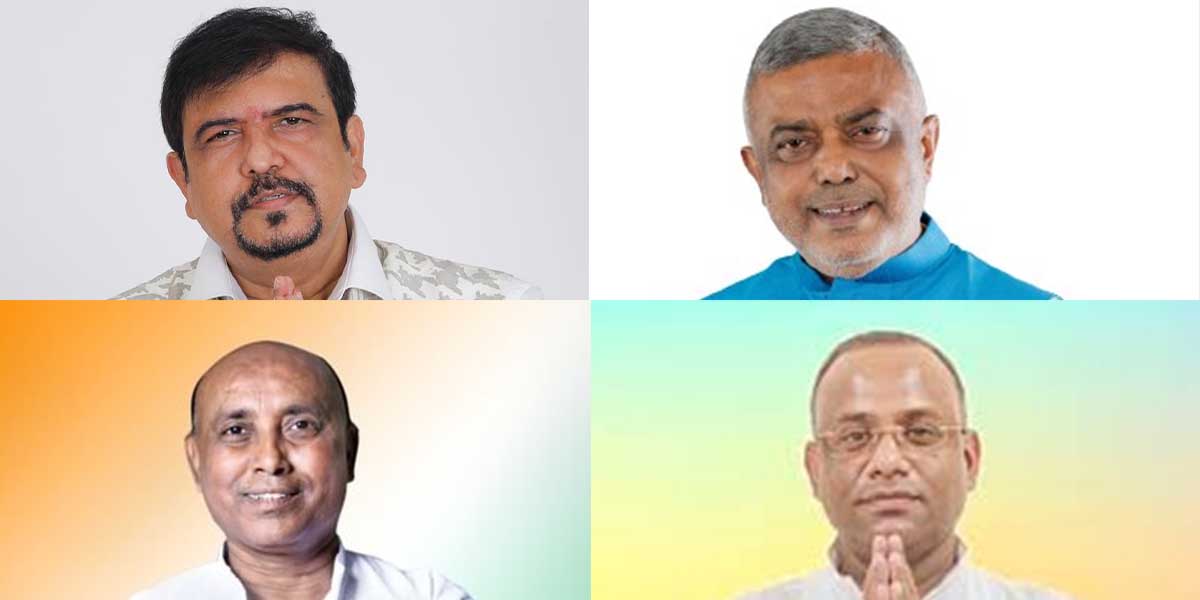
With polling date fast approaching for the West Bengal Assembly elections, the central investigative agencies have got into their act, summoning candidates from the ruling Trinamool Congress (TMC). Polling for all 294 seats is scheduled in two phases on April 23 and 29. Both the Enforcement Directorate (ED) and the National Investigation Agency (NIA) have intensified probes in respect of four TMC candidates in cases linked to alleged recruitment scams, land-grabbing and a blast investigation. Among those summoned are: Sujit Bose, state’s Fire Minister, contesting from Bidhannaga. He has been asked to appear before the ED on April 6 in connection with alleged irregularities in municipal recruitments. Bose won the Bidhannagar seat in 2021 by around 8,000 votes. The case relates to alleged multi-crore irregularities across 123 municipalities and seven municipal corporations, including South Dum Dum, Kamarhati, Panihati, North Dum Dum and Baranagar, based on a CBI FIR alleging illegal recruitments between 2014 and 2018 in exchange for money. In a separate case, Debasish Kumar, TMC candidate from Rashbehari and a member of the Kolkata Municipal Corporation’s Mayor-in-Council, has been summoned three times within 15 days by the ED in an alleged land-grabbing case. He was questioned for several hours on March 30 and April 3. Senior TMC leader Rathin Ghosh, contesting from Madhyamgram, was summoned on April 9 in connection with 1,500 alleged illegal municipal recruitments during 2014–2018. Manab Kumar Parua, candidate from Bhagabanpur, appeared before the NIA in the 2022 Bhupatinagar blast case. TMC spokesperson Arup Chakraborty accused the BJP of using central agencies to target candidates. He claimed leaders like Tapas Roy, Suvendu Adhikari who joined the BJP are not being investigated.
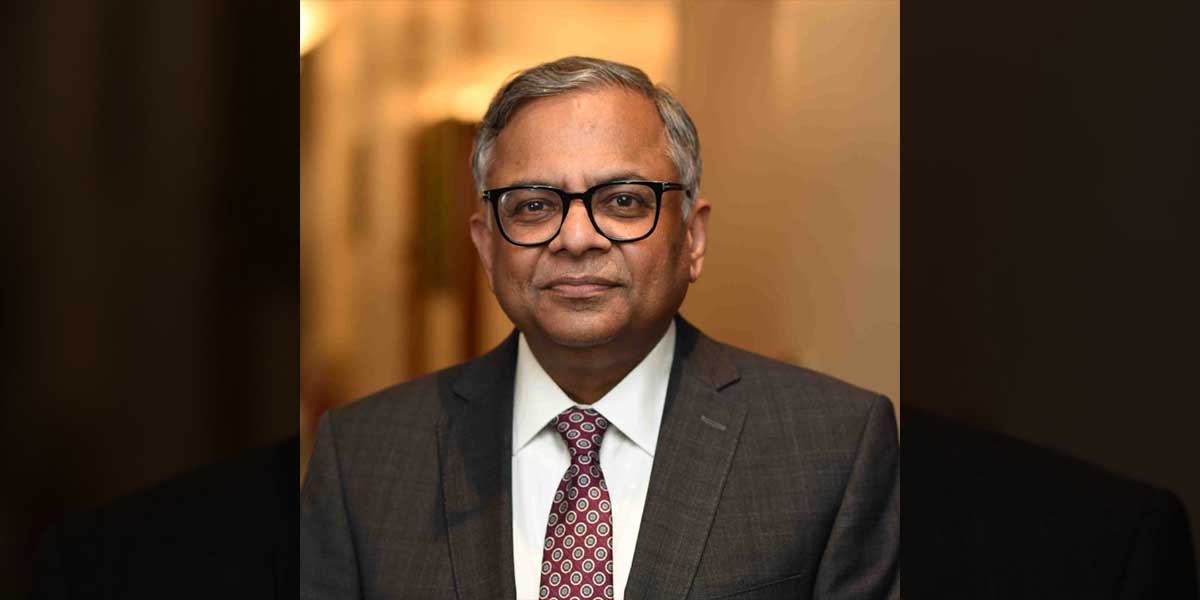
It appears that 68-year-old Noel Tata is slowly but steadily consolidating his position within the Tata Group. When Ratan Tata was at the helm, Noel maintained a low profile, focusing on companies entrusted to him, such as Trent Limited. However, following Ratan Tata’s passing, he seems to have moved to centre stage. Many within the group welcome his increased involvement, noting his ability to navigate complex institutional dynamics. Some time ago, he, along with other trustees, blocked the reappointment of Mehli Mistry—a close confidant of Ratan Tata—to the boards of the Sir Dorabji Tata Trust and the Sir Ratan Tata Trust, the principal trusts that together hold over 51% in Tata Sons. At the Tata Sons board meeting held on February 24, 2026, in his capacity as chairman of Tata Trusts, Noel Tata raised concerns about several group businesses, including aviation, automobiles, and digital services. In this context, Chairman of Tata Sons N Chandrasekaran recommended that a decision on his extension be deferred to the next board meeting. A couple of days later, Noel Tata is believed to have proposed a shorter, two-year extension for Chandrasekaran beyond 2027, instead of the five-year term until 2032 that had earlier been approved by the board. My assessment is that Chandrasekaran may not be keen to continue beyond 2027, when he turns 65. Having had a dream run so far, now he may not be interested in talking about project milestones, justifying capex etc. Then who will take over as chairman of Tata Sons? It is unlikely to be Noel Tata, who will be nearing 70. Could it be another member of the Tata family? One possibility is Noel’s son, Neville, who would be around 34 years old in 2027. He was appointed as a Trustee of the Sir Dorabji Tata Trust in November 2025. He is the youngest trustee. He is also associated with Trent. Here, it is worth recalling that J R D Tata was also 34 when he assumed leadership of the group.
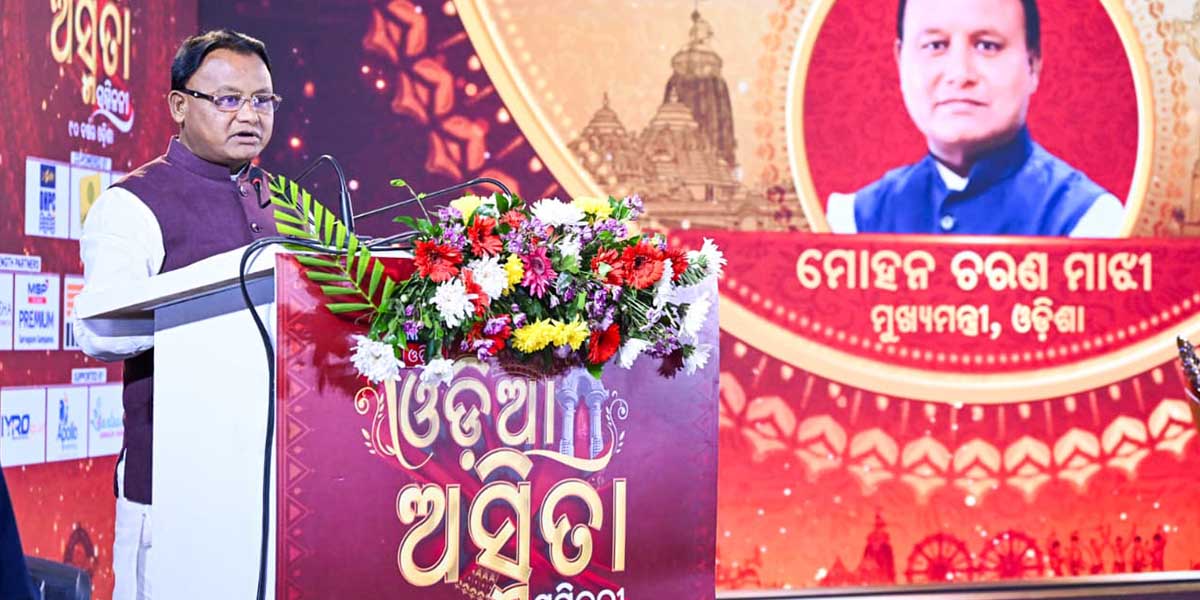
In May 2024 when Mohan Charan Majhi government came to power he had set an ambitious target of creating over 3.5 lakh new jobs in the state by 2029. Political commentator Ruben Banerjee says going by the current rate of hiring it will take the state government 140 years to achieve that number. According to him, against the promise of providing 65 000 employment in the first two years 2024-26, the Majhi government provided employment to only 39,505 people. However, clued-in political commentators say job creation should not be an issue since Majhi’s Odisha seems quite set to acquire India’s top 5 industrial state status diversifying beyond metal by 2029. Odisha government is now targeting Rs 5 lakh crore commissioned industrial investments by 2029 from eminent industrial houses like Vedanta, JSW Group, Adani Group, and Tata Steel, IndianOil Corporation, ACME Group, SRF and Bharat Forge thus making a transition from a largely mineral-based economy to a diversified manufacturing powerhouse.
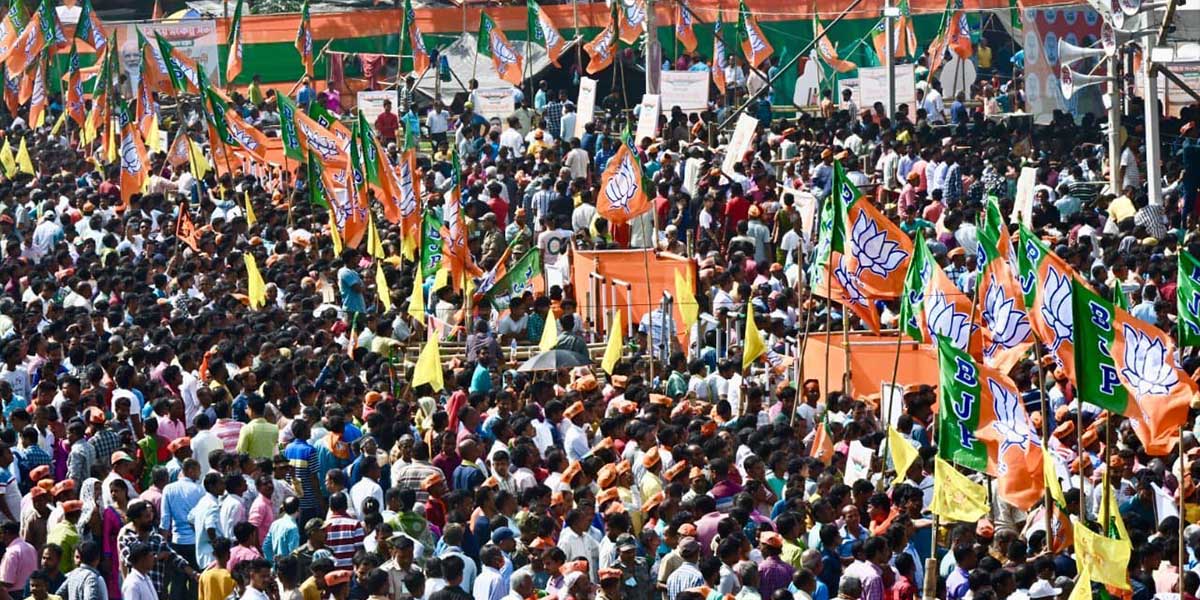
In West Bengal, the BJP is leaving no stones unturned to come to power. It seems the party has intensified efforts to consolidate support among traditional Left voters, a segment widely seen as having contributed significantly to its electoral rise in the state. Party insiders indicate that the BJP is seeking to retain and expand the gains it made from the Left’s declining vote share, particularly that of the CPI(M)), which saw its support shrink to around 5–6% in the 2021 Assembly elections. According to sources, the BJP has rolled out a booth-level outreach programme aimed at identifying and engaging Left-leaning voters. Local party workers have begun visiting households, making phone calls, and compiling detailed lists of voters perceived to be either inactive Left supporters or ideologically inclined towards Left politics. In several districts such as Howrah, Hooghly, and Purba Bardhaman efforts are underway to persuade disgruntled Left cadres and sympathisers to switch sides, with assurances of organisational responsibilities within the BJP. Former state BJP president Sukanta Majumdar on multiple occasions appealed to Left supporters to join hands with the party, arguing that ideological commitment can be retained while aligning politically against the ruling establishment. Political observers note that the BJP’s strong performance in the 2019 Lok Sabha elections in West Bengal was partly fuelled by an erosion of the Left vote base. The party has highlighted examples of former Left leaders who have transitioned successfully into the BJP. Among them are Khagen Murmu and Shankar Ghosh who are now prominent faces within the BJP. Former Left minister Bankim Ghosh is also part of the BJP’s legislative ranks.
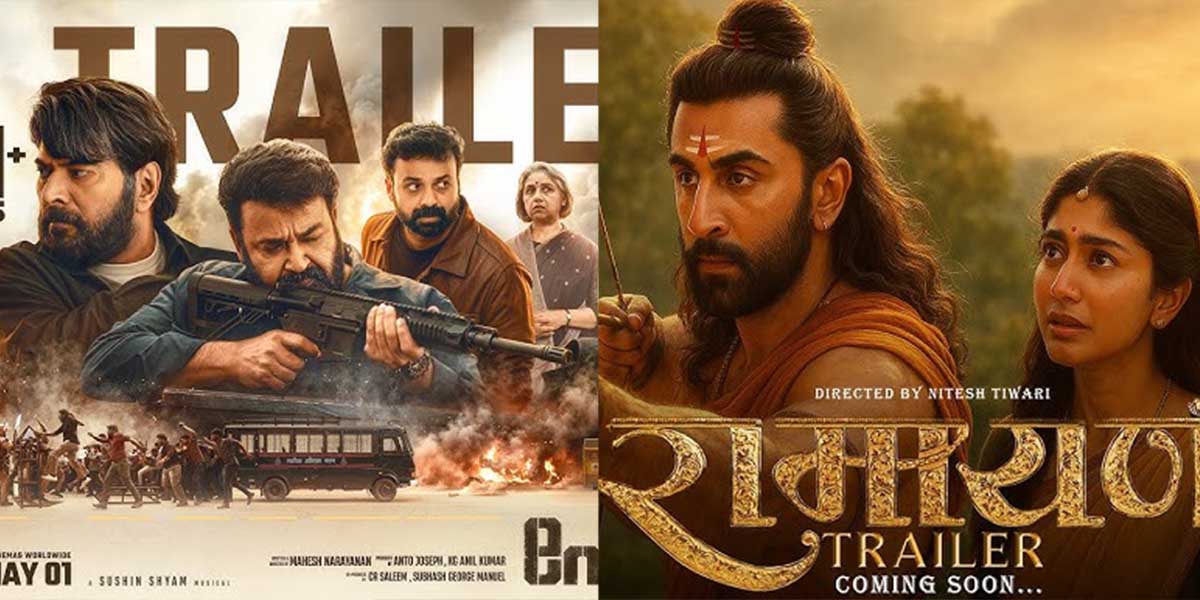
Two films’ trailers…poles apart in setting, content and impact made history even before they hit the big screens. They are: Malayalam film, Patriot and the evergreen epic Ramayanaa in Hindi. The two legends of Malayalam films, Mammootty and Mohanlal will soon be seen in Patriot, a big budget extravaganza directed by Mahesh Narayanan. If you can conjure up Keralam events that are awaited with nail-biting anticipation every year –the Thrissur Pooram and the August Vallam Kali (boat race) – similar to the case with Patriot, expected to hit theatres on May 1. Mammootty viewed Patriot at Raagam cinema in Thrissur even as Mohanlal did at Kavitha theatre in Ernakulam. Not to miss the news that Patriot is the lead trailer of the LA Film Festival, a moment of pride to the Kerala diaspora. Other celebrities to be watched in Patriot are Nayanthara, Fahad Fasil and Kunjappan Boban who raise the star value of a certain to be hit …with Nationalism as the pivot. The other trailer that wowed the audience is Ramayana, the immortal classic that never tires those who watch it with spiritual ardour. This unveiling first look took place in LA where Ranbir Kapoor, who plays Shri Ram moved the audience with his touching introduction. A considerably slimmer and gentle Kapoor played his pivotal role to extreme perfection …the hall reverberated with Jai Shri Ram chant when he said, “Shri Ram is the conscience of a nation/”. The India showing was on Hanuman Jayanthi. The audience were speechless watching the VFX of Ravana’s Palace, Ram Sethu and the Vanara army, filmed with much devotion by Nitesh Tiwari. Sai Pallavi as Sita and Yash as Ravan give gripping portrayals. It will be released this Diwali.
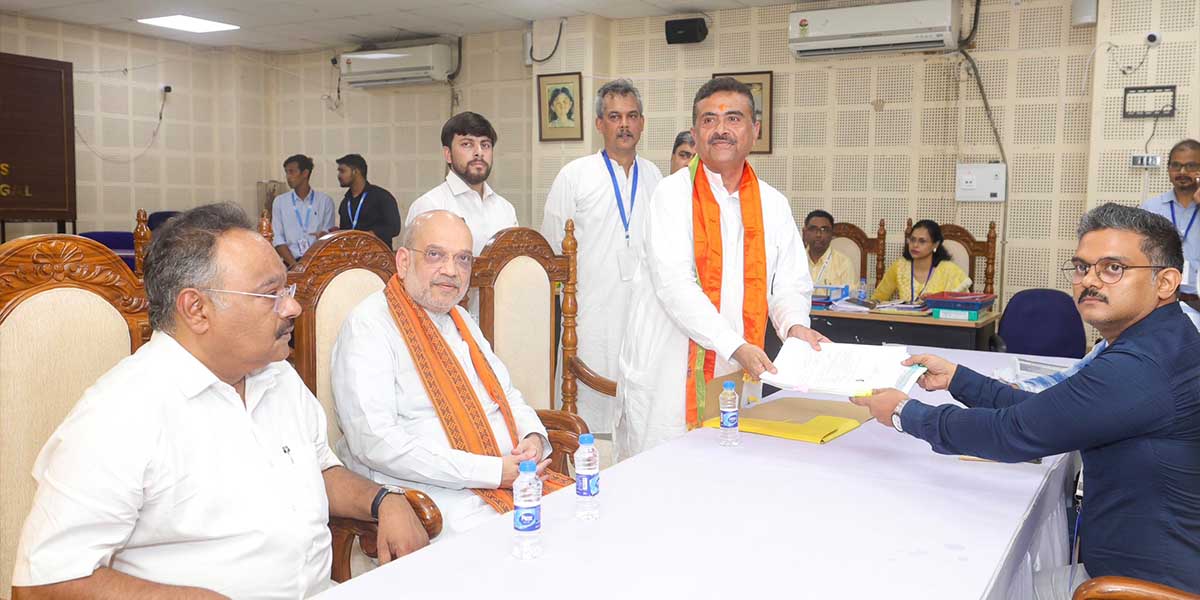
Union Home Minister Amit Shah is so convinced that the BJP is in a position to defeat Mamata Banerjee’s Trinamool Congress (TMC) in Bengal that he wants to concentrate more on the state than in Tamil Nadu. Once elections are over in Assam, Kerala and Puducherry on April 9, Shah will spend more than two weeks in Bengal. PM Modi is likely to address two rallies within a week. The BJP has pressed a battery of leaders into action, hoping to unseat the TMC government. “A number of our senior leaders are camping in the state, and more are set to join once the elections in Assam are over…” says a senior BJP leader. Work is being carried out in silos — at the level of both assembly and Lok Sabha constituencies. The BJP has divided West Bengal into nine zones, each zone is being handled by senior leaders, including ministers such as Dharmendra Pradhan, Nityanand Rai, Gajendra Singh Shekhawat, Sanjay Jaiswal, and Nishikant Dubey. Most of the leaders deployed so far are from Chhattisgarh, Bihar, Jharkhand, Uttar Pradesh, Tripura, among others.”The fact that Amit Shah ji has himself announced that he will campaign and stay in West Bengal for 15 days shows the party’s commitment and seriousness,” a senior leader said. The BJP is also making sure to counter any ‘negative narrative’ by the TMC to ensure such a depiction does not affect its prospects. For instance, soon after Mamata Banerjee claimed that the BJP would ban fish, meat, and even eggs if it came to power, Union Minister Sukanta Majumdar claimed that Bengal’s next CM from the BJP will be a ‘non-vegetarian’ when it comes to food habits. Shah has said, “I have a shortcut for bringing change to the state. Just make Suvendu Adhikari win from Bhabanipur (against Mamata), and the change is bound to happen.”
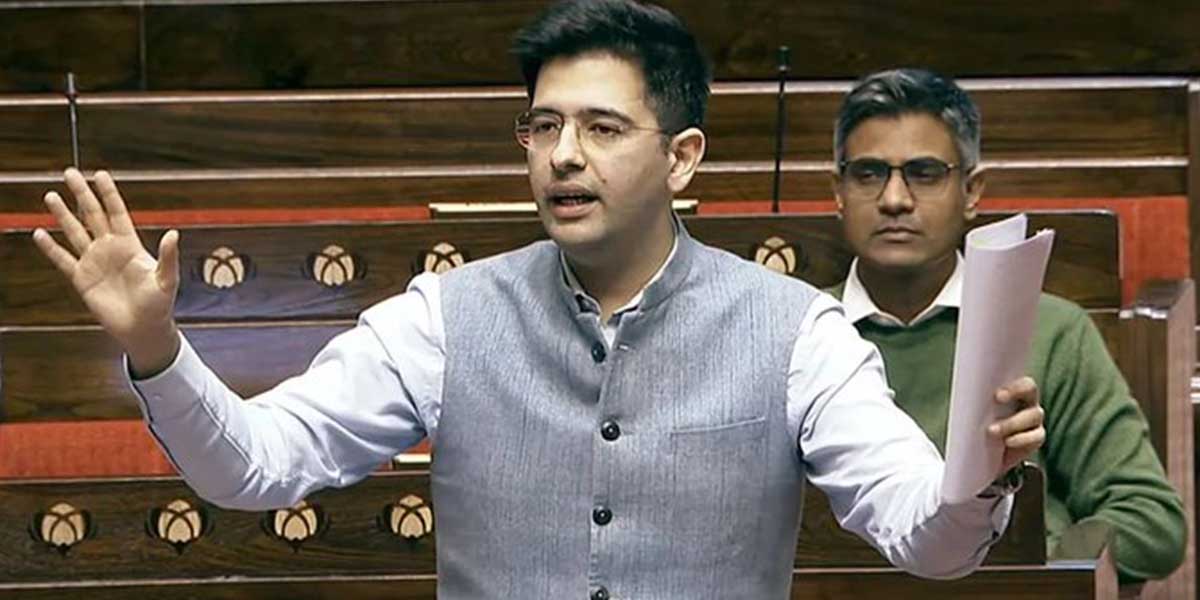
Raghav Chadha had been the AAP’s face on national media for years now, but recently the MP came into prominence for taking up “quality-of-life issues”, most of which largely concerned the middle- and upper-middle class. Each of his interventions in the Rajya Sabha was crisp in its own way. Chadha, a technocrat with good communication skills, knew exactly how to highlight them. He has 123 lakh followers on Instagram, and almost 10-lakh on X. He went on to become the Aam Aadmi Party’s leader of the House, and later the deputy with the return of senior colleague Sanjay Singh. It may seem odd that the AAP has stripped Chadha of his post as deputy leader in the Rajya Sabha. It is being said that Arvind Kejriwal suspected that Chadha may shift to the BJP ahead of the 2027 Punjab assembly elections. Kejriwal noticed Chadha was not critical of PM Modi or Home Minister Amit Shah. He hasn’t been very vociferous on issues against the BJP. Besides he was found missing in action when AAP may have needed him most. Like when Kejriwal was arrested Chadha was in the UK for eye surgery. Chadha was also absent at the recent “Jan Sabha” at Jantar Mantar, which was Kejriwal’s first public address following his discharge, along with Delhi’s former deputy CM Manish Sisodia. But Chadha has been far from idle and was always present and voluble in Parliament. Chadha campaigned against high samosa-and-chai prices at the airport. Nobody likes paying Rs 350 for a samosa and Rs 150 for a cup of chai. It is an issue that affects at best 5% of people in India who can afford to travel by air. Yet oddly, the government began to work on Chadha’s ideas. Within weeks of his raising the issue, UDAN Yatri cafes opened at 17 airports which offered samosas and tea for Rs 20 and Rs 10, respectively.
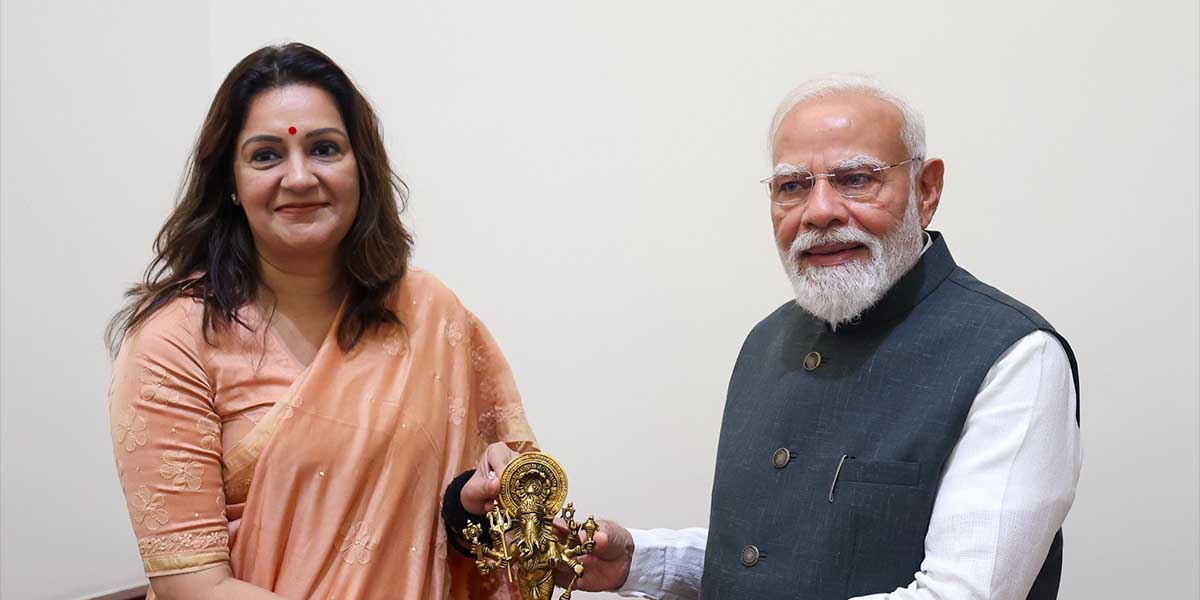
The Shiv Sena (UBT) is experiencing extreme discomfort following its outgoing MP Priyanka Chaturvedi’s ‘courtesy’ call on Prime Minister Narendra Modi in New Delhi. Although she has declared that she will remain in the opposition, the praise heaped by her on Modi is viewed as a signal. Sena leader Uddhav Thackeray is already uneasy since two of his Lok Sabha members attended a reception hosted by Maharashtra’s deputy CM Eknath Shinde’s confidant Pratap Jadhav, MP, in the capital a couple of days ago. While Sena spokesman Sanjay Raut has been predicting that several MLAs from the NCP(Ajit) are planning to defect to the BJP in Maharashtra, he has avoided any comment on the two MPs meeting Jadhav. Significantly, this meeting happened soon after Shinde had visited the national capital. Thus, revival of the so-called ‘Operation Tiger’ is being discussed afresh. The two MPs are Nagesh Patil-Ashtikar (Hingoli) and Sanjay Deshmukh (Yavatmal-Washim), who had attended Jadhav’s felicitation last year as well. Both have clarified that it was a friendly visit and that no politics should be searched about it. However, given the fluid phase in the state polity, their defence is taken with a pinch of salt. Newly-elected Sena (Shinde) Rajya Sabha member Jyoti Waghmare had indicated the possibility of some MPs crossing sides but she had not provided any details. As Priyanka Chaturvedi was in the news over the reported tiff in the Sena (UBT) over the denial of another Rajya Sabha term to her, the call on the PM by her is considered fraught with several possibilities.
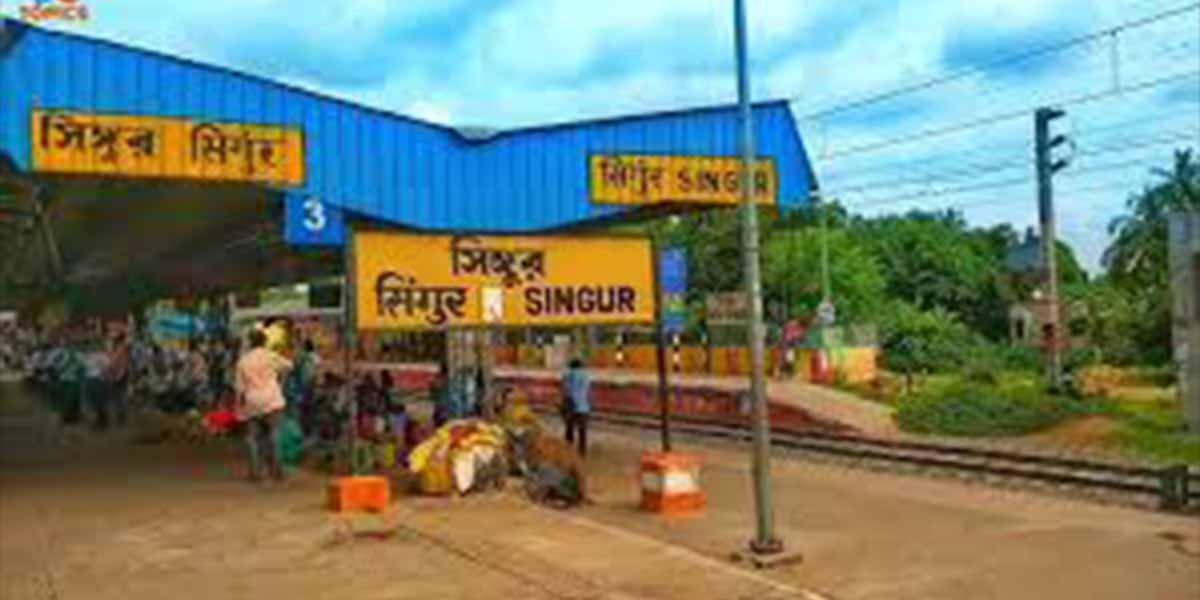
Nearly two decades after the Singur agitation reshaped West Bengal politics, the fertile stretch in Hooghly district has re-emerged as a key electoral flashpoint. With the 2026 Assembly elections nearing, the BJP has revived the Singur narrative, promising the return of Tata Motors and large-scale industrialisation if voted to power. The Trinamool Congress (TMC), however, continues to project Singur as a landmark victory for farmers against forcible land acquisition. BJP leaders argue that Tata Motors’ exit in 2008 marked the onset of de-industrialisation and that only a change in government can restore investor confidence. The BJP has also contrasted West Bengal’s industrial trajectory with Gujarat’s rapid expansion, presenting the latter as a development model. The party sees Singur as a way to reach Left-leaning voters by emphasising employment and economic growth rather than identity politics alone. The TMC has countered by reiterating that the Singur movement centred on protecting cultivable land and farmers’ rights. It cites the Supreme Court verdict declaring the 2006 land acquisition illegal and ordering land to be returned to unwilling farmers, calling it both legal and moral vindication. The conflict began in 2006 when the Left Front government acquired nearly 1,000 acres for Tata’s Nano project. The decision sparked sustained protests led by Mamata Banerjee, including police action and a 21-day hunger strike. Amid escalating unrest, Tata Motors withdrew in 2008 and shifted the project to Sanand, Gujarat. The Singur and Nandigram agitations later became central to the TMC’s rise, ending 34 years of Left rule in 2011. At present, about 300 acres have been restored to cultivation. Farmers’ groups have demanded that another 300 acres be made arable, suggesting the rest could be considered for industry. As elections approach, Singur’s abandoned fields have again become a battleground of competing visions of development and memory.
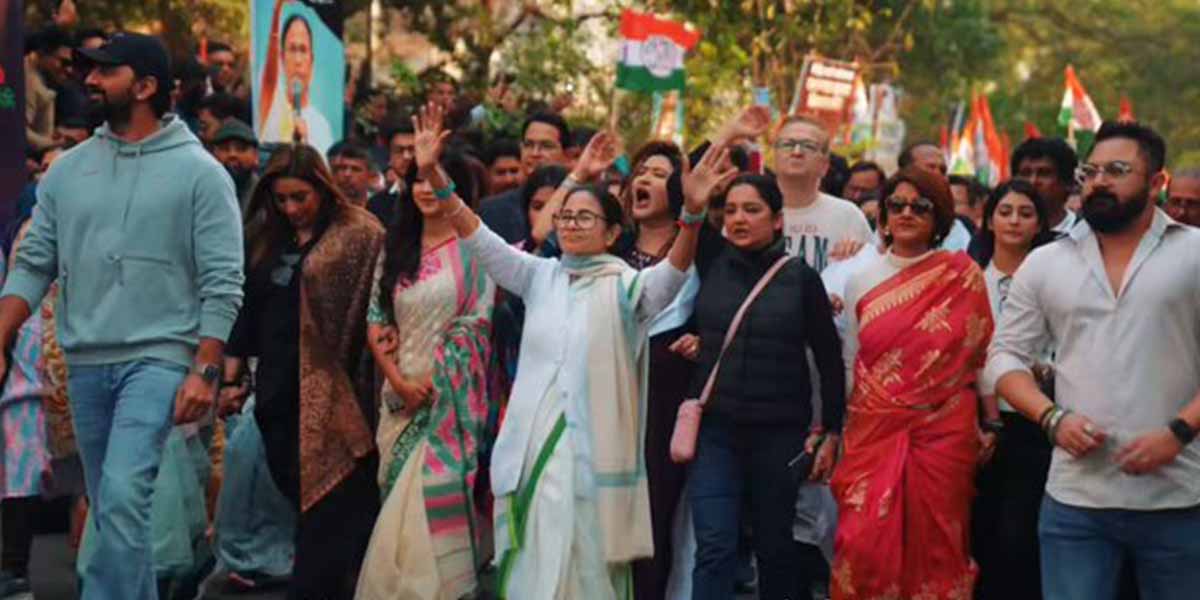
West Bengal Chief Minister and TMC supremo Mamata Banerjee once again placed confrontation at the centre of her politics on January 8, when she entered the residence of political strategist Pratik Jain just as the Enforcement Directorate began a search. Jain is the director of I-PAC, the political consultancy that has advised the TMC since 2021 and is widely credited with playing a key role in the party’s landslide Assembly victory that year. According to Mamata, the agency’s objective was not law enforcement but the seizure of confidential TMC poll material, including candidate lists, campaign strategy documents, SIR-related papers and electronic data. The episode reinforced an image Banerjee has cultivated over decades as a political “street fighter”. Supporters point to her early days as a Youth Congress worker protesting against Jayaprakash Narayan, her emergence as a “giant-killer” after defeating Left heavyweight Somnath Chatterjee in the 1984 Lok Sabha elections, and decades of street battles against the Left that culminated in the Singur and Nandigram movements and the fall of the 34-year Left Front government in 2011. Senior TMC insiders cite precedents where confrontation brought political dividends: her February 3, 2019 dharna after a CBI raid on then police commissioner Rajeev Kumar in the Saradha scam case; her February 23, 2021 confrontation with a CBI team probing a coal smuggling case involving Abhishek Banerjee and his wife; and her May 17, 2021 six-hour stay at the CBI office as several TMC leaders were arrested in the Narada sting operation case. Leaders argue such confrontations help counter anti-incumbency, mask internal factional rifts and deflect attention from economic management and alleged scams. As elections approach, Didi has returned to the mode that has long defined her career: fighting her battles on the street.
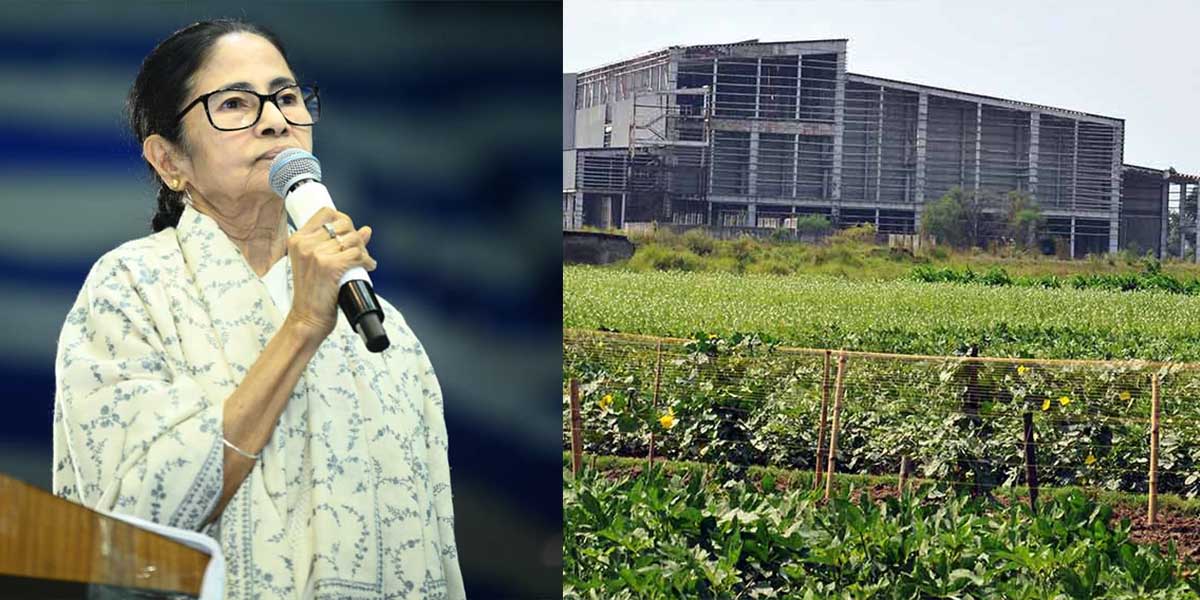
More than a decade after the Tata Group exited Singur following protests led by then Opposition leader Mamata Banerjee, the Trinamool Congress (TMC) supremo, now West Bengal chief minister, has cleared a Rs 500-crore investment proposal for the same area, signalling a renewed push for industrial development. Political observers see this as an effort to reinforce her government’s pro-industry image and revive Singur ahead of the 2026 Assembly elections. The Mamata Banerjee-led Cabinet approved a large warehouse and logistics project at Singur, marking a symbolic turnaround for a site central to her political rise. Minister of State for Finance Chandrima Bhattacharya said Nahar Industrial Enterprises Ltd will invest Rs 500 crore, with 11.35 acres allotted on a 99-year lease. The facility is expected to bolster logistics and delivery operations for major e-commerce players such as Amazon and Flipkart, generate employment, and strengthen supply-chain infrastructure. Singur gained national prominence in 2006–08 after protests against land acquisition for the Tata Motors Nano factory under the CPI(M)-led Left Front government. The agitation, led by Didi, ended with Tata Motors pulling out in October 2008, and the Left branding her “anti-industry.” More than 14 years after assuming power in 2011, Mamata has now facilitated major private investment at the same site. This follows a 2016 Supreme Court verdict directing the TMC government to take possession of about 1,000 acres and return it to farmers, declaring the earlier acquisition illegal.

The Singur movement not only altered Bengal’s industrial trajectory but also marked one of the biggest power shifts in the state’s history — from the Left Front to Mamata Banerjee’s Trinamool Congress. Yet, the Nano car exit in 2008 left an enduring scar, branding Didi as “anti-industry” despite her repeated efforts to change that perception. Seventeen years later, the narrative seems to be coming full circle, with electric vehicle manufacturer Cynosure announced plans to launch a four-wheeler priced below Rs 1 lakh from Sugandha in Hooghly district — just 17 km away from Singur, where Ratan Tata’s dream project had collapsed in 2008. Cynosure revealed its plan at the launch of its electric three-wheeler in Kolkata and the prototype of the car would be unveiled after Diwali, with a commercial rollout targeted for January 2026. According to co-founder Sampurna Ghosh, the fully battery-operated vehicle will seat four passengers, including the driver with an aim to make personal cars affordable for the middle and lower-middle-class families. Sources said that the car’s final name would be decided by the chief minister. Political observers have pointed out that the announcement carries political undertones just ahead of the 2026 Assembly elections, as it can be recalled that in 2008, Tata Motors withdrew from Singur after completing 80% of the factory, blaming Mamata then opposition leader. The project later shifted to Gujarat. Didi has since maintained that her fight was against the Left’s forcible land acquisition policy, not against Tata.
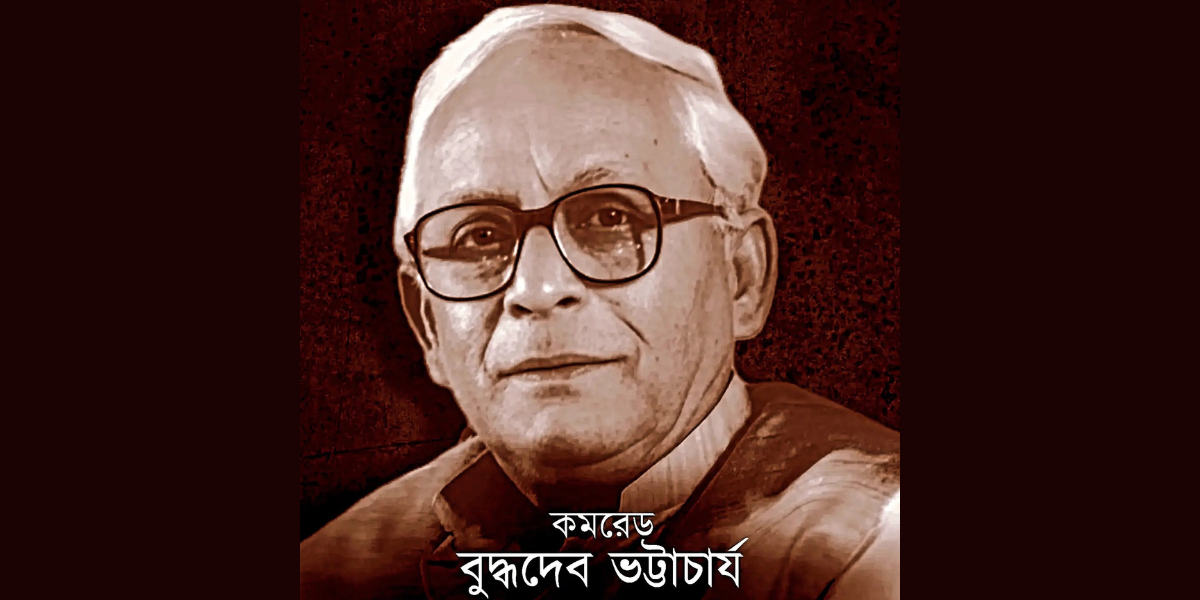
CPI(M), once a dominant force in West Bengal, is finding it increasingly difficult to connect with the masses in the current political landscape. After the party’s significant loss in the 2011 state elections, the presence of veteran leader Buddhadeb Bhattacharjee at rallies and public gatherings continued to provide a semblance of continuity. However, as Bhattacharjee’s health began to fail, the CPI(M) had to adapt modern ways to send out his messages. During the recent Lok Sabha election 2024 campaigns, the party relied on his video statements and even experimented with AI-based videos to keep his message alive. It may be recalled that Bhattacharjee’s controversial land acquisition policies in Singur (Hooghly district) and Nandigram (Purba Medinipur district) remain a significant blot on his legacy. These events, which led to widespread protests and violent clashes, symbolized the disconnect between his vision for industrial development and the concerns of the rural populace. Ironically, the same party that once criticized Bhattacharjee for his “perform or perish” attitude and his opposition to the bandh culture promoted by the Left’s trade union wing, CITU, has repeatedly turned to him in times of crisis. His televised video and audio addresses to the masses, particularly his call for a judicious decision to defeat the “undemocratic” Trinamool Congress and the “communal” BJP in the 2021 assembly elections, were seen as efforts to resurrect the party’s dwindling influence. As the CPI(M) navigates a rapidly changing political environment, the challenge of connecting with the masses without the charismatic presence of Bhattacharjee looms large after his death on August 8.