 All
All Politics
 Business
 Entertainment
 Sports
 Celebrities


When Vijay won CM’s status of Tamil Nadu, talk about his twin competitor, Ajith Kumar hogging the top film status in this void reached a high decibel. The two had entered the film world almost simultaneously and commanded enviable, and high remuneration per film. Even as Vijay nurtured his political ambition, Ajith had carved a parallel passion track as a Formula1 racer, speeding in a Porsche, 992 GT 3 in European and Middle East high stake races. The dashing dare devil race car driver and his alter ego persona, film hero, aligned perfectly. His last film, Good Bad and Ugly was promoted as a high voltage entertainer. Clint Eastwood and his iconic namesake film had made the spaghetti Western, a cult. Ajith’s film made at a cost of Rs 270 crore just about managed Rs 212 crore worldwide. News of Ajith Kumar’s next film, tentatively named AK 64, directed by Aadik Ramchandran sent his fans into a tizzy, starved as they were for their hero’s film and his notable absence. News circulated fast about which production house would be bank rolling AK 64. But there were no takers, including Sun Pictures…strange! The real reason circulated fast and furious …the hero had stipulated Rs 150 crore as his salary. Thiruppur Subramaniam who heads the Tamil Films Distributors Association said, “not many can afford this”. Suddenly the news spread that his wife Shalini Ajith Kumar would turn producer, after decades of hibernation. The final list of cast, crew and other details would be announced by Shalini in August. Ajith Kumar is all set to stride the screen with guns blazing.
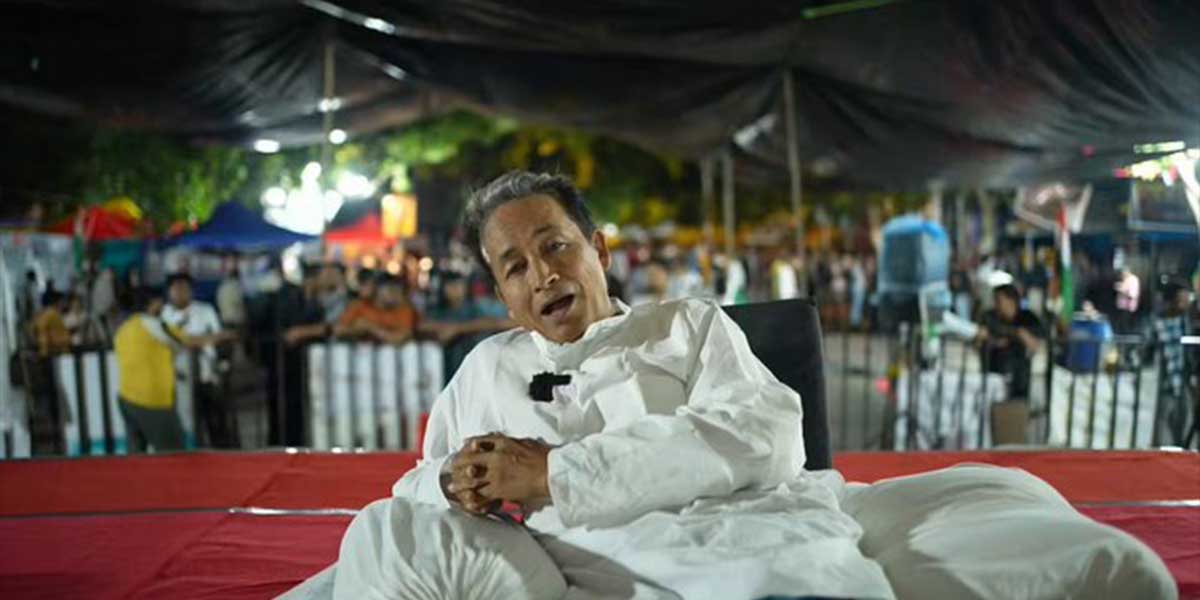
Why did Union Home Minister Amit Shah suddenly replace Delhi police commissioner Satish Golcha? Senior IPS officer Anurag Kumar was asked to take charge as the new Commissioner of Delhi Police on July 17. A 1994-batch IPS officer, Kumar was serving as the Special Director in the Intelligence Bureau (IB) before being entrusted with the top post in Delhi Police. Golcha was removed before his scheduled retirement in 2027. Golcha had taken over as the city police chief in August 2025. Delhi comes directly under the Union Home Ministry because it is a UT. Does his removal have anything to do with the Cockroach Janata Party’s 20-day-old sit-in at Jantar Mantar? An MHA order stated that Golcha, a 1992-batch AGMUT cadre IPS officer, will report to the Lieutenant Governor of Delhi for his next posting after Anurag Kumar formally assumes charge. That means he was removed without a new posting. The new police chief Anurag Kumar is one of the senior officers with extensive experience in both policing and intelligence. Before his stint at the IB, he served as DCP in several districts of Delhi. At IB he held several important assignments related to internal security and intelligence operations. His appointment comes months after the Delhi Police underwent a major administrative reshuffle on March 3. In one of the biggest transfers in recent years, 70 officers, including 50 IPS officers and 20 DANIPS officers, were shifted to new postings with immediate effect after approval from the Lieutenant Governor. The exercise covered appointments and transfers across several senior ranks, including Special Commissioners, Joint Commissioners, Additional Commissioners and Deputy Commissioners of Police (DCPs). The reshuffle impacted key wings, including district policing, crime, traffic, security, and other specialised units.
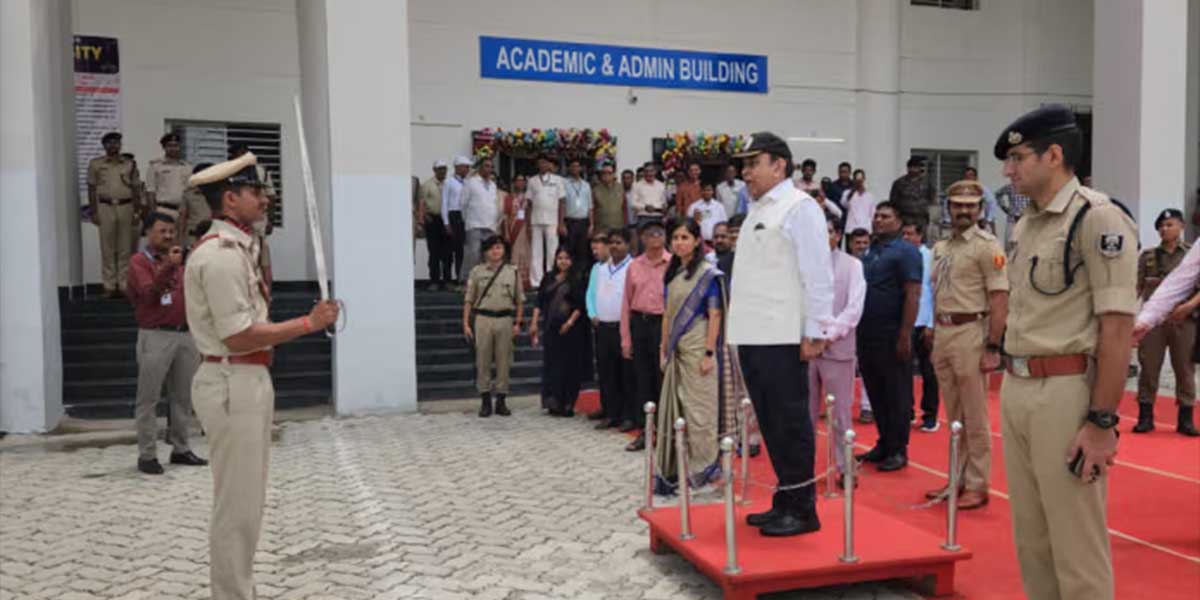
If an Army General is the Governor of a state, this is bound to happen. A guard of honour for the President, a Governor or a CM is a ceremonial — typically military or police personnel — arranged in a row to greet, escort, or pay respects to a distinguished guest, dignitary, or deceased person. But many police personnel are found not doing it properly. Recently, Bihar Governor Lieutenant General (Retd) Syed Ata Hasnain had to teach the word of commands to a Bihar Police officer during an inspection of a guard of honour at Nalanda Open University. The Bihar Governor was seen correcting the police commander who he said, was rushing through the guard of honour procedure. “You are moving too fast…That should not be the case,” he could be heard saying in Hindi. Hasnain, a former General Officer Commanding (GOC) of the Army’s Srinagar-based 15 Corps and the Bhopal-based 21 Corps, reached the university on July 15 for a function. He then went on to salute the commander twice as part of the ceremony, as the latter followed his instructions, shouted out the commands aloud, and sheathed his sword in the end to signal the end of the ceremony. Hasnain was further seen briefing the commander and the Superintendent of Police regarding the process. “Respect Guard, Wait…National Salute, Salami. Yes. Not Cut. Cut. Cut…No need to end so soon,” he apparently said.
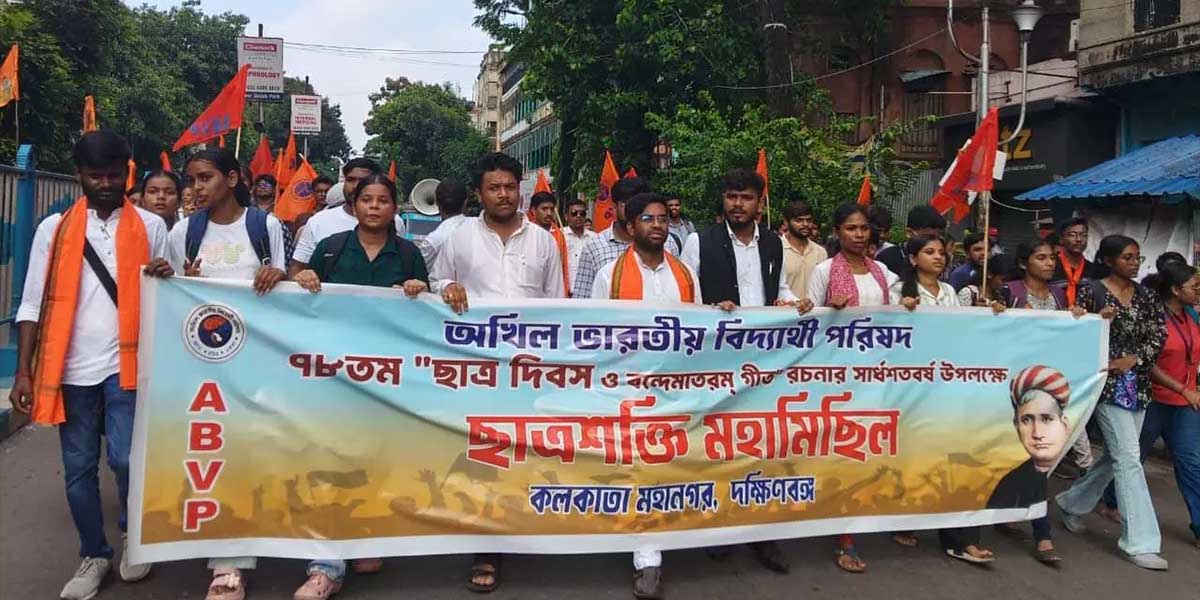
Jadavpur University, long regarded as one of West Bengal’s strongest Left ideological bastions, is witnessing a significant political shift as the Akhil Bharatiya Vidyarthi Parishad (ABVP), BJP’s student wing, rapidly expands its presence following the party’s victory in the Assembly elections in May. Within weeks of the change in government, RSS held its routine activities on the campus, marking a visible departure from the university’s long-standing liberal and Left-dominated political environment. ABVP leaders said the organisation is focusing on removing what it calls the corruption associated with the Trinamool Chhatra Parishad (TMCP) while promoting nationalism on campuses. It has launched a state-wide membership drive targeting 10 lakh students by December 2026, including two lakhs in Kolkata. ABVP, which had around 75,000 members in the state until last year, now has units in nearly 100 colleges and universities and plans to expand to over 500 campuses. It has also renewed its demand for immediate student union elections, suspended in most institutions for years. ABVP had remained inactive because campuses were dominated first by Left student organisations and later by the TMCP. They said the political transition had created greater space for alternative political views. The expansion marks a strategic shift from ABVP’s traditional strongholds in north Bengal and districts such as Purulia and Bankura towards Kolkata’s premier educational institutions. ABVP national general secretary Virendra Singh Solanki said the BJP’s victory had created an opportunity to transform the education sector and deepen student engagement. Academics said the BJP’s campus expansion reflects its effort to build organisational influence beyond electoral success. The real measure of ABVP’s growing support will emerge only when long-pending student union elections are finally held.
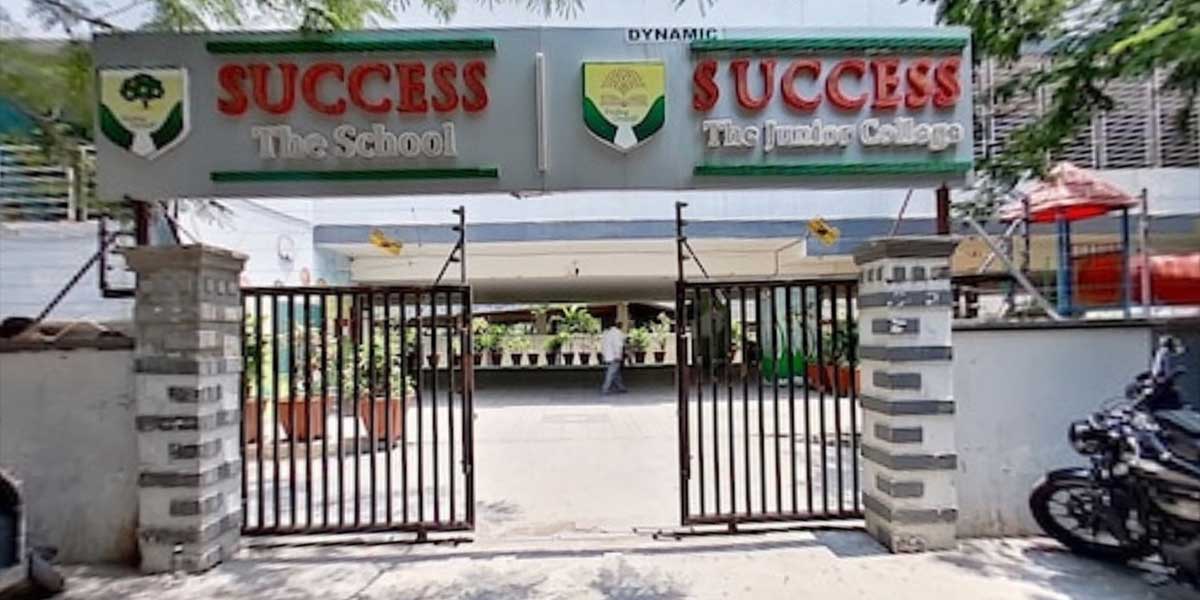
A private school in Hyderabad with mostly Muslim students had to terminate a teacher after she allegedly assigned religious homework to a Class 2 Hindu student, triggering a controversy and protests by the parents of the Hindu student. “Success, The School,” in Saidabad, Telangana issued a termination letter to teacher Shaik Aisha Parveen, stating that she was permanently disqualified from teaching in any of its schools. “The teacher acted in violation of the school’s policy and has been terminated. The parents are satisfied and no police complaint has been filed,” said a senior Hyderabad cop. The school apparently is a secular school run by Muslims. It is open to children of all faiths. For some bizarre reason Shaik Aiisha Parveen had asked the non-Muslim students to also work on Kalma and Surah Fatiha. The Kalma is the Islamic declaration of faith, while Surah Fatiha is the opening of the Holy Quran. Cops acknowledged that the teacher had violated school policy which was why she lost her job. Initially the school had said that the homework was only for Muslim students who opted for a subject about Islamic teachings. According to the cops the Muslim students outnumbered the Hindus. BJP Telangana President N Ramchandra Rao however felt since Success School came under Telangana’s Department of Education, the department must survey schools across the state for such insidious attempts to convert Hindus. Rao feels that the issue that has cropped up in-Success School — wherein two Hindu students were asked to write the Kalma may not be an isolated instance. The government should take action against the management. The management says that they have terminated the teacher. But terminating the teacher is not sufficient. We feel it is not an isolated case. It is a larger plan by some schools and some management to convert people…” feels Rao.
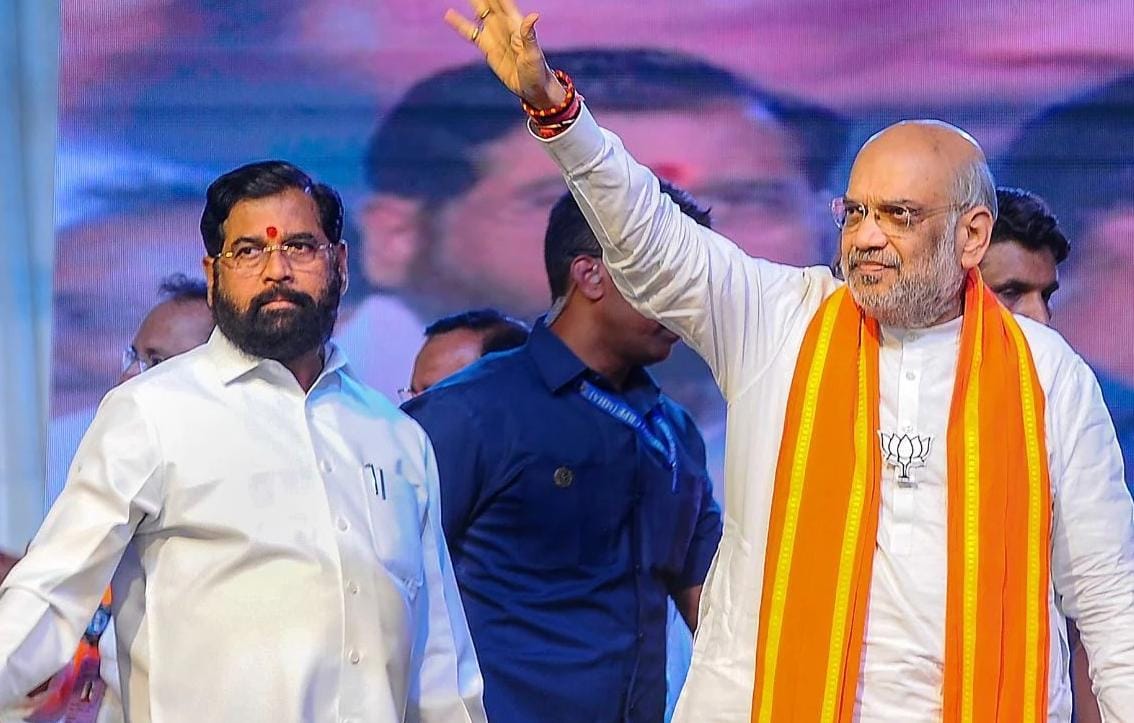
Ahead of Monsoon Session of Parliament beginning on July 20, the Women’s Reservation Bill and the Delimitation Bill received unusual support from NDA ally, the Shiv Sena and its leader, Maharashtra deputy CM Eknath Shinde. Making a case for its passage, Shinde said that the population of many Lok Sabha constituencies has now reached between 2 million and 2.5 million, making it increasingly difficult to effectively undertake development works across such vast constituencies. He said ” that the delimitation of constituencies is therefore essential to ensure justice and equitable representation for the people.” He made a case for the Delimitation Bill while interacting with media persons at his son Dr Shrikant Shinde residence in Delhi. A number of party MPs were also present. It is significant that the Shiv Sena leader who has been tapping extra numbers and bolstering NDA strength in the Parliament came out publicly in support of the Delimitation Bill, after interacting with Union Home Minister Amit Shah. Shinde also made it clear that although there had been discussions for years about providing 50% reservation for women in Parliament, it was PM Narendra Modi who demonstrated the political will to introduce the legislation. He alleged that the Women’s Reservation Bill had failed to pass in the previous parliamentary session– April 2026– because of the opposition parties. According to him, the opposition paid a political price for this in the West Bengal elections. Interestingly, NCP (SP) leader Supriya Sule had also voiced her support for the Delimitation Bill provided it assured a gender quota. As for meeting with Shah, Shinde said they held positive discussions on a wide range of development-related issues, including irrigation projects in the constituencies of Shiv Sena MPs.
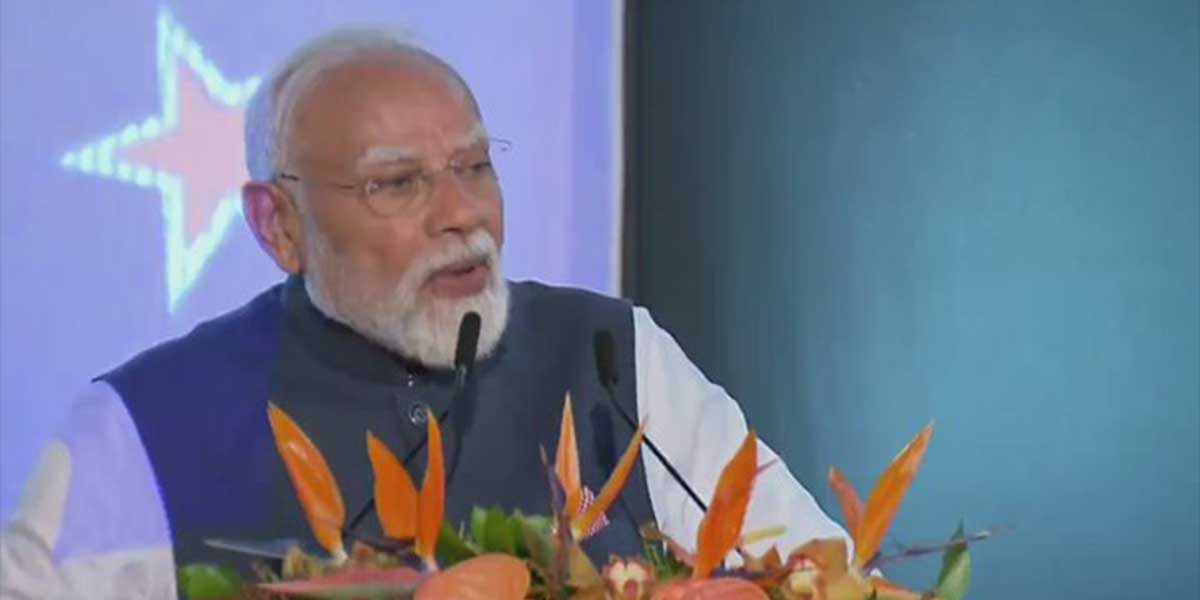
With Punjab set to go to polls in early 2027, PM Narendra Modi’s visit to state capital and Union Territory Chandigarh on July 17 to inaugurate healthcare projects, a renovated railway station in Jalandhar, and flag off a train from Chheharta (Amritsar) to Varanasi seems to have rankled the ruling Aam Aadmi Party government. Predictably, the AAP leaders are miffed that Modi is stoking poll fever a bit too early. As a counter strategy, the AAP government has begun to endorse the bizarre U.S. line in the gangster Lawrence Bishnoi case. It has gone so absurd as to accuse the Modi government of deliberately ignoring Punjab and “aid a gangster, lodged in Sabarmati Jail of Gujarat, to spread his drug business in the state.” Punjab Health Minister Balbir Singh is upset that PM Modi will inaugurate health projects in Punjab. “The Centre is not even allowing our flagship health insurance scheme to be implemented in PGI, Chandigarh—a project set up for Punjab several decades ago. If this is not discrimination, what else is?” he said. 80% of drugs being smuggled from across the International Border are being dumped in the state. That is why new drugs like ICE and cocaine are increasingly coming into Punjab,” said Balbir Singh, on the sidelines of a press conference called to speak about the initiatives being taken by the AAP government to tackle the drug menace in Punjab. Bragging about AAP government’s capabilities to stem the rot, Singh claimed that if only the “person sitting in the Sabarmati jail of a state which has a double-engine government is now accused by an international agency like the FBI of running a global drug racket “were to be sent by the Centre to a Punjab jail, “we will not only treat him but also reform him.”
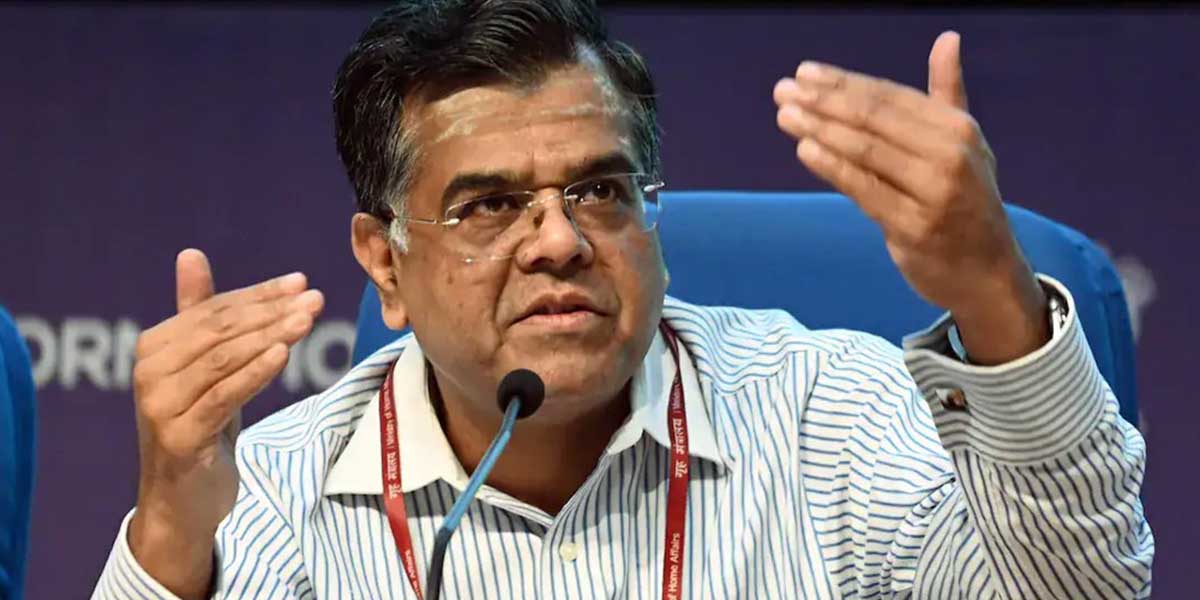
As Cabinet Secretary and senior IAS officer T V Somanathan’s tenure is scheduled to end on August 29, he pens a note on having brief meetings. Upon the conclusion of his term, the 1987-batch Tamil Nadu cadre officer will superannuate from the IAS. However, before his departure, he had decided to list some dos and don’ts. In a recent communication to all chief secretaries and the directors general of administrative training institutes, Somanathan has circulated a ‘Guide on Conducting Effective Meetings’. As a first rule, he has asked the babus to “avoid long meetings” and finish them in 30 to 60 minutes. Somanathan believes that meetings consume an inordinate part of a civil servant’s working day. Many officers themselves have told him that meetings often begin late, become overstretched and directionless, and end without any “tangible takeaways”. Somanathan’s objective, however, extends far beyond shortening meetings. The guide is, in effect, an attempt to change the culture of governance itself. Along with Somanthan’s departure, nearly 300 senior IAS officers, including some of the most powerful figures in the bureaucracy, are set to retire this year. This may trigger a massive reshuffle across the Centre and states, reshaping the top echelons of governance and opening the door for a new generation of officers. Several chief secretaries of major states and senior secretaries in crucial Union ministries are also on the retirement list, making the turnover far-reaching in both scale and impact. Uttar Pradesh alone is expected to see around 30 senior officers retire, while Punjab, Haryana, Madhya Pradesh, Odisha, Tamil Nadu and the AGMUT cadre are also slated to lose a significant number of experienced administrators. States such as Delhi, Odisha, Haryana and Meghalaya will see their serving chief secretaries superannuate, necessitating a new succession line.
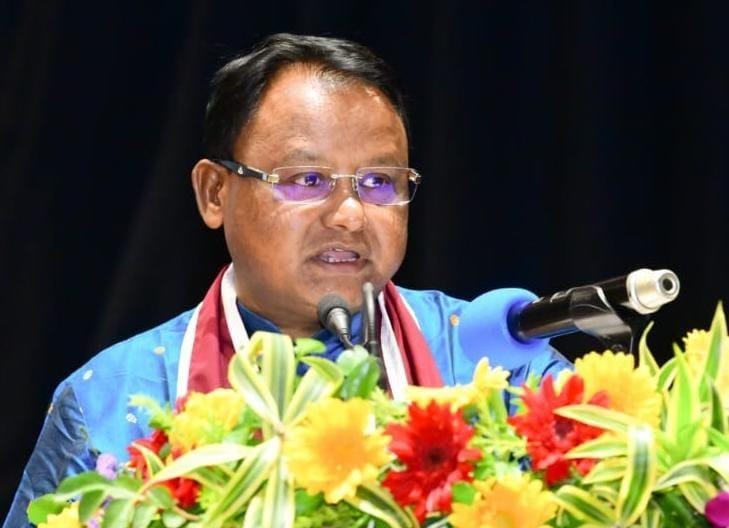
Odisha chief minister Mohan Charan Majhi has reasons to be worried. Despite a record-breaking state budget allocation of Rs 3.10 lakh crore, Odisha government has made a poor show so far. This is because Odisha’s inability to spend allocated funds. Odisha state has spent only 8.8% of its fund so far, thereby exposing the state government’s weakness and slow-paced administration,” say government sources. Reasons for these lapses are many – such as bureaucratic delays, prolonged bidding and tendering processes, lack of trained personnel, need for multiple clearance level and slow speed of action to settle lingering issues. Reportedly, Odisha’s 16 key departments are lagging in spending target. The new rumour is 10 out of 44 departments are not in a position to utilise 60% of their allocated funds so far. Odisha Chief Secretary Anu Garg has however urged key stakeholders to accelerate government projects. All these shows the BJP-run state government in bad light. Majhi needs to set up a war room to keenly monitor all government projects.
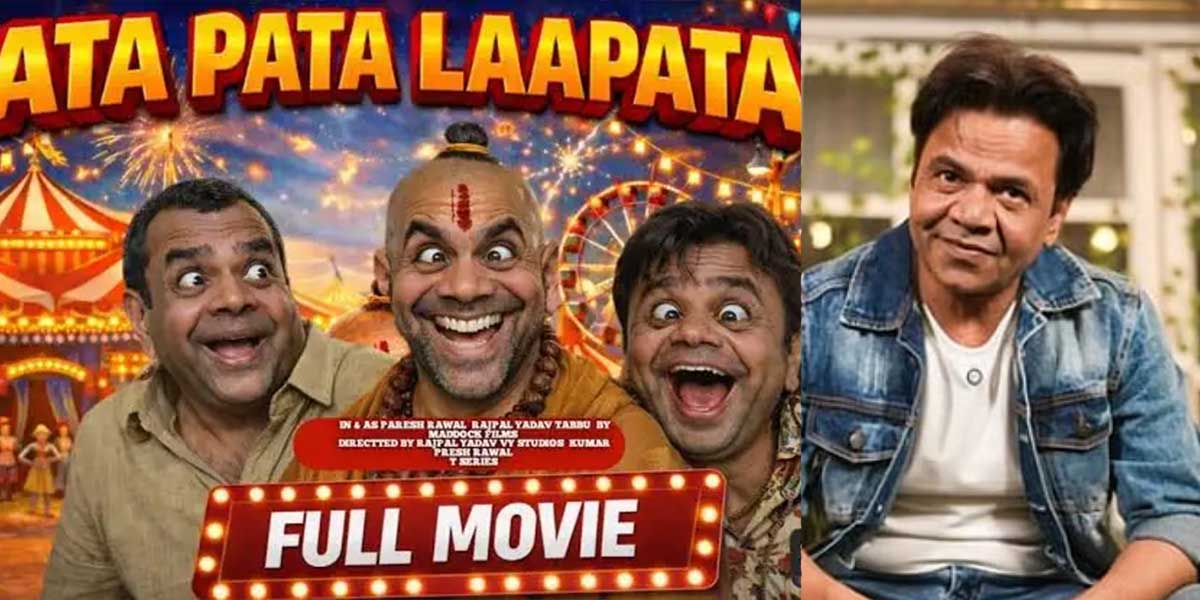
In a stunning case of reel life turning eerily prophetic, the Delhi High Court’s July 10, 2026 verdict upholding Rajpal Yadav’s conviction in a Rs 5 crore cheque-bounce scandal has thrown a harsh spotlight on how his 2012 directorial debut Ata Pata Laapata uncannily predicted his own downfall. Convicted in seven cases but with jail reduced to three months, the actor now faces massive compensation orders; a real-world echo of the film’s satirical chaos. In the film, Yadav’s protagonist sees his house mysteriously vanish and turns to the law for justice, only to become the prime suspect in a web of bureaucracy, corruption, and twisted justice. The bold satire mercilessly lampoons a system that punishes the victim. It was Yadav’s passionate directorial debut, conceived in 2005 amid industry recession and strikes, produced by his wife Radha under their family banner with a massive ensemble cast and heavy personal investment. Yadav secured bank loans for the Rs 20 crore project. In 2010, businessman Madhav Gopal invested Rs 5 crore with repayment agreements in place. However, after a heated argument following the 2011 music launch, Gopal allegedly obtained a pre-release stay order, publicly accused Yadav of fraud, and sabotaged the November 2, 2012 release. Despite over 1,000 screens booked, the film vanished from theatres within days; mirroring the protagonist’s missing house and flopped commercially. Post-dated cheques bounced amid the chaos, dragging Yadav into the very legal ordeal he had mocked on screen. While reducing the latest sentence, the court criticised his conduct, noting the law cannot be “rewritten at the will of an actor.” Yadav claims the investor’s rage destroyed not just his dream but endangered artistes and massive finances. As he eyes an appeal, this prophetic saga blurs fiction and harsh Bollywood reality in the most scandalous way.

As the Final Countdown begins for the high-voltage Kerala Assembly elections on April 6, the voters are presented with two simple options: BJP candidate E Sreedharan’s Palakkad model and Kochouseph Chittilappilly-Kitex’s 20:20 model, versus the decades old alternate rule model of the Left and the Congress. Sreedharan has outlined his five-year development vision for Palakkad. This is also reiterated by Prime Minister Narendra Modi: “The time has come for FAST development in Kerala — F for fisheries and fertilisers, A for agriculture and Ayurveda, S for skill development and social justice and T for tourism and technology.” V Guard’s Chittilappilly and Kitex’s Sabu have transformed Kizzakambalam panchayat’s (in Ernakulam) socio-economic landscape with their 20:20 party’s transformative endeavours: roads built to last with a 20-year guarantee, a corruption-free panchayat office and the 20:20 supermarket (akin to a DMart or Walmart’s scale) that enables even a poor family of four members to shop their entire week’s groceries for just Rs 500! Sreedharan, Chittilappilly and Sabu are positioning themselves as the Mahabalis of Kerala (the legendary king of the native folklore in whose memory the festival of Onam is celebrated by all communities in Kerala), who can ensure that it’s a daily Onam lifestyle in certain assembly constituencies of the state. Is “Onam Lifestyle” – having Onam every day as a way of life – an idea whose time has come? Well, we will have to wait for the final word from the Kerala polls to understand the voters’ tryst with Onam.

With technocrat and builder of some of India’s iconic public infrastructure projects, E Sreedharan joining the BJP, the Kerala voters finally have an “optimistic third option.” The state assembly elections have traditionally been marked by a two-horse race to power – and the rotation of power between the LDF and the UDF over the past couple of decades. Two scenarios are available for the voters: BJP backed by the Christian leadership, Church and voters, could get the 72-seat simple majority to form the government (140 seats). The state observers hold that Sreedharan’s clean image, the likelihood of political autonomy that he may command, and a “strategic” election manifesto should nudge the average Kerala voter to back the BJP and allies. In the second scenario, contrary to opinion polls now favouring the Left, the Congress can form the government, mainly backed by allies IUML, SDPI and Welfare Party. However, it will be a plain replay of the past 20-year administration. Though the Anna-Kitex group backed 20:20 party could win the entire eight contested seats, it prefers to sit independent in the opposition and continue with its well-received public welfare goals. For some analysts, with this assembly polls, the NDA and the 20:20 party may get positioned as formidable options in the next 10-15 years in a radically transformed Kerala.

V-Guard Industries’ Founder Chairman and philanthropist Kochouseph Chittilappilly, in a no holds barred chat with Kerala’s popular Food Vlogger Mrinal Das Vengalat, dropped a bombshell that Yusuff Ali, CMD of the multi-continent Lulu Group, may not be the richest Malayalee of Kerala origin, despite a net worth of $4.8 billion! Chittilappilly, a self-made billionaire, said the combined personal net worth of the UDF and the LDF politicians, who ruled Kerala by “default turns” over the last 20 plus years, could surpass that of Lulu’s Ali. If one were to extrapolate Chittilappilly’s observation to the entire country, then the combined net worth of politicians could well be over billions of dollars, surpassing that of combined networth of top 10 industrialists. The money-spinning arithmetic of politicians only gets eye popping every year, especially in the light of the letter written by the recently transferred Mumbai Police Commissioner Param Bir Singh. In his letter, he alleged that the Maharashtra Home Minister Anil Deshmukh had asked the arrested Assistant Police Inspector Sachin Vaze to collect Rs 100 crore every month. And the maths that was allegedly given was: “There are 1,750 bars and restaurants in Mumbai. If you collect Rs 3 lakh on an average that works out to Rs 50 crore. As for the balance amount, there are other avenues.” Is India a land of “mega bucks” for the renegades?