 All
All Politics
 Business
 Entertainment
 Sports
 Celebrities

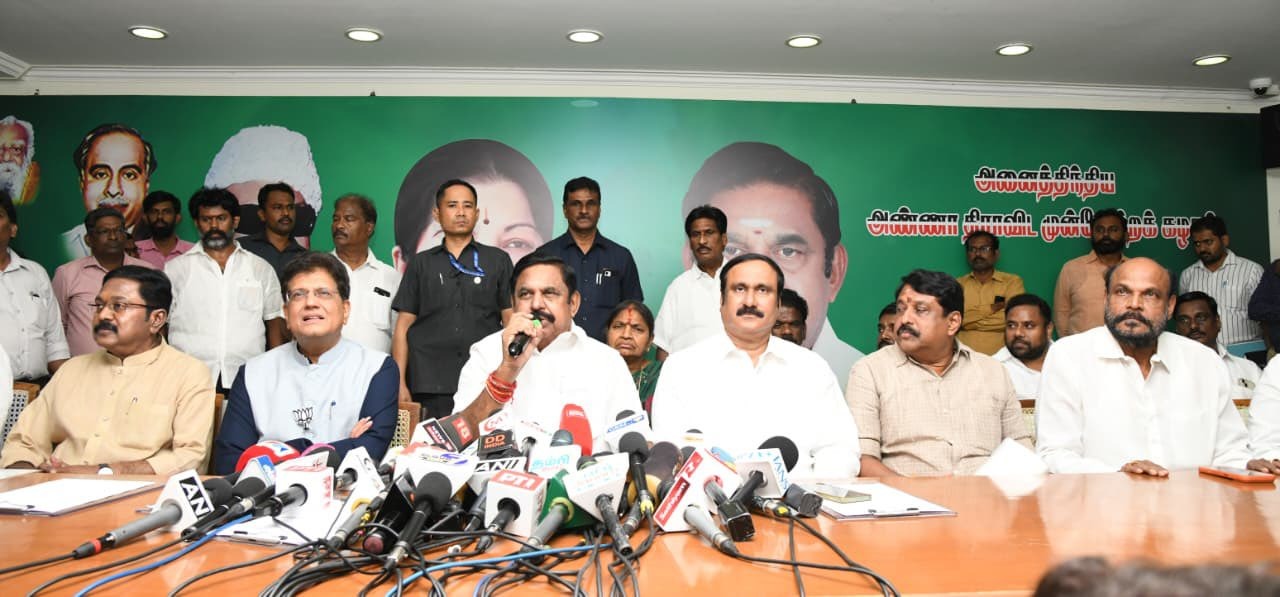
The AIADMK finalised its seat-sharing arrangement with allies –the NDA — for the April 23 Assembly elections, by allotting 27 seats to the BJP. Under the pact, the Pattali Makkal Katchi (PMK) will contest 18 seats, while the Amma Makkal Munnetra Kazhagam (AMMK) 11 seats. The agreement was signed at the AIADMK headquarters in Chennai in the presence of Union Commerce Minister Piyush Goyal and AIADMK chief Edappadi K Palaniswami (EPS). With merely a week to go for the filing of nominations Tamil Nadu BJP in-charge Goyal arrived in Chennai on March 23 to expedite the process of talks among the constituents of the NDA, headed by the AIADMK in the state. Goyal not only reached Chennai, he also made it a point to visit AIADMK party headquarters where the NDA alliance under EPS’s leadership was announced. The visit of a senior BJP leader to AIADMK headquarters not only sent the “right kind” of message about the NDA alliance, it also busted a few myths. A section of the media was critical about the NDA alliance being worked out in Delhi; it panned EPS’s visit to Delhi to meet and discuss with Union Home Minister Amit Shah to draw a roadmap for the NDA alliance. In his interaction with the media, EPS made it clear that he had no inhibition about interacting with anyone in Delhi. Political analysts in Chennai found EPS being very confident about the way he handled his alliance. In fact, by including every shade of opinion and community like AMMK leader T T V Dhinakaran and PMK leader Dr Anbumani Ramadoss, EPS could be holding the key to a rainbow coalition of OBC castes. As for the DMK led secular alliance, one hears its talks with the CPI (M) have hit a roadblock over one seat.
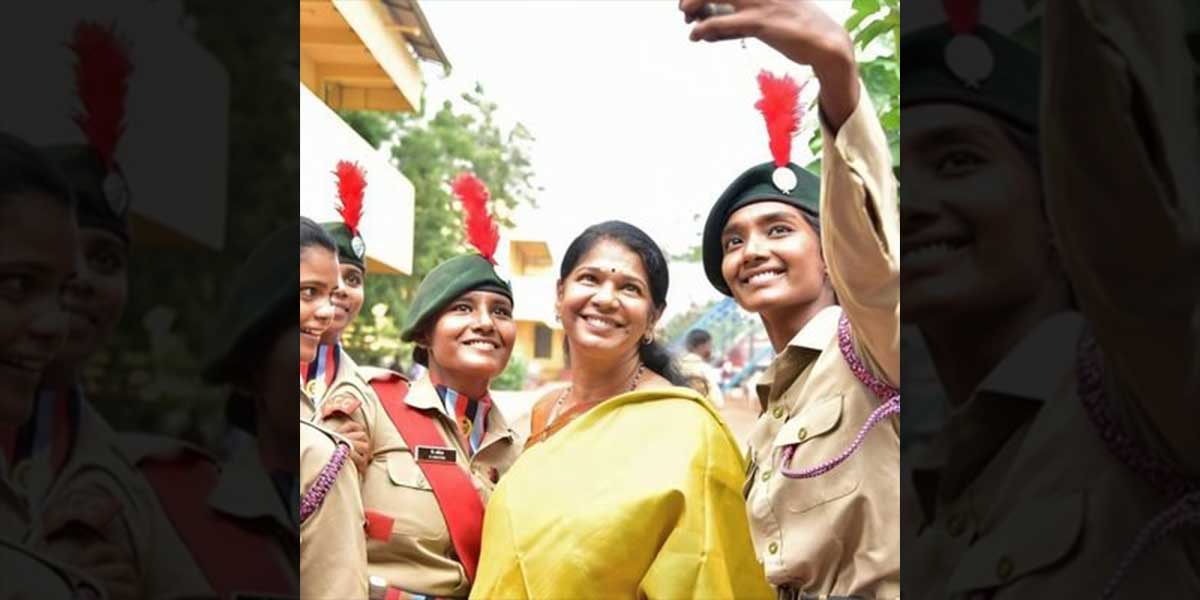
This half-sister of Tamil Nadu chief minister M K Stalin, Kanimozhi Karunanidhi, was seen by many as the favourite of her father. Born in 1968, Kani studied in the elite Chennai school, Presentation Convent Church Park, later did her Masters in Economics from Ethiraj College, turning into a poet, journalist and astute politician by osmosis in the First Family. With all these qualifications, why has her political career become a snakes and ladders game? Currently, the MP from Thoothukudi, Kani has not been handed the true fruits of her effort. For want of trying or a more powerful force that ensures she remains the face of the DMK in Parliament, an honour she should be proud of! Calm waters run deep and Kanimozhi after several attempts to be inducted into TN politics with efforts stymied has this time decided that she must seize her own destiny. Twice meeting Stalin about her role in Delhi she unburdened her ambition to come back to her state and participate in the power paradigm of TN. It is learnt that she wants to stand from Thoothukudi for Assembly and has sounded sitting MLA to move to adjacent place. It is said by senior party watchers that Stalin side-tracked her…to talk of other matters. Obviously her return to TN would jeopardise the status of Udhayanidhi, her nephew who is already perceived as the CM. Conversely, misogynistic party oldies ask, what more does she want? Only she knows that this MP status is only a ceremonial sop. All wheeling-dealings and heavy lifting are actually done by Stalin’s son in law V Sabareesan and old timer T R Baalu who is well entrenched in Delhi politics. An occasional Tamil spat with the FM is the only optics Kani gets. Any wonder that Kani is aching to get home?
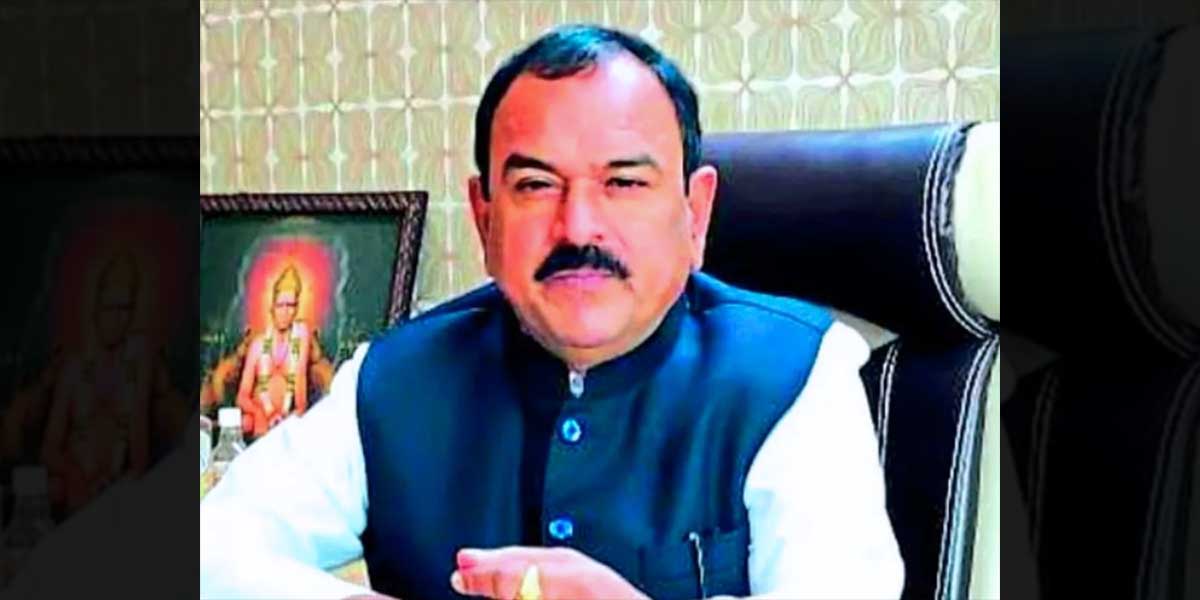
Self-proclaimed Godman Ashok Kharat’s arrest for his alleged sex atrocities against many women has stirred a hornet’s nest as pictures of some top leaders with him have started surfacing. The Nationalist Congress Party (NCP-Ajit) and the Shiv Sena (Shinde), the two major partners in the Mahayuti regime in Maharashtra, are finding themselves on the defensive with every new such disclosure. NCP leader Rupali Chakankar has become the focus of the sex scandal since many serious allegations are being made against her hour by hour. The plot has thickened since a couple of NCP leaders have charged that certain suspicious things found outside the official residence of late deputy CM Ajit Pawar when he was alive were part of black magic reportedly perpetrated by Kharat. Investigations so far have revealed that Kharat had been practising his questionable occultism to lure hapless women and that he has amassed huge wealth through this route over the years. The sordid racket of Kharat was exposed when chief minister Devendra Fadnavis himself ordered the police bosses to act against him. It is whispered that besides some prominent politicians, certain police officials also will face the heat as the probe progresses since they tacitly permitted Kharat to operate. Ironically, Kharat was caught by the police when he himself had filed a complaint against a couple of his acquaintances, who had been blackmailing him. Retired from Merchant Navy, Kharat was flaunting the title of a Captain while running his racket in Nasik in north Maharashtra.
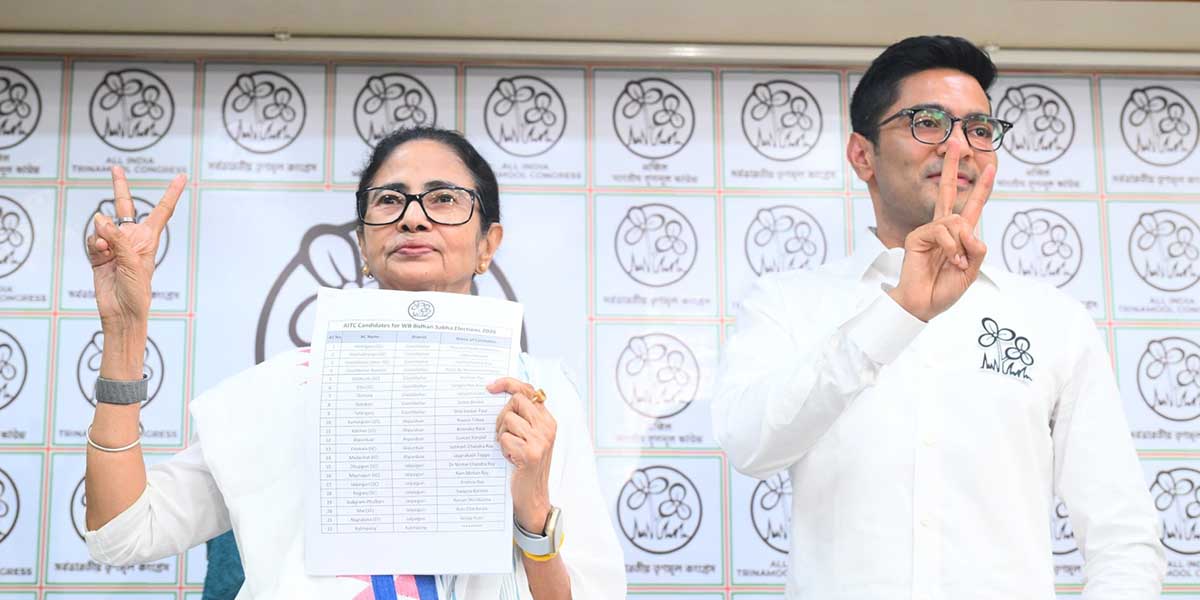
Seeking a fourth consecutive term, West Bengal chief minister Mamata Banerjee who released a 291-seat candidate list clearly signalled a sweeping organisational reset. Defined by a “three-generation balance” strategy, the list represents a calculated gamble by Mamata and her nephew Abhishek Banerjee to neutralise anti-incumbency through a mix of youthful energy and seasoned stability. Didi’s focus this time has been on younger faces, increased representation of women, and caste & community equations. Party insiders describe a “three-generation balance”, an idea pushed by Abhishek. Of 291 candidates, 219 or 75% are under 60, 45% around 50, 72 above 60 and 25 over 70 — marking a clear shift from 2021. To address anti-incumbency, 74 sitting MLAs have been dropped. Veterans like Samar Mukherjee (83), Sobhandeb Chattopadhyay (82), Firhad Hakim, Madan Mitra, Jyotipriya Mallick have been retained. Younger faces include Madhuparna Thakur (27), Rituparna Adhya (28), Debangshu Bhattacharya (29), and Rajib Biswas (29). Thirteen recent entrants have been fielded immediately that includes Pabitra Kar against his mentor Opposition leader Suvendu Adhikari in Nandigram. Meanwhile, Partha Chatterjee, Chiranjeet Chakraborty, Kanchan Mullick, Paresh Pal and Swarnakamal Saha, Vivek Gupta have been dropped. Several second-generation leaders have been fielded, including Shreya Pandey (daughter of Sadhan Pandey), Sirsanya Bandopadhyay, Tirthankar Ghosh, Basundhara Goswami, Shubhankar Singh and Sandipan Saha; however, the exclusion of late Mukul Roy’s son Subhranshu Roy signals a selective legacy politics. The list includes 52 women, 40 Muslims, 78 Scheduled Caste and 17 Scheduled Tribe candidates. Interestingly, the TMC appears to have moved away from its earlier reliance on inducting fresh faces from the Bengali film industry.
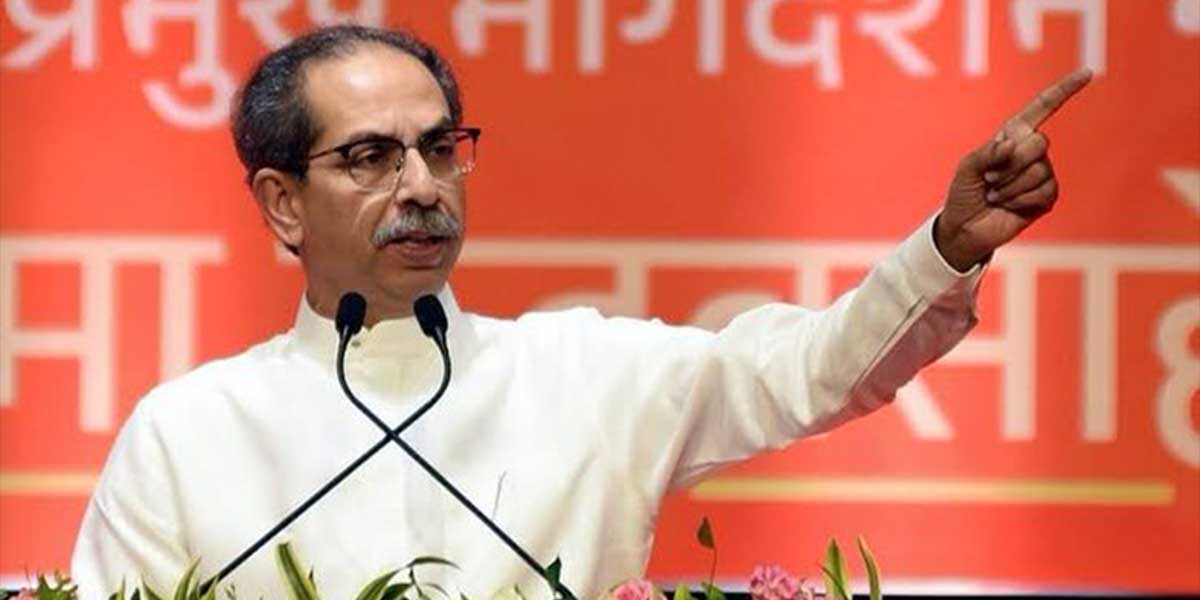
Unstinted support by the Shiv Sena (UBT) of the Freedom Religion Bill in the Maharashtra legislature has once again renewed political speculation about Uddhav Thackeray’s next likely stance regarding the BJP. His silence on the coming two assembly byelections in the state has already created unease within the Opposition Maha Vikas Aghadi (MVA). The state Congress unit has declared that it will consider fielding candidates in the two constituencies, one of them Baramati, represented by late deputy CM Ajit Pawar. His wife Sunetra, who has taken over his place in the state cabinet, will contest from Baramati. Her sister in law and NCP(SP) leader Supriya Sule has announced that her party will not challenge Sunetra. However, that decision has been seen as a family matter. But the Congress party is sore since it was taken without consulting its state leader Harshwardhan Sapkal. Even earlier, the Congress was ignored by the other two MVA partners when it was decided that veteran NCP leader Sharad Pawar will be sent to the Rajya Sabha. This was a BJP strategy to compel the MVA to agree to elect the remaining six Mahayuti candidates unopposed. Hence, rather than alienating the Hindutva vote bank, Uddhav decided to support the Religion Freedom Bill, which will soon become a law with state governor’s consent. He ignored the Bill’s criticism by the NCP(SP), the Congress and the fringe Opposition parties. Uddhav’s stand has made MVA uneasy once again but it will hardly reflect in the state polity, it is felt.
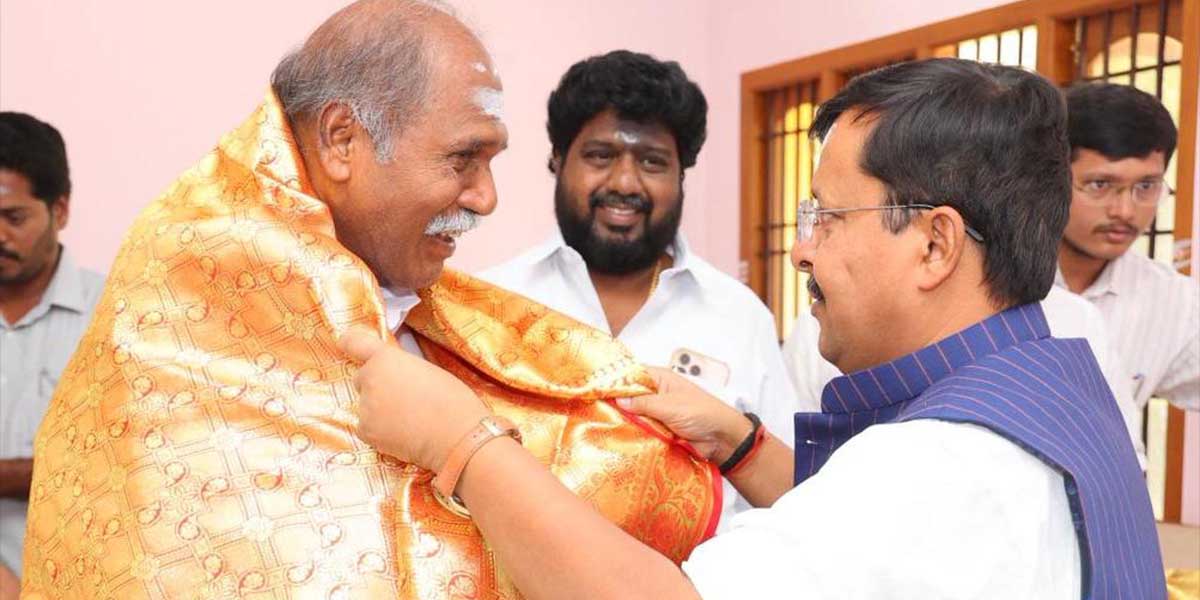
With barely a few days left for nominations to close for Puducherry assembly elections (Mar 23), Congress leaders were hoping for a miracle. They were hoping that there would be some electoral arrangement with actor Vijay’s Tamilaga Vettri Kazhagam (TVK) in the Union Territory. This seemed possible as the party in power — All India N R Congress — sent a message to its partner BJP that it could go alone in the polls. The CM’s Congress colleagues were keen that he break away from the NDA and return to the Congress fold. Jose Charles Martin, the son of lottery tycoon Santiago Martin, had launched his own political party — Latchiya Jananayaga Katchi. But the CM was not keen to include anyone with a lottery background. The CM raised everyone’s hopes in the Congress in TN as he played truant. He had avoided meeting Union Minister Mansukh Mandviya in Puducherry. However, Home Minister Amit Shah ensured all outstanding issues were sorted out and the alliance for 30 seats was finally sealed on March 20. Meanwhile, it is being said Rahul Gandhi has not publicly endorsed the DMK-Congress alliance in TN; it is quite likely that he may not campaign for the alliance. With his close aide Praveen Chakravarty renewing contacts with Vijay, there is a possibility that there could be an informal understanding between the Congress and the TVK in select constituencies in the state. However, more than TN it is the contest in Kerala that is posing a challenge for the Congress. Party sources say return of the Left Front for a record third term is now inevitable with the Congress trailing a good 2% behind. With group clashes coming to the fore, party men feel Kerala can be reclaimed only if the Congress projects a different CM — say a Shashi Tharoor!
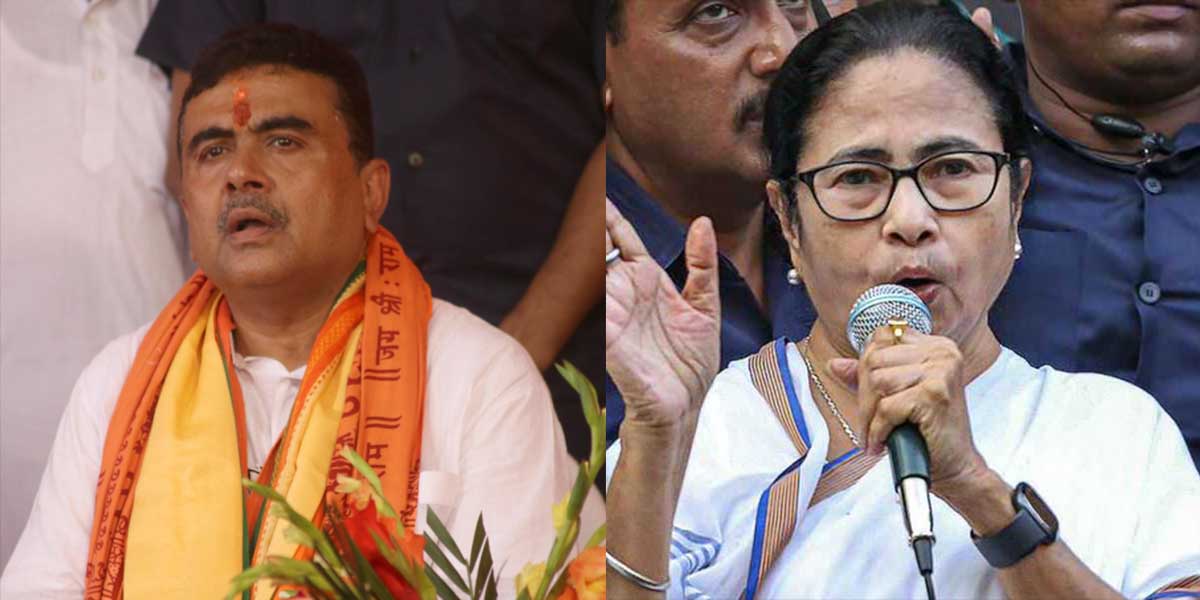
It’s a high stakes battle in Bhabanipur between West Bengal chief minister Mamata Banerjee and Leader of Opposition Suvendu Adhikari. Didi will do everything to defend her urban stronghold, while Adhikari — former TMC heavyweight turned BJP leader defeated her in the 2021 Nandigram contest — has entered the fray to challenge her once again. Interestingly, Adhikari will also contest from Nandigram as well. Observers say this could be BJP’s strategy to pin down Mamata to a gruelling local fight in Bhabanipur so as to limit her ability to lead a state-wide campaign. Her presence remains vital for TMC candidates across West Bengal’s closely contested districts. The constituency itself, often called “mini Bharat,” features a diverse demographic where nearly 40% of voters are from non-Bengali communities—including Gujaratis, Marwaris, Punjabis, and Odias—alongside a 20% Muslim electorate. While the seat has leaned toward the TMC since 2011, the BJP is aggressively courting the business community to bridge the gap. The build-up to the April 23 and April 29 two-phase elections has been marked by a fierce dispute over the electoral rolls. Reports indicate over 47,000 names were removed during a special intensive review, with another 14,000 under scrutiny. While the BJP justifies the deletions as a clean-up of duplicate entries, the TMC alleges a conspiracy involving the Election Commission to disenfranchise genuine voters. Despite these tensions, Didi enters the race with a formidable record, having won her 2021 by-election by over 58,000 votes. Her party’s broader list reflects a push for representation, featuring 52 women, 95 SC/ST candidates, and 47 minority representatives.
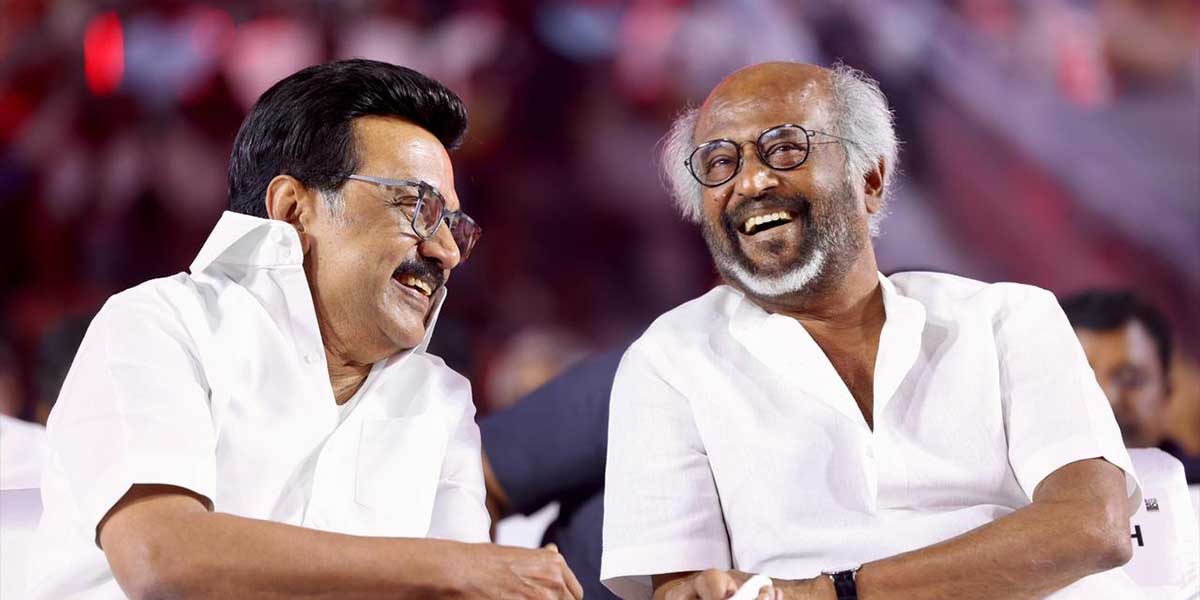
TVK supremo Vijay’s consigliere Aadav Arjun is seen to be deranged by the political rank and file, especially after his loose cannon remarks. The one baiting Thalaivar Rajinikanth has raised the hackles of all …fans especially who are waiting to be roused to rise. What did Arjun say? In an extreme attempt to schmooze and schmaltz in his role of deifying Vijay, this indiscreet party member said, “Even Rajinikanth attempted to plunge headlong into politics, aping MGR, assuming he would be worshipped by TN. But what happened? The first family of DMK threatened him. And he withdrew. But our TVK leader Vijay is a rock…cannot be threatened by anyone”. You can imagine the storm raised by this indiscreet and vicious comment especially about Rajini who is worshipped by devoted fans all over the country. Tamil Nadu BJP chief Nainaar Nagendran tried to condemn Aadav’s pointless talk, with some meek, assuaging words and the challenge that Aadav should apologise to Rajinikanth. But it is the scathing repartee of journalist Mani that made a big impact. “This man is not just ignorant, but indecent…and he is not even a politician but a lottery ticket vendor. Earlier he tried to latch on to Thirumavalavan, then the DMK’s first family …now he has latched on to Vijay.” Rajini fans have protested but the DMK has brushed off the allegation like a fly. With a consigliere like Aadav who needs enemies?
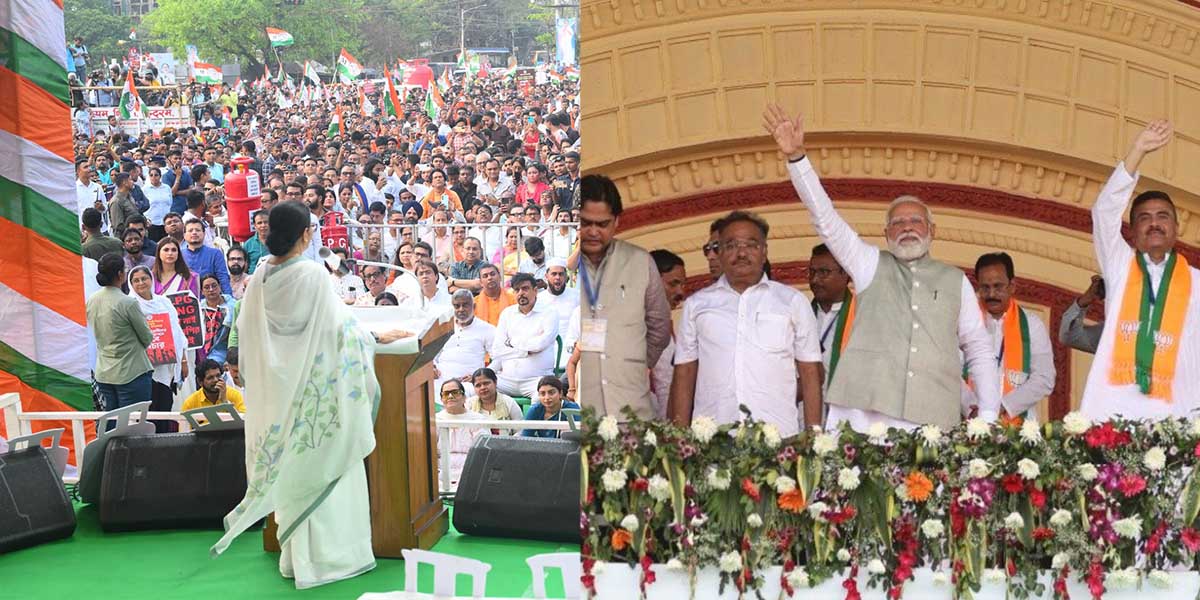
West Bengal’s upcoming Assembly election will be held in two phases, dividing the state into contrasting political zones, with data from the 2021 Assembly polls and 2024 Lok Sabha segment mapping indicating the battle for power will unfold differently across the two regions. The first phase, scheduled for April 23, covers 152 constituencies across 16 districts, including North Bengal, the western belts, and coastal Purba Medinipur. A retrospective mapping of the 2021 results suggests a competitive landscape where the TMC held 92 seats against the BJP’s 59. While the BJP previously capitalised on anti-incumbency here, 2024 Parliamentary data shows a tighter race; the TMC secured a 52.6% vote share, the BJP 39.5%, and the Congress-Left alliance 7.9%. With an average victory margin of just 9.89%, this zone remains highly volatile. Social demographics add further complexity. Of the 39 constituencies with minority populations exceeding 40%, the TMC’s 2021 clean sweep faced fragmentation in 2024, with the TMC leading in 21 segments, the Congress-Left in 11, and the BJP in seven. Furthermore, voter list adjudication poses a mathematical threat: in 48% of these seats, voters under adjudication outnumber the 2024 victory margins. On April 29, the battle shifts to 142 seats in the South Bengal heartland, encompassing Kolkata and the 24 Parganas. This remains a formidable TMC stronghold; the party won 123 seats here in 2021 and maintained an 80.3% lead in 2024 segments with a wide 15.05% average margin. Interestingly, this region shows high voter deletion rates, averaging 12.7% in TMC-won seats. As the BJP’s strongest areas vote first, the TMC may benefit from a schedule that allows it to consolidate momentum toward its core base in the final.

Many political aspirants and Tamil Nadu party leaders are secretly coveting this extraordinary Brand status of Vijay, the leader of TVK. How lucky can a man get with such super branding, promos, press and news stature like the cine star Vijay? Of course he bungee jumped into the fray with a mind blowing fan following, star status and oodles of money and flash. Just two years into his splash down, Vijay gets to hog the press…41 people die in the Karur stampede at his first ever public meet, his overhyped and meticulously planned release Jana Nayagan, so called swan song hits the censor road block, allegations of an extramarital affair and the fury of his wife Sangeetha in her divorce plea, his two children openly cutting his name off as parent, toxic revelations about his parents distancing themselves from him, CBI summons and trips to Delhi so called pressure wooing from a national party. In fact, every facet of his public and private life is in the constant glare of publicity. Would any other politician go out on a limb and still smell of roses? Vijay does. The Kohinoor in Vijay’s crown is the happening development — V Senthil Balaji summoned to Delhi for CBI questioning. Balaji is the DMK MLA from Karur, his powerful stomping ground where the stampede killed 41 people. Vijay is alleged to have conveyed to the CBI, that though he was delayed coming to the mega meet, it was the henchmen of Balaji who sprayed a fainting agent on the crowd …the stampede, melee and deaths quickly happened.
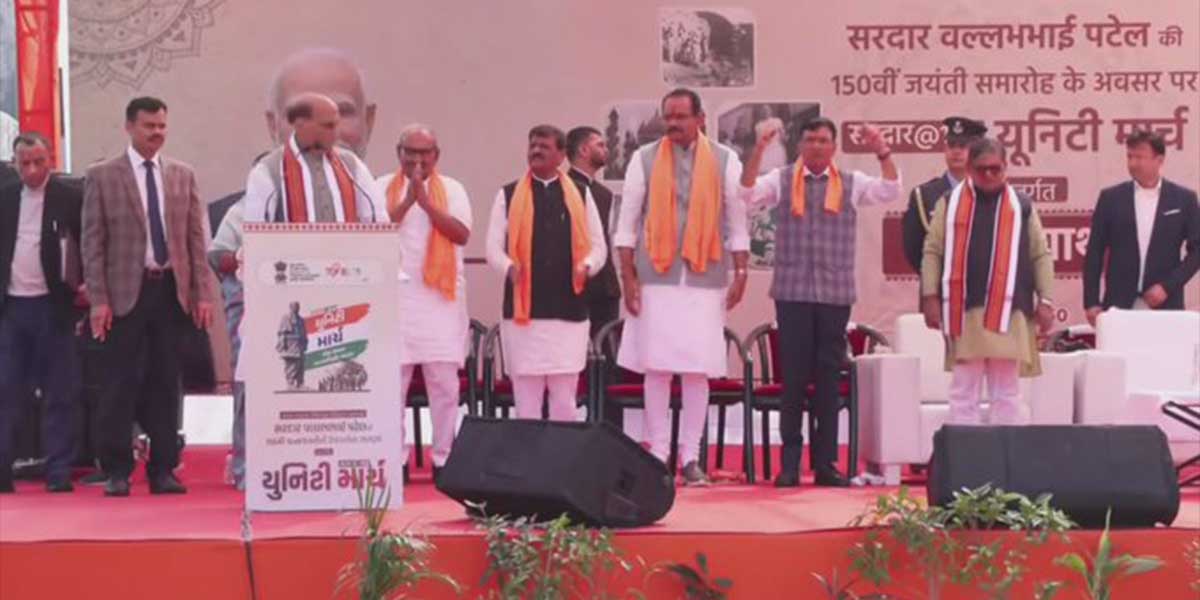
Nothing may have rankled the Congress more than Defence Minister Rajnath Singh’s assertion that former PM Jawaharlal Nehru wanted to use government funds to build Babri Masjid. Remembering India’s first Home Minister at the ‘Sardar Sabha’ organised in Gujarat’s Vadodara, Singh explained how Patel did not look to appease communities, unlike Nehru, who questioned the reconstruction of Somnath Temple. “Sardar Vallabhbhai Patel was truly secular. He never believed in appeasement. When Jawaharlal Nehru spoke about spending government funds on the Babri Masjid issue, if anyone opposed it, it was one born in Gujarat, Sardar Vallabhbhai Patel…” said Rajnath Singh. He said that earlier parallels were drawn between the reconstruction of the Gir Somnath temple, but Patel rejected similarities between the two cases, highlighting that the Somnath temple was rebuilt with donations instead of government money. The Defence Minister said, “The Ram Mandir in Ayodhya too has not been funded by government money. The people of this country have borne the entire cost.” Was Singh imagining this conflict of ideas between Nehru and Patel? Of course not. BJP MP Sudhanshu Trivedi said the differences between Nehru and Patel were drawn from the reminiscences and references made by Patel’s daughter Maniben Patel in her book, The Inside Story of Sardar Patel. It mentions all the correspondence between the two leaders from 1936 to 1950. Giving a context to dragging in Nehru and Babri, Sudhanshu Trivedi says how Nehru insisted that Raja Jam Saheb should stay away from the inauguration of Somnath Temple in April 1951, India’s first PM had publicly declared his disappointment in seeing the beautiful temples in south India. This Nehruvian aversion to temples best explains why the Gandhis have stayed away from Ram Temple in Ayodhya till now.